1 free read left. Create a free account for unlimited reading + AI research.
Create free accountArticle DiGRA
1 free read left. Create a free account for unlimited reading + AI research.
Create free accountArticleDiGRA
The essay argues that both deliberate art games and everyday innovative play can operate within social life. Such works are completed through participation and social transformation.
This essay argues that computer games, both deliberately designed art games and everyday innovative play, can be understood as "social sculptures" in the sense developed by Joseph Beuys in the late 1960s, meaning art that operates within social life and is completed through participation and social transformation. Its central thesis is that games can move beyond personal entertainment or aesthetic expression to foster collective social discourse and critical engagement, thereby offering a new basis for recognizing both the artistic status and the social value of games and play. The author draws on a body of game studies scholarship and art-historical sources, including Fluxus and the broader lineage of social practice art, to frame this argument.
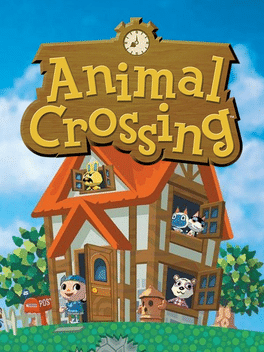
The analysis proceeds through two lines of inquiry. The first concerns art games, where the paper critiques Sharp's categorization of game art, artgames, and artists' games as overly designer-centric, and instead locates artistic quality in the dialogical interplay between artist and player. Molleindustria's Democratic Socialism Simulator serves as an illustrative case, with its randomness and implicit design prompting players to engage in continuous political dialogue with the designer. The second line concerns innovative play, drawing on Aarseth's and Flanagan's notions of play that exceeds conventional goals. The example given is virtual protests staged by Hong Kong players in Animal Crossing: New Horizons, which the author compares to Beuys's 1972 action Sweeping Up in its use of simple, symbolically loaded gestures to convey political messages.
The paper situates these claims within the critical debates surrounding social sculpture itself, noting that critics have questioned whether participatory rhetoric can resolve political questions, and that similar doubts have been raised about the political efficacy of games. The author's reply is that the interpenetration of play and everyday life under neoliberal conditions creates openings for social sculpture to be realized through play. The work is a short conceptual essay presented at DiGRA 2020 rather than an empirical study, so its claims rest on theoretical argument and selected examples rather than systematic data, survey samples, or quantitative findings.
Each row is a game or company this document names, each column a document, oldest first. A mark means that document names it. Select a row to see those documents.

DiGRA · 2026

DiGRA · 2026



DiGRA · 2026