Compressed game solving leverages deterministic finite automata to represent board positions as compressed sets of strings, fundamentally shifting how computational game theory approaches state-space exploration. By performing move generation directly on these compressed representations, this methodology achieves sublinear space complexity, typically ranging between n to the power of 0.5 and 0.7. This approach facilitates constant-time membership testing, providing a robust alternative to traditional retrograde analysis that often struggles with the memory constraints inherent in large-scale game solving.
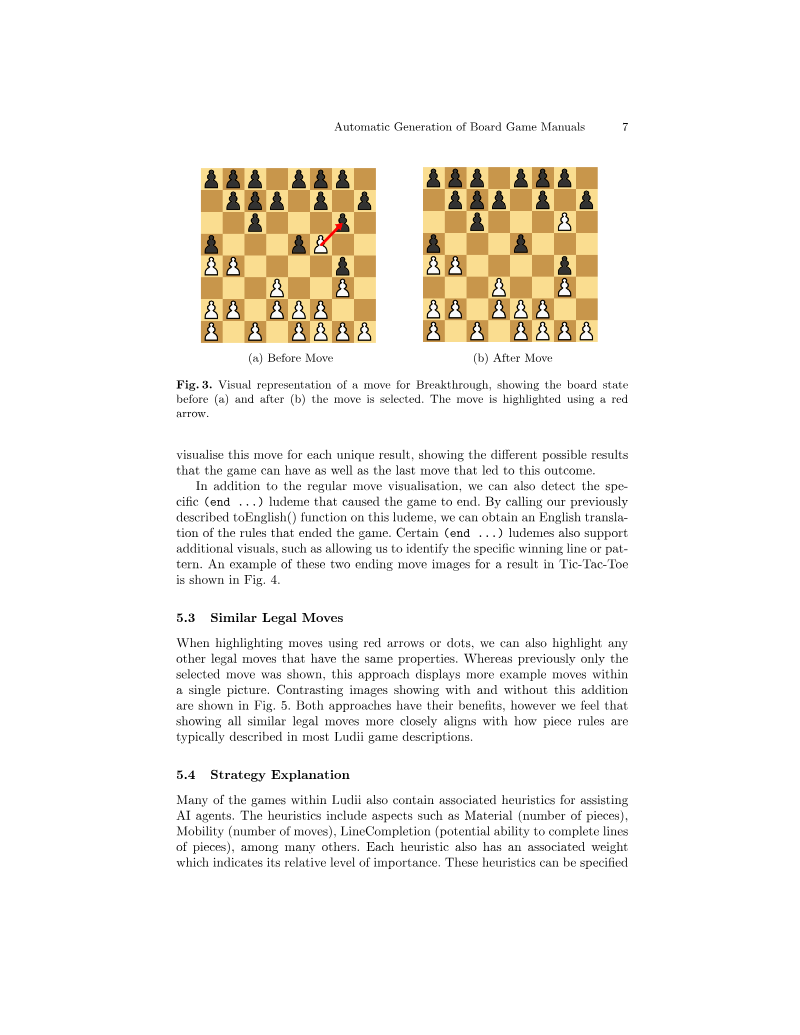
The practical application of this technique to the game of Breakthrough demonstrates significant improvements in computational efficiency. By utilizing DFA-based compression, researchers successfully solved board sizes that were previously inaccessible, including a 6x6 configuration on standard commodity hardware. These findings indicate that representing game states as automata allows for highly efficient set operations and move generation, effectively bypassing the memory bottlenecks that limit conventional exhaustive search algorithms. While the degree of compression remains dependent on the inherent complexity of the specific game, the method consistently outperforms traditional approaches in terms of space utilization.
This research builds upon a long trajectory of milestones in computational game theory, drawing from foundational work established by figures such as Alan Turing and John von Neumann. By integrating these theoretical roots with modern data compression techniques, the current approach advances the field beyond the historical benchmarks set by the formal solving of games like checkers and Othello. Ultimately, the transition toward DFA-based representations offers a scalable path for analyzing increasingly complex board games, providing a viable framework for future investigations into games that were once considered computationally intractable.