1 free read left. Create a free account for unlimited reading + AI research.
Create free accountArticle G|A|M|E – The Italian Journal of Game Studies
1 free read left. Create a free account for unlimited reading + AI research.
Create free accountArticleG|A|M|E – The Italian Journal of Game Studies
It uses FrontierVille, later renamed The Pioneer Trail, as its case study.
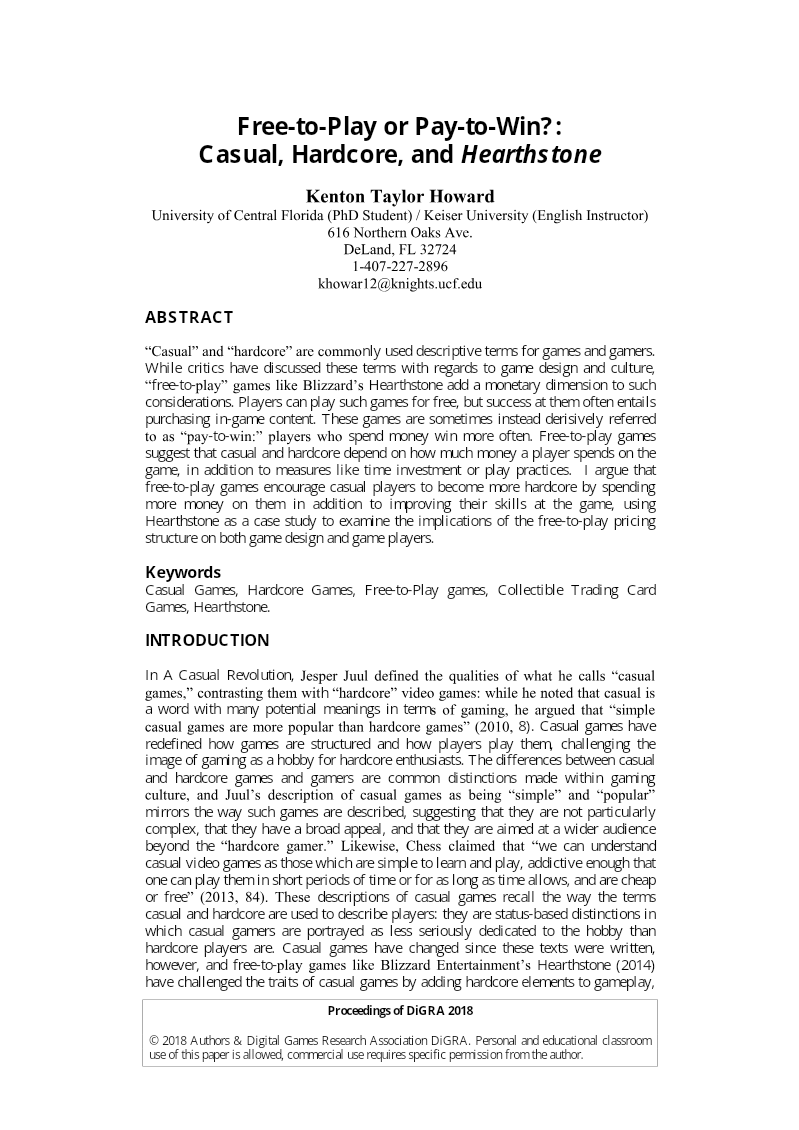
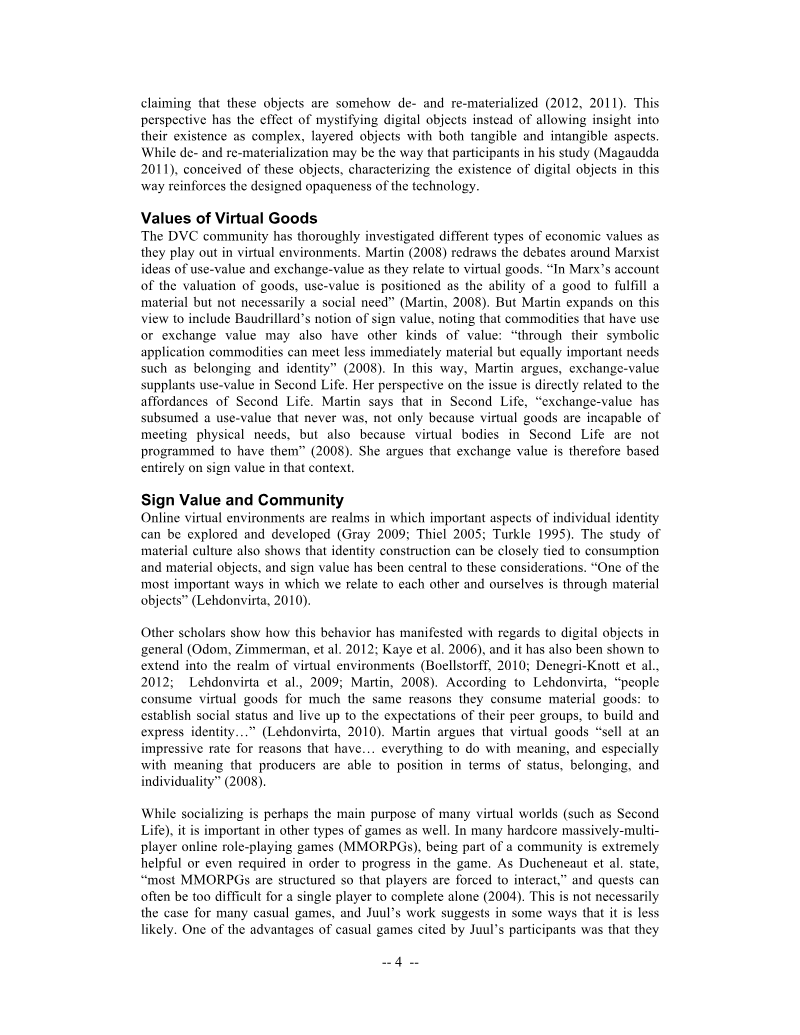
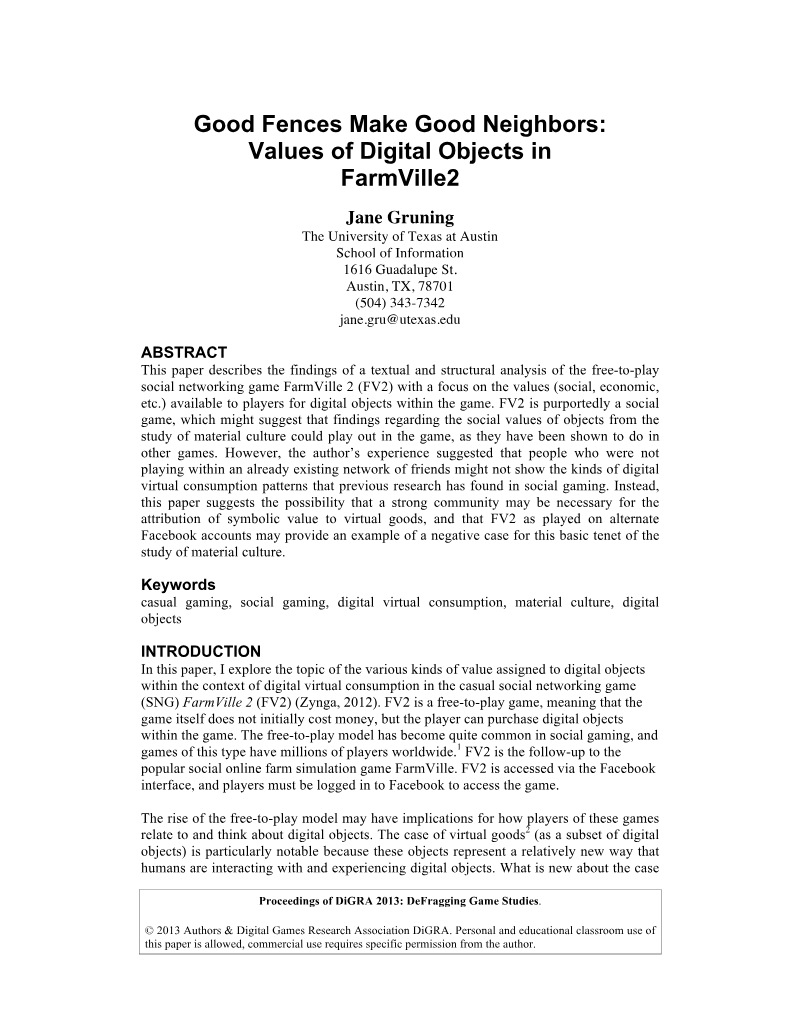
This paper by Melinda Jacobs, published as a peer-reviewed journal article, argues that Zynga's success in social network gaming cannot be fully explained by the three factors commonly cited in industry and scholarly discussion: being free-to-play, being social, and offering engaging gameplay. Through a case study of FrontierVille, later renamed The Pioneer Trail, the author contends that Zynga's games operate as a hybrid between free-to-play and pay-to-play, with players able to pay either with money or with "media value" generated by referring friends through word-of-mouth marketing. The paper further claims that the social dimension of these games is largely external, resting on pre-existing friendships, and that interactions with friends often resemble interactions with non-player characters.
The analysis draws on game studies frameworks, including Raph Koster's social mechanics, Salen and Zimmerman's distinction between internal and external social play, and Jesper Juul's six-point definition of a game. Applying Juul's criteria, the author concludes that The Pioneer Trail meets only some of the requirements, with few variable outcomes, limited meaningful choice, and obligations tied to real-life relationships. The paper therefore proposes that such titles are better understood as examples of gamification, which it characterizes as the "gamification of clicking," where timed clicks serve as the primary form of engagement and players optimize their clicking efficiency.
The study is a qualitative case study focused on a single Zynga title and relies on academic literature, industry reporting, blog commentary, and the author's own gameplay analysis rather than survey data or quantitative sampling. Its scope is limited to the social network gaming landscape of roughly 2009 to 2011, and its conclusions about Zynga's broader business model are inferential. The author presents the work as a starting point for further research into how such environments sustain player retention.
Each row is a game or company this document names, each column a document, oldest first. A mark means that document names it. Select a row to see those documents.
G|A|M|E – The Italian Journal of Game Studies · 2026
G|A|M|E – The Italian Journal of Game Studies · 2026
G|A|M|E – The Italian Journal of Game Studies · 2026
G|A|M|E – The Italian Journal of Game Studies · 2026
G|A|M|E – The Italian Journal of Game Studies · 2026
G|A|M|E – The Italian Journal of Game Studies · 2026
G|A|M|E – The Italian Journal of Game Studies · 2026
G|A|M|E – The Italian Journal of Game Studies · 2026
G|A|M|E – The Italian Journal of Game Studies · 2026

G|A|M|E – The Italian Journal of Game Studies · 2026
G|A|M|E – The Italian Journal of Game Studies · 2026
G|A|M|E – The Italian Journal of Game Studies · 2026

Two & a Half Gamers · 2024