1 free read left. Create a free account for unlimited reading + AI research.
Create free accountWhitepaper Eludamos: Journal for Computer Game Culture
1 free read left. Create a free account for unlimited reading + AI research.
Create free accountWhitepaperEludamos: Journal for Computer Game Culture
The article challenges the dominant user-avatar dichotomy, which treats avatars as objects shaped primarily by users' identity motivations.
Victoria McArthur's 2018 Eludamos article challenges the dominant "user-avatar dichotomy" in avatar customization research, which treats avatars as objects shaped primarily by users' identity motivations. Drawing on Actor-Network Theory, the author argues that avatars emerge from heterogeneous networks of human and non-human actors, including interface affordances, game-world aesthetics, co-situated players, and socio-cultural ideologies. The central thesis is that self-representation studies must move beyond anthropocentric frameworks and recognize interfaces as active co-constructors of identity rather than neutral tools.
The article traces the lineage of identity research from text-based MUDs through graphical MMOGs, noting that designers now control the range of customization options available to players. It critiques the terms "high fidelity" and "low fidelity" as misleading descriptors of creation interfaces, since interface complexity does not reliably determine how faithfully users represent themselves. Studies of World of Warcraft, Second Life, and Whyville are examined to show recurring motivational categories, such as the idealized self, standing out, following trends, realistics, fantasies, and roleplayers, while the author cautions against reliance on self-reported data and reductionist user typologies.
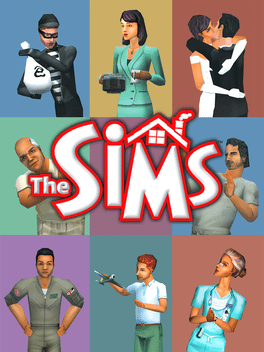
A recurring finding concerns default avatars and hegemonic norms. Default options carry social stigma, and defaults such as The Sims' white male character reinforce dominant cultural assumptions within virtual worlds. The author argues that these defaults, together with aesthetics and affordances, constrain as well as enable player choice, drawing on work by Wertsch and by Kannengiesser and Gero.
The article proposes a four-part analytical framework of self, affordances, aesthetics, and co-situated play for tracing this expanded actor-network. It contends that avatar customization is shaped by situated action rather than pre-set plans, and that faction-based segregation in multiplayer games often limits self-representation. To capture these dynamics, the author advocates lab-based, real-time observation over self-reports or finished avatars, with examples drawn from World of Warcraft, Second Life, Whyville, Saints Row IV, and MapleStory.
Each row is a game or company this document names, each column a document, oldest first. A mark means that document names it. Select a row to see those documents.
Eludamos: Journal for Computer Game Culture · 2024
Eludamos: Journal for Computer Game Culture · 2024
Eludamos: Journal for Computer Game Culture · 2024