1 free read left. Create a free account for unlimited reading + AI research.
Create free accountReport IIDEA
1 free read left. Create a free account for unlimited reading + AI research.
Create free accountReportIIDEA
While 86% of studios aim for consumers, 61% of total studio activity is now dedicated to business-to-business services.
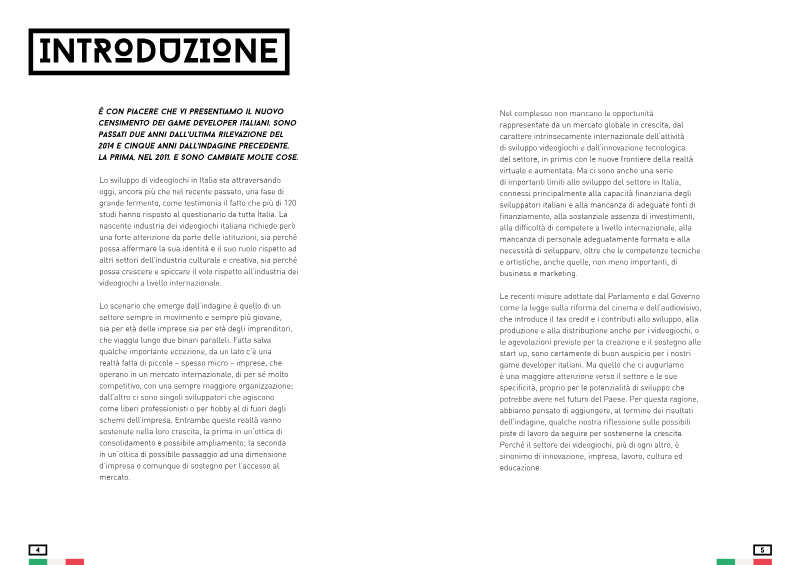
The 2016 Census of Italian Game Developers provides a comprehensive analysis of the domestic video game industry, documenting a sector characterized by significant growth, youthful entrepreneurship, and a strong international orientation. Based on a survey of over 120 development studios, the research highlights an industry transitioning from a collection of hobbyist projects toward a more structured, professionalized business landscape. The findings underscore that while the sector is highly innovative and globally connected, it remains constrained by limited financial resources, a lack of specialized management skills, and a need for greater institutional support.
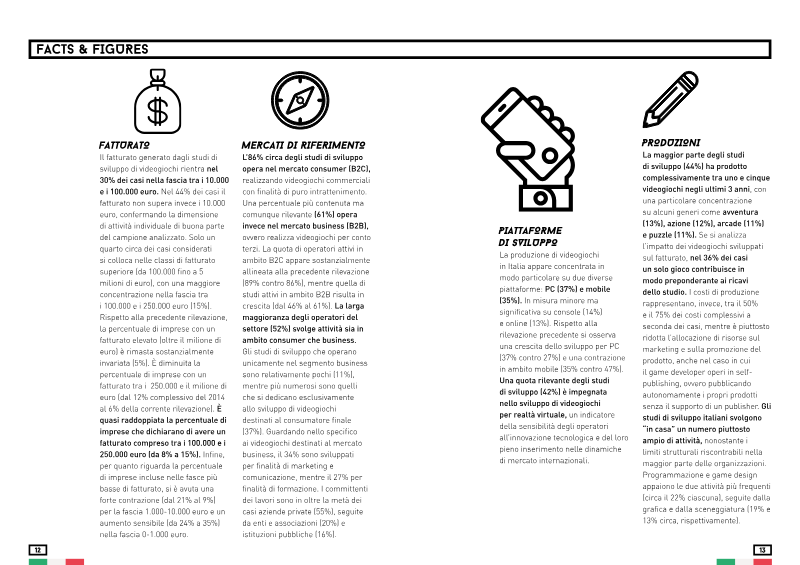
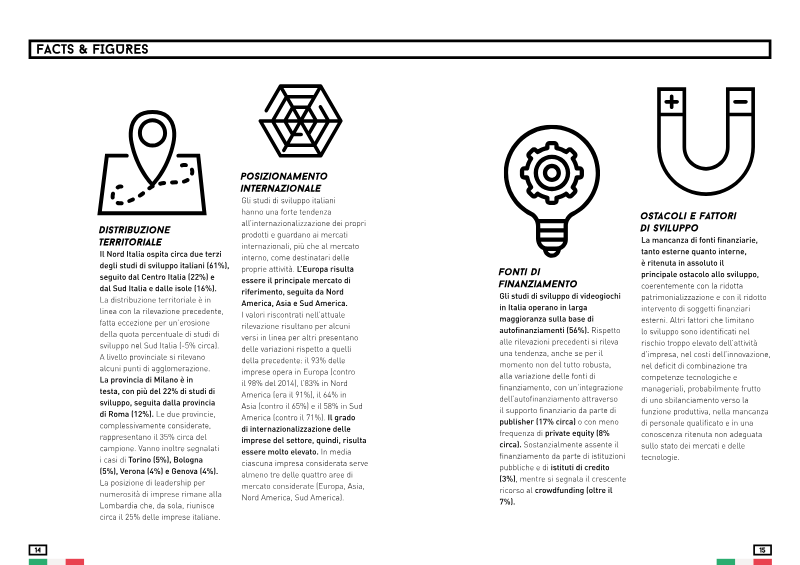
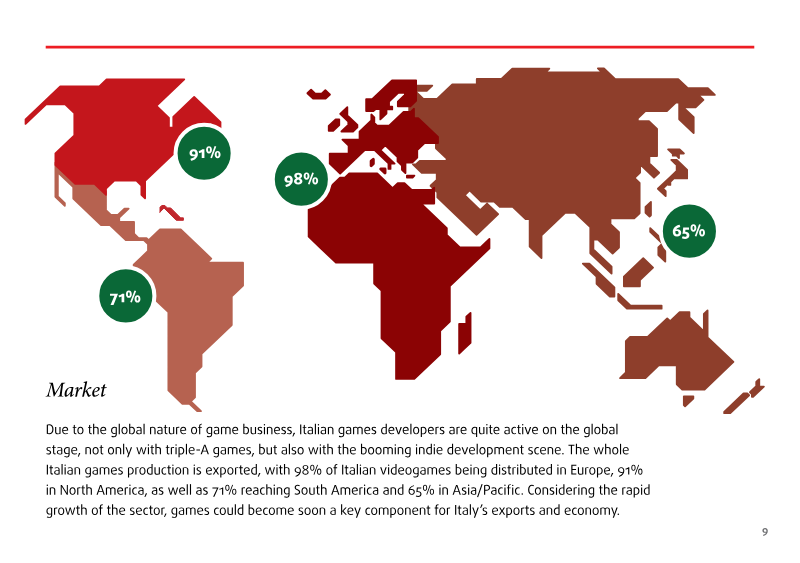
Key data points reveal that the industry is predominantly composed of small and micro-enterprises, with 47% of studios employing five or fewer staff members. The workforce is notably young, with an average age of 33, and demonstrates a high level of academic specialization, though many practitioners still rely on self-taught skills. Economically, the sector is fragmented, with 44% of studios generating less than 10,000 euros in annual revenue. While 86% of developers target the consumer market, there is a growing trend toward business-to-business (B2B) services, which now account for 61% of studio activities. Geographically, the industry is concentrated in Northern Italy, particularly in the provinces of Milan and Rome.
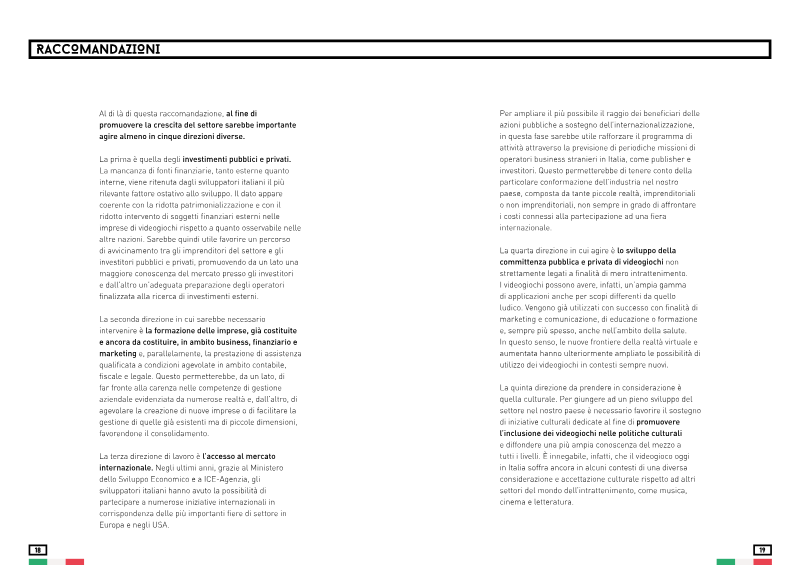
The analysis concludes that the industry’s future competitiveness depends on five strategic pillars: increasing public and private investment, enhancing business and management training, improving access to international markets, expanding the use of applied games beyond entertainment, and fostering a broader cultural recognition of the medium. While recent legislative reforms, such as the introduction of tax credits for audiovisual production, offer a promising foundation, the report emphasizes that sustained growth requires targeted policies that account for the unique operational realities of game development compared to traditional media sectors.

IIDEA · 2022

IIDEA · 2022


IIDEA · 2022

IIDEA · 2022
IIDEA · 2022

IIDEA · 2022

IIDEA · 2022
IIDEA
The Game Business · 2026