Related Documents
Report
Brazil Games Industry Report 2022
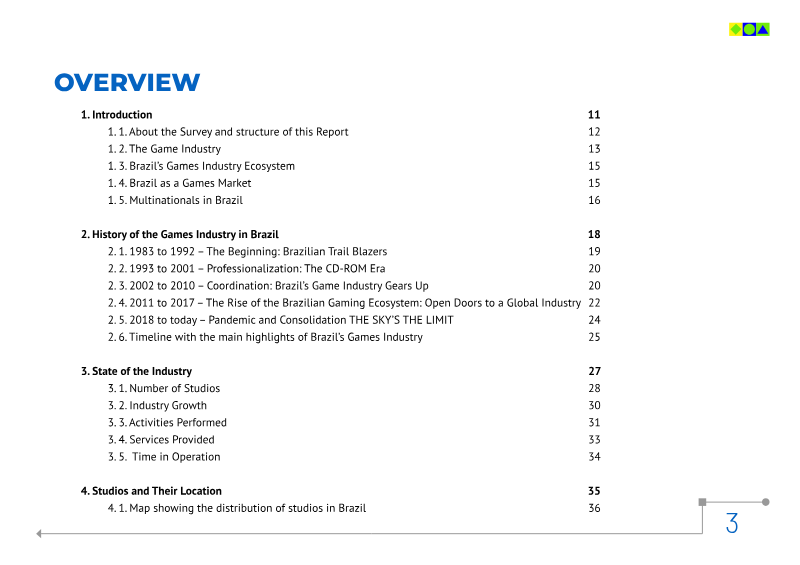
Brazil has established itself as the preeminent games market in Latin America and the 12th largest globally, generating approximately USD 2.3 billion in 2021. The ecosystem is defined by rapid professionalization and internationalization, evidenced by a 102% increase in active studios since 2018. With over 1,000 companies and a workforce exceeding 12,000 professionals, the industry has transitioned from a historical period of informality to a sophisticated hub for original intellectual property and high-quality external development services. While the Southeast and South regions remain the primary geographic hubs, the sector’s reach is global, with over half of local companies serving international markets, particularly in the United States and Europe. The industry demonstrates increasing maturity through longer studio lifespans and a shift toward diverse platforms. While mobile and PC development remain dominant, console production grew significantly to 17% of the market by 2021. Beyond entertainment, Brazilian studios maintain a strong presence in educational and corporate gamification. Despite this growth, structural challenges persist, including a lack of formal inclusion policies for underrepresented groups and a "wage war" for senior talent driven by the rise of remote work for foreign firms. Furthermore, the workforce is navigating a transition where 93% of companies now focus on proprietary IP, moving away from a pure service-provider model. Economic and regulatory hurdles continue to shape the landscape. Federal funding has reached historic lows, forcing a reliance on founder capital and state-level initiatives. Developers face significant "legal insecurity" due to the absence of a specific regulatory category for games and a tax system that treats development hardware as luxury entertainment rather than capital goods. Nevertheless, the resilience of the sector is underscored by a 336% revenue increase in USD since 2015 and the emergence of "unicorns" like Wildlife. The industry remains a vital component of the global value chain, increasingly recognized for its technical proficiency in engines like Unity and its expanding role in emerging technologies such as blockchain and the metaverse.
AbragamesJan 2022


Report
Brazilian Game Industry 2023
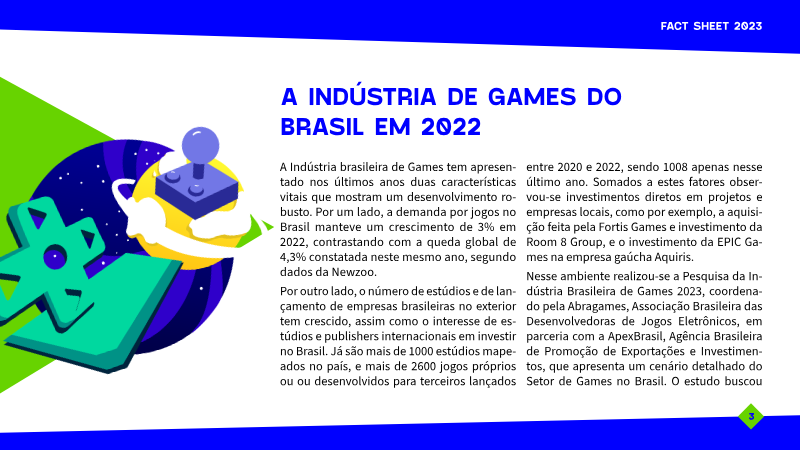
**Fact Sheet 2023 – Brazil Game Industry – Executive Summary** Below is a concise synthesis of the most relevant data, trends and insights from the 2023 Fact Sheet (compiled July 2023) on the Brazilian games sector. All figures refer to the 2022‑2023 survey period unless otherwise noted. --- ## 1. Macro‑economic context | Indicator | 2022 | 2023 (survey) | |-----------|------|---------------| | **Growth of the sector** | +3 % (contrasting with a 4,3 % global decline) | Continued modest growth; Brazil remains one of the few markets expanding year‑on‑year. | | **International revenue share** | 70 % of studios earn > 50 % of their turnover abroad | 58 % of studios now sell internationally; 10 % have permanent reps or PR offices overseas. | | **Key export markets** | United States (58 %), Latin America (57 %), Western Europe (54 %) | Same hierarchy, with a noticeable rise in Western‑European share (from 49 % to 54 %). | --- ## 2. Industry structure & geography | Metric | Value | |--------|-------| | **Active development studios (2022)** | **≈ 1 042** (↑ ~ 2 % YoY) | | **Studios > 10 yr old** | 17 % | | **Studios < 2 yr old** | 19 % | | **Formalised studios** | 85 % (63 % of the non‑formalised plan to formalise within 2 yr) | | **Regional distribution** | Southeast 58 % (dominant hub), South 20 % (‑1 % YoY), Northeast 15 % (+1 % YoY), Center‑West 6 %, North 2 % (‑1 % YoY) | | **Unlocated studios** | 222 (data gaps) | *Implication:* The sector is highly concentrated in the Southeast, but growth is emerging in the Northeast and other regions, driven by remote‑work adoption and expanding local education programs. --- ## 3. Internationalisation & market exposure * **Export activity:** 58 % of surveyed studios reported sales abroad in 2022. * **Foreign representation:** 10 % maintain a dedicated overseas representative or PR office. * **International business exposure (2022 vs 2023):** * Visitor/Listener at foreign events – 33 % → 39 % * Exhibitor/Presenter – 17 % → 14 % * Commercial missions – 10 % → 13 % * International round‑tables – 30 % → 33 % *Key takeaway:* Participation in B2B events abroad is the most effective lever for increasing foreign sales and partnerships. --- ## 4. Technology stack (engines) |
AbragamesJan 2023



Report
Pesquisa Nacional da Indústria de Games 2023
The 2023 national survey of Brazil’s game‑development ecosystem maps the sector as it stood in 2022, revealing a vibrant but highly fragmented industry dominated by micro‑ and small studios. With 1,042 active studios and a representative sample of 309 developers, 214 freelancers and 80 support organisations, the market expanded despite a 5.1 % contraction in the global games market, delivering a 3 % domestic growth that lifted the industry to US $182.9 bn in 2022 and projecting US $206.4 bn by 2025. Brazil ranks fifth worldwide in online population, hosting roughly 103 million gamers; revenue generation is led by mobile (49 %), followed by PC (26 %) and consoles (25 %), while gender parity approaches equality with women accounting for 46.2 % of players. Export orientation is emerging, as 76 % of developers target the domestic market but substantial shares also aim at the United States (58 %), Latin America (57 %) and Western Europe (55 %). Prospects for the next three years show Canada and Latin America each featuring in 47 % of sales roadmaps, with China appearing in 44 % of plans, indicating a gradual diversification of export destinations. The sector is supported by 17 regional industry associations and coordinated nationally by Abragames, Brazil Games and ApexBrasil, which provide market representation, business‑matching missions and participation in overseas fairs. Artificial intelligence dominates technology priorities, cited by more than half of respondents as a short‑ and long‑term focus, while XR/VR/AR follows closely, driven by 5G and new engines such as Unreal Engine 5. Interest in blockchain and
AbragamesJan 2023
Report
Pesquisa da Indústria Brasileira de Games 2022
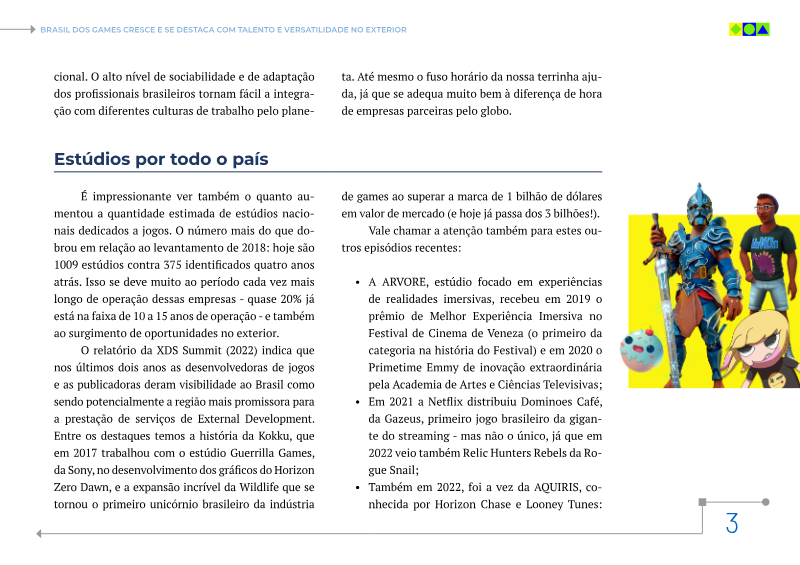
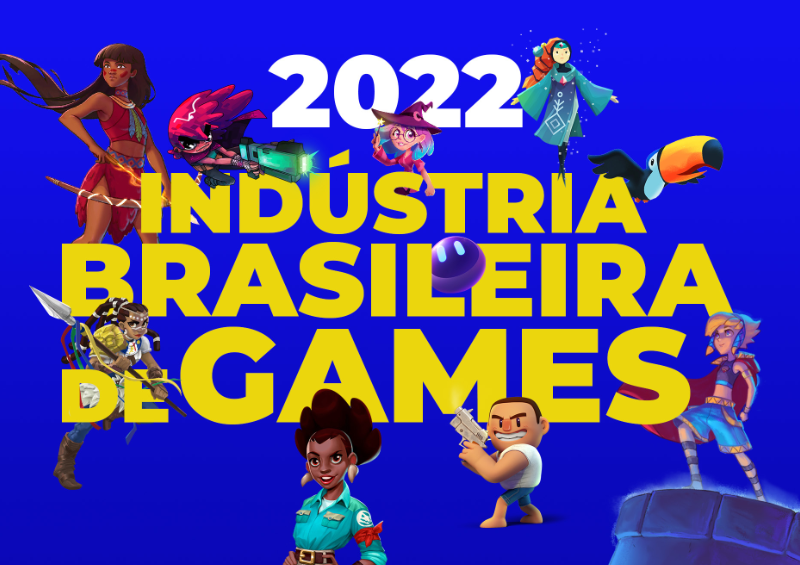
The 2022 Brazilian Games Industry Survey demonstrates that Brazil’s gaming sector has entered a phase of rapid expansion and increasing global relevance. Between 2018 and 2022 the number of domestic development studios more than doubled, rising from 375 to 1,009, while domestic digital‑game sales reached over US $2.3 billion in 2021, accounting for roughly three‑quarters of the market’s total revenue. This growth reflects a maturing ecosystem that now includes a full spectrum of domestic and foreign participants, from independent creators to multinational publishers. The analysis highlights a dual‑track outlook in which private investment is expected to intensify, driving higher levels of international publishing, scaling of emerging opportunities, and greater promotion of Brazilian events abroad. Concurrently, public agencies such as Abragames, Brazil Games and ApexBrasil are projected to expand quantitative support through export missions, business‑matching initiatives and promotional campaigns, reinforcing the sector’s export potential. A broad portfolio of recent Brazilian titles illustrates the country’s expanding talent pool and creative versatility, positioning Brazil as a competitive player on the world stage. Overall, the findings underscore a robust, export‑oriented trajectory for Brazil’s gaming industry, driven by a surge in studio formation, strong domestic sales, and coordinated public‑private efforts aimed at amplifying international visibility and market access. The survey’s scope encompasses the national market from 2018 through 2022, covering studio demographics, revenue figures, and the institutional framework supporting the sector’s growth.
AbragamesJan 2022