1 free read left. Create a free account for unlimited reading + AI research.
Create free accountWhitepaper DiGRA
1 free read left. Create a free account for unlimited reading + AI research.
Create free accountWhitepaperDiGRA
In Genette's original work, paratextuality was one relation within a broader system of transtextual relations.
This paper argues that the concept of paratextuality, as applied in game studies, has drifted from Gérard Genette's original 1982 formulation and should be reconceived rather than simply reapplied. The author contends that Genette's idea was one relationship within a broader system of transtextual relations, yet scholars have isolated it and expanded it so widely that it now functions as a catch-all label for any artifact secondary to video games. Two revised frameworks are examined: a reduced one, which limits paratext to spatially bound verbal material, and an expanded one, associated with Mia Consalvo and Jonathan Gray, which includes trailers, livestreams, walkthroughs, and tie-in novels regardless of authorship. The paper observes that the expanded version reproduces the hierarchy of main texts and epiphenomena it claims to critique.
The proposed alternative treats paratextuality not as a classification of individual texts but as a granular quality linking any text, or part of a text, to its socio-historical context. Under this view, a phenomenon is analyzed for the degree to which it exhibits paratextual features rather than being categorically designated as a paratext. The argument rests on theoretical review and on empirical testing through video game trailers, which the author treats as a test case for this granular approach.
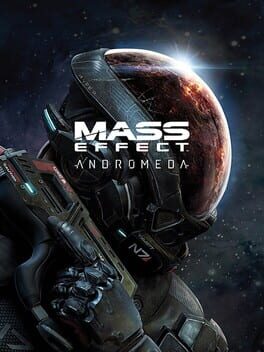
The empirical component analyzes twelve trailers for eight mainstream games released between 2009 and 2017, including The Witcher III: Wild Hunt, Overwatch, Battlefield 1, and Mass Effect: Andromeda. Formally, the trailers display certain paratextual qualities, but they also function as partly autonomous texts through original content and cinematic editing. Audience reception points to a dual role: viewers consume trailers both as information about games and as entertaining cinematic works in their own right. The author concludes that trailers occupy an ambiguous position in the video game industry that cannot be captured by a purely paratextual classification.
DiGRA · 2026
International Journal of Role-Playing · 2026