1 free read left. Create a free account for unlimited reading + AI research.
Create free account
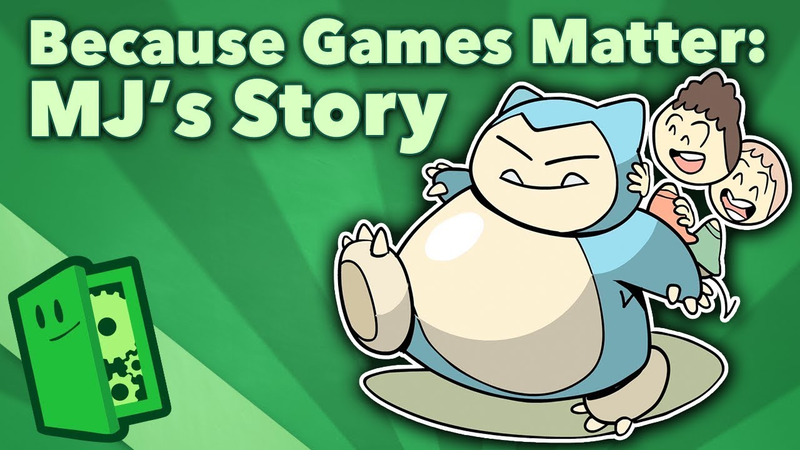
Because Games Matter - MJ's Story: How Games Brought a Family Together - Extra Credits
Key insights
6 takeaways- 01Interactive media can bridge interpersonal gaps and resolve long-standing sibling conflicts by shifting dynamics from friction to collaborative, shared experiences.
- 02Motion-controlled gaming provides individuals with physical limitations the ability to engage in immersive, joyful activity that might otherwise be inaccessible.
- 03Games serve as a critical medium for maintaining familial bonds during terminal health crises by providing asynchronous communication and distraction through mobile, word-based titles.
- 04The sound and presence of family members playing games together can provide significant emotional peace and comfort during end-of-life care.
- 05Game design that prioritizes social connection over solitary consumption promotes face-to-face interaction, such as using physical gestures like shaking a phone to facilitate shared play in public spaces.
- 06When games are intentionally designed for accessibility and multiplayer interaction, they function as powerful tools for fostering human empathy and navigating life’s most challenging transitions.
Ask AI about this video
Transcript
Games get a bad reputation from being distractions that keep us from interacting with other people. And there's a definite stigma that gamers are isolated from society. So today, we wanted to share a story from MJ about how games can help bring people together. My name is MJ, and I'm a game developer and professor of game design. But I didn't always have access to games. When I was growing up, my brother and I had fairly limited opportunities to play games. My parents didn't want us to get addicted to something they considered an unhealthy habit. So, they limited our access to it. One day, my family was at the shopping mall, and my brother and I were lured to a display case that was set up to play Pokémon Stadium on Nintendo 64. We began playing so intently that our parents left us there for some time while they did their shopping. And when they returned, we were still glued to it. And a funny thing was happening. We were laughing and having fun together. Now, I should
explain. My brother and I did not get along well in our childhood. We fought a lot, and my parents struggled to find activities we could do together. And now here was this silly little game that made us both forget our differences and bond over our shared enjoyment. We left the mall that day with a Nintendo 64 and a copy of Pokémon Stadium, and parents who were a bit more open-minded about games. Years later, I was at grad school for entertainment technology. At that time, I wanted to design attractions at theme parks or work in animated film. But the program I was in often had us work on unusual game-like experiences. One such project was an exercise game that had two players on Wii Fit balance boards and used a Kinect to track arm movement. My parents came to visit, and I convinced them to try the exercise game. My mom was handicapped from childhood. She could stand, but not without the help of canes. So, using the balance board and Kinect was a challenge for her. But she gave it a try and played against my dad. She was soon laughing harder than I'd ever seen and for a
moment she seemed to forget her physical limitations and become immersed in the experience. Not long after that, my mom was diagnosed with cancer. I was too far away to visit more than a couple times a month and my mom had to spend long periods of time getting treatment. She was frequently by herself during those treatment days since my dad had to work. Alone at a time when she probably needed people the most. But, we found a way for me to keep her company. Words with Friends. Words with Friends had just come out and she and I both loved word games. So, we started playing during her treatments. She would let me know in advance when her treatment schedule was and I would coordinate my schedule so I could be on my phone during those times. One great thing about Words With Friends was the chat feature so we could send messages while we were playing. And we would start lots of games at once. Sometimes we'd have 10 simultaneous games going. That way there would always be one she could take a turn on and it would keep her mind off things during the treatment. Sadly, my mom didn't make it through the
cancer. When she found out it was terminal, my brother and I came home to spend her last couple of weeks with her. It was hard for her to focus on anything, even conversation, and she didn't want us sitting around being sad. So, she asked us to play games next to her so she could hear us laughing and having fun together and it would bring her peace. After my mom died, my career hit a turning point. I decided I wanted to make games. Specifically, I wanted to make games that bring people together the way they had done for my family. I worked a couple of jobs at game studios, mainly making educational and training games, but eventually I started working on games on my own. My first solo project I made for my dad. Now, my dad doesn't always get along with newer technology, but he had a smartphone and I wanted him to try playing games on it. He had a physical dice game that he enjoyed a lot. So, I made a digital dice game with similar rules so he'd already know how to play. I also wanted to keep the physical nature he loved. So, to roll the dice,
you shake the phone and the internal gyroscope would do the rest. I decided it would be multiplayer and players would play sharing one phone. The intent was that people who were waiting for something like at a restaurant or in a waiting room could have an activity to do together rather than everyone just staring at their own phones. It's simple. A player would roll the dice a few times trying to get certain numbers then pass the phone to the next person to take their turn. Something any family can do. When I released my game, it only had a handful of downloads, but one of those downloads was my dad. He had never downloaded a game before, so I gave him step-by-step instructions to download and install. But once he had it, he enjoyed playing it and he got more comfortable using his phone for something other than phone calls. A year later, he still played that dice game on his phone. He even pulled it out at Christmas to show me. Games don't have to be distractions or unhealthy habits. If we let them, they can be things that bring us together and create moments of joy between us and our
loved ones. Incredibly well said, MJ. Thanks so much for sharing something so personal with us. And you know, I'm willing to bet that there's a lot of people out there who feel very much the way you do. And now thanks to your story, they feel a little less alone. Thanks again.
Summary
Video games often face societal criticism as isolating distractions, yet they possess a unique capacity to foster familial connection and emotional support. Personal experiences within the game development community demonstrate that interactive media can bridge interpersonal gaps, provide therapeutic engagement during health crises, and facilitate intergenerational bonding. By shifting the focus from solitary consumption to shared, collaborative experiences, games serve as a medium for creating lasting memories and maintaining relationships across physical distances.
The narrative highlights several key instances where gaming transformed family dynamics. Initially, a shared interest in console gaming helped resolve long-standing sibling conflict, shifting a relationship from constant friction to mutual enjoyment. Later, motion-controlled gaming provided a mother with physical limitations a rare opportunity for immersive, joyful activity. During a terminal cancer diagnosis, asynchronous mobile gaming—specifically word-based titles with integrated chat features—offered a vital lifeline, allowing for constant communication and distraction during grueling medical treatments. In the final stages of life, the sound of family members playing games together provided a source of peace and comfort, proving that the value of play extends far beyond entertainment.
These experiences ultimately influenced a professional trajectory toward game design, emphasizing the creation of accessible, multiplayer experiences. By developing simple, intuitive mobile games that utilize physical gestures like shaking a phone to roll dice, designers can encourage face-to-face interaction in public spaces rather than digital isolation. Ultimately, the evidence suggests that when games are designed with social connection as a primary objective, they become powerful tools for human empathy, helping families navigate life’s most challenging transitions through shared play.




















Comments