1 free read left. Create a free account for unlimited reading + AI research.
Create free accountArticle DiGRA
1 free read left. Create a free account for unlimited reading + AI research.
Create free accountArticleDiGRA
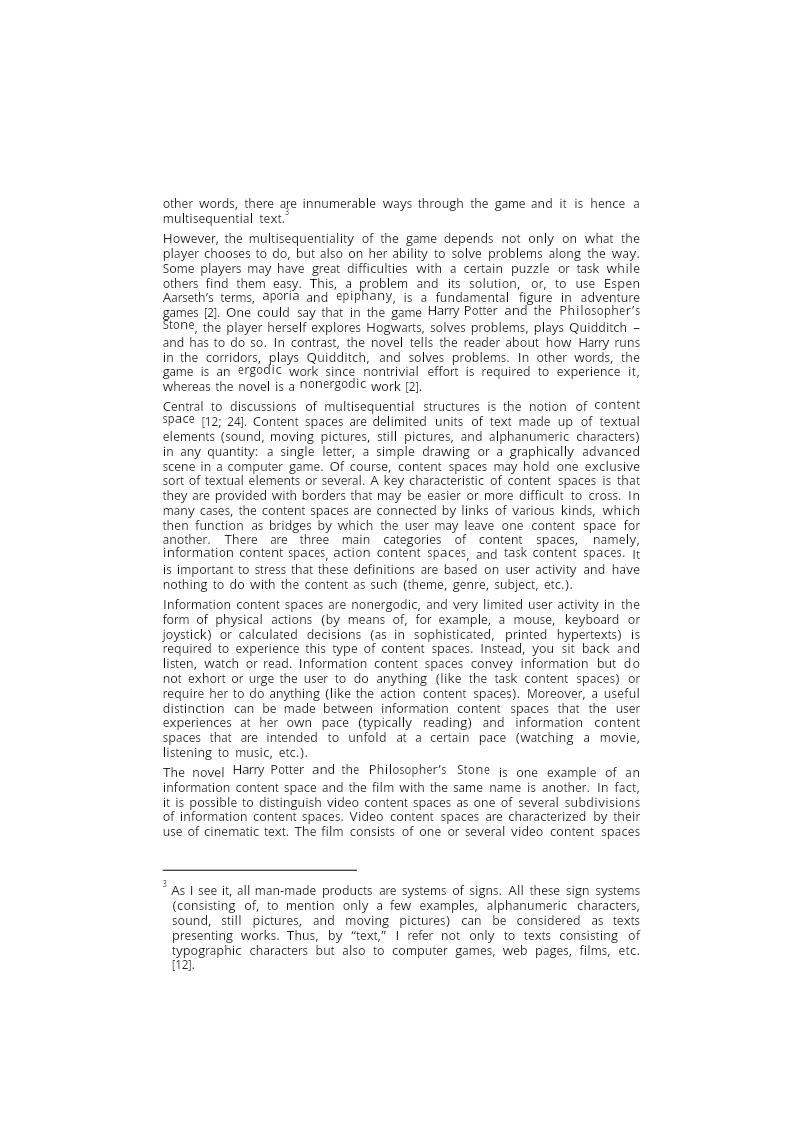
The novel is described as monosequential and nonergodic, a fixed sequence readers follow. The 2001 Windows game is described as multisequential and ergodic, with player choices shaping the sequence of events.
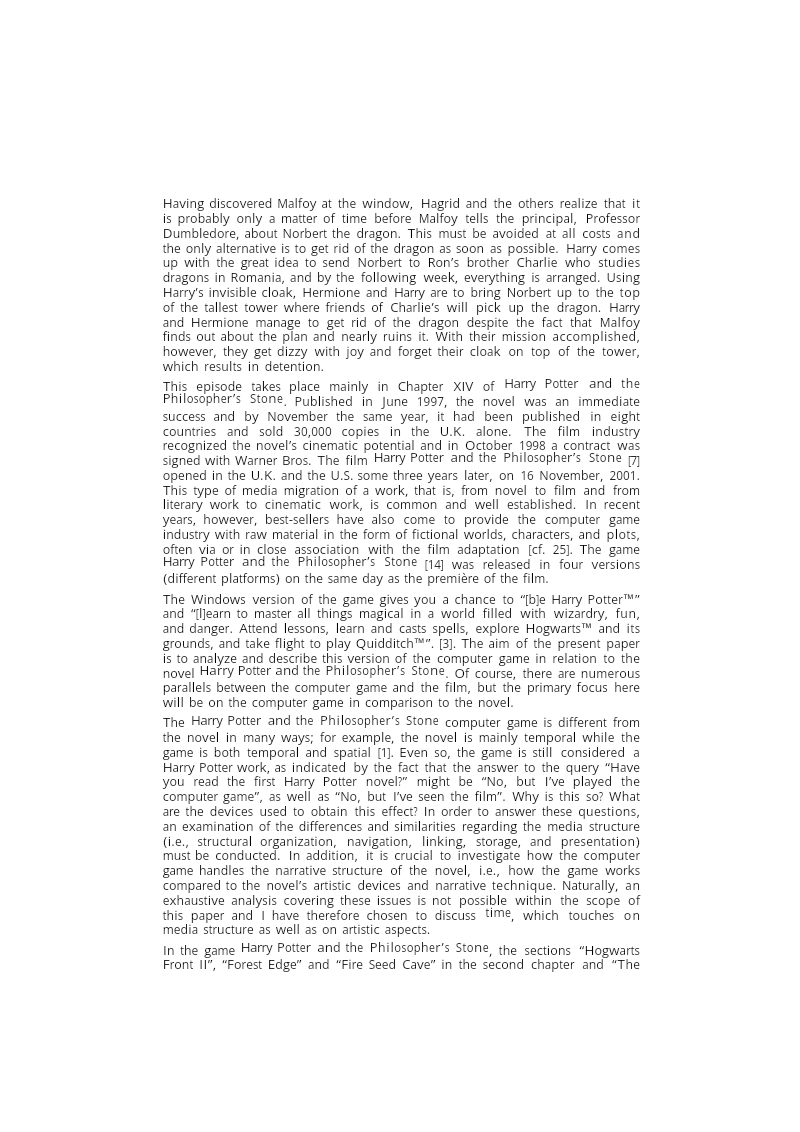
Gunder's analysis, as developed in "As if by Magic: On Harry Potter as a Novel and Computer Game," examines how Rowling's 1997 novel Harry Potter and the Philosopher's Stone and the 2001 Windows computer game of the same title engage their audiences in fundamentally different ways. The central thesis holds that the novel is monosequential and nonergodic, presenting a fixed sequence of events that readers follow without altering, while the game is multisequential and ergodic, requiring players to make choices and solve problems that shape the sequence of events they experience. Yet the work argues that both media achieve a shared effect, capturing and sustaining interest through suspense, curiosity, and surprise.
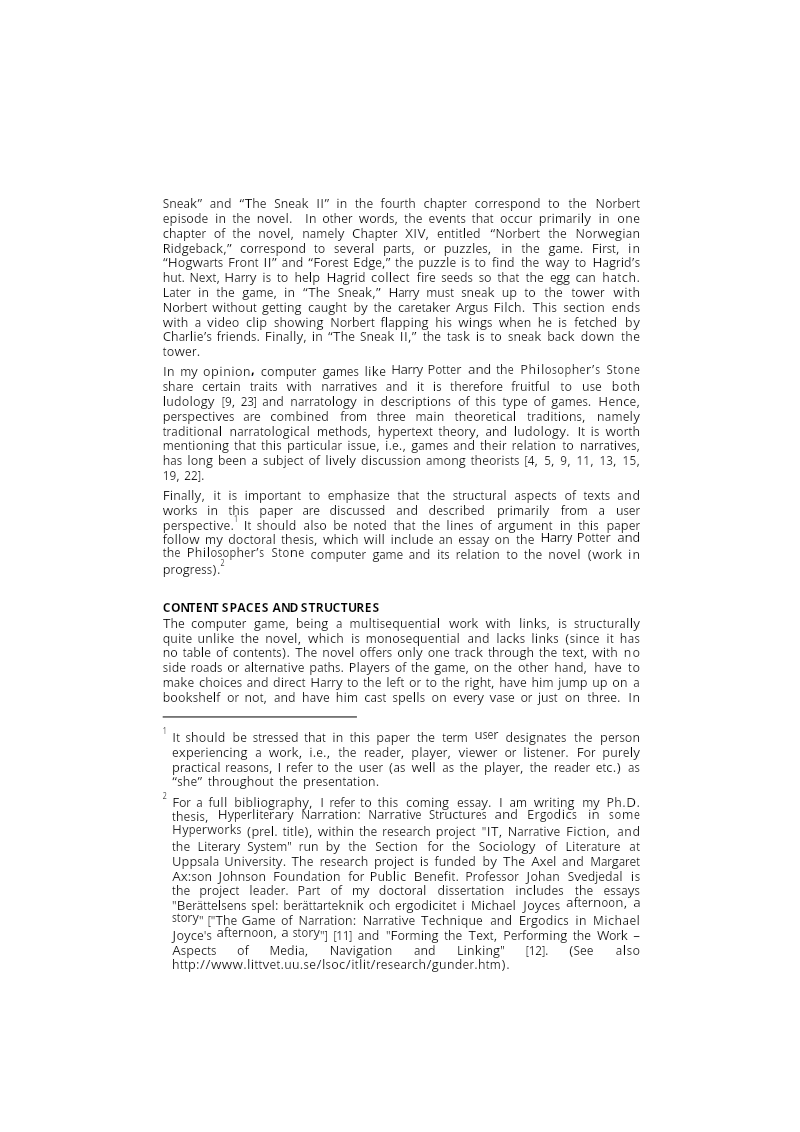
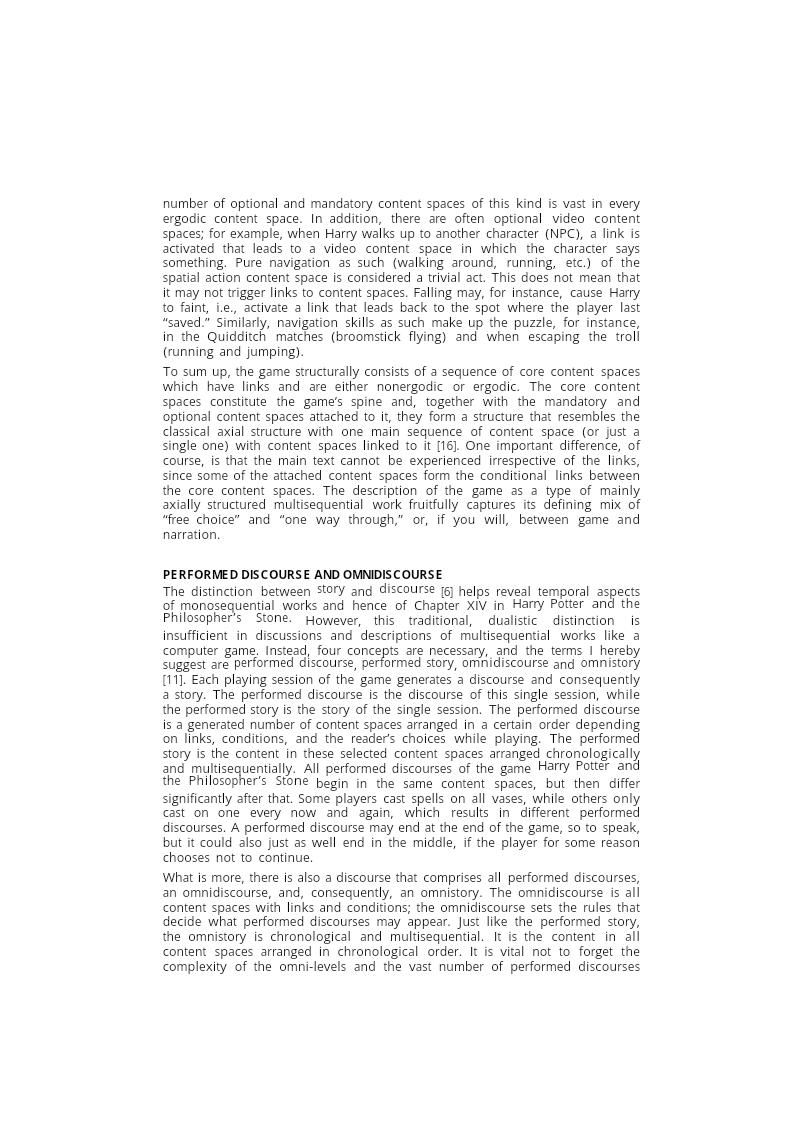
The analysis rests on a conceptual framework that distinguishes information, action, and task content spaces, with particular emphasis on the action spaces where players make real decisions and solve puzzles. The game is characterized as mainly axially structured, blending free choice with a "one way through" narrative. To describe how each play session generates a different sequence of content, the author introduces four analytical levels: performed discourse, performed story, omnidiscourse, and omnistory. Narratological tools such as scene, ellipsis, analepsis, and frequency are applied to both works, revealing the game to be highly scenic, while suspense and curiosity operate on the player's own actions rather than on a reader's interpretive activity.
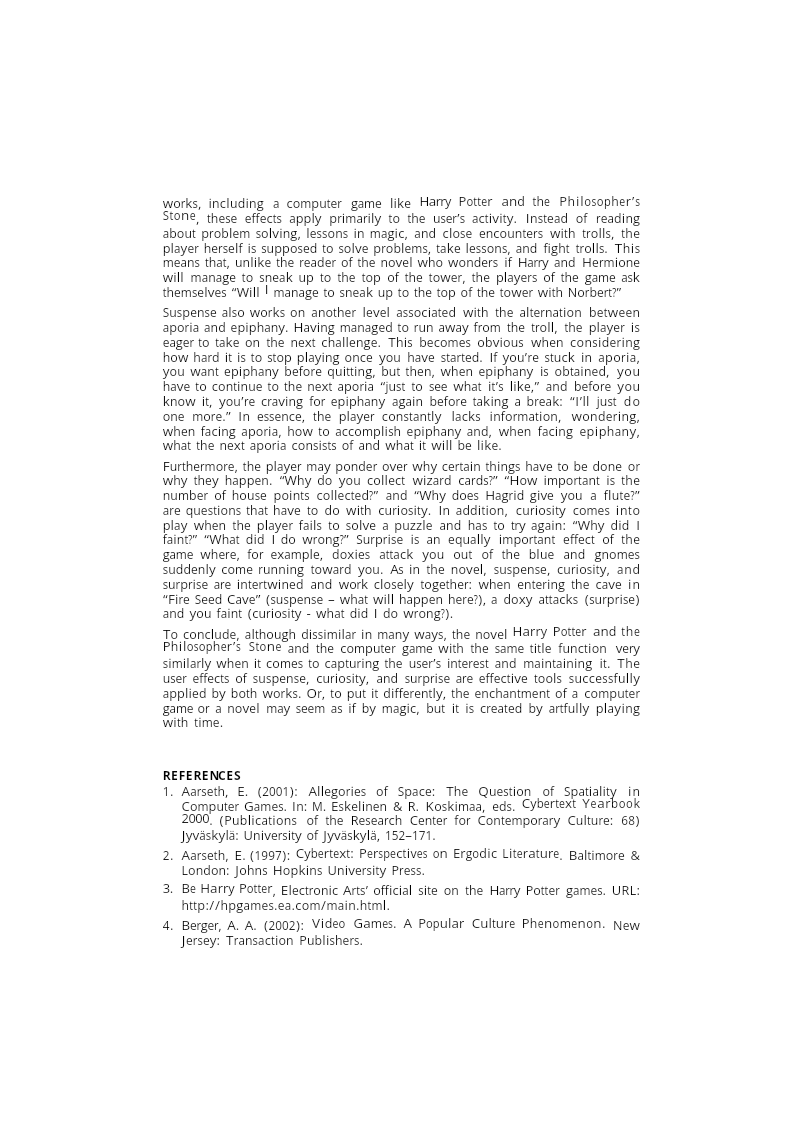
The study's principal conclusion is that the game's onward drive and challenge-based structure are essential to engagement, even though it departs structurally from the novel. Both media, the author contends, create their enchantment through the artful manipulation of time, as illustrated by the "Fire Seed Cave" sequence, in which a doxy attack and a fainting episode combine suspense and surprise. The work is grounded in academic scholarship on ludology, narratology, and cybertext, and its scope is confined to this single novel and its corresponding Windows game.

DiGRA · 2026

DiGRA · 2026



DiGRA · 2026



DiGRA · 2026



DiGRA · 2026



DiGRA · 2026



DiGRA · 2026



DiGRA · 2026

DiGRA · 2026



DiGRA · 2026



DiGRA · 2026

DiGRA · 2026
DiGRA · 2026