
AppLovin Corporation’s Q3 2021 financial report details a period of aggressive expansion and structural transformation following its April 2021 initial public offering. The company achieved significant financial growth, with quarterly revenue reaching $727 million—a 90% year-over-year increase—and a successful transition to profitability, reporting $0.1 million in net income compared to an $89.9 million loss in the same period of 2020. This performance was driven by the scaling of its Software Platform and Apps segments, supported by strategic acquisitions such as Adjust GmbH and a robust pipeline of mobile game assets.
The company’s capital structure underwent substantial changes during this period, bolstered by $1.75 billion in net IPO proceeds used to reduce debt and fund ongoing operations. Management has implemented a multi-class common stock structure that concentrates 93% of voting power among Class B shareholders, qualifying the firm as a controlled company exempt from certain independent governance requirements. While the balance sheet remains strong with $1.05 billion in cash and cash equivalents, the company continues to manage significant debt obligations and has expanded its credit facilities to support future growth.
Despite these gains, the company faces a complex risk profile inherent to the mobile ecosystem. Operational success is heavily dependent on third-party platforms like Apple and Google, whose evolving privacy policies and fee structures pose direct threats to user acquisition and revenue. Furthermore, the company’s reliance on a limited number of mobile games, the challenges of integrating over $2.5 billion in acquisitions, and the burden of navigating global regulatory environments regarding data privacy and monetization create significant volatility. Management acknowledges that maintaining profitability will require ongoing investment in infrastructure, security, and compliance, while simultaneously managing the risks associated with its concentrated ownership structure and competitive market pressures.
AppLovin · 2026
AppLovin · 2026

AppLovin · 2026

AppLovin · 2026

AppLovin · 2025

AppLovin · 2025
AppLovin · 2025

AppLovin · 2025

AppLovin · 2025

AppLovin · 2024

AppLovin · 2024

AppLovin · 2024

Almedia · 2026

Sensor Tower · 2026

Modern Times Group · 2026

InvestGame · 2026
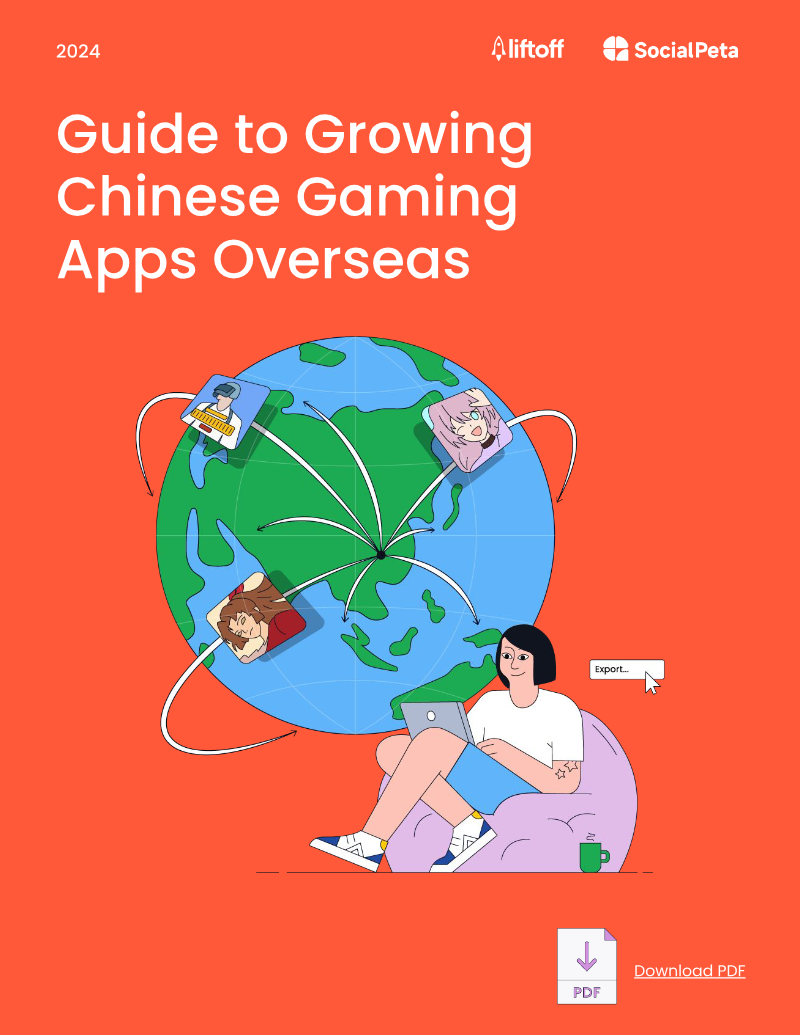
EA · 2025

Moloco · 2025

AppsFlyer · 2025
Unity · 2025

Sensor Tower · 2025

King · 2025

Adjust · 2025

Adjust · 2025