Loading the document
More from Association for Computing Machinery
View all
Whitepaper
Doing Game Design in Theatre
Association for Computing Machinery · 2026
Article
TokenVerse: A Game-Based Learning Experience for Understanding LLMs and Human-AI Interaction
Association for Computing Machinery · 2026
Whitepaper
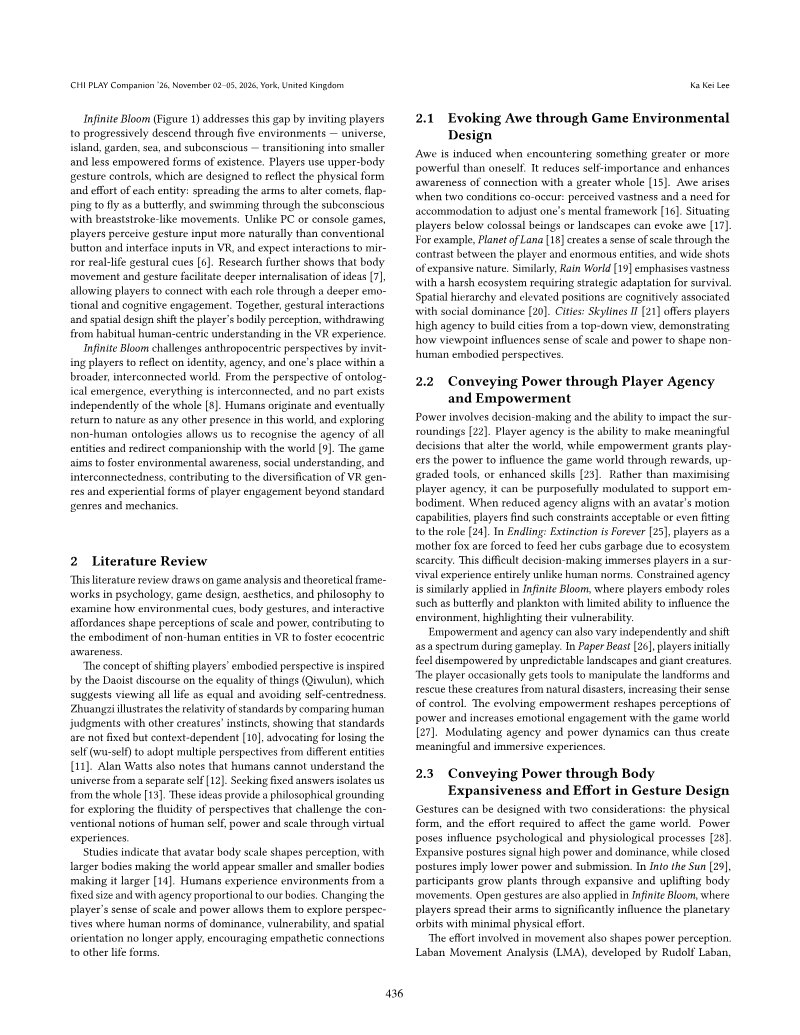
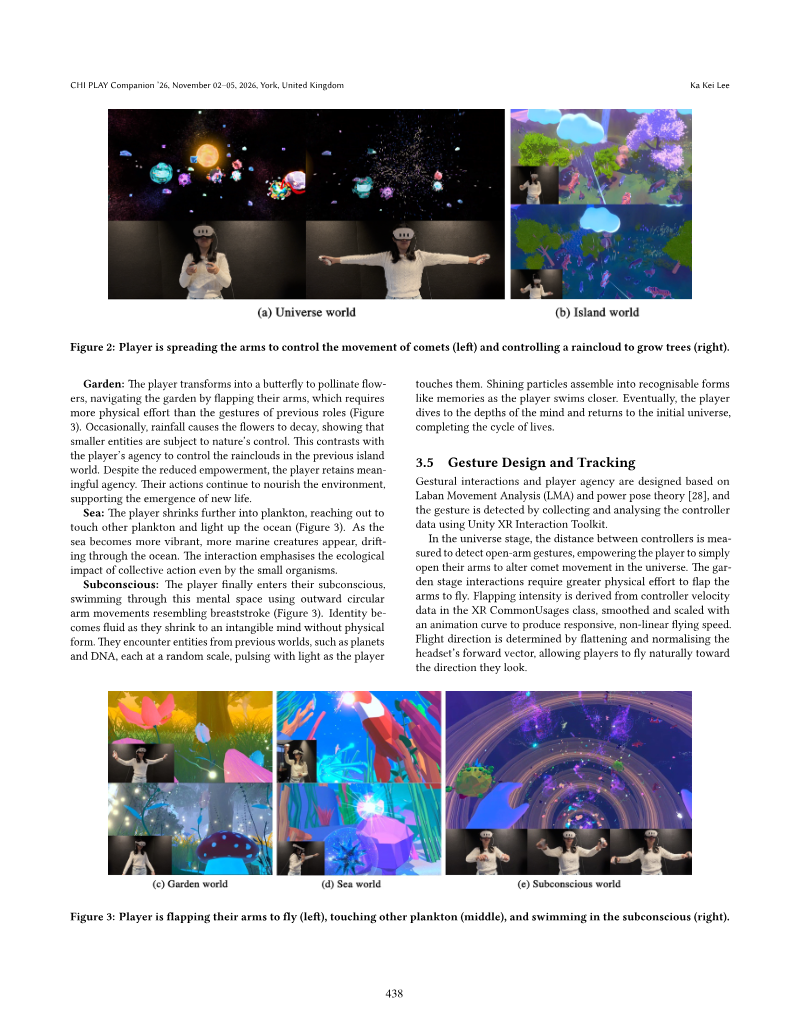
Infinite Bloom: Exploring Non-Human Embodiment in Virtual Reality Games
RMIT University · 2026
Whitepaper
Stopping Unintended Actions: Exploring EMS-Based Action Inhibition through a Game-Based Rapid Decision Task
Kyoto Sangyo University · 2026
Whitepaper
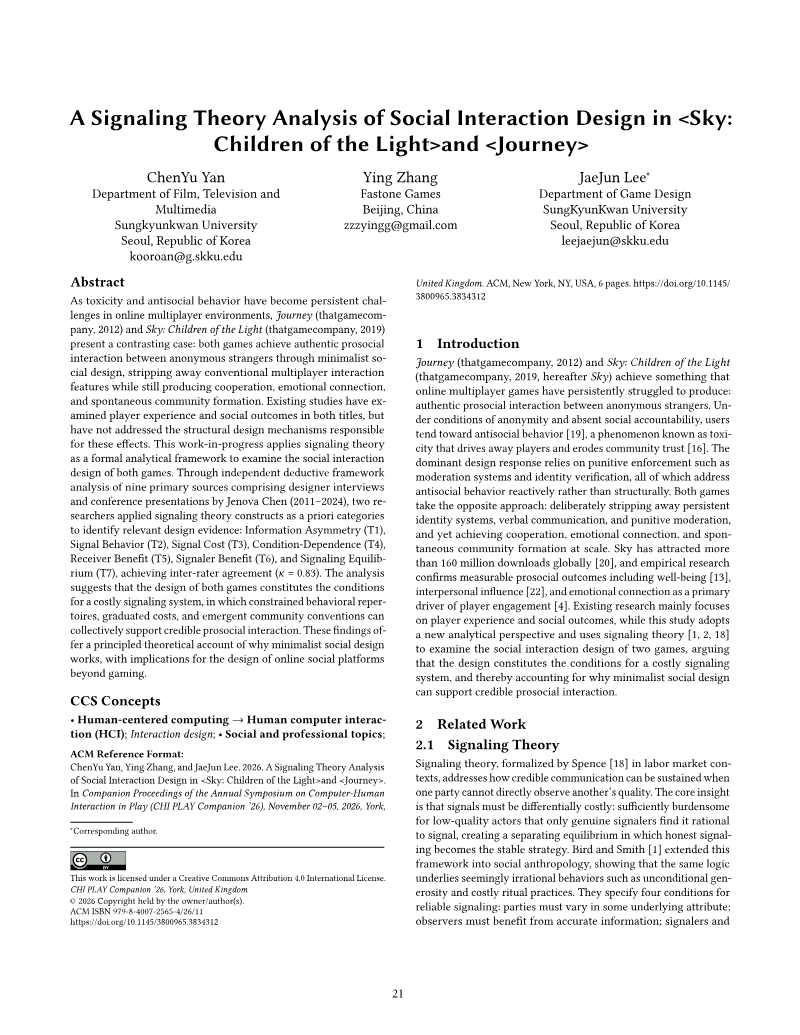
A Signaling Theory Analysis of Social Interaction Design in Sky: Children of the Light and Journey
Sungkyunkwan University · 2026
Whitepaper
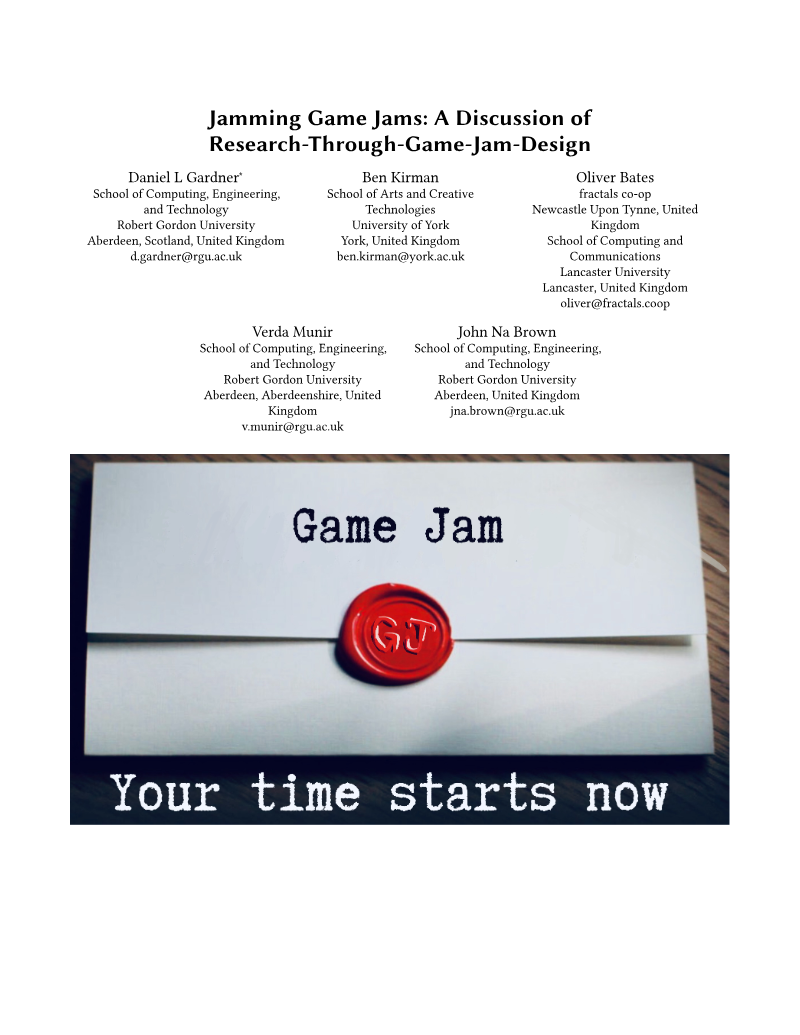
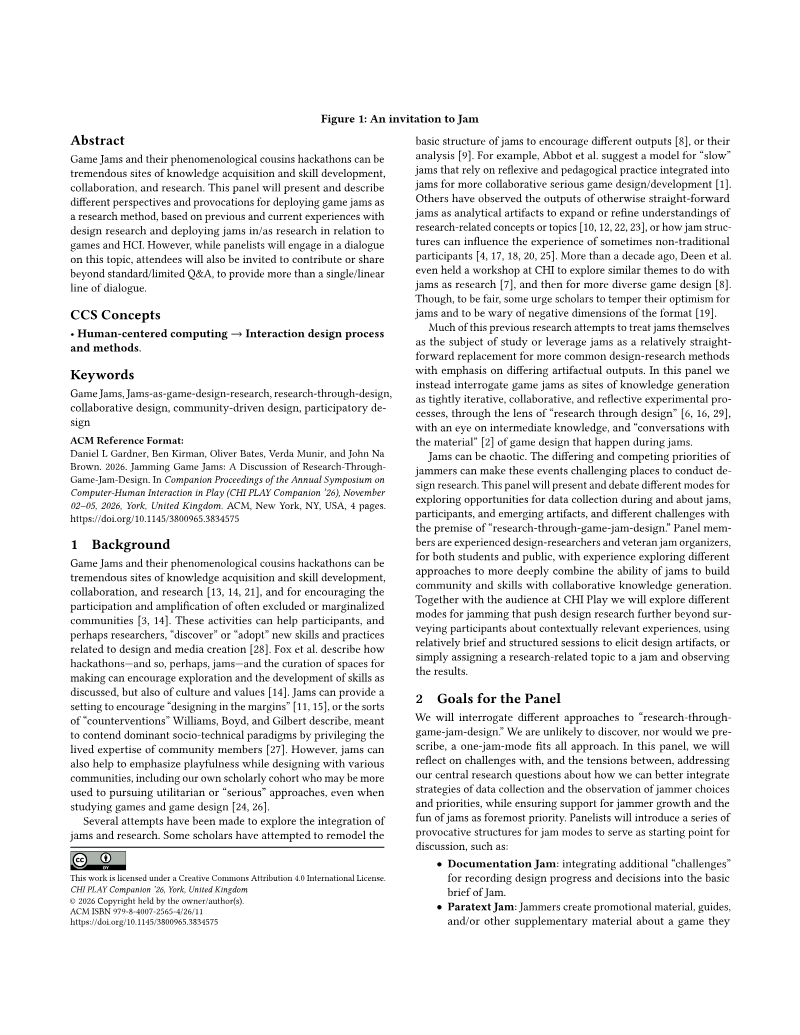
Jamming Game Jams: A Discussion of Research-Through-Game-Jam-Design
Association for Computing Machinery · 2026
Whitepaper
Mapperoni: A Tool for Teaching the Basics of Level Design
Association for Computing Machinery · 2026
Whitepaper
‘That’s What Girls Have to Think About All the Time’: Board Games for Civic Engagement and Perspective-Taking
Association for Computing Machinery · 2026
Article
The Playable Magic Mountain: Sanatorium Space, Ludic Intertextuality and Frozen Civilisation in Genshin Impact
RMIT University · 2026
Whitepaper
Exploring Player Experience Factors for Designing Persuasive Recruitment Games
Association for Computing Machinery · 2025
Whitepaper
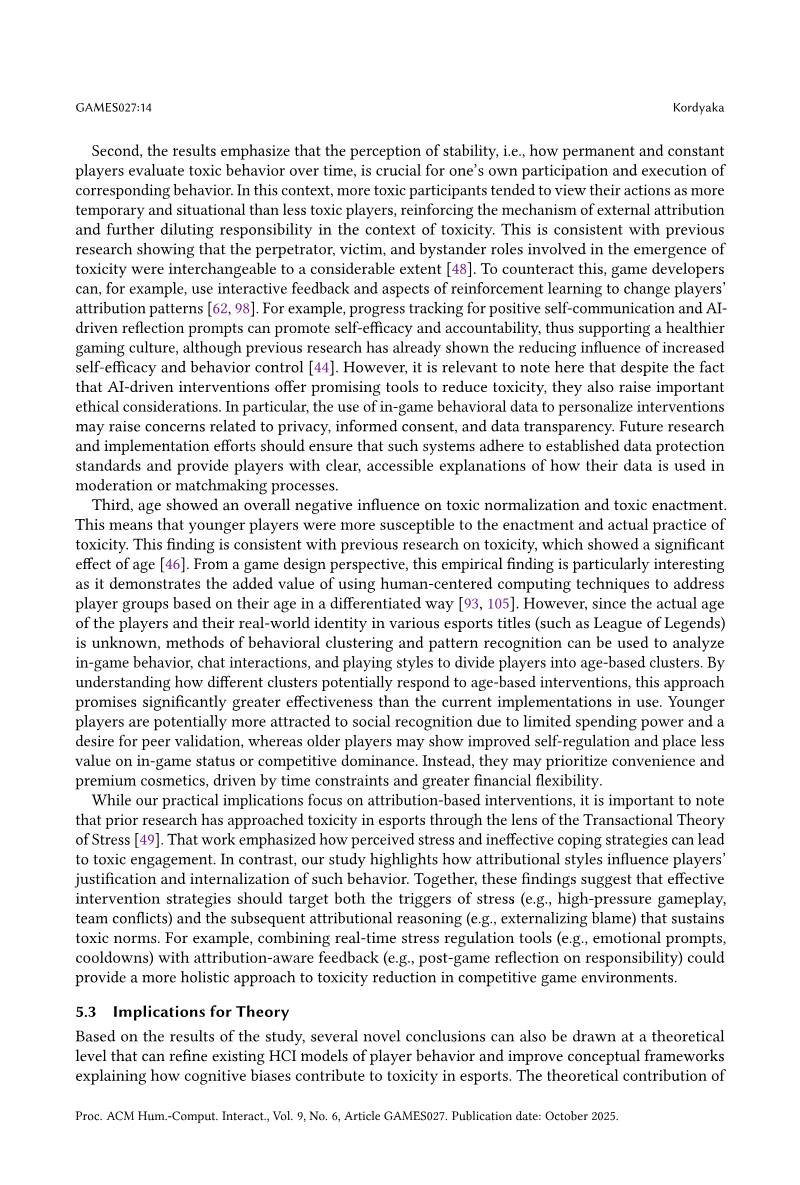
“It’s Not My Fault”: Exploring Attributional Patterns in eSports Player Toxicity
Association for Computing Machinery · 2025
Whitepaper
Towards Custom Quest Tutorials: Identifying and Addressing Players' Cognitive and Performative Struggles in Games
Association for Computing Machinery · 2025