Loading the document
1 free read left. Create a free account for unlimited reading + AI research.
Create free accountArticle GameMakers
1 free read left. Create a free account for unlimited reading + AI research.
Create free accountArticleGameMakers
Players on the social gaming platform spent significantly more time interacting with the AI concierge than playing the core game.
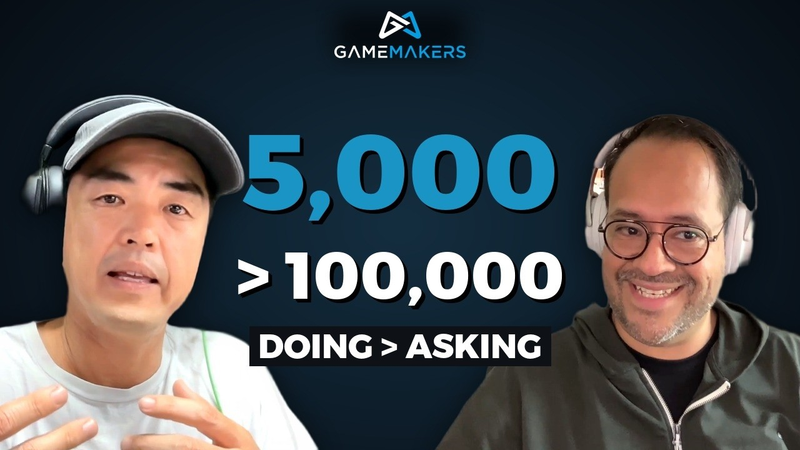
This document, published on January 15, 2025, summarizes a discussion with Siamak Freydoonnejad, CEO of Campfire, regarding the transformative impact of AI on the gaming industry. The central thesis is that AI is not merely an enhancement but a catalyst for entirely new game genres and development workflows, with Campfire's own experience demonstrating a five-fold increase in player engagement when AI characters were introduced.
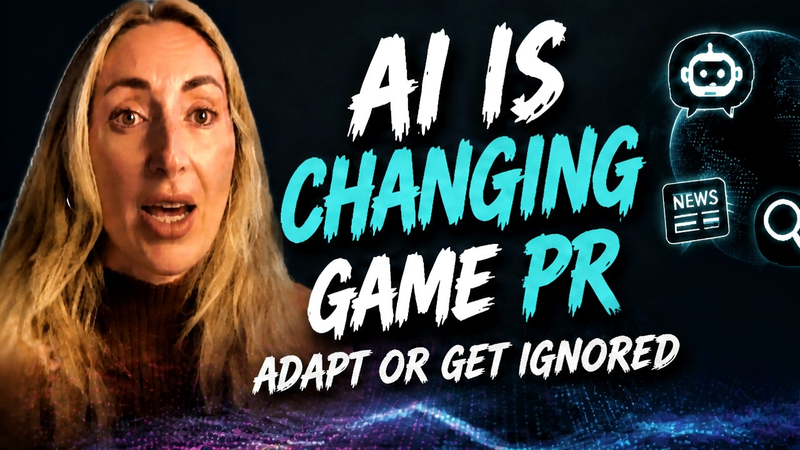
The discussion highlights three major areas where AI is reshaping gaming: asset generation and workflows, AI integration into development tools, and the emergence of AI-native games. Examples include EA's use of AI for detailed player rosters in its college football game and Netflix's investment in generative AI for content creation. AI copilots are streamlining repetitive tasks in game engines like Unity and Unreal, while AI-native games such as "Suck Up" and "Yandere AI Girlfriend" represent new genres previously impossible. Mobile platforms are identified as a likely early success point for AI-native games.
Key challenges in AI gaming include technical infrastructure limitations for on-device AI, necessitating cloud-based solutions, and the associated issues of latency and cost. Maintaining content quality, consistent character personalities, and managing token-based pricing models are also significant hurdles. For developers, the advice is to start with small-scale AI integrations, focus on core loops that uniquely benefit from AI, and consider the business implications of scaling AI-driven experiences. The industry is currently in a "trough of disillusionment" regarding AI, presenting an opportunity for developers who focus on experiences that AI uniquely enables. Established studios should integrate AI into existing dialogue systems and personalize interactions, while new studios should build around AI-native mechanics from the outset, particularly on mobile platforms, with scalability in mind.
Each row is a game or company this document names, each column a document, oldest first. A mark means that document names it. Select a row to see those documents.
GameMakers · 2026

GameMakers · 2026
GameMakers · 2026
GameMakers · 2026

GameMakers · 2026
GameMakers · 2026
GameMakers · 2026

GameMakers · 2026

GameMakers · 2026

GameMakers · 2026

GameMakers · 2026
GameMakers · 2026
DiGRA · 2026