The industry is transforming and emerging as a significant global player.
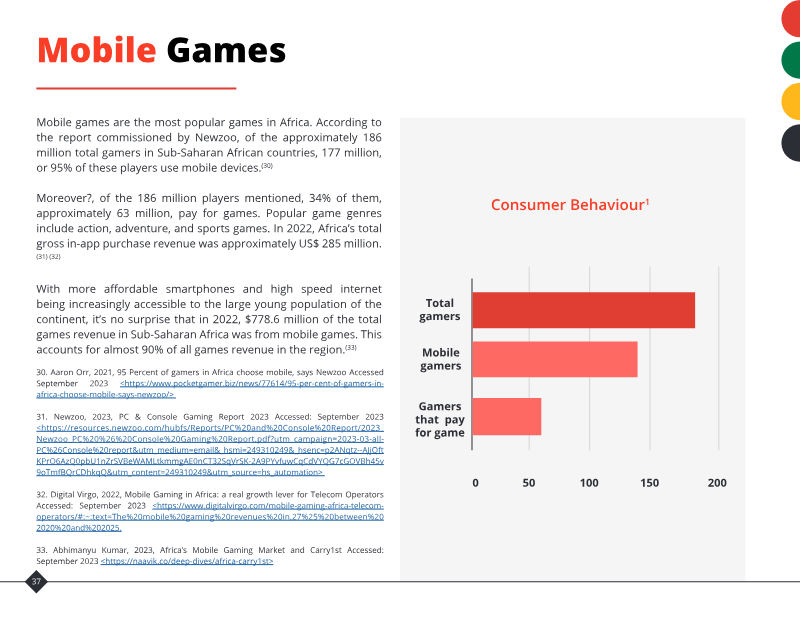
Page 36 of the reportMobile gaming serves 95 percent of the continent's gamers.
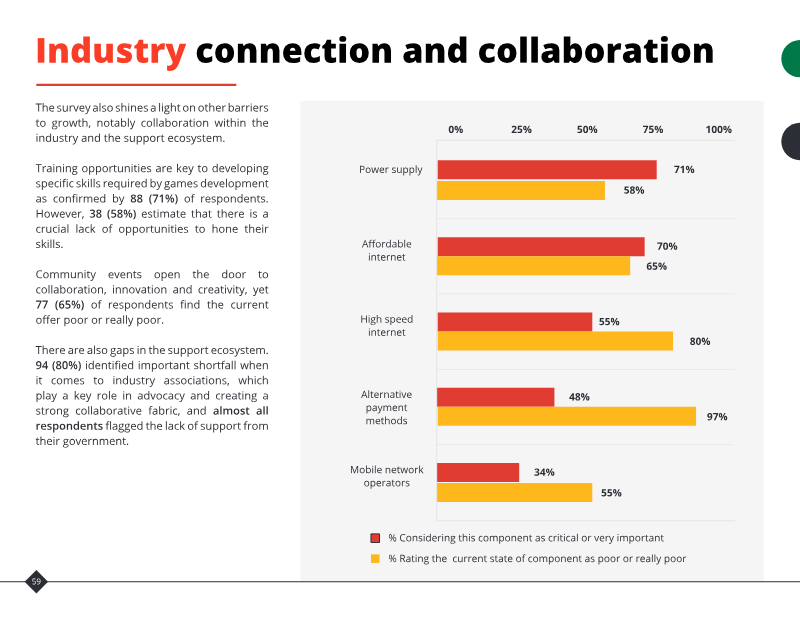
These include persistent challenges with power and internet infrastructure, limited government support, and restricted access to venture capital.
It's like trying to build a house without a solid foundation or proper tools.
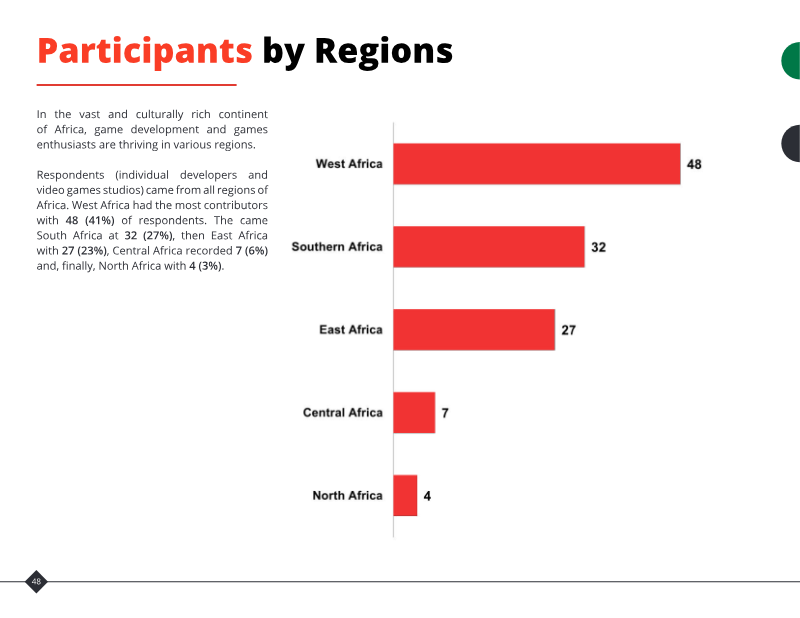
West Africa leads in developer participation, while Southern Africa hosts the highest concentration of established studios.
This model prioritizes infrastructure development, specialized education, and improved financial accessibility.
The African games industry is currently undergoing a transformative period of expansion, positioning itself as a significant emerging player within the $250 billion global market. Driven by a young, mobile-first demographic, the sector is characterized by a heavy reliance on mobile platforms, which account for 90 percent of regional revenue and serve 95 percent of the continent’s 186 million gamers. With total spending in Sub-Saharan Africa projected to reach $1 billion in 2024, the industry is leveraging its unique cultural identity and integration with broader creative arts to capture international attention and investment.
The development landscape is geographically diverse, with West Africa leading in developer participation while Southern Africa maintains a concentration of established studios. Despite this momentum, the sector faces structural impediments that hinder widespread profitability. Currently, only 36 percent of developers generate consistent income, a statistic largely attributed to persistent challenges regarding power and internet infrastructure, limited government support, and restricted access to venture capital. These barriers underscore the necessity for a more robust ecosystem that bridges the gap between creative talent and commercial viability.
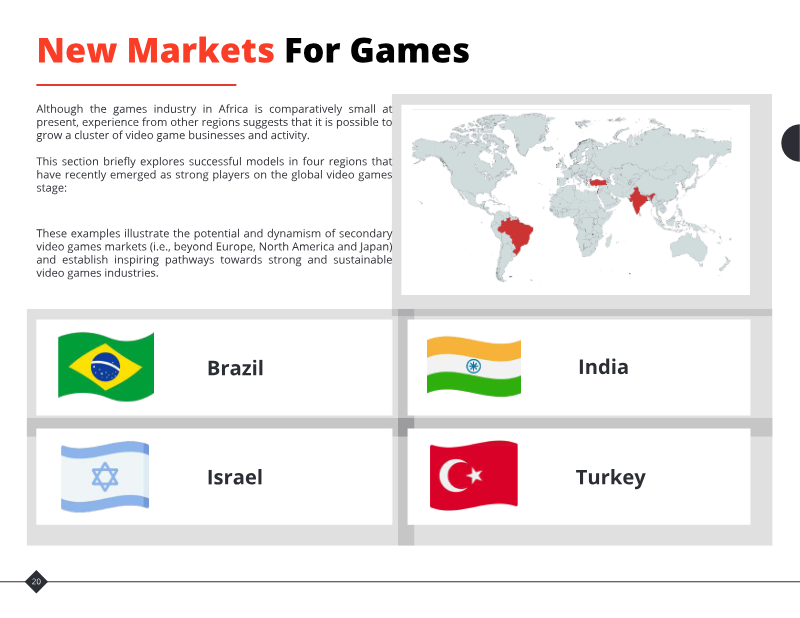
To achieve long-term sustainability, the industry must transition from its current fragmented state toward a more integrated model supported by strategic partnerships and policy advocacy. Drawing parallels from successful emerging markets like Brazil and Turkey, the path forward requires collaborative interventions that prioritize infrastructure development, specialized educational initiatives, and improved financial accessibility. By fostering these foundational elements, African studios can better navigate global markets, ensuring that the continent’s burgeoning creative output translates into lasting economic growth and a permanent foothold in the international gaming ecosystem.