Loading the document
1 free read left. Create a free account for unlimited reading + AI research.
Create free accountWhitepaper European Conference on Games Based Learning (ECGBL)
1 free read left. Create a free account for unlimited reading + AI research.
Create free accountWhitepaperEuropean Conference on Games Based Learning (ECGBL)
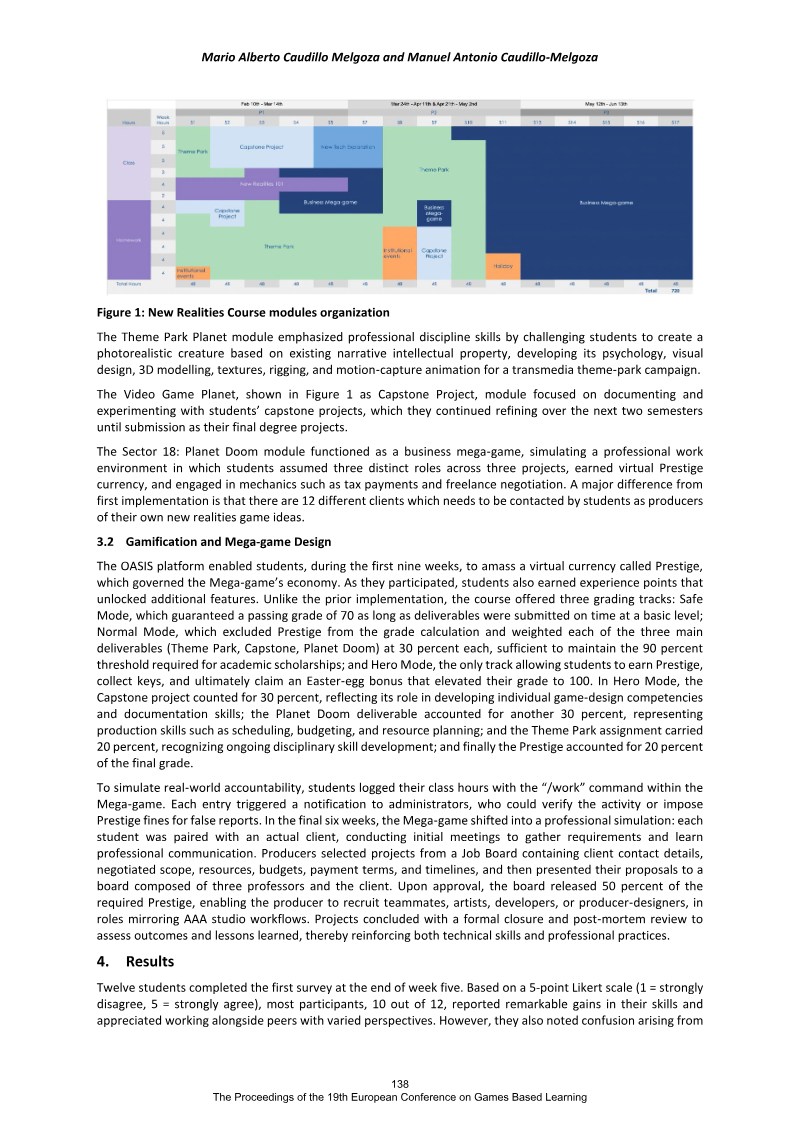
Students spent 24 hours in supervised class activity and 24 hours on asynchronous assignments each week.
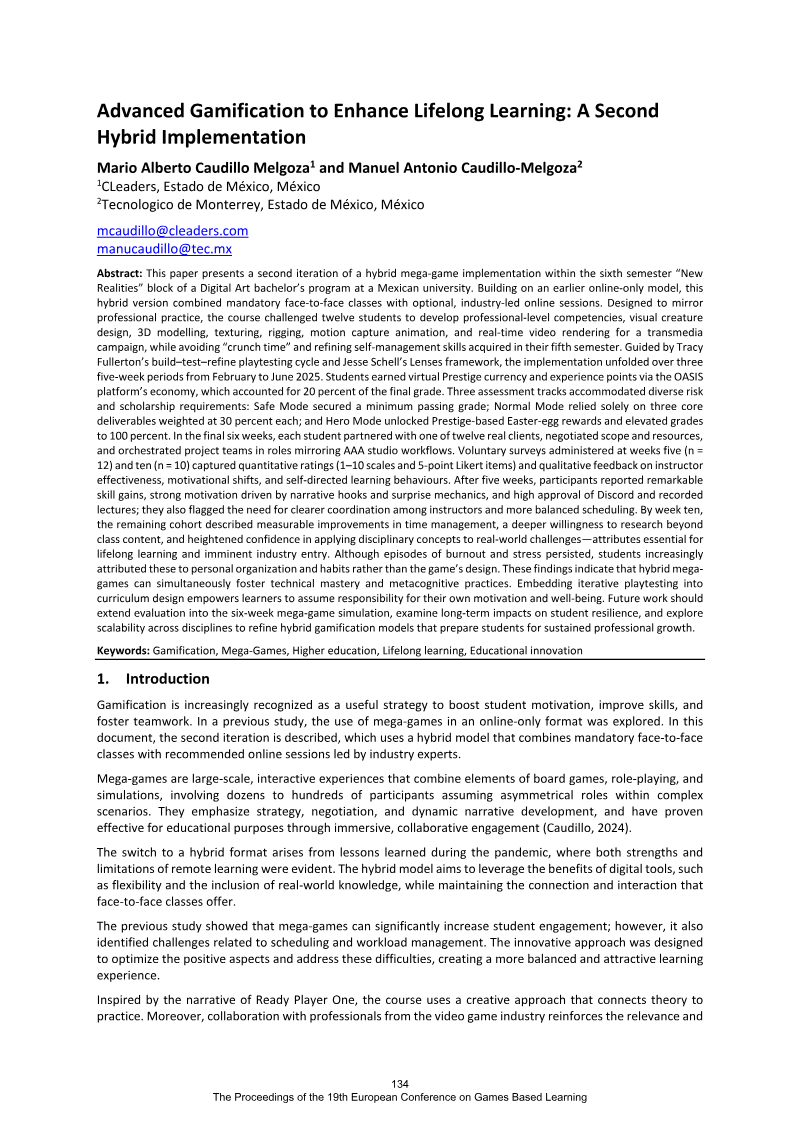
This study by Mario Alberto Caudillo Melgoza, affiliated with Tecnologico de Monterrey, examines advanced gamification and Mega-games in a semester-long course. The research ran from February to June 2022 and targeted sixth-semester Video Game Studies students in the Digital Arts Bachelor's program, with virtual classes for groups in Guadalajara and Querétaro. The course involved 35 students aged 20-22 and a 48-hour weekly commitment. The authors used a mixed-method approach that combined participatory observation on the OASIS Discord server, documentary research, online questionnaires, semi-structured group interviews, and faculty interviews.
The authors report that gamification elements heightened student involvement and motivation, with positive feedback on instructor support and course content. Students felt challenged to develop new skills and concepts, with an average score of 8.9, and rated their instructors with an average score of 9.1. Challenges were also identified, including burnout, economic disparities, and varying engagement levels. The Ready Player One narrative elements drew mixed reactions, with 36% of students responding positively, 36% neutrally, and 28% negatively.
The authors argue that future research should examine the psychological effects of continuous gamification and Mega-games, particularly in intensive implementations of up to 48 hours per week. They note that the study found preventive measures against farming experience points helped students focus on meaningful content.
Each row is a game or company this document names, each column a document, oldest first. A mark means that document names it. Select a row to see those documents.
European Conference on Games Based Learning (ECGBL) · 2026
European Conference on Games Based Learning (ECGBL) · 2026
European Conference on Games Based Learning (ECGBL) · 2026
European Conference on Games Based Learning (ECGBL) · 2026
European Conference on Games Based Learning (ECGBL) · 2026
European Conference on Games Based Learning (ECGBL) · 2026
European Conference on Games Based Learning (ECGBL) · 2026
European Conference on Games Based Learning (ECGBL) · 2026
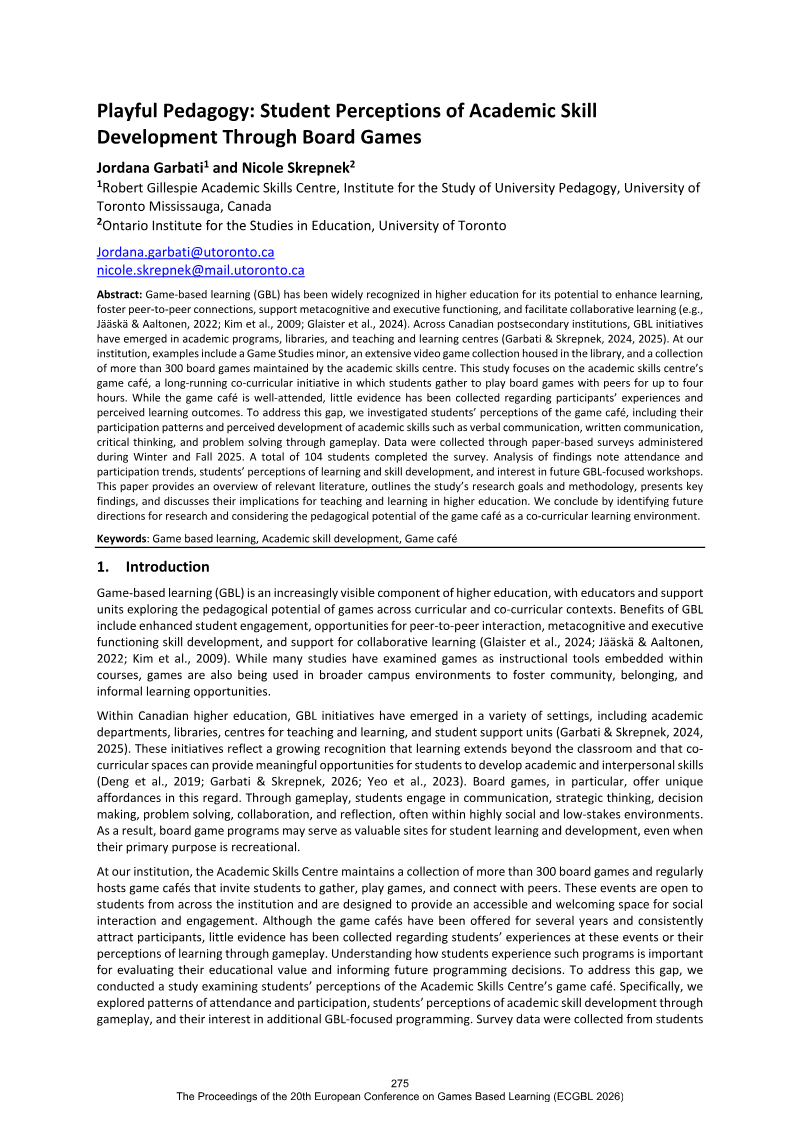
University of Toronto · 2026
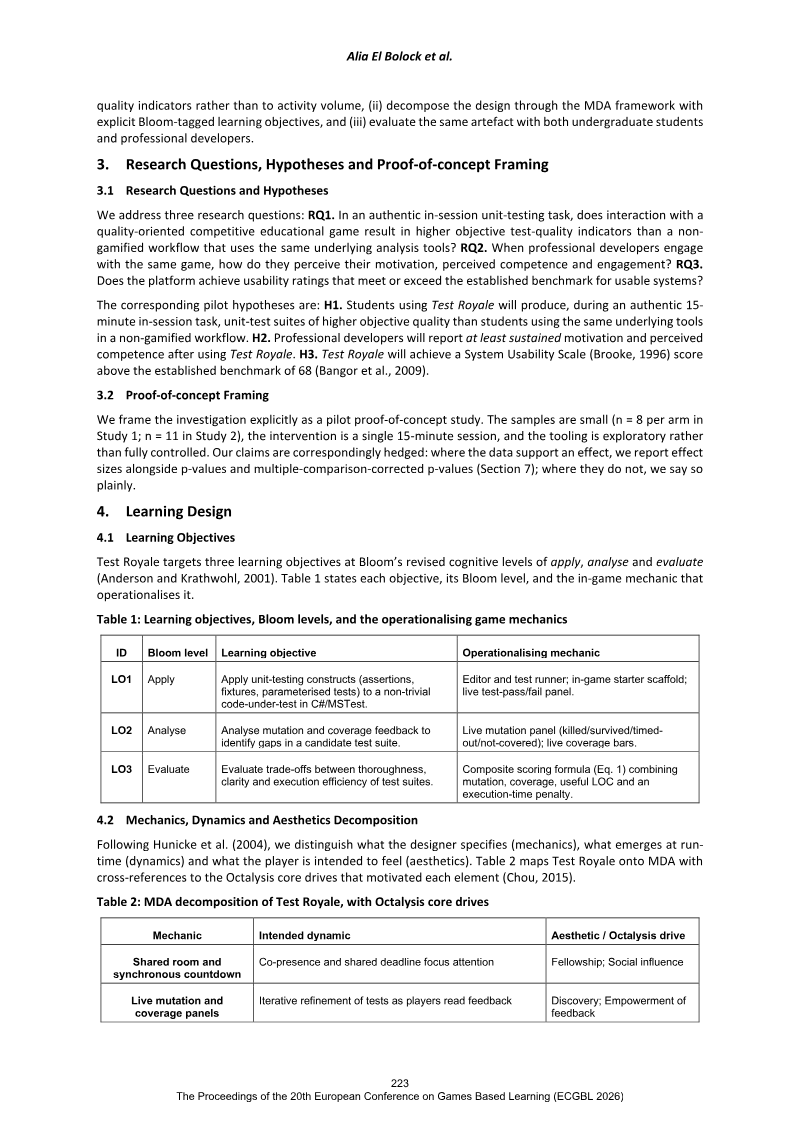
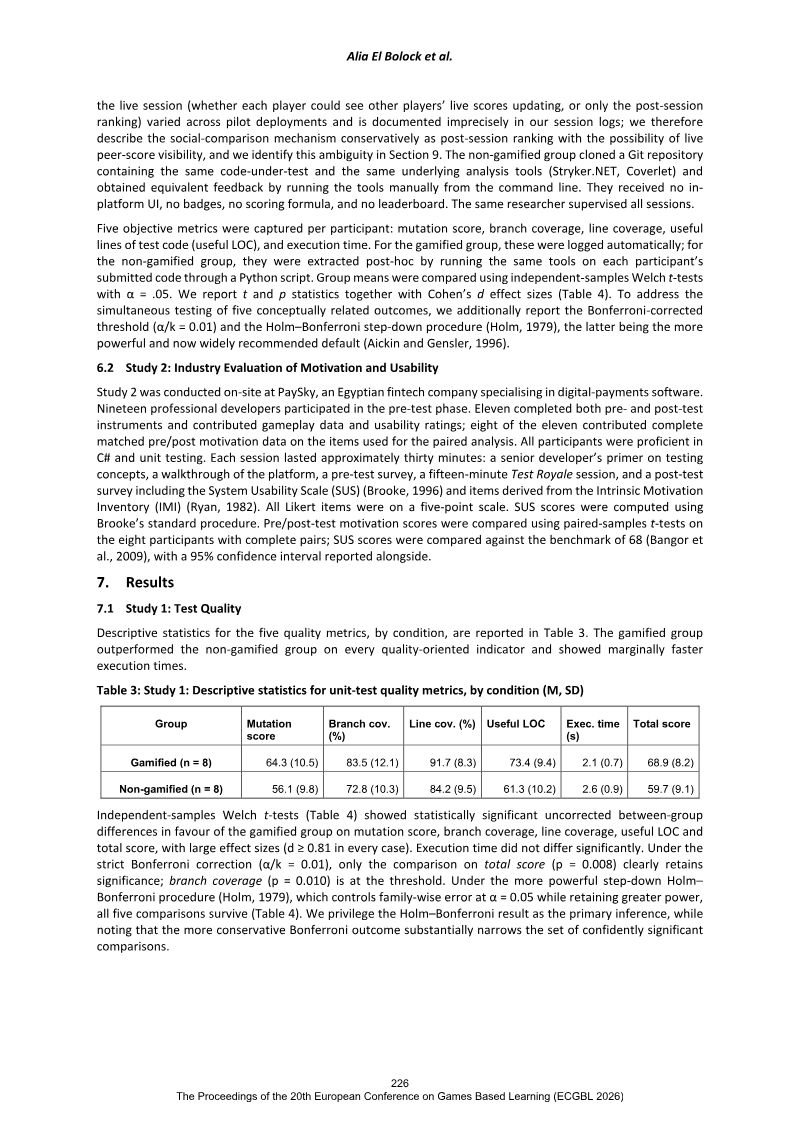
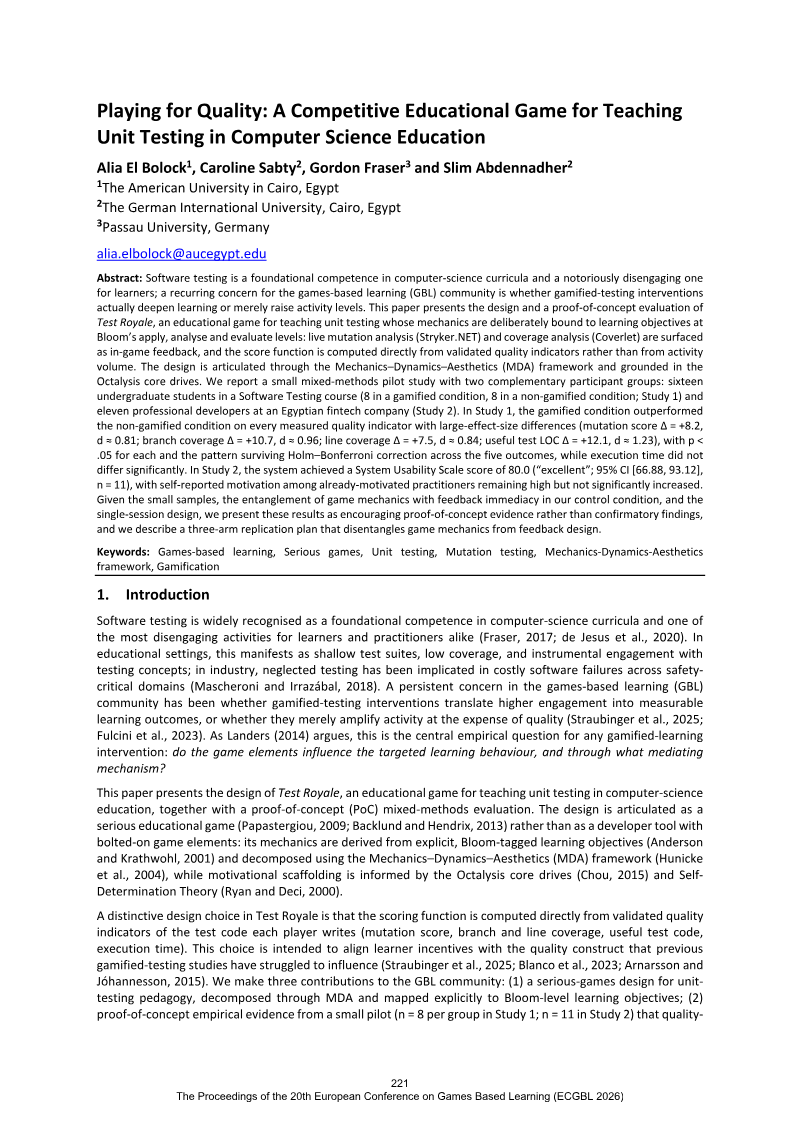
European Conference on Games Based Learning (ECGBL) · 2026
European Conference on Games Based Learning (ECGBL) · 2026
European Conference on Games Based Learning (ECGBL) · 2026
European Conference on Games Based Learning (ECGBL) · 2026
European Conference on Games Based Learning (ECGBL) · 2026
European Conference on Games Based Learning (ECGBL) · 2026