1 free read left. Create a free account for unlimited reading + AI research.
Create free account
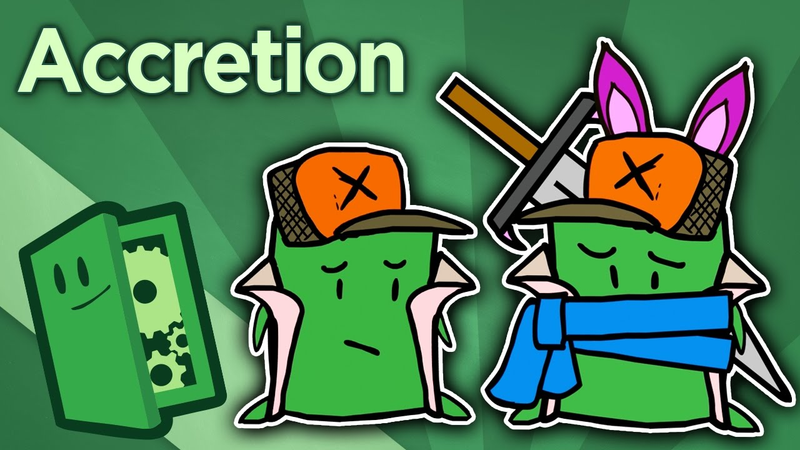
Accretion - Design by Landfill: A Longterm Strategy? - Extra Credits
Key insights
6 takeaways- 01Accretion, or 'design by landfill,' involves layering new game systems over broken or stagnant mechanics rather than refactoring existing code to maintain development speed.
- 02The primary long-term risk of accretion is the accumulation of unrefined complexity, which often creates an intimidating, inaccessible experience for new players.
- 03This strategy allows developers to bypass complex system integration and delicate balancing, enabling rapid iteration cycles for MMOs and annual franchises.
- 04By introducing new currencies and gear that render previous iterations obsolete, developers create a disposable design cycle that effectively mitigates player churn.
- 05Serialized franchises face a fundamental tension between satisfying veteran players' demands for increased depth and maintaining the broad accessibility required for market growth.
- 06Developers must choose between periodically stripping away accumulated layers to reset the experience or continuing to build upon existing structures, which often results in increasingly dense, menu-heavy titles.
Ask AI about this video
Transcript
As more and more games look to be perpetual experiences, as more games are greenlit with 5 and 10-year plans, designers are being faced with a tough question. How do you keep your design focused, holistic, and cohesive across a decade-long rollout of content? Or should you even try to? This is the question of accretion. Also, special thanks to Eli for being a guest artist on this episode. Say hello. A generally held maxim for good design is that if something's broken in your game, if some mechanic or system is out of whack and ruining the experience, you patch the game until you fix it. Likewise, if a mechanic is already solid but could be improved further to create an even more engaging experience, you refine it. But lately, especially with the slew of free-to-play MMOs that later in their lives end up getting handed off to studios that had nothing to do with building them in the first place, we're seeing a different solution, accretion. Accretion is the idea that instead of
fixing mechanics and systems, instead of really refining what you have, you just keep building new mechanics and systems and simply bail on anything that doesn't work or can't be easily improved. Those mechanics and features stay in the game, but as you layer more systems and more mechanics on top of them, the old systems just start to become obsolete. Do you have a currency that hit hyperinflation? Don't try to somehow fix it, just introduce a new currency earned in some weird way and make sure that all the new gear can only be bought with that new currency. Everybody will just abandon the old one, so problem solved. Do you have a piece of gear that people have found an exploit to farm? Don't worry about fixing the exploit, just introduce a new piece of gear that renders that first one worthless. Problem solved. Now, this approach might sound totally untenable, ridiculous even, but this spaghetti of systems is not necessarily as unmanageable as you might think. You see, unlike games which are more elegantly designed, where the systems are all intricately intertwined
and any change or addition you make will impact everything you already have in place, these less cohesive games just become a cobbled-together jumble of unconnected systems over time, which seems bad, but none of these systems rely on anything but the most core gameplay to function. So, there's no delicate balance to be broken, and systems added later in the game's life don't have to rely on earlier ones. That new currency you added to solve your inflation problem has nothing to do with the original hyper-inflated currency, by design, which is what allows you to safely abandon it. And sure, you might never have found a way to balance that gear that players keep farming, but by introducing a system for, say, socketable equipment upgrades, you've effectively done an end run on the problem, because that old gear doesn't have any sockets. It's worthless now, even if the new gear is only marginally more powerful, because players want to play with the new design. It is pretty nuts as a design philosophy, because you're kind of just leveling and rebuilding everything. It's power demolishing. It's the designers firing
rockets willy-nilly at their own game to create more design space. James likes to think of it as game design by landfill. By creating that socket system, you didn't just precision nerf that one piece of gear that players were exploiting. You basically just laid waste to every piece of gear designed before that system was introduced, because remember, in this type of design, you're not going to go back and rework anything. You are a design shark. You just keep moving forward to live. But then it kind of works in your favor, because your players who were bored with their easy method of getting the great high-end gear are actually ecstatic that they've got something new to grind for. Your retention rates go up, your churn goes down, and your players embrace this idea of disposable game design. Now, of course, if you go about this wrong, your players will get upset with you, but if your game is fundamentally about acquiring new things or facing ever harder challenges, that's basically what you're providing by laying waste to your own design. And there are real advantages to doing this from a production perspective. You can turn out content a lot quicker if you don't have
to worry about it being perfect if you're just going to outmode it yourself when, if not before, players figure out how to exploit it anyway. And since you're going to blow up all that new content soon anyway, it's only got to be good enough to be exciting and fun to play through for a limited time. Better still, you don't have to comb back through the entire game and make sure somebody on your staff who understands every little piece of content fits together whenever you're planning your next thing, assuming that your next thing basically has nothing to do with anything else in the game except sharing the most core systems and mechanics. But this does also come with a huge cost. Aside from the inevitable power creep problems, this approach results in a game with ever-increasing complexity for the player, and often it's complexity without a lot of depth. If your game has 12 different types of currency because you've burned them all one by one, for a new player, that's going to be really imposing, confusing, and just look like a mess. And it doesn't help that this type of slash-and-burn design doesn't tend to bother updating tutorials much
to cover new systems. After all, why spend a bunch of effort teaching systems that are going to be obsolete in 6 months? This all basically means that you're sustaining your elder players by providing them an incredibly rapid stream of new content at the cost of making your game ever harder for new players to jump into, which makes a lot of business sense if you've just picked up an aging MMO on the cheap, but what does it mean for the rest of the landscape? I mean, yes, jumping into a game that you know has a huge amount of content that you could be playing and exploring forever can feel really exciting, but it can also just as easily feel overwhelming. But setting aside what this means for MMO-type games, I think it's even more fascinating to consider what this design philosophy might mean for serialized games. Many of our biggest-name titles are now annual releases, and they all struggle with the same question. Do they cater to their existing audience trying to get them to purchase every new release, or do they try to bring in new players replacing the players who have lapsed and expanding their market? The struggle over this question is evident in so many
of these games. Boot up a modern Madden game, you're going to find 20 submenus and a dozen different modes, each one accreted over time. Look at Call of Duty: Infinite Warfare versus the first Modern Warfare side-by-side and you'll find some of the same effect. Or even look at something like Civilization. Now, I'm not talking about Civ 6. We actually wrote this episode before 6 came out. But Civ 4 with all of its expansions, that was one of James's favorite unmodded Civilization experiences ever. But then, when Civ 5 came out, that one felt like a step backwards to him. Not because he thought it actually was a step backwards. It was a great game, but Civilization 5 was the entry where Firaxis decided to scrape off all of the accretion that had piled up over the previous four games in an effort to make the game accessible to new players again. It only felt like a step backwards to James because he was an elder player who grew up with the series and enjoyed just how expansive and intriguing the game could be with all of the complexity that had been layered on top of it over the years. For
the franchises of the future, I think this is one of the key questions. How do you balance expanding and adding new things to your game compared to refining the game's core and making your game accessible to a new audience, especially now when games are on an annual build cycle where even when you have two alternating teams working on their own iteration simultaneously, the developers have at most two years to finish these major release games where they might have had three and a half years in the past. And the demand for new features from your existing audience is so high, the temptation to free up development time by just accreting new things and leaving old systems or levels or mechanics to exist without purpose, that temptation's very high. And that may not always be the wrong choice. It's not the game design James learned when he entered the industry, but games move fast. A lot has changed since then. The pressures of yearly releases, the pressures of having to put forth a 5-year plan for your game before it's even built, the constant demand for content, and the increasing price of
development may push us in that direction. It's my hope that we can look at this scorched earth design approach and think of it as another tool in our designer's tool belt. Something that can be used in a way that's awesome. That can be used to create massive amounts of new content rapidly, so our audience never gets bored, never runs out of things to do. But, at the same time, I also hope that we realize the inherent dangers of this approach, and that we don't just use it to meet deadlines. Time will tell. I'll see you next week.
Summary
Accretion, often described as design by landfill, is a development strategy where designers address broken or stagnant game mechanics by layering new systems on top of existing ones rather than refining or fixing the original code. This approach is increasingly prevalent in long-term projects, such as massively multiplayer online games (MMOs) and annual franchise sequels, where developers face pressure to provide constant content updates under tight production schedules. By introducing new currencies, gear, or mechanics that render previous iterations obsolete, developers can bypass the need for delicate balancing and complex system integration, effectively creating a disposable design cycle that keeps veteran players engaged with fresh content.
The primary advantage of this methodology is production efficiency. Because new systems are designed to function independently of older, potentially flawed mechanics, developers can iterate rapidly without the risk of breaking deeply intertwined code. This strategy successfully mitigates player churn by providing a steady stream of new challenges and rewards. However, the approach carries significant long-term costs, most notably the creation of massive, unrefined complexity that can alienate new players. As games accumulate layers of obsolete systems, tutorials often fail to keep pace, resulting in an intimidating and confusing experience for newcomers.
This design philosophy also presents a fundamental tension for serialized franchises, which must balance the demands of veteran players for increased depth against the need for accessibility to maintain a broad market. While some developers choose to periodically strip away accumulated accretion to reset the experience, others continue to build upon existing structures, leading to increasingly dense and menu-heavy titles. Ultimately, accretion serves as a pragmatic, albeit risky, tool for modern game development. While it offers a viable solution for sustaining perpetual experiences, it requires careful management to ensure that the pursuit of rapid content delivery does not sacrifice the long-term health and accessibility of the game.


















Comments