1 free read left. Create a free account for unlimited reading + AI research.
Create free accountWhitepaper Breda University of Applied Sciences
1 free read left. Create a free account for unlimited reading + AI research.
Create free accountWhitepaperBreda University of Applied Sciences
The authors argue that MARIN's VTS, Sea Traffic Management and SEATRAS fit planning goals poorly and are too computationally demanding for multi-layer planning sessions.
The paper introduces SEL (Shipping Emulation Layers), a heuristic shipping simulation embedded in the MSP Challenge platform, designed to show how maritime spatial plans shape vessel traffic. The authors argue that existing shipping simulators such as MARIN's VTS, Sea Traffic Management, and SEATRAS are poorly aligned with maritime spatial planning goals and too computationally demanding for multi-layer planning sessions, which motivates a purpose-built tool. The system formalises requirements for constant and dynamic data layers, including shipping lanes, ports, and restriction areas, and produces ship-type heat maps alongside three categories of key performance indicators.
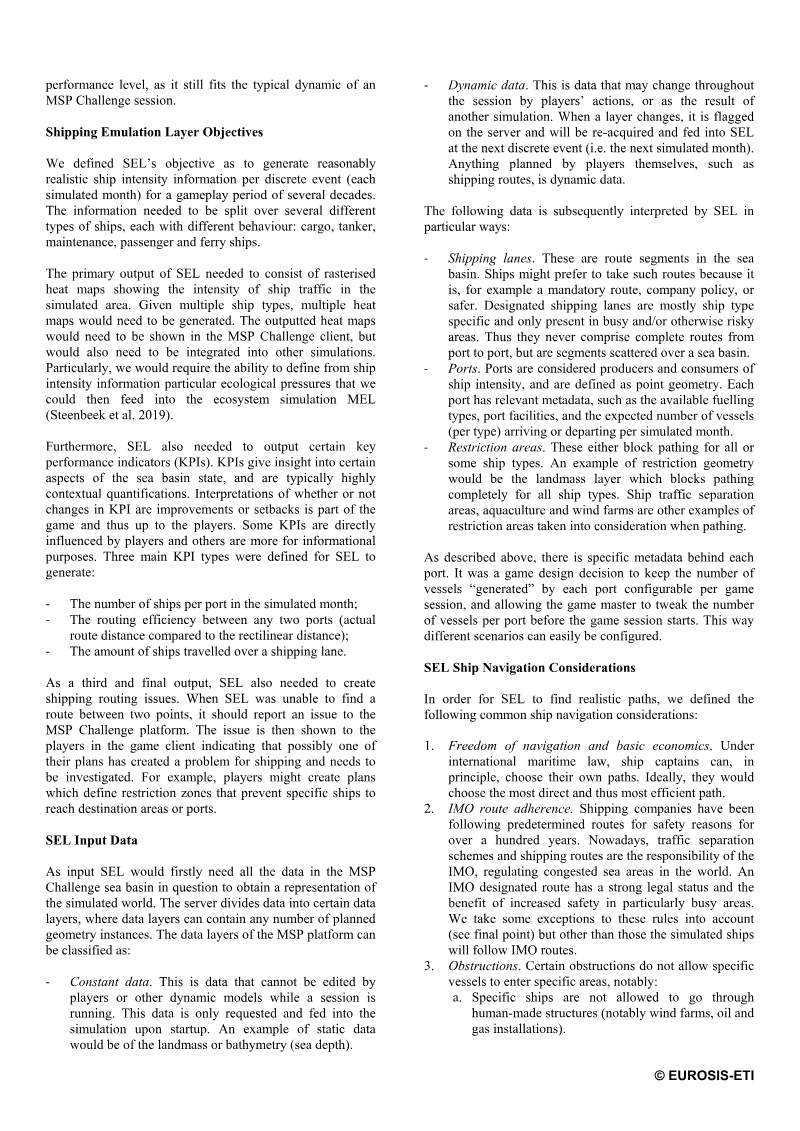
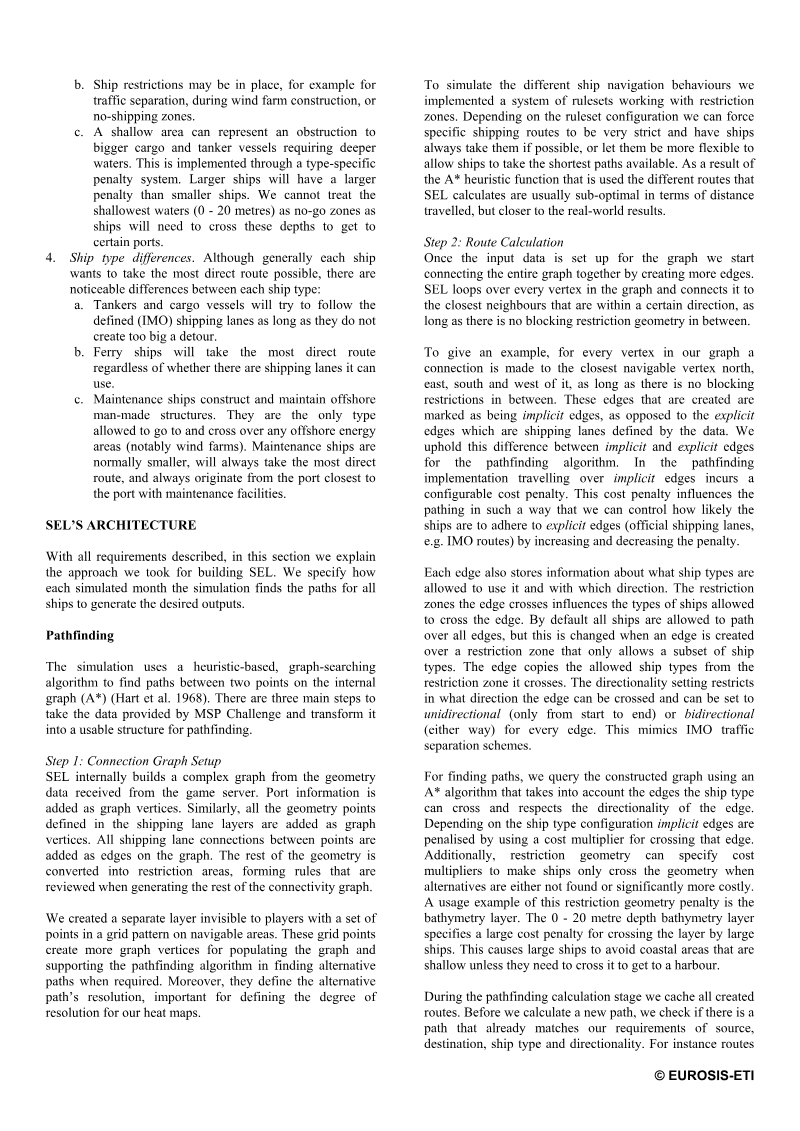
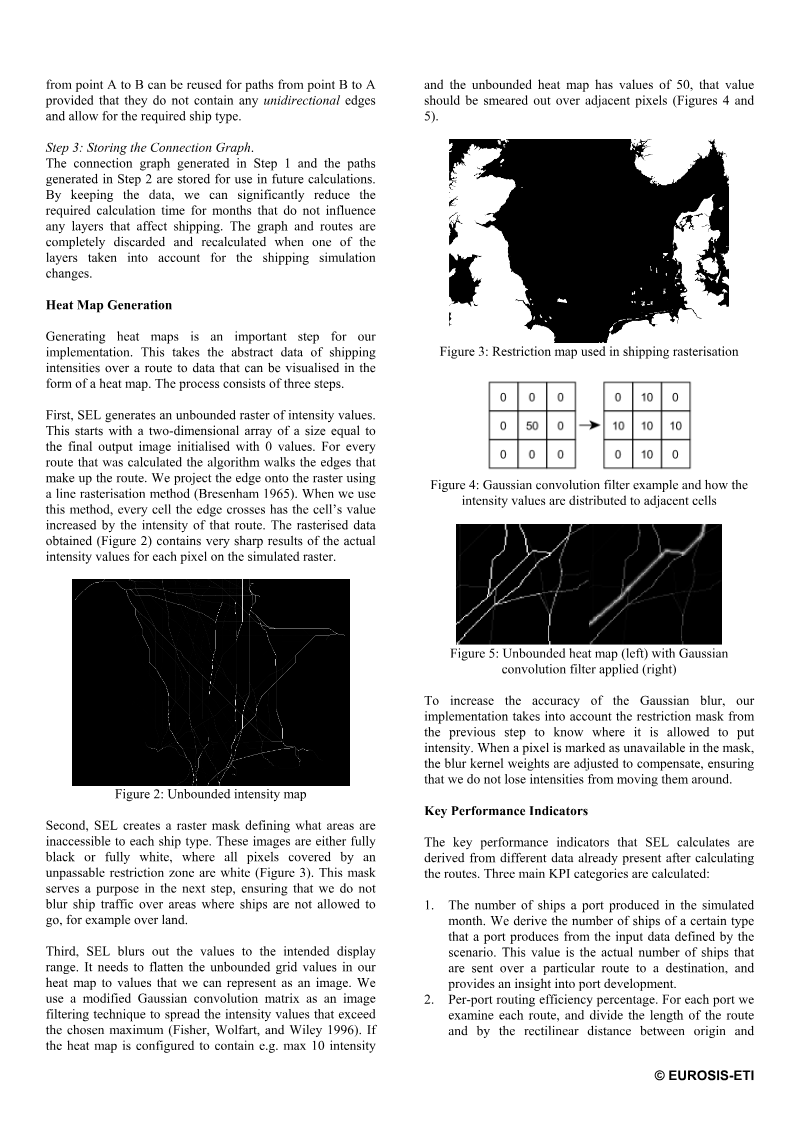
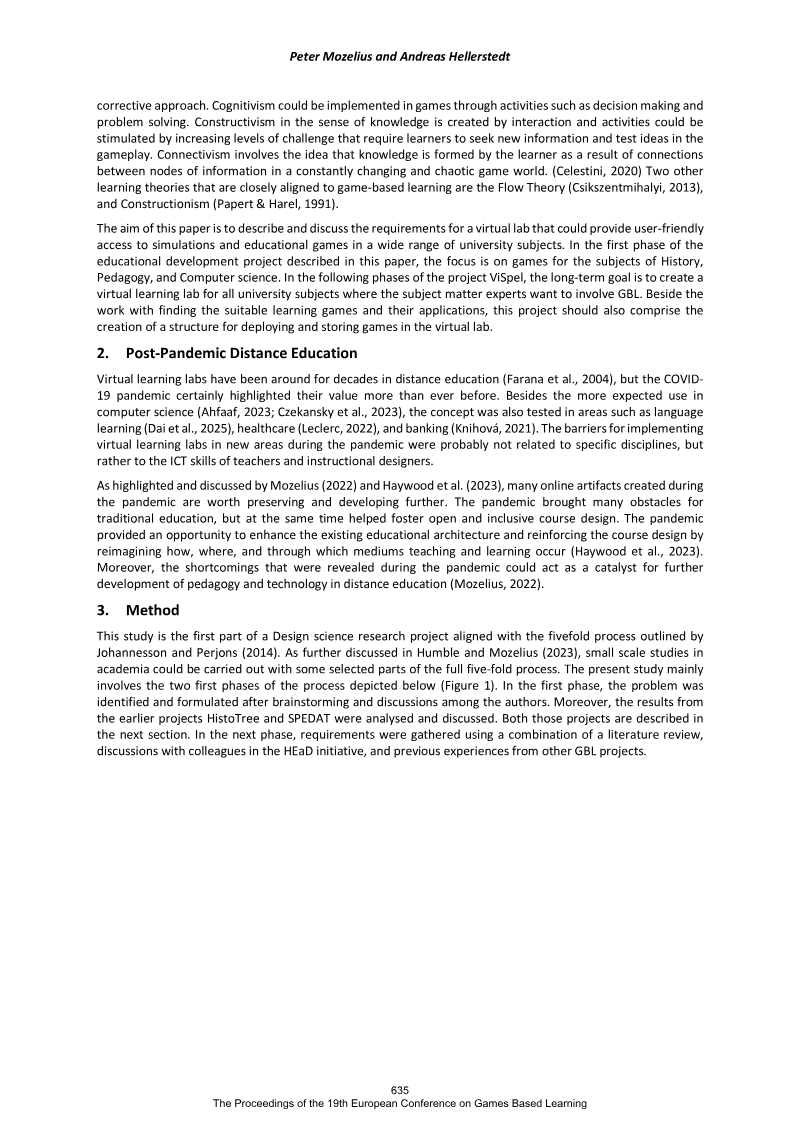
At its core, SEL applies A pathfinding over a connection graph derived from game geometry, incorporating cost penalties for bathymetry and restricted zones, with routes rasterised into heat maps using a modified Gaussian blur. Validation against AIS and heat map data for the Firth of Clyde, North Sea, and Baltic Sea found that maritime professionals regarded the results as valuable. Reported limitations include the absence of congestion modelling, traffic dispersed across more lanes than observed data indicate, and routing errors near Den Helder. Runtime across the three basins ranges from roughly 4 to 17 seconds per simulated month, falling below one second when no dynamic layers change. Since 2018 the tool has supported 15 sessions involving 215 participants for stakeholder engagement, planning support, and higher education.
The paper closes by outlining planned refinements, namely applying bathymetry penalties more realistically, which currently arise only when crossing between deep and shallow water and can generate unrealistic path segments, and introducing congestion modelling so that vessels avoid crowded areas and the shipping intensity inaccuracies are reduced.
Breda University of Applied Sciences · 2026
Breda University of Applied Sciences · 2026
Breda University of Applied Sciences · 2026



Breda University of Applied Sciences · 2026
Breda University of Applied Sciences · 2026
Breda University of Applied Sciences · 2026
Breda University of Applied Sciences · 2026
Breda University of Applied Sciences · 2026
Breda University of Applied Sciences · 2026
Breda University of Applied Sciences · 2026
Breda University of Applied Sciences · 2026
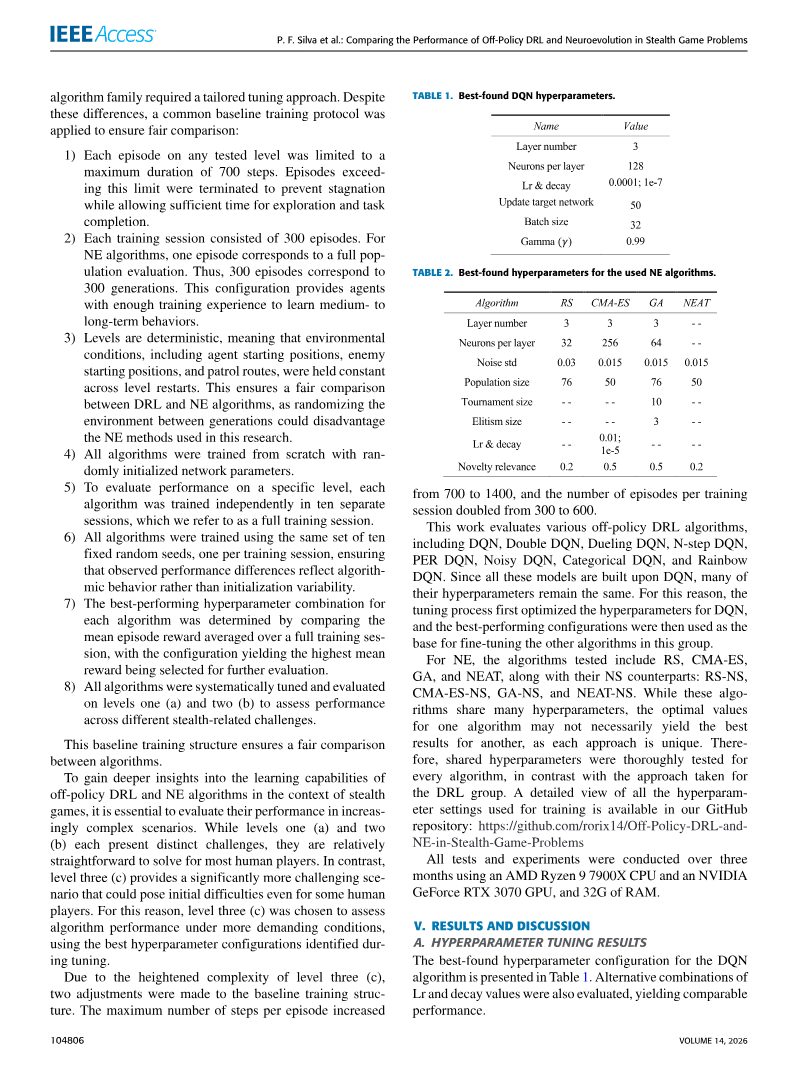
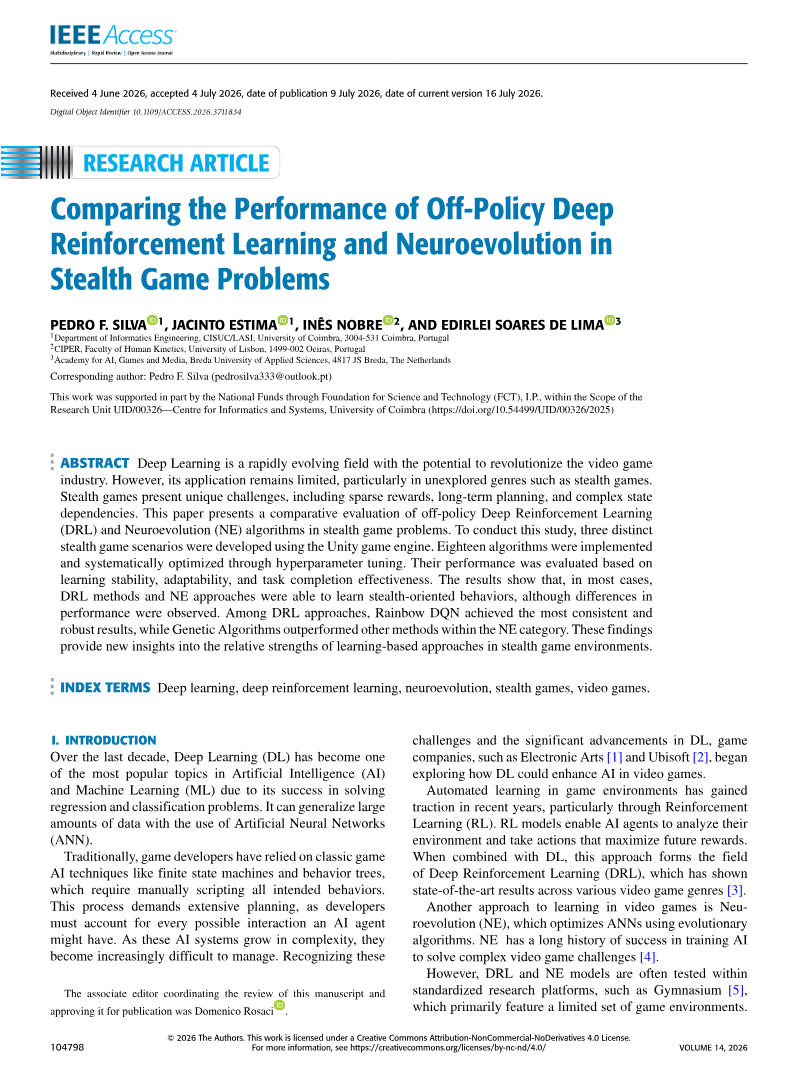
Breda University of Applied Sciences · 2026



European Conference on Games Based Learning (ECGBL) · 2026
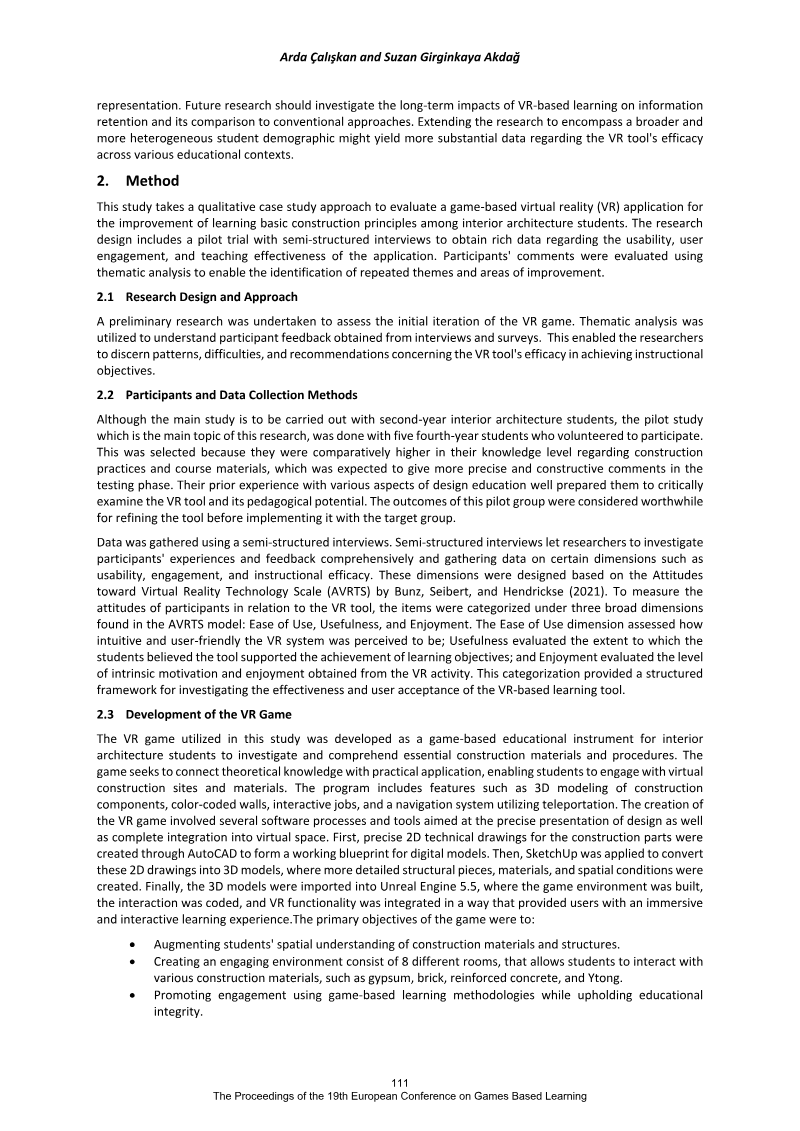
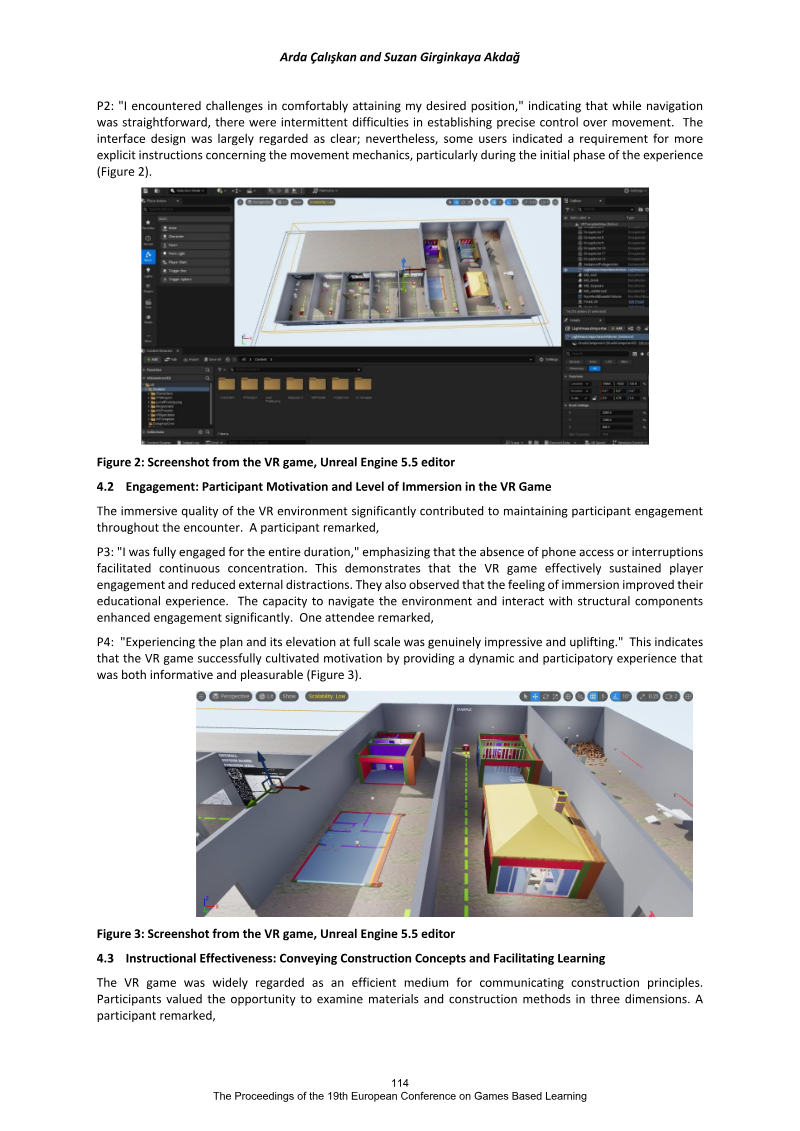
European Conference on Games Based Learning (ECGBL) · 2025
European Conference on Games Based Learning (ECGBL) · 2025