Loading the document
1 free read left. Create a free account for unlimited reading + AI research.
Create free accountArticle How To Market A Game
1 free read left. Create a free account for unlimited reading + AI research.
Create free accountArticleHow To Market A Game
It frames genre and quality as the biggest determinants of commercial success.
Indie developers should use market data on genre popularity to decide what to build, and four common objections to that approach are misguided. Drawing on his earlier analysis of Steam genre earnings versus release volume since 2019, the author argues that genre and quality are the biggest determinants of a game's commercial success. Platformers, puzzle games, visual novels, VR, and FPS titles are heavily oversaturated and sell poorly, while roguelike deckbuilders, 4X, city builders, simulation, and open-world survival craft show strong demand with little indie competition.
The first myth holds that following popular genres will make every game the same. The author counters that indies already do this, noting the public stereotype of the pixel-art platformer. The second myth, that attention to genre stifles creativity, is rebutted with an analogy to Seattle's grunge scene, where a label's tight formula produced original work. The third myth is that players want something wholly unprecedented. Citing Raymond Loewy's "Most Advanced, Yet Acceptable" principle, the author argues audiences want the new but familiar, so developers should tweak only one or two genre tropes. The fourth myth treats genre as a loose suggestion. Using negative reviews of a visual novel that lacked meaningful choices, the author shows that missing a genre's core anchors alienates fans.
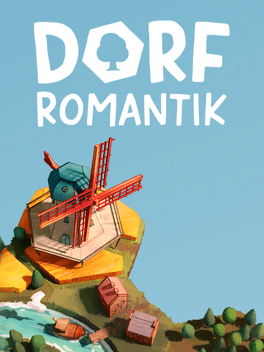
The closing argument addresses the objection that underserved genres are complex and take years to build. The recommended answer is to strip a genre to the minimum fans expect and deliver it inventively. Examples include Stacklands (a god/builder game reduced to a card game, developed in months, with tens of thousands of copies sold), ISLANDERS, Dorfromantik (essentially the expansion portion of 4X), and Tile Cities, which reportedly sold well with no marketing. The author frames market research as a way to find where innovation is needed, not as a call to clone existing games.
Each row is a game or company this document names, each column a document, oldest first. A mark means that document names it. Select a row to see those documents.
How To Market A Game · 2026

How To Market A Game · 2026
How To Market A Game · 2026
How To Market A Game · 2026
How To Market A Game · 2026
How To Market A Game · 2026
How To Market A Game · 2026
How To Market A Game · 2026
How To Market A Game · 2026
How To Market A Game · 2026
How To Market A Game · 2026
How To Market A Game · 2026
Two & a Half Gamers · 2026