Key insights
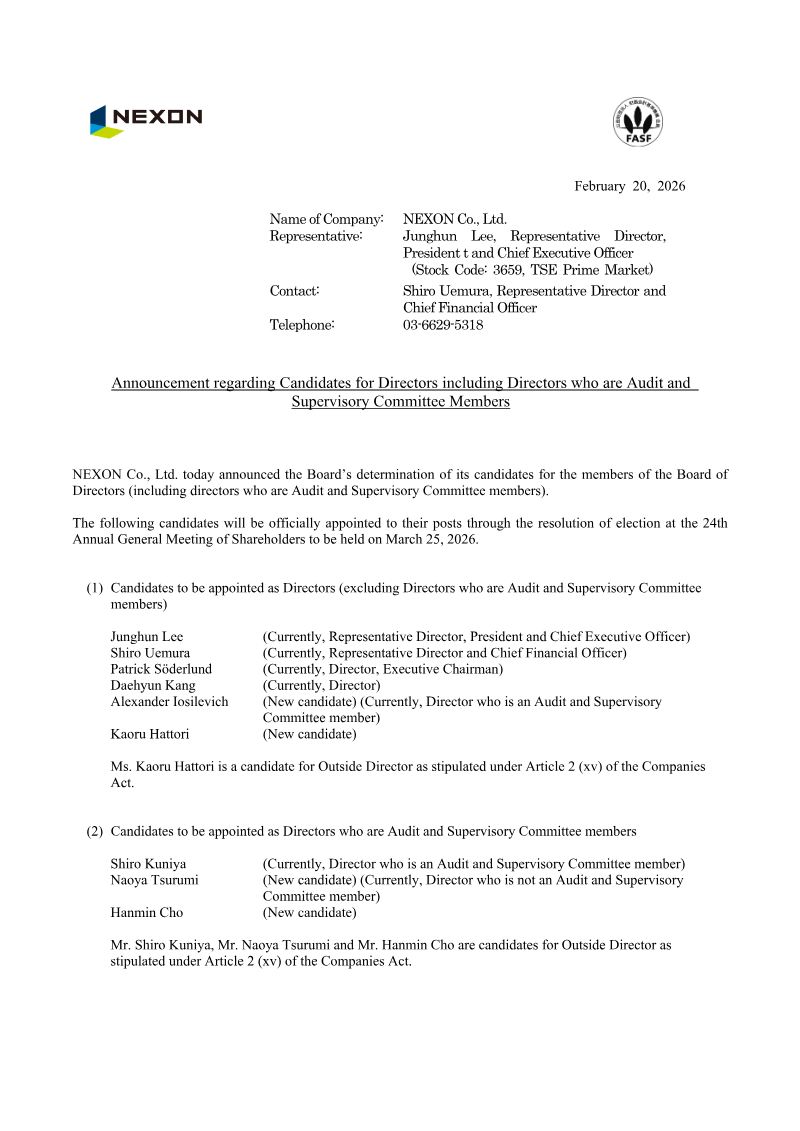
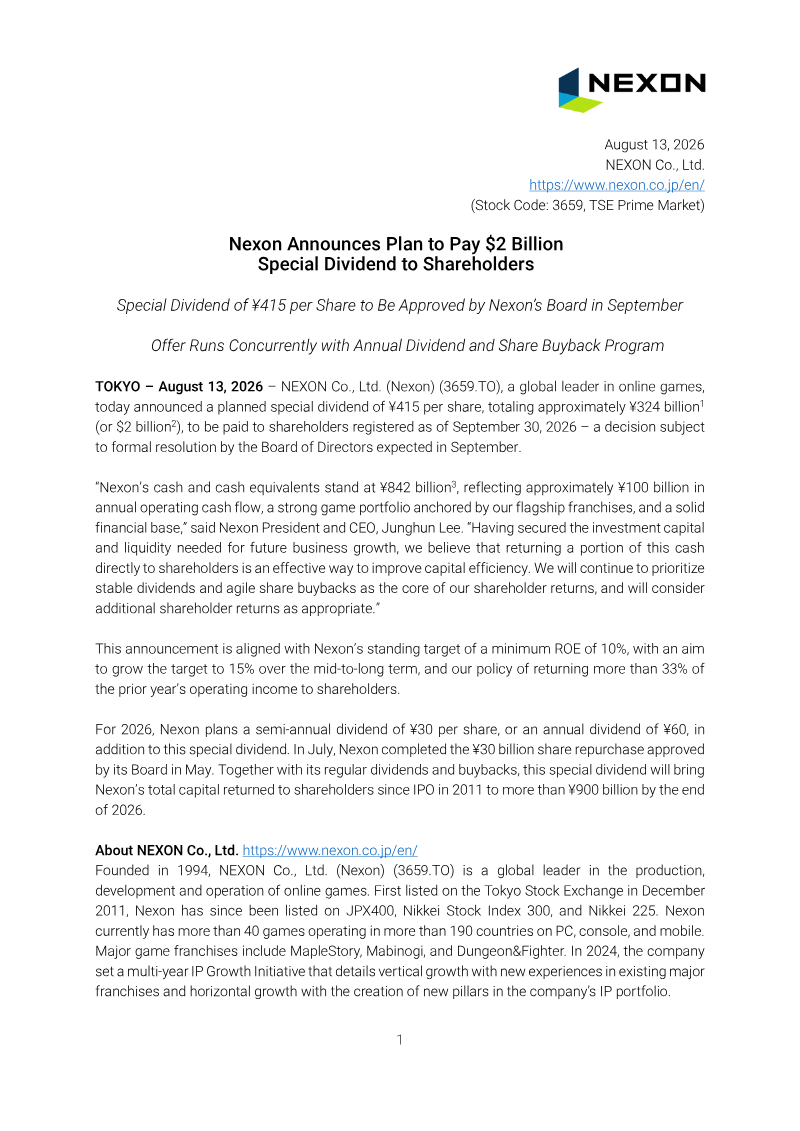
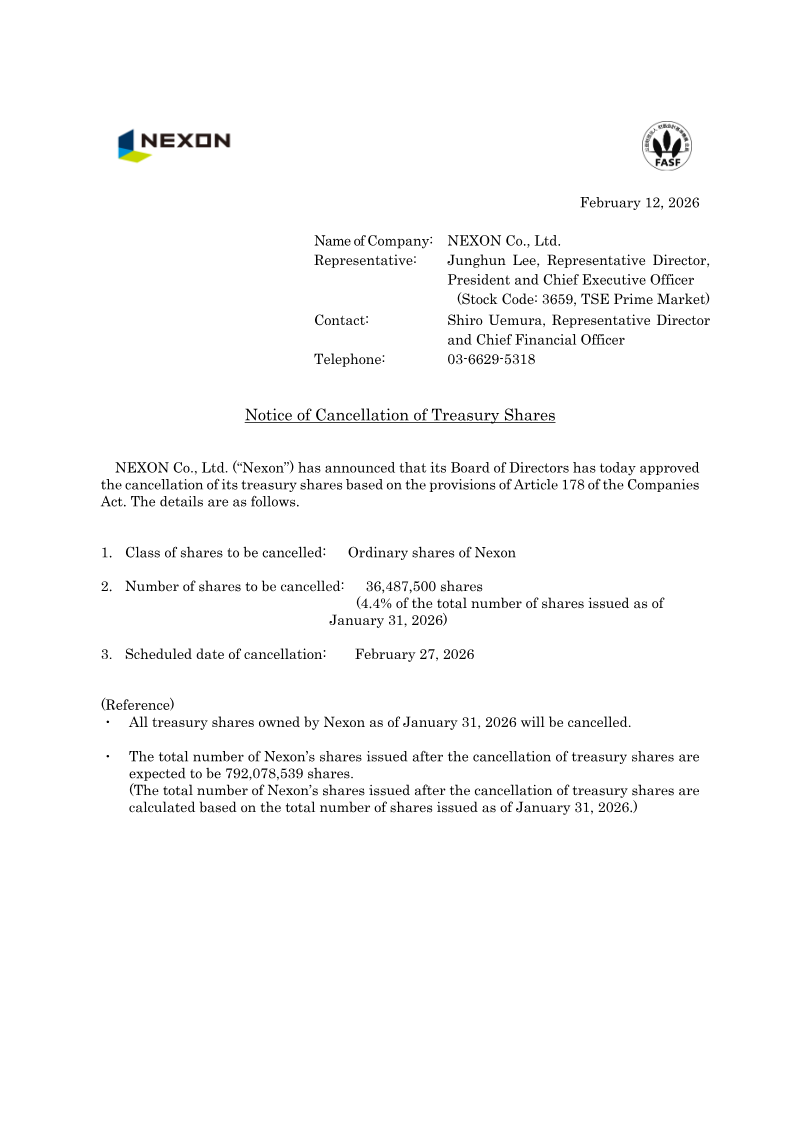
6 takeaways · ~2 min read- 01NEXON Co., Ltd. will cancel 36,487,500 treasury shares on February 27, 2026, representing approximately 4.4% of its total issued shares.
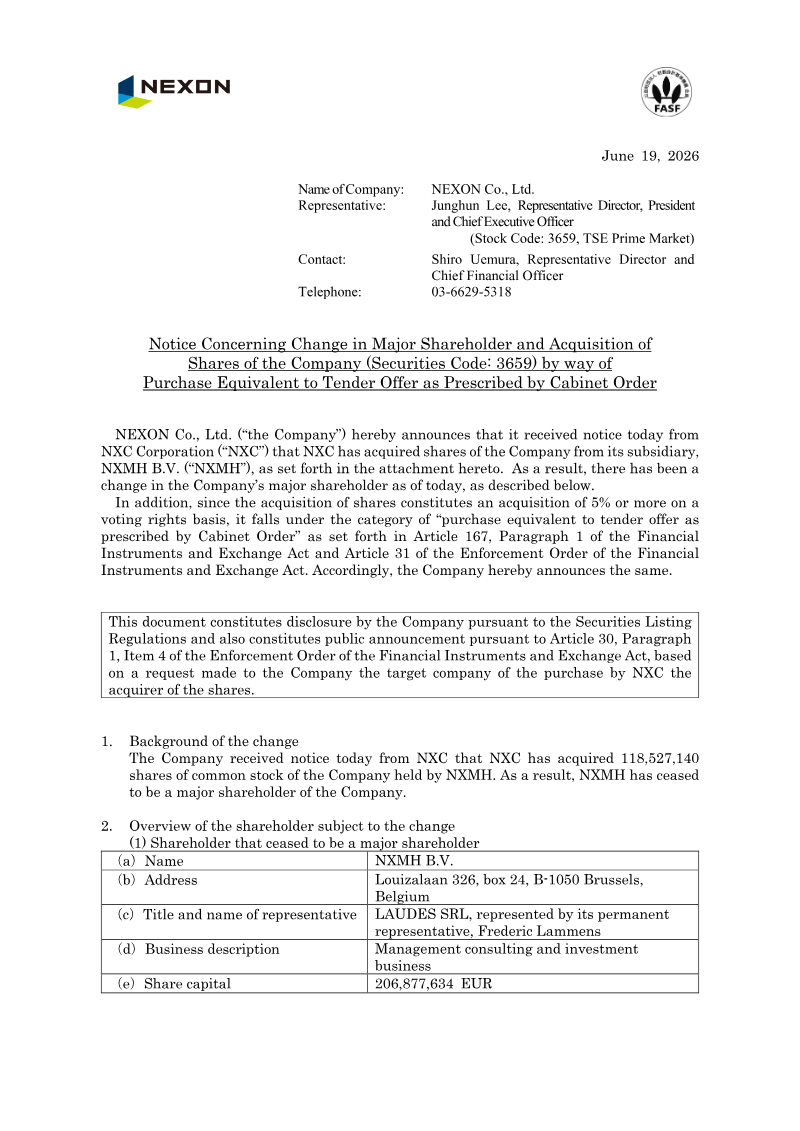
- 02The cancellation will reduce the company's total outstanding share count from its current level to 792,078,539 shares.
- 03This action involves the retirement of all treasury shares held by the company as of January 31, 2026.
- 04The move is a strategic capital management initiative intended to consolidate ownership and improve earnings per share for existing shareholders.
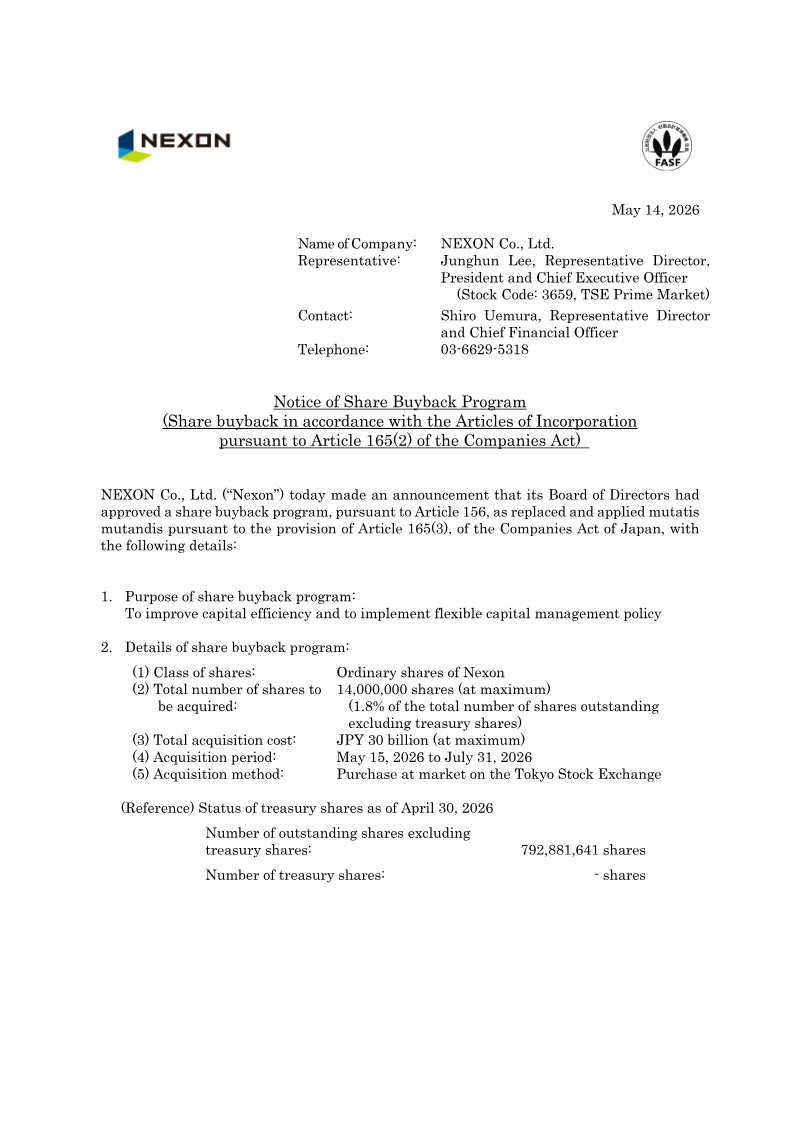
- 05The transaction is executed in accordance with Article 178 of the Japanese Companies Act and affects shares listed on the Tokyo Stock Exchange Prime Market.
- 06This administrative procedure does not alter the company's underlying business operations, geographic footprint, or internal governance protocols.
Summary
NEXON Co., Ltd. has formalized a strategic reduction in its equity base through the mandatory cancellation of treasury shares, a move approved by its Board of Directors in accordance with Article 178 of the Companies Act. This corporate action involves the retirement of 36,487,500 ordinary shares, representing approximately 4.4% of the company’s total issued shares as of January 31, 2026. By eliminating these shares, the company effectively reduces its total outstanding share count to an expected 792,078,539 shares, thereby consolidating ownership for existing shareholders.
The scope of this cancellation encompasses the entirety of the treasury shares held by the company as of the end of January 2026. The execution of this retirement is scheduled for February 27, 2026. This decision reflects a standard capital management practice within the Japanese gaming and technology sectors, typically aimed at improving earnings per share and enhancing shareholder value by permanently removing shares from circulation.
The data provided indicates a precise adjustment to the company's capital structure within the Tokyo Stock Exchange Prime Market. This administrative procedure follows the company's internal governance protocols and adheres to Japanese regulatory requirements for publicly traded entities. The financial impact is centered on the contraction of the share float rather than a change in the underlying business operations or geographic footprint of the organization.
Cite this report
Citation
Generating citation…