Skip to main content
Game Industry
Library
Ask AI
Cited answers
Search…
⌘
K
Library
Search
TL;DR
Connect your AI
PRO
Browse
Topics
Collections
Writers
Glossary highlights
Theme
Help & info
Subscribe
Game Industry
Library
Library
TL;DR
Search
Ask AI
Saved
Collections
PC & Console
PC & Console
Steam, consoles, cross-platform play and cloud gaming.
229 documents
Reports
Presentations
Whitepapers
Newest first
Oldest first
Title A–Z
Title Z–A
Newzoo · 2023
Report
Newzoo DLC Content Report 2023
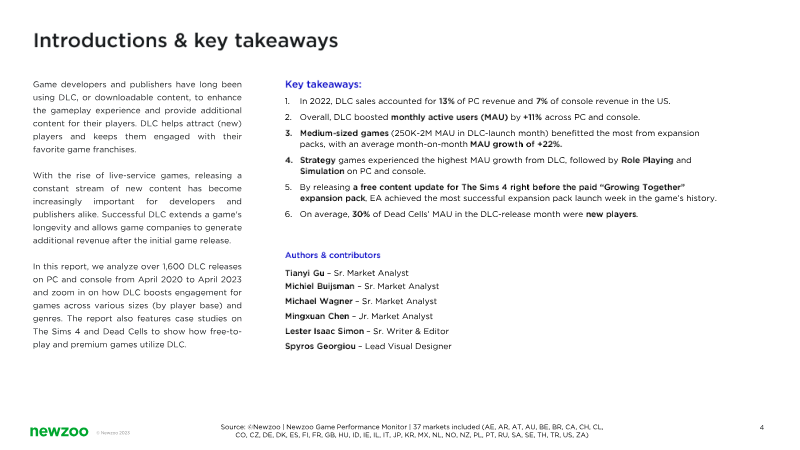
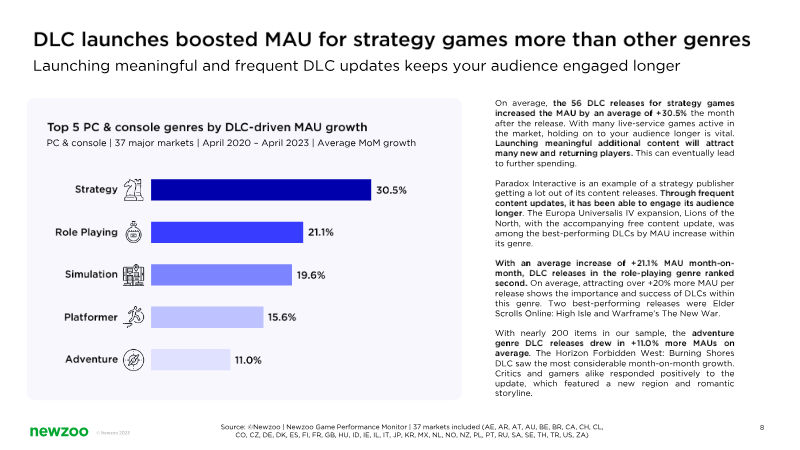
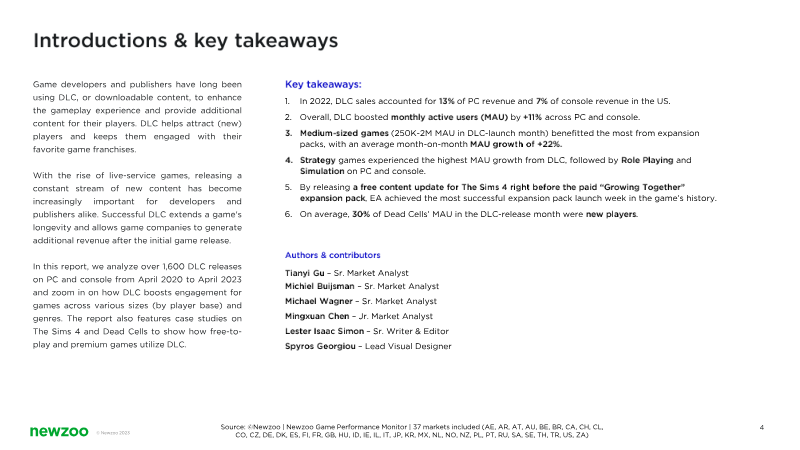
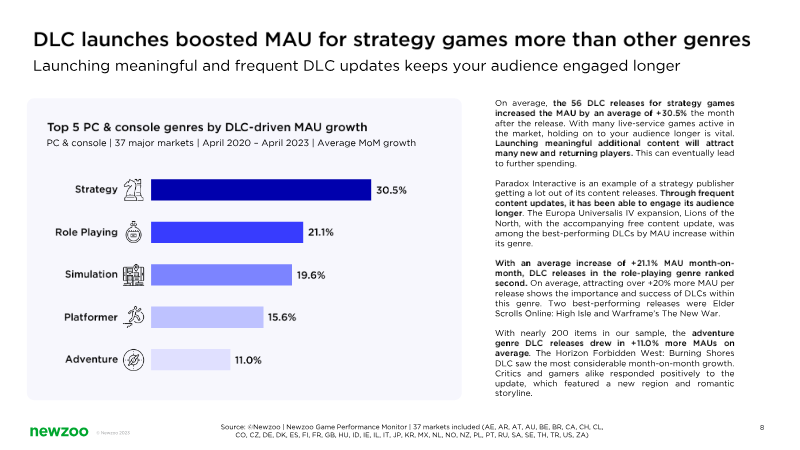
This analysis examines the impact of downloadable content (DLC) on player engagement and revenue across the PC and console markets. Covering the period from April 2020 to April 2023, the study evaluates over 1,600 DLC releases across 37 major global markets. The findings demonstrate that DLC serves as a critical tool for extending game longevity and driving monetization, particularly within the live-service model. In 2022, DLC sales accounted for 13% of total PC revenue and 7% of console revenue in the United States, highlighting a stronger reliance on add-on content among PC audiences. The research indicates that DLC launches provide a significant boost to player activity, with an average increase of 11% in Monthly Active Users (MAU) during the launch month. Medium-sized games, defined as those with 250,000 to 2 million MAU, saw the most substantial benefit, averaging a 22% growth rate. From a genre perspective, strategy games experienced the highest engagement spikes at 30.5%, followed by role-playing games at 21.1%. However, the data also reveals a trend of declining engagement in the months following a release, suggesting that players often churn or move to other titles once they have consumed the new content. Case studies of The Sims 4 and Dead Cells illustrate diverse strategic approaches to content delivery. Electronic Arts successfully utilized a "free-to-play" funnel by releasing a free update immediately before a paid expansion, resulting in the most successful launch week in the franchise's recent history. Conversely, Dead Cells demonstrated the power of crossovers, with its Return to Castlevania DLC driving a 225% increase in MAU. Despite these spikes, the analysis notes that retention remains a challenge, as a significant majority of players do not return for subsequent updates, emphasizing the constant need for fresh content to maintain a stable player base.
Newzoo · 2023
Report
How DLC boosts engagement for PC and console games
Downloadable content (DLC) serves as a critical driver for player engagement and long-term monetization in the PC and console gaming sectors. Analyzing over 1,600 content releases between April 2020 and April 2023 across 37 major markets, data indicates that DLC launches provide an average monthly active user (MAU) boost of 11%. This impact is most pronounced for medium-sized games with 250,000 to 2 million MAU, which experienced a 22% growth during launch months. While these releases successfully spike interest, engagement typically declines in the months following the initial release, highlighting the necessity of a consistent content pipeline to maintain player interest. Monetization trends in the United States further underscore the importance of post-launch content. In 2022, DLC accounted for 13% of PC revenue and 7% of console revenue, contributing to a landscape where in-game spending represents nearly half of total industry earnings. Strategy games emerged as the top-performing genre for DLC-driven growth, seeing a 30.5% average increase in MAU, followed by role-playing and adventure titles. These findings suggest that genres requiring deep mechanical updates or narrative expansions benefit most from the DLC model. Case studies of The Sims 4 and Dead Cells illustrate diverse strategic approaches to content delivery. Electronic Arts successfully utilized a "free-to-play" transition combined with a free base-game update to prime the audience for the "Growing Together" expansion, resulting in its most successful launch week since 2015. Conversely, Dead Cells demonstrated the power of high-profile collaborations, such as the Castlevania DLC, which drove a 225% MAU increase. However, the data also reveals a retention challenge, as a significant majority of players who engage with new DLC do not remain active in subsequent non-update months. This emphasizes that while DLC is a potent tool for re-acquisition and revenue, sustaining a permanent player base remains a complex hurdle for live-service titles.
Newzoo · 2023
Presentation
PC & Console Gaming: 2023
The global PC and console gaming market in 2023 is navigating a period of post-pandemic stabilization, marked by a contraction in total playtime as the industry adjusts from the unprecedented surges observed between 2020 and 2022. Despite this correction, the sector remains significantly larger than pre-COVID projections, outperforming historical expectations by over $32 billion. The current landscape is defined by intense competition for user attention, where established franchises and long-standing titles maintain dominance over new market entrants. To sustain growth in this saturated environment, developers and publishers are increasingly prioritizing engagement-focused strategies, including cross-platform functionality, subscription-based models, and persistent microtransaction ecosystems. A pivotal driver of modern industry performance is the integration of transmedia strategies, as film and television adaptations of gaming intellectual property have proven highly effective at revitalizing engagement and driving revenue for legacy titles. The ecosystem is evolving into a multifaceted social environment where the boundaries between playing, viewing, and social interaction continue to blur. This shift toward a more interconnected, cross-platform experience is supported by improved console hardware availability and a substantial pipeline of delayed software releases, both of which are expected to catalyze growth throughout the remainder of the year. Comprehensive market intelligence, derived from title-level performance metrics, global consumer research, and brand health tracking, remains essential for stakeholders to navigate these shifting dynamics. By synthesizing data on player behavior and market trends, industry participants can better forecast growth trajectories and refine monetization strategies. As the sector matures, the ability to leverage these analytical tools to monitor consumer engagement across both PC and console platforms will be the primary determinant of success in an increasingly competitive global landscape.
Newzoo · 2023
Report
How Consumers Engage with Video Games Today: Global Gamer Study 2023
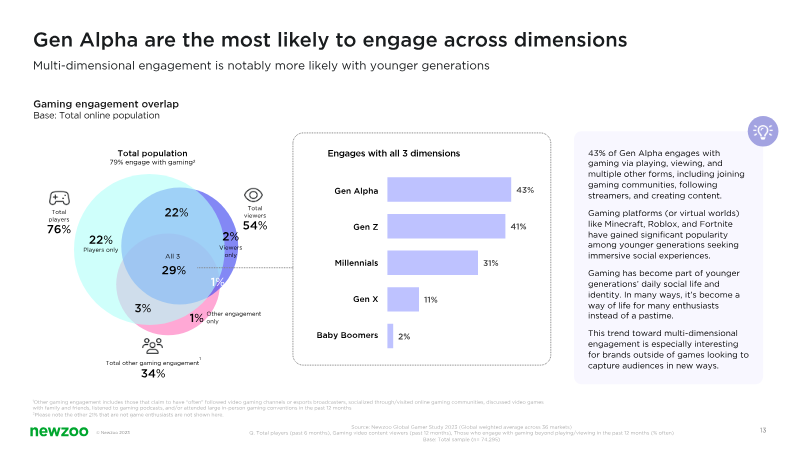
Gaming has evolved into a pervasive, multi-dimensional activity that now encompasses 79 percent of the global online population. Beyond traditional play, this engagement includes viewing content and participating in social interactions within virtual environments. This shift has transformed the medium into a critical marketing channel, allowing brands to connect with diverse, multi-generational audiences through immersive digital experiences. The landscape is increasingly defined by cross-platform behavior, with nearly half of all gamers utilizing multiple devices to access content. A particularly valuable cohort of tri-platform players has emerged, demonstrating higher levels of both time investment and financial expenditure compared to single-platform users. While mobile gaming serves as the primary entry point for the broadest audience, console platforms currently maintain the highest play-to-pay conversion rates. In response, developers are prioritizing cross-platform and cross-progression strategies to sustain engagement and capitalize on the growing trend of brand discovery within these ecosystems. These insights are derived from a comprehensive analysis of 36 international markets, drawing on data from over 74,000 surveyed individuals throughout 2023. By examining a wide spectrum of gaming behaviors, spending motivations, and demographic profiles, the findings illustrate a global industry that is increasingly interconnected. As gaming continues to bridge the gap between entertainment and social utility, the focus on platform-agnostic experiences remains the primary driver for growth and monetization across the sector.
Newzoo · 2023
Report
Global Games Market Report: August 2023
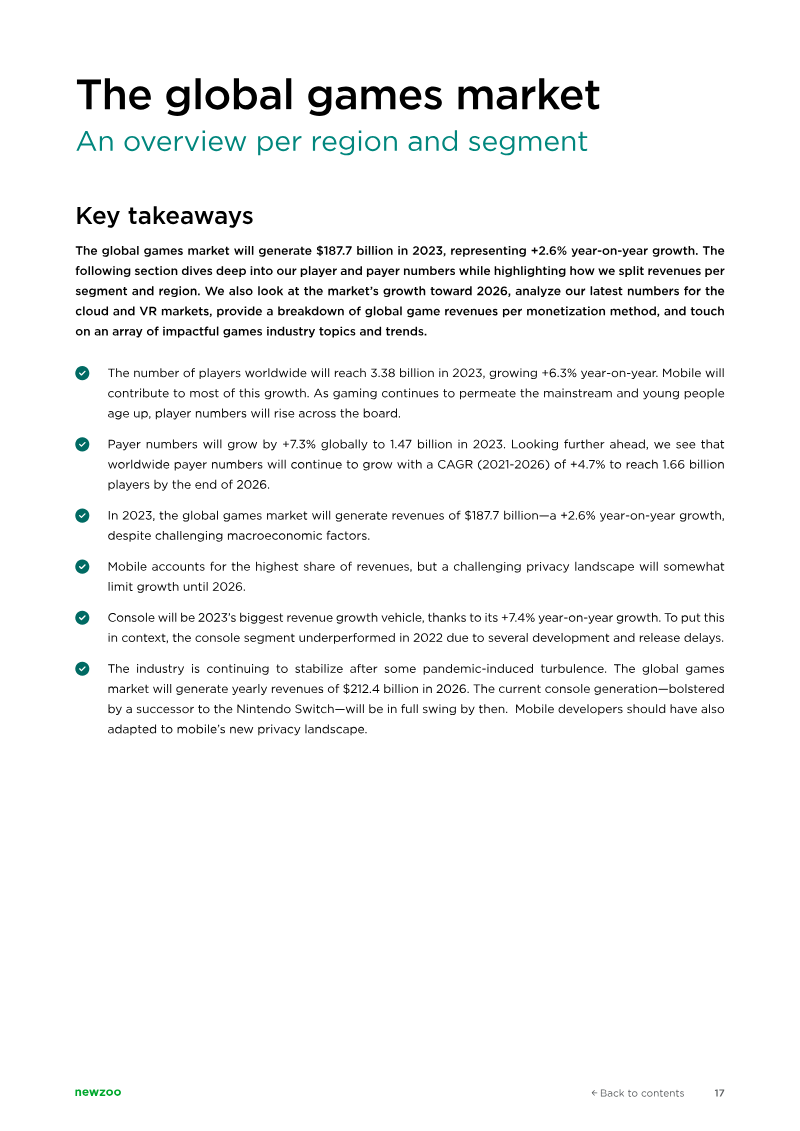
The global games market is entering a period of recovery in 2023, characterized by a projected revenue of $187.7 billion and a total player base of 3.38 billion. This 2.6% year-on-year growth signals a stabilization following the post-pandemic market correction of 2022. While mobile gaming remains the largest revenue segment, console gaming serves as the primary catalyst for this year’s expansion, rebounding significantly from previous development delays. Looking toward 2026, the industry is expected to maintain this upward trajectory, with total revenues forecasted to reach $212.4 billion. Regional performance remains uneven, as strong console demand in Western markets contrasts with slower growth in the Asia-Pacific region, where regulatory challenges in China continue to dampen momentum. To mitigate rising production costs and extended development cycles, studios are increasingly prioritizing live-service monetization models and integrating generative AI into their workflows. While these technologies offer potential for streamlined asset creation and prototyping, their long-term viability is complicated by unresolved legal and ethical concerns regarding copyright and intellectual property. The industry is undergoing a structural shift toward digital-first engagement, evidenced by the continued decline of physical media and the rise of transmedia strategies and influencer-led development. Hardware diversification is also accelerating, with the emergence of complementary handheld devices expanding the reach of traditional platforms. Despite these advancements, specific genres are experiencing shifting player preferences; while adventure and shooter titles remain dominant, the battle royale genre is losing traction. Furthermore, the mobile sector faces persistent headwinds in monetization and user acquisition, largely driven by evolving privacy policies that have impacted the performance of previously lucrative genres like RPGs.
Newzoo · 2023
Report
How Different Generations Engage with Video Games Today
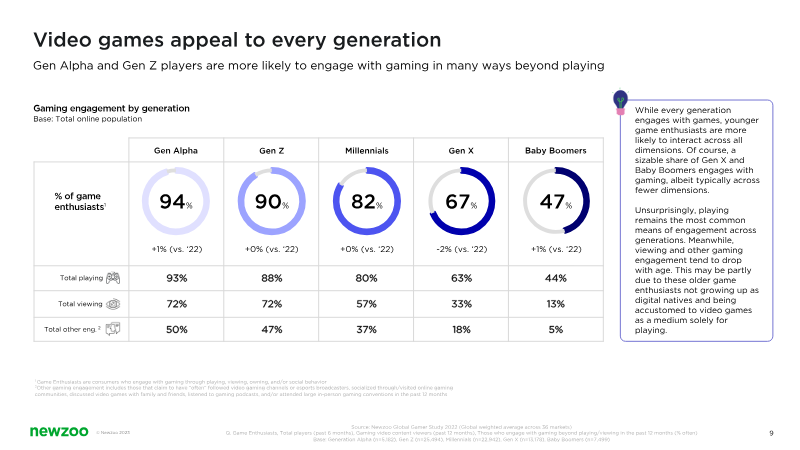
Gaming has evolved into the primary entertainment medium for younger generations, with 94% of Gen Alpha identifying as game enthusiasts. This shift signifies a transition from gaming as a solitary hobby to a multi-dimensional "way of life" that encompasses playing, viewing, and socializing. While mobile gaming maintains universal appeal across all age groups, younger cohorts like Gen Alpha and Gen Z are significantly more likely to engage across multiple platforms and participate in virtual social environments. These younger players demonstrate high spending conversion rates, with approximately 60% investing in games, often driven by a desire for social immersion and diverse genres such as Adventure and Battle Royale. In contrast, older generations like Gen X and Baby Boomers exhibit more utilitarian engagement patterns. These cohorts primarily favor casual puzzle-solving titles and are motivated by achievement, mastery, and time-saving mechanics. While 70% of younger players are "player-viewers" who consume gaming video content for entertainment and social connection, older players use video content more informationally, such as for reviews or tutorials. This generational divide extends to brand discovery; younger players are increasingly open to discovering new brands within game worlds, making the medium a vital marketing tool for reaching modern consumers. The global gaming landscape is characterized by both universal franchises and distinct regional preferences. Major titles like Call of Duty, Fortnite, and Genshin Impact maintain a massive international presence, yet markets such as China, Japan, and South Korea continue to support region-specific hits like Honor of Kings and Lineage. Across these diverse geographies, the 2023 data highlights that gaming has become a central pillar of social interaction and brand engagement, particularly as younger generations integrate virtual experiences into their daily identities and consumption habits.
Newzoo · 2023
Report
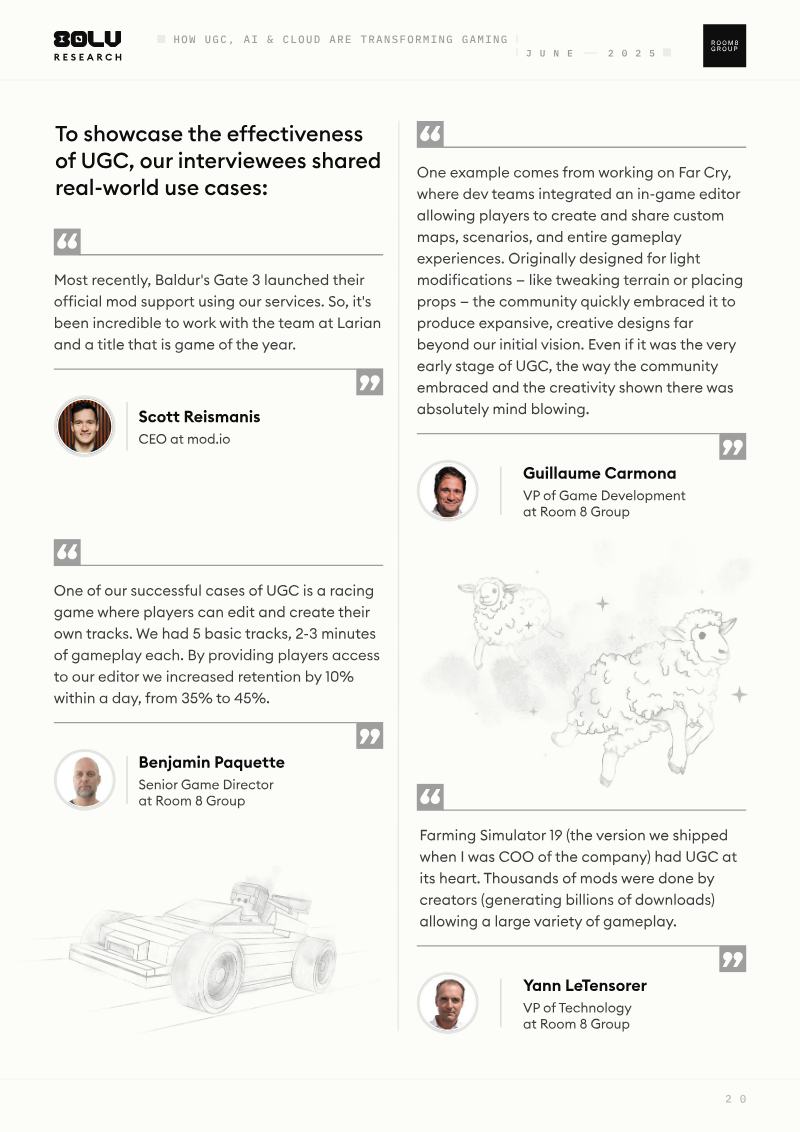
How UGC, AI, & Cloud Are Transforming Gaming
The gaming industry is currently undergoing a fundamental transformation driven by the social behaviors of Gen Alpha and Gen Z, over 90% of whom utilize gaming as their primary interactive outlet. This demographic shift has catalyzed the rise of User-Generated Content (UGC), artificial intelligence, and cloud infrastructure, collectively democratizing development and allowing indie titles to compete with AAA productions. The cloud gaming market is expanding rapidly, reaching nearly 400 million users within four years, while the integration of AI in gaming is projected to achieve a $4.2 billion valuation by 2029. UGC has emerged as a critical driver of retention, with dominant platforms like Roblox, Minecraft, and Fortnite accounting for 19% of total global playtime and distributing over $1.3 billion to creators in 2023. To overcome the technical and legal hurdles of content creation, the industry is increasingly turning to generative AI, a sector expected to reach $1.8 billion by 2025. These tools automate complex processes such as texture upscaling and level generation, lowering the barrier to entry for creators across diverse genres. While cloud technology offers the potential for real-time updates and massive concurrency, infrastructure limitations remain a significant bottleneck. Approximately 76% of players identify latency as a primary concern, suggesting that while 5G will eventually facilitate mass consumer adoption, the immediate utility of the cloud lies in B2B applications like secure playtesting and instant discoverability. The convergence of these technologies is ultimately moving the industry toward a live-service ecosystem of "endless games," where the boundaries between traditional media and interactive community-driven platforms continue to blur.
Newzoo · 2023
Report
PC & Console Gaming Report 2023
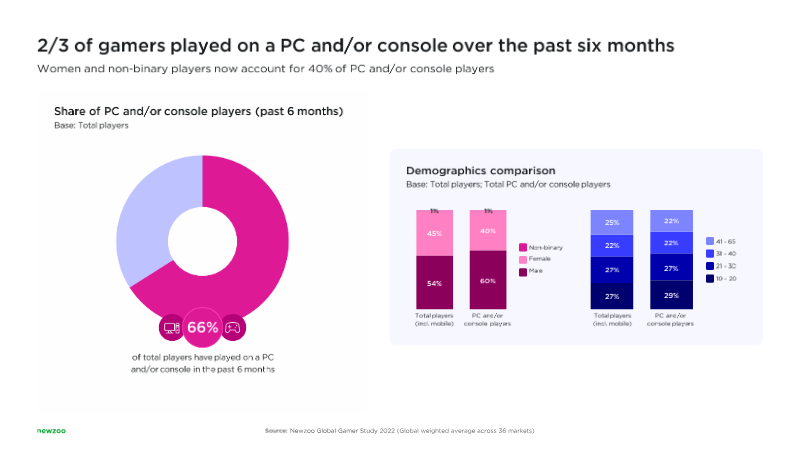
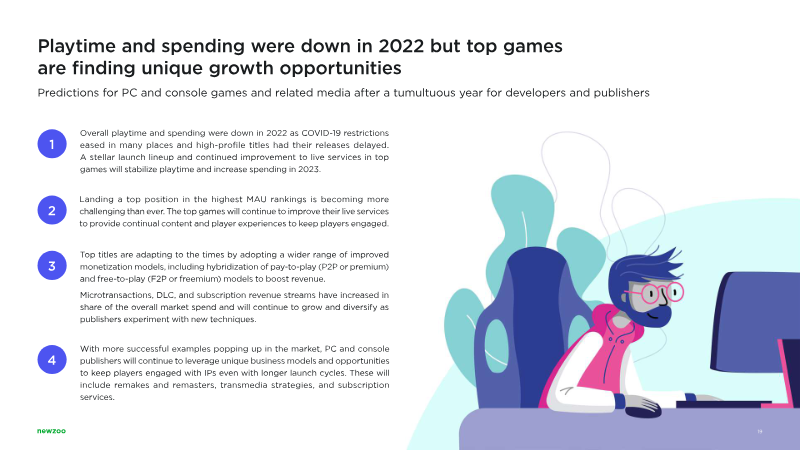
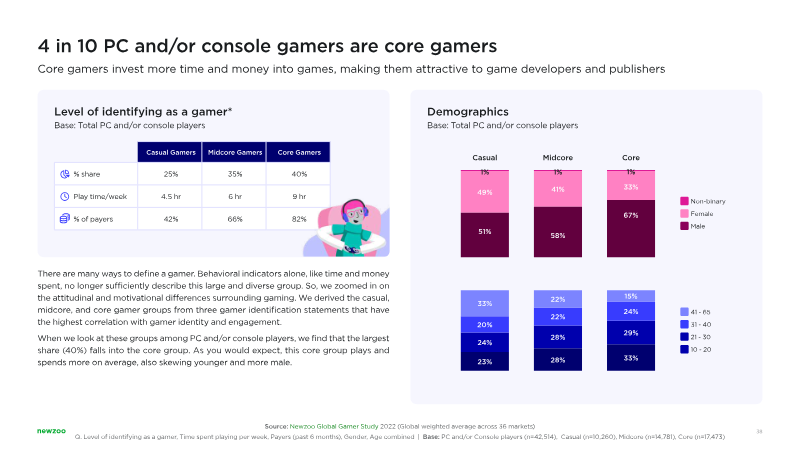
The PC and console gaming market entered a corrective phase in 2022, generating $92.3 billion in revenue despite a 2.2% year-on-year decline and a 15% drop in playtime. This contraction represents a stabilization toward pre-pandemic levels rather than a long-term downturn, as the market still outperformed pre-COVID forecasts by more than $32 billion. While total engagement fell, particularly among hardcore players who reduced playtime by 37%, the industry maintains a massive global audience of 1.1 billion PC and 611 million console players. This foundation is increasingly defined by a shift toward recurring revenue, with microtransactions and downloadable content now accounting for nearly half of all consumer spending. Market dynamics are currently shaped by the dominance of established live-service titles and the successful integration of transmedia strategies. Games like Fortnite and Roblox continue to lead in monthly active users, while media adaptations have proven effective at revitalizing older intellectual properties. The player base has also become more diverse and socially driven, with women comprising 40% of the audience and 72% of users engaging across multiple platforms. Beyond traditional gameplay, three-quarters of players participate in social activities or content creation, indicating that gaming has evolved into a broader lifestyle ecosystem where multi-platform "core gamers" represent the highest-value consumer segment. The outlook for 2023 and beyond suggests a robust recovery fueled by stabilized hardware supply chains and a dense schedule of highly anticipated blockbuster releases. While PC revenue is expected to grow steadily, console gaming is positioned as the primary driver of market expansion over the next three years. High consumer awareness for upcoming major titles, combined with the continued pivot toward hybrid monetization and cross-media expansion, points toward a resilient industry capable of sustaining growth well above historical norms. This trajectory reinforces the transition of the sector from a product-based model to a service-oriented landscape defined by long-term engagement and social connectivity.
Xsolla · 2023
Report
The Xsolla Report: The State of Play
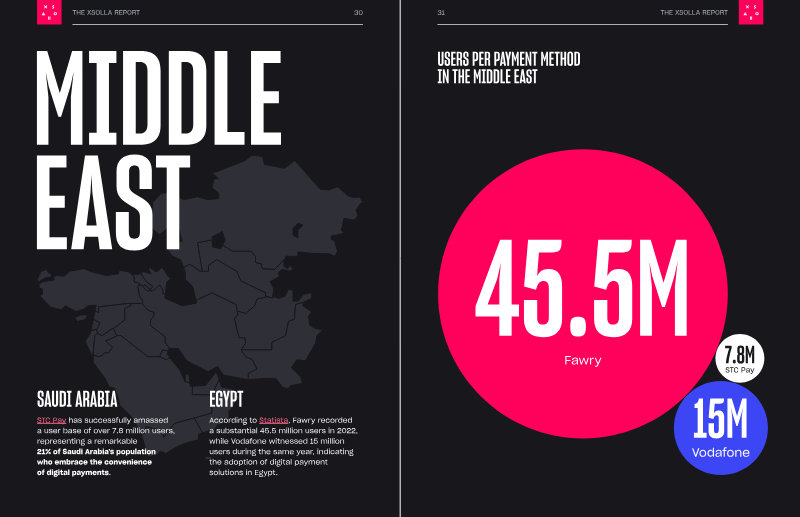
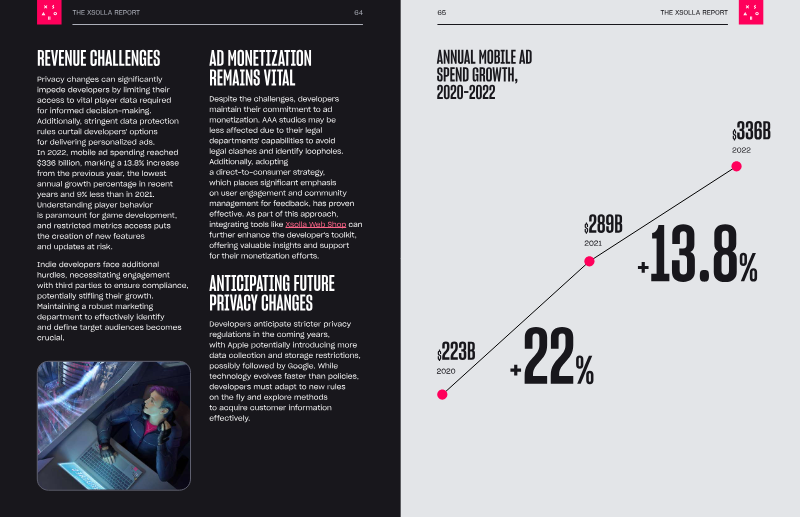
The global gaming market is undergoing a structural transformation driven by multiplatform integration and the rapid evolution of financial technologies, with total revenues projected to reach $211.2 billion by 2025. A significant catalyst for this growth is the rise of real-time payments, which are expected to account for 28% of global electronic transactions by 2027. This shift is particularly pronounced in emerging markets across the MEA and LATAM regions, where systems like India’s UPI and Brazil’s PIX are facilitating new revenue streams. To bypass traditional platform commissions and rising acquisition costs, developers are increasingly adopting mobile web shops and hybrid monetization models, including Buy Now, Pay Later services, which are forecasted to reach a $309 billion market value by 2030. Technological advancements in cloud gaming and artificial intelligence are further reshaping the industry landscape. Cloud gaming is anticipated to reach 2.5 billion users by 2024, though it continues to face technical challenges regarding latency and infrastructure. Simultaneously, generative AI is becoming a fundamental development pillar, with over 50% of top studios expected to utilize the technology by 2024 to improve efficiency by up to 30%. Within the next decade, AI is projected to support more than half of the entire game creation process, significantly reducing production timelines and costs. The industry is also pivoting toward a more interconnected ecosystem where cross-platform capabilities are a primary consumer demand, supported by 87% of multiplayer gamers. This integration, combined with advancements in virtual reality and blockchain, is fueling the expansion of the metaverse, which is forecasted to reach a $710 billion valuation by 2027. As privacy regulations and shifting ad efficiencies challenge traditional growth strategies, the sector is prioritizing flexible payment solutions and immersive, cross-play environments to maintain global momentum.
Newzoo · 2022
Report
Global Cloud Gaming Report: 2022
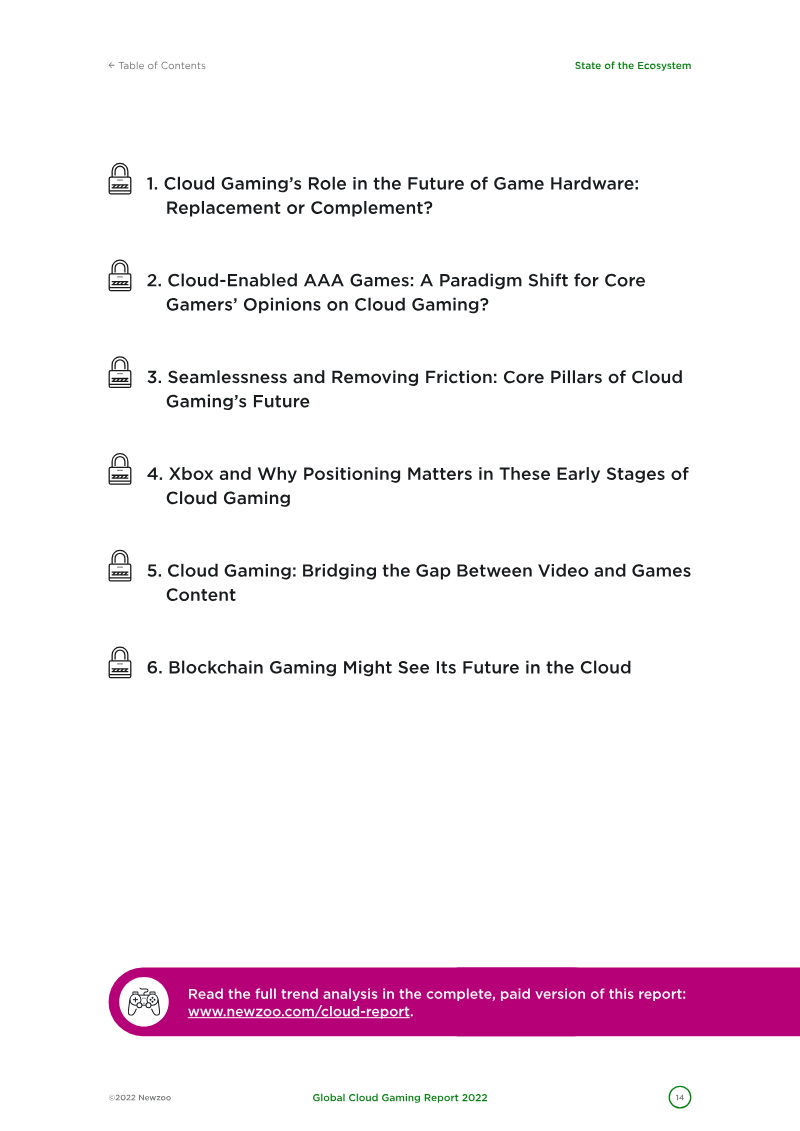
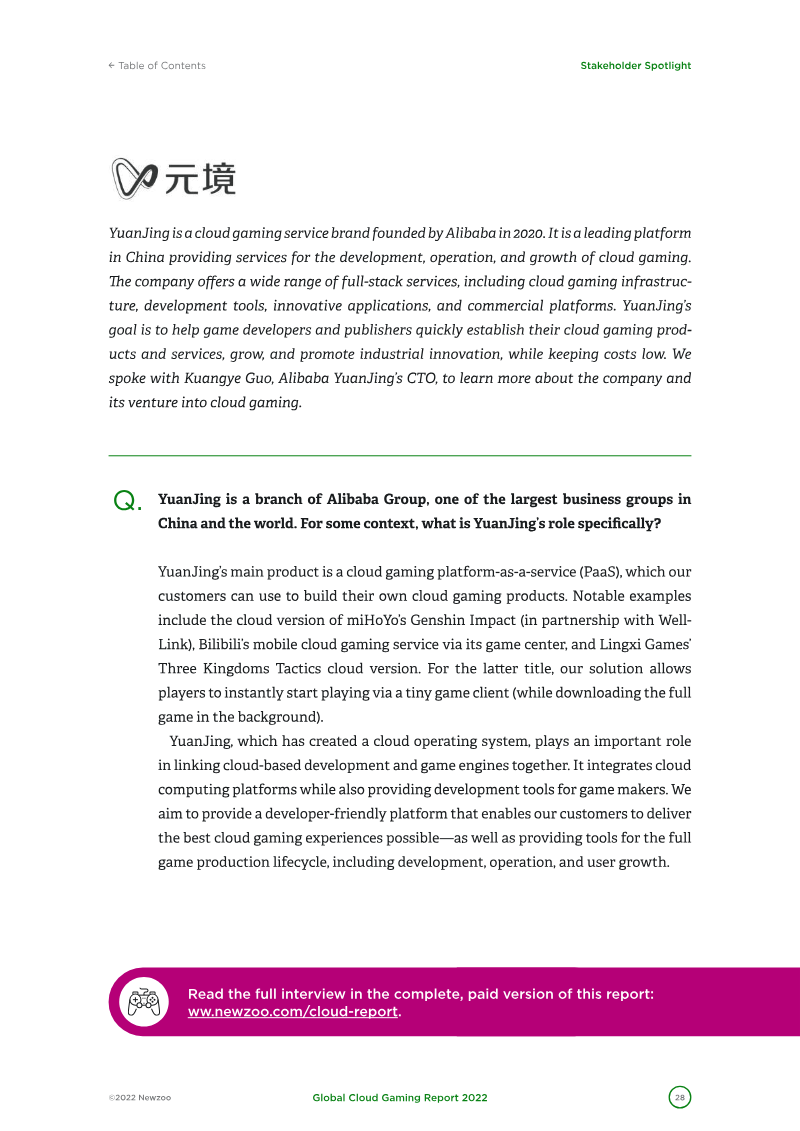
The global cloud gaming market is entering a phase of maturity, with 2022 revenues projected to reach $2.4 billion supported by a base of 31.7 million paying users. Despite high-profile shifts in the ecosystem, such as the closure of Google Stadia, the industry remains fundamentally viable as major platform holders like Xbox and PlayStation successfully integrate cloud technology to complement traditional hardware. This evolution is primarily driven by the increasing seamlessness of services, which allows players to bypass local hardware limitations and access high-end content instantly across a diverse range of devices. Market projections indicate a robust growth trajectory through 2025, at which point paying users are expected to reach 86.9 million and annual revenues are forecasted to climb to $8.2 billion. This expansion is underpinned by the global rollout of 5G networks, improved service profitability, and the emergence of cloud infrastructure as the foundational backbone for the metaverse. Strategic scaling by major players, including Alibaba’s YuanJing, aims to support massive concurrent user experiences while overcoming the constraints of physical hardware on a global scale. Technological innovation in infrastructure-as-a-service models is further accelerating adoption by lowering costs for both telecom operators and consumers. By utilizing GPU edge computing within carrier networks, providers can deliver high-quality gaming experiences with reduced latency. The industry is also refining its internal metrics and consumer segmentation, distinguishing between cloud-enabled and cloud-native content to better target diverse player demographics. These developments suggest that cloud gaming is transitioning from a niche technology into a central pillar of the broader interactive entertainment landscape.
Newzoo · 2022
Report
Consumer Insights: Games and Esports 2022
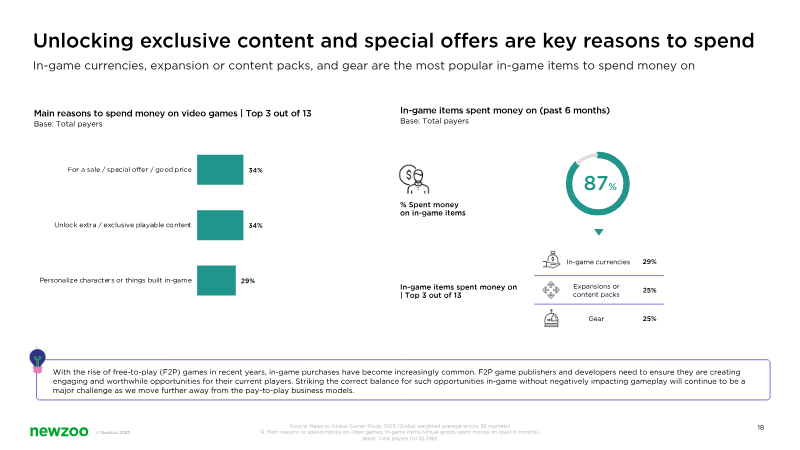
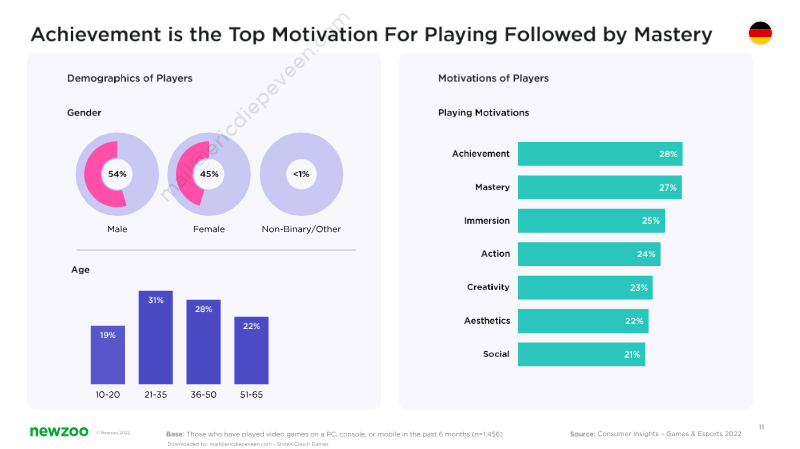
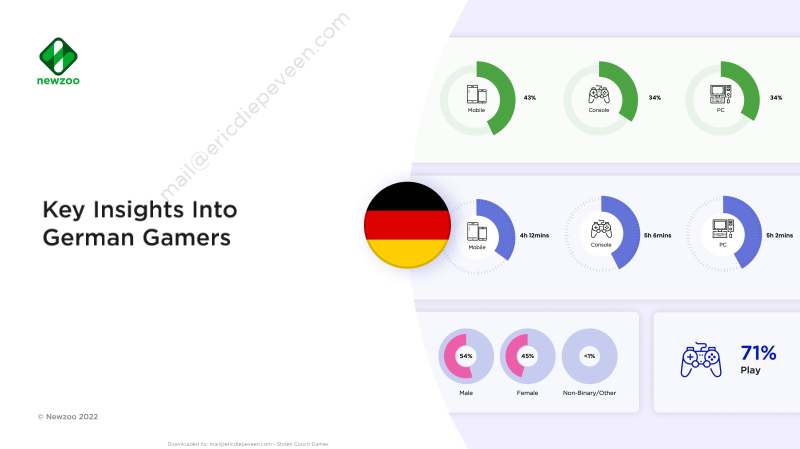
The Consumer Insights: Games and Esports 2022 report provides a comprehensive analysis of global gaming behaviors, motivations, and market engagement. The primary purpose of the research is to equip game developers, publishers, and industry stakeholders with actionable data to benchmark titles, understand player demographics, and identify growth opportunities across 36 diverse international markets. By examining over 100 key performance indicators, the analysis offers a granular view of how players interact with PC, console, and mobile platforms. The research is underpinned by a robust methodology, drawing on survey data from over 75,000 consumers worldwide. The findings highlight distinct engagement patterns, such as the prevalence of specific gaming personas—notably Time Fillers and Mainstream Gamers—and the interplay between playing and viewing habits. For instance, data from the German market indicates that while playing remains the dominant activity, a significant portion of the population also engages with gaming video content and esports. Furthermore, the report identifies key drivers for consumer spending, noting that price sensitivity, the desire for exclusive content, and social connectivity are primary motivators for financial investment in games. Covering a broad geographic scope that includes North America, Europe, Latin America, the Middle East, and the Asia-Pacific region, the report serves as a strategic tool for navigating the complex global gaming landscape. By synthesizing metrics such as monthly active users, daily active users, and lifetime player value, the analysis facilitates a deeper understanding of the motivations driving player behavior. Ultimately, the findings emphasize that a nuanced approach to audience segmentation and platform-specific engagement is essential for companies seeking to reach and retain diverse gaming populations in an increasingly competitive entertainment market.
Newzoo · 2022
Report
Games, Esports, Live Streaming, Cloud and the Metaverse: 2022 Trends to Watch
The global gaming industry is currently undergoing a structural transformation characterized by the integration of emerging technologies and a pivot toward cross-platform accessibility. Central to this evolution is the expansion of cloud gaming, which serves as a critical bridge to overcome hardware constraints, allowing publishers to reach broader audiences on mobile devices and legacy consoles. Simultaneously, the metaverse is maturing into a robust commercial ecosystem, fueled by significant venture capital investment, the proliferation of virtual real estate, and the integration of digital fashion. These developments signal a broader industry shift toward enhanced creator-viewer interactivity and the adoption of Web3.0 business models. Monetization strategies are diversifying as companies experiment with blockchain-based player trading and fan engagement tools, despite notable consumer resistance toward non-fungible tokens. This period is also defined by a surge in high-quality cross-media intellectual property adaptations and a crowded release calendar, which intensifies competition for consumer attention. Furthermore, regulatory and consumer pressures are forcing a transition toward more open app store ecosystems, challenging traditional distribution gatekeepers. Within the esports sector, organizations are actively diversifying revenue streams by prioritizing mobile-first titles and leveraging co-streaming to maximize viewership reach. These trends, observed throughout 2022, reflect a strategic effort to sustain growth across global markets. By synthesizing market intelligence and tracking key performance metrics, the industry continues to navigate the complexities of digital transformation, balancing the pursuit of innovative monetization with the necessity of maintaining user trust in an increasingly interconnected virtual landscape.
Previous
1
…
16
17
18
…
20
Next