Mobile Games
The mobile market by genre, from hypercasual and puzzle to midcore and idle.
403 documents
Niko Partners · 2020
ReportFor the Win: Breaking Down the Preferences of Asia's Mobile Gamers
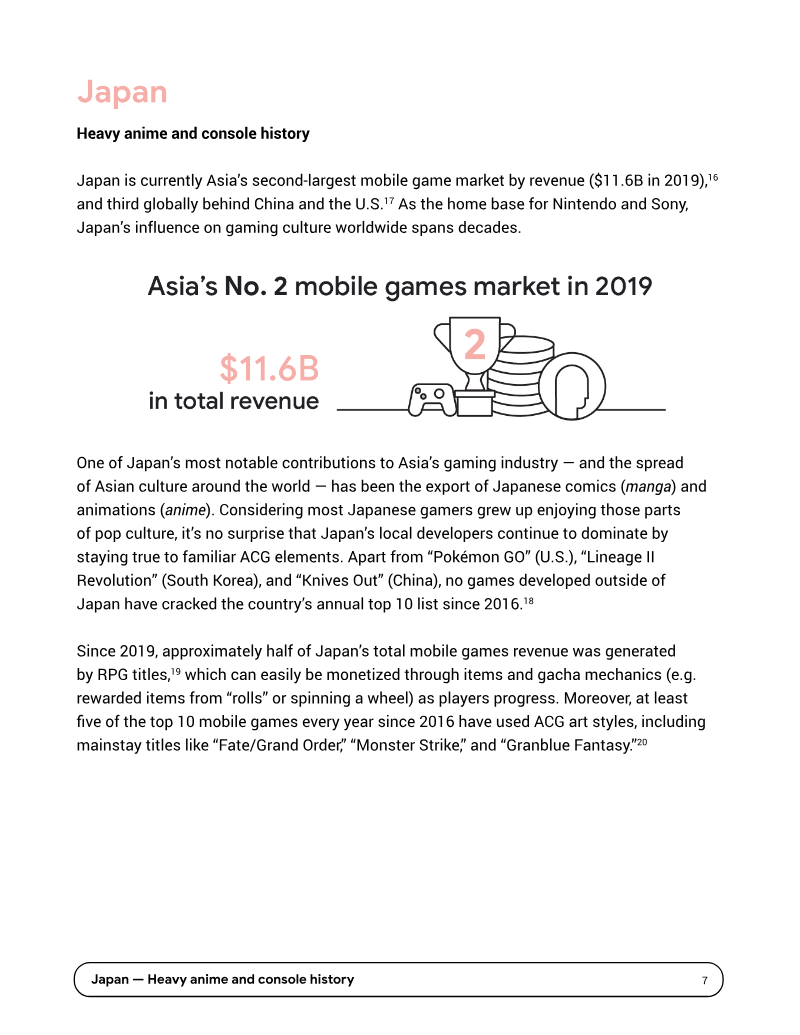
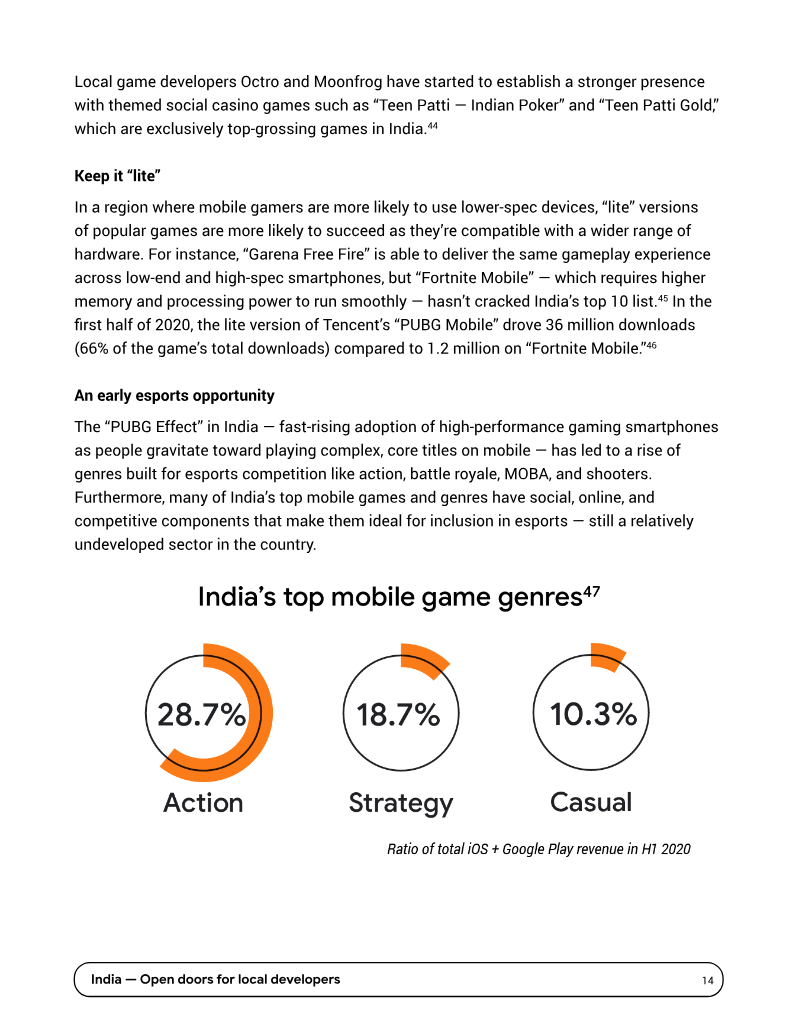
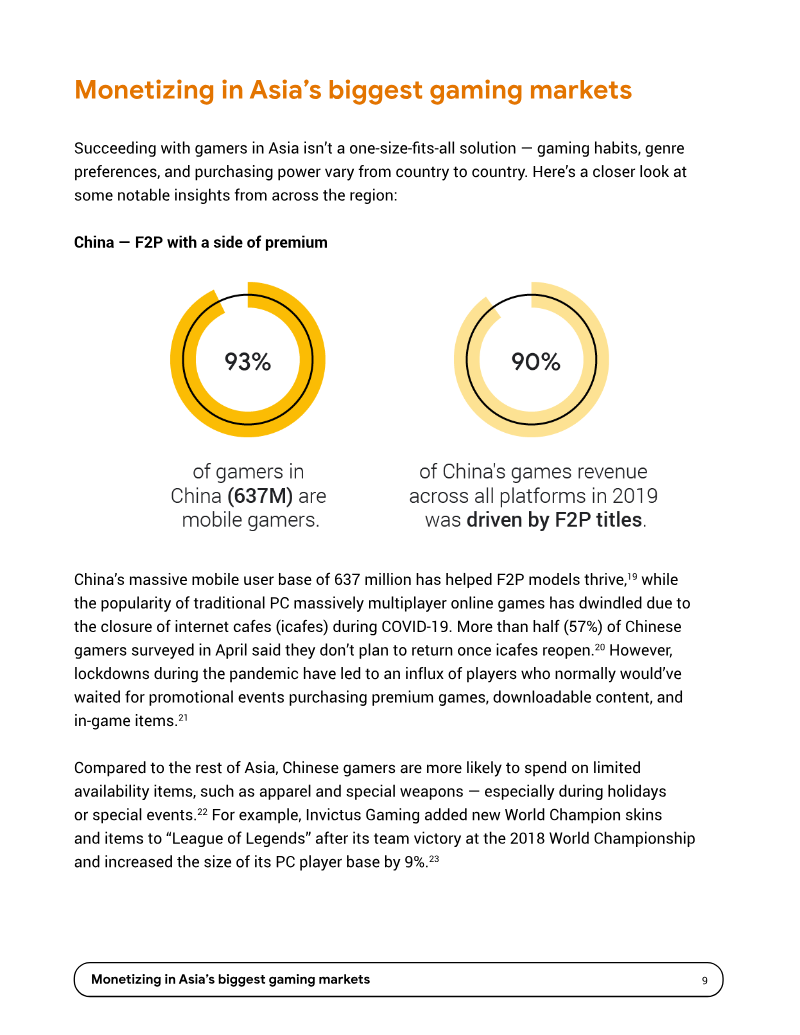
Asia represents the world’s most significant mobile gaming hub, housing over half of the global player base and generating the majority of the industry's mobile revenue. The primary objective of this analysis is to examine the distinct player preferences, cultural influences, and market regulations across five key regions: China, Japan, South Korea, India, and Southeast Asia. By evaluating top-grossing titles and genre shifts through the first half of 2020, the findings illustrate a broader regional transition from casual play toward complex, competitive, and socially-driven experiences. China remains the largest market, characterized by the successful migration of PC intellectual properties to mobile and a regulatory environment that necessitates domestic partnerships. In contrast, Japan’s market is defined by a deep-rooted console history and the pervasive influence of anime and manga aesthetics, with RPGs accounting for nearly half of its mobile revenue. South Korea leverages its robust 5G infrastructure and "PC bang" culture to sustain a market dominated by high-fidelity MMORPGs. Meanwhile, India and Southeast Asia emerge as high-growth regions where young populations and increasing smartphone accessibility are fueling a massive surge in mobile esports and battle royale titles. The data reveals that localization involves more than translation; it requires integrating local folklore, respecting religious customs, and optimizing for hardware constraints. For instance, "lite" versions of games are essential for market penetration in India, while community-centric features are vital for success in Southeast Asia. Across all regions, the rise of mobile esports is a dominant trend, with competitive titles increasingly displacing traditional genres in the top-grossing charts. The methodology utilizes data from Niko Partners, incorporating market models, five-year forecasts, and qualitative surveys from a panel of millions of consumers across Asia. The analysis covers the period from 2016 through June 2020, drawing on data from retailers, app markets, and interviews with industry executives to provide a comprehensive view of the mobile landscape.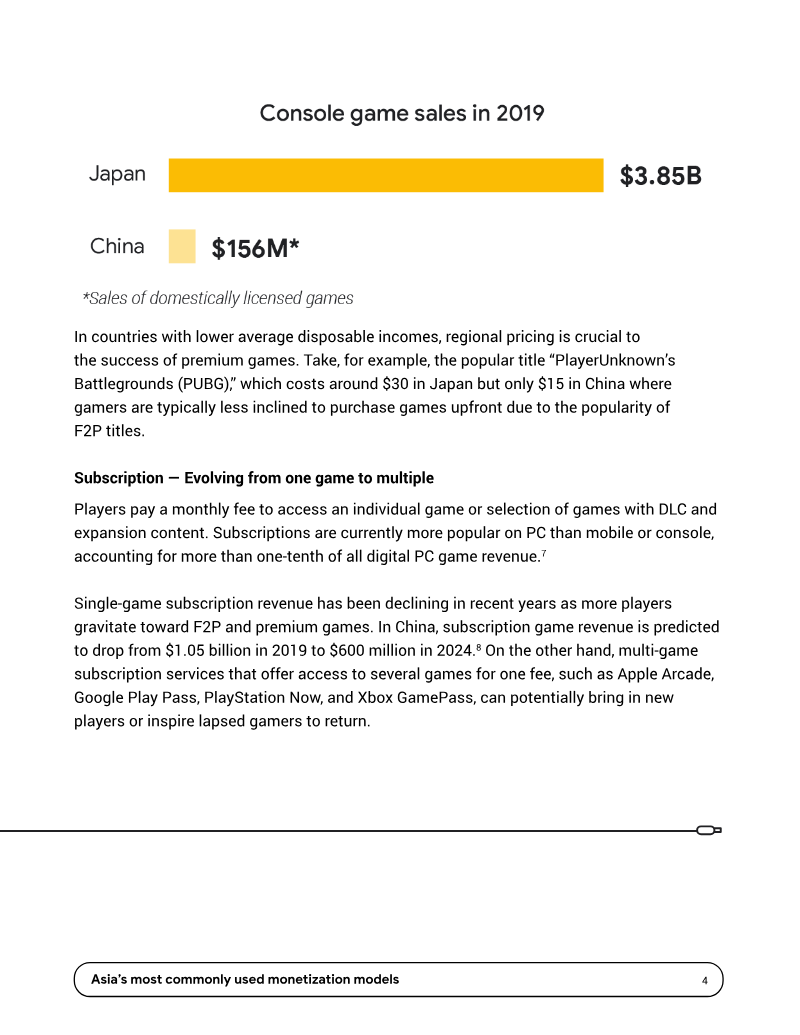
Niko Partners · 2020
ReportFrom Playing to Paying: The Art of Monetizing Games in Asia
This analysis examines the evolving landscape of game monetization across Asia, focusing on how developers adapt revenue models to meet the demands of a maturing market. The central thesis posits that while free-to-play (F2P) remains the dominant force, the rise of hybrid models and advanced mechanics like battle passes and gacha are essential for capturing the increasing purchasing power of Asian gamers. The scope covers major markets including China, Japan, South Korea, India, and Southeast Asia, utilizing 2019 and 2020 data to highlight shifts accelerated by the COVID-19 pandemic. Key findings underscore the overwhelming success of the F2P model, which accounted for 98.5% of all mobile games revenue in 2019. In China, 100% of the top-grossing mobile titles utilized F2P. However, regional nuances are significant; Japan represents the most valuable mobile market with a revenue per download of $12.84, compared to a regional average of $1.53. While premium models remain a staple in console-heavy Japan, emerging markets like India are "leapfrogging" traditional stages by quickly adopting sophisticated F2P mechanics, such as battle passes, which were featured in half of India’s top-grossing games by early 2020. The methodology relies on a combination of proprietary consumer panels exceeding four million users, developer interviews, and market modeling. The conclusions suggest that developers must move toward hybrid monetization—blending in-app purchases with rewarded ads—to mitigate economic risks and appeal to diverse player segments. By aligning monetization with core gameplay rather than interrupting it, publishers can sustain long-term engagement in a region where player motivations range from high-spend competition to time-intensive casual play.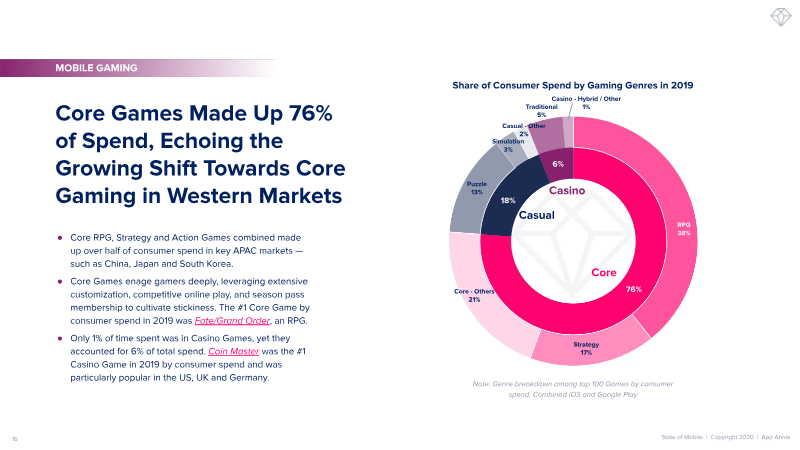

data.ai · 2020
ReportState of Mobile 2020
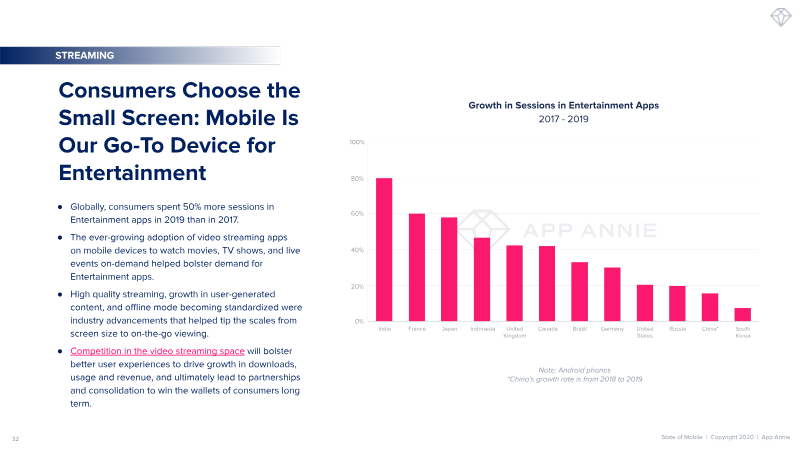
The mobile industry reached unprecedented milestones in 2019, characterized by 204 billion app downloads and $120 billion in consumer spending. This growth represents a doubling of the market since 2016, establishing mobile as the primary platform for global commerce and entertainment. Mobile-centric companies now command significantly higher IPO valuations than their traditional counterparts, a trend driven largely by the emergence of Gen Z as a dominant demographic. This generation engages with mobile content 60% more frequently than older cohorts, signaling a permanent shift in consumer behavior across global markets, with particularly high engagement levels in the Asia-Pacific region. Mobile gaming continues to anchor the ecosystem, accounting for 72% of all app store spending and outperforming the combined revenue of PC, console, and handheld gaming platforms. While casual games lead in total downloads, core titles such as RPGs and Action games generate 76% of total consumer spend and capture the majority of user engagement time. This monetization success is mirrored in other sectors; for instance, dating app expenditures doubled to $2.2 billion, and health and fitness apps saw a 130% increase in spending as users migrated from physical gyms to digital wellness platforms. Beyond entertainment, mobile has become essential to finance and retail. Global finance app sessions surpassed one trillion in 2019, with fintech startups increasingly outperforming traditional banking institutions. In retail, a strong correlation exists between time spent in-app and total sales, exemplified by record-breaking mobile transactions during major shopping events. Furthermore, the rapid rise of short-form video platforms like TikTok and the 240% increase in food delivery sessions since 2017 underscore a broader transformation where mobile serves as the central hub for daily logistics, social interaction, and professional services.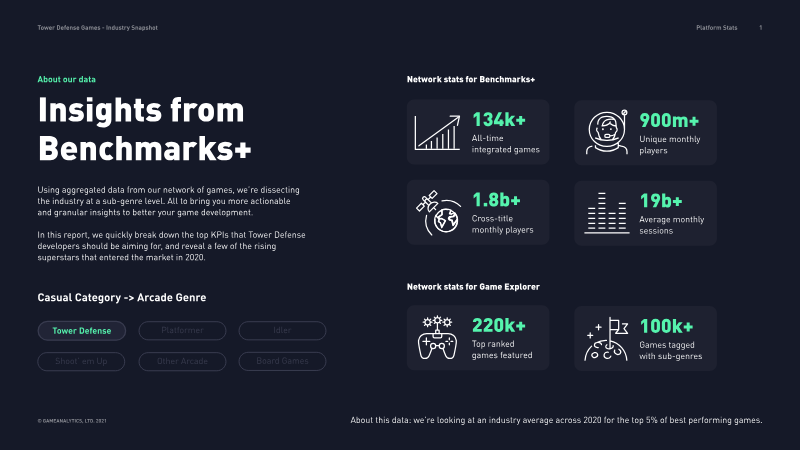

GameAnalytics · 2020
ReportTower Defense Games: Deconstructing the Superstars (2020 Industry Snapshot)
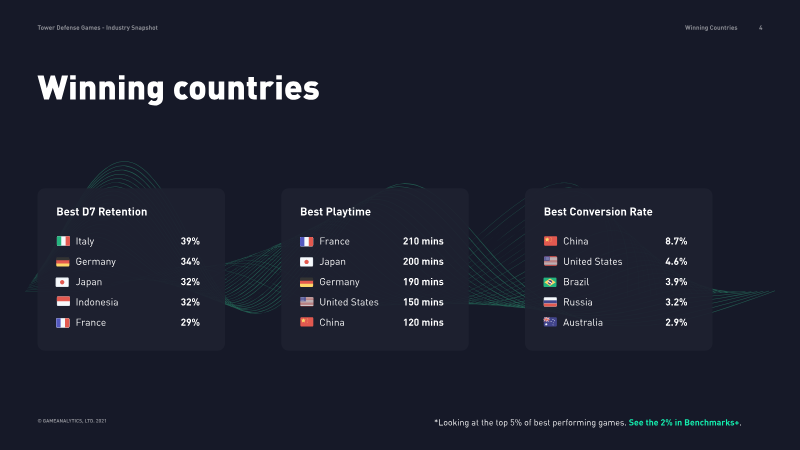
The tower defense sub-genre represents a high-performing segment within the casual arcade category, characterized by strong monetization potential and deep player engagement. Analysis of global mobile gaming data from 2020 reveals that tower defense titles significantly outperform related genres like platformers and idlers in key financial metrics. Specifically, the sub-genre boasts an Average Revenue Per Paying User (ARPPU) of $83 and an Average Revenue Per Daily Active User (ARPDAU) of $1.66. These figures are supported by a robust daily conversion rate of 3.83%, which is more than double that of board games. Geographic performance varies across different engagement and monetization KPIs. Italy leads in Day 7 retention at 39%, while France records the highest average daily playtime at 210 minutes. However, China emerges as the most effective market for monetization, achieving a conversion rate of 8.7%, nearly double that of the United States. These statistics are derived from a massive dataset encompassing over 134,000 integrated games and 900 million unique monthly players, providing a granular view of the competitive landscape. The success of the genre is attributed to its accessible core mechanics combined with high replayability. Developers leverage meta-features such as daily challenges, PvP options, and RPG elements to drive long-term retention. By introducing new characters or obstacles, studios can shift the game meta without the resource-heavy requirement of designing entirely new maps. Notable titles launched in 2020, such as Kingdom Wars Defense and Rush Royale, exemplify these trends by blending traditional defense mechanics with innovative strategy and merging elements to maintain high user ratings and market relevance.

GDACZ – Czech Game Developers Association · 2020
ReportCzech Video Game PC, Console and Mobile Game Developers in Czech Republic 2020
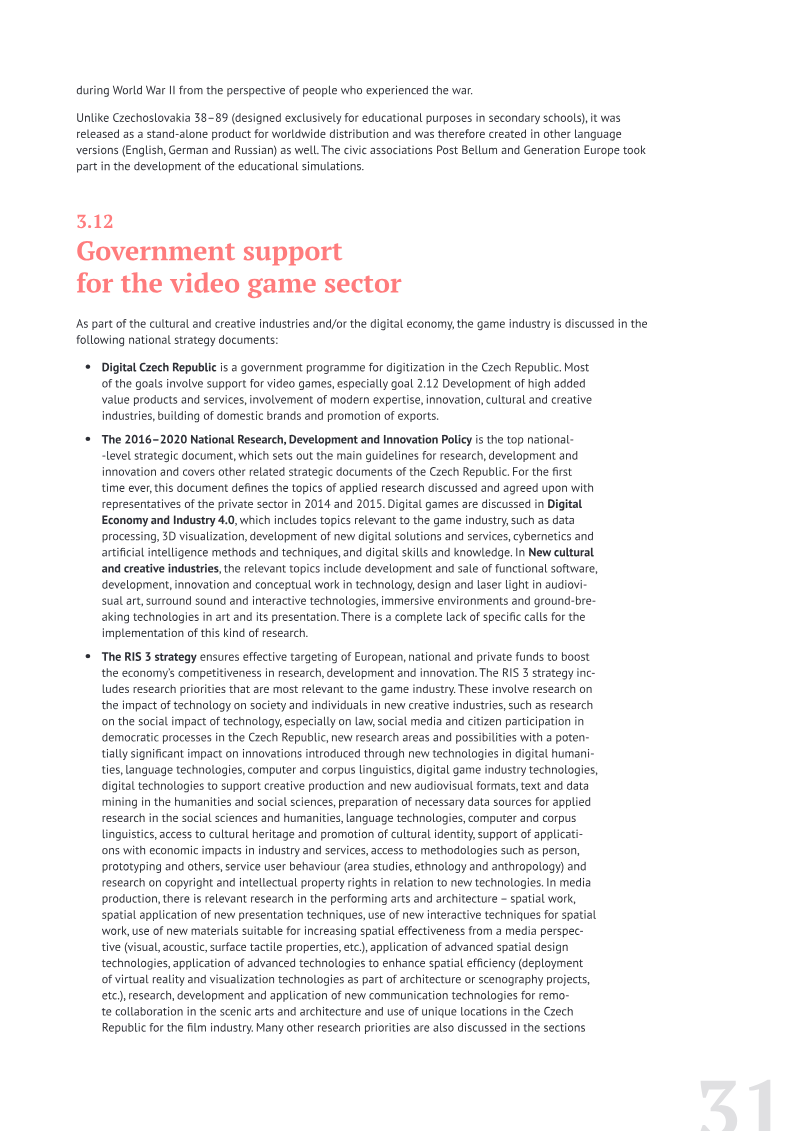
The study maps the structure and dynamics of the Czech video-game industry as of 2020, highlighting its rapid export-driven expansion and the strategic challenges it faces in talent development and public support. The sector comprises roughly 110 domestic development studios, of which only a small fraction are foreign branches, employing about 1,750 specialists. Turnover rose from CZK 2.26 billion in 2017 to over CZK 5 billion in 2020, equivalent to more than €190 million, reflecting an average annual growth rate of 29% over the previous five years and an export share near 95% to markets such as the United States, Germany and the United Kingdom. Revenue in 2019 already surpassed €169 million, outpacing the national film industry by a factor of three, and the market is projected to exceed €190 million in 2020. The analysis of the publishing and distribution landscape shows a shift away from traditional full-development financing toward a model where publishers act mainly as marketing and launch partners, while online platforms now dominate the transaction chain, reducing costs and marginalising physical distributors, of which only ten remain active in the country. Consumer data reveal an average gamer age of 33, a gender split of one-third women, and annual spending of roughly CZK 4 billion, with a strong preference for story-driven titles. Human-capital constraints emerge as a critical bottleneck: the industry confronts intense competition for skilled staff, a fragmented education pipeline, and limited visibility of creative industries within public policy. Unlike neighboring Poland and Germany, which allocate substantial public funds to game-industry support, the Czech Republic offers virtually no dedicated subsidies for research, development or innovation, despite the sector’s outsized contribution to national exports. The findings suggest that sustained growth will depend on coordinated investment in education, clearer industry-government linkages, and targeted public financing to bolster the sector’s competitive edge.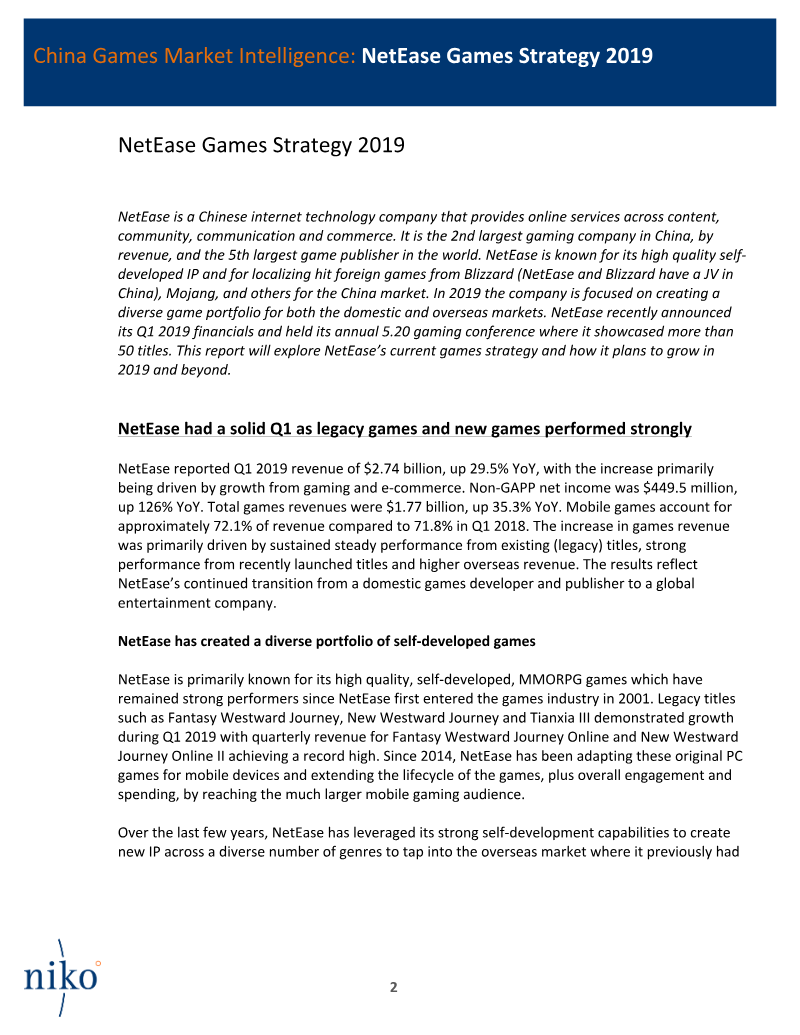

Niko Partners · 2019
ReportNetEase Games Strategy: 2019
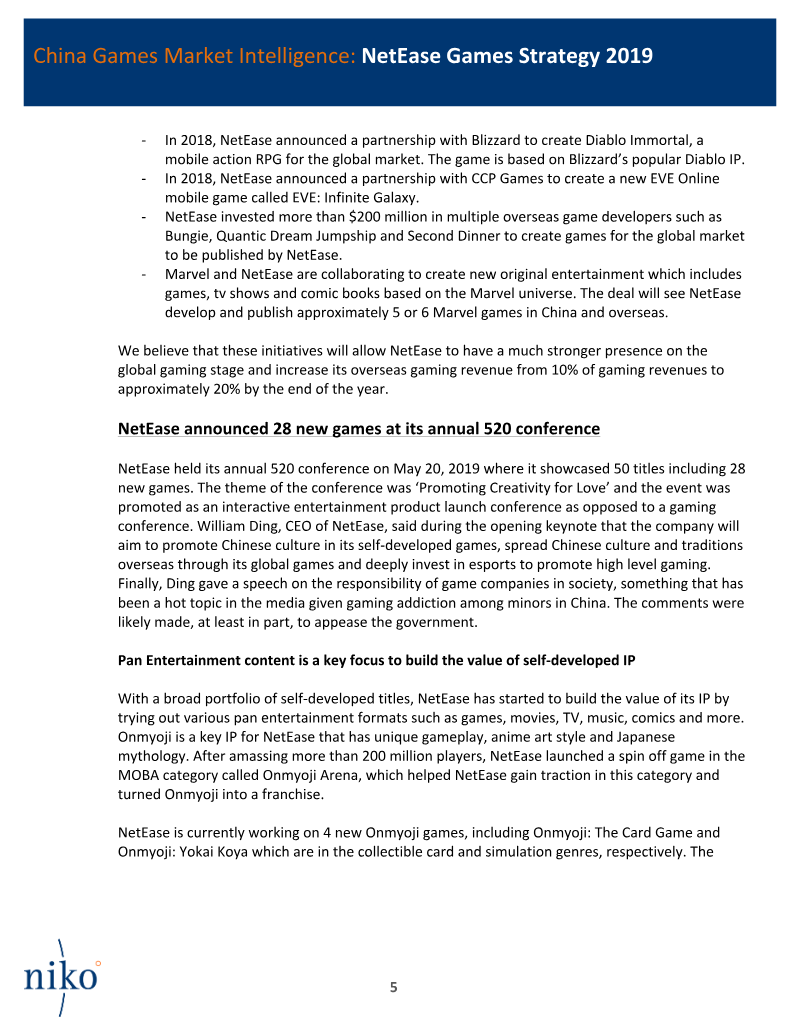
NetEase is executing a strategic transition from a domestic-focused MMORPG developer to a global entertainment powerhouse. By diversifying its portfolio across multiple genres and expanding into international markets, the company aims to mitigate the risks associated with slowing growth in China. This strategy centers on leveraging high-quality self-developed intellectual property, fostering international partnerships, and building a comprehensive gaming ecosystem that integrates esports, live streaming, and pan-entertainment content. Financial performance in early 2019 underscored the company’s stability, with total revenue reaching $2.74 billion, a 29.5% year-over-year increase. Gaming revenue accounted for $1.77 billion of this total, driven by the sustained performance of legacy titles and the success of newer mobile games. Mobile platforms remain the primary revenue driver, representing 72.1% of total gaming income. Despite a regulatory freeze on game licenses in China during 2018, NetEase maintained growth by capitalizing on its existing library and expanding its footprint in key overseas markets, particularly Japan and the United States. To sustain this momentum, the company is aggressively pursuing global expansion through simultaneous worldwide launches, porting mobile titles to PC and console, and investing over $200 million in overseas studios. Furthermore, NetEase is building a robust gaming ecosystem that encompasses developer support, social platforms like the Da Shen app, and significant investments in esports, including the NeXT tournament brand. By evolving its top-tier intellectual properties into multi-media franchises—spanning film, comics, and merchandise—and securing strategic collaborations with global brands, NetEase is positioning itself as a formidable, long-term competitor in the global interactive entertainment industry.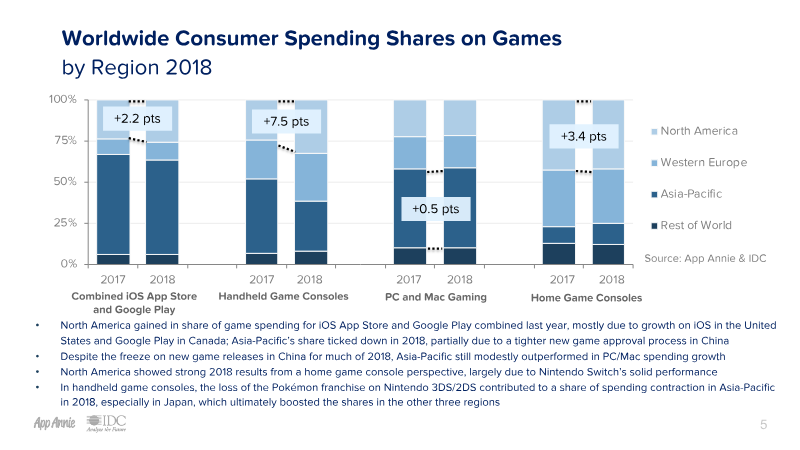

data.ai · 2019
ReportGaming Spotlight 2018 Review
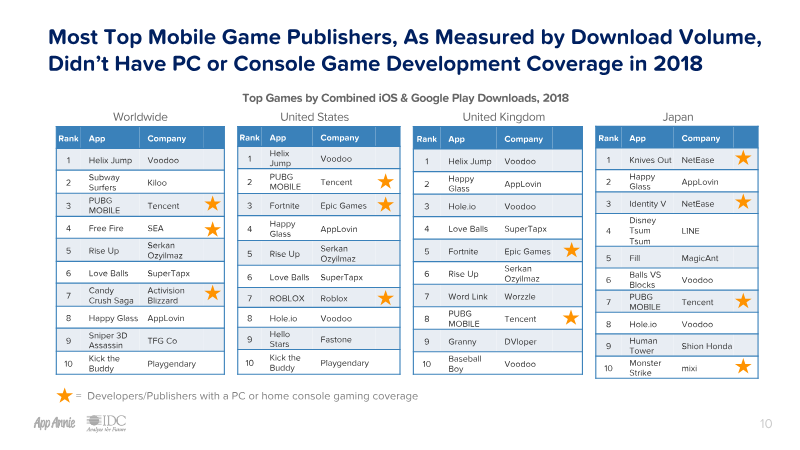
The 2018 Gaming Spotlight Review analyzes the global gaming landscape, focusing on the shifting dynamics between mobile, PC, and console platforms. The report establishes that mobile gaming has solidified its dominance, with consumer spending in 2018 exceeding the combined totals of home consoles, PC/Mac, and handheld consoles by nearly 20%. This represents a significant shift from 2016, when mobile spending trailed these combined categories by 14%. The analysis covers global markets with specific emphasis on North America, Asia-Pacific, and Western Europe, utilizing consumer spend data from app stores and retail tracking. A primary finding is the maturation of mobile gaming into a platform for sophisticated, hardcore experiences. While games accounted for only 35% of total app downloads, they generated 75% of total consumer spend on the iOS App Store and Google Play. The market is increasingly bifurcated between hyper-casual titles that monetize through advertising and hardcore-leaning multiplayer games. In 2018, three of the top five grossing mobile games featured real-time multiplayer elements, such as Battle Royale and MOBA mechanics, reflecting a trend where mobile experiences now rival traditional console and PC gameplay. Geographically, the Asia-Pacific region remained the leader, accounting for over 55% of global mobile game spending despite a nine-month freeze on new game approvals in China. In North America, the Nintendo Switch drove strong home console performance, while the handheld market faced contraction as franchises like Pokémon migrated from the Nintendo 3DS to more modern platforms. Methodologically, the report compares 2018 data against historical benchmarks from 2014–2017 and incorporates a 2018 survey of U.S. gamers, which revealed a 3.5% increase in hardcore-leaning players compared to 2015. The conclusion highlights that publishers with PC or console backgrounds are increasingly dominant in mobile monetization, holding seven of the top ten spots for consumer spend.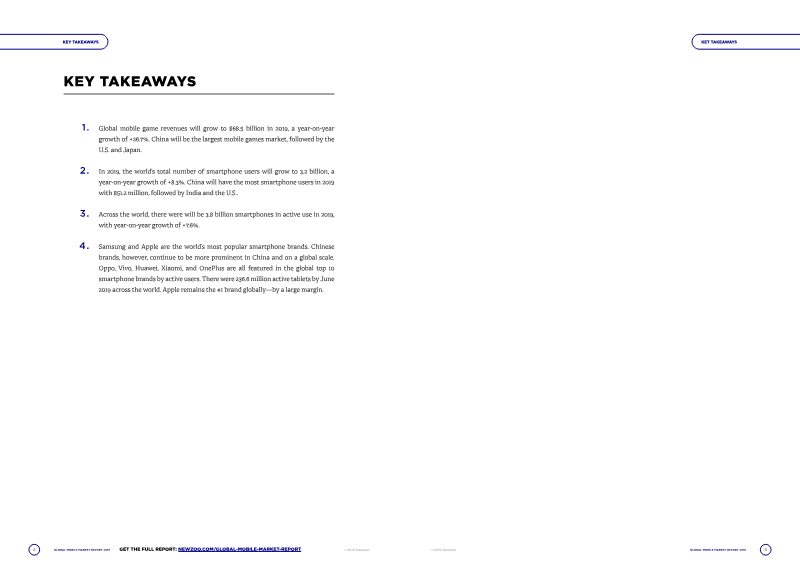

Newzoo · 2019
ReportGlobal Mobile Market Report 2019
The mobile gaming industry reached a significant inflection point in 2019, characterized by the emergence of 5G technology and its potential to redefine hardware performance and user engagement. With global mobile game revenues climbing to $68.5 billion, representing a 26.7% year-on-year increase, the sector demonstrated robust financial health. This growth was supported by a global base of 3.2 billion smartphone users, reflecting the deepening integration of mobile devices into daily life. The industry’s trajectory is increasingly defined by the transition toward cloud gaming, which promises to lower hardware barriers and expand the reach of high-fidelity experiences to a broader audience. Market leadership remained concentrated among established hardware giants, with Samsung securing a 25.4% share of the global smartphone market and Apple maintaining a commanding 67.6% dominance in the tablet sector. Geographically, China continued to serve as the primary engine of the industry, hosting 851.2 million active smartphone users and acting as a hub for innovative development trends. Developers globally have begun adopting the "mixed-mechanic" gameplay models pioneered in Asian markets, signaling a shift toward more immersive, mid-core experiences designed to capture the attention of diverse player segments. Consumer behavior analysis highlights that "Time Fillers" currently constitute the most prevalent gamer persona, yet the anticipated proliferation of 5G and cloud-based platforms is poised to catalyze the growth of the "Cloud Gamer" segment. By facilitating access to sophisticated gaming experiences without the necessity of high-end local hardware, these technological advancements are expected to drive the next phase of industry innovation. As manufacturers continue to experiment with foldable devices and larger screens, the mobile ecosystem is evolving to accommodate a more demanding and technically sophisticated user base.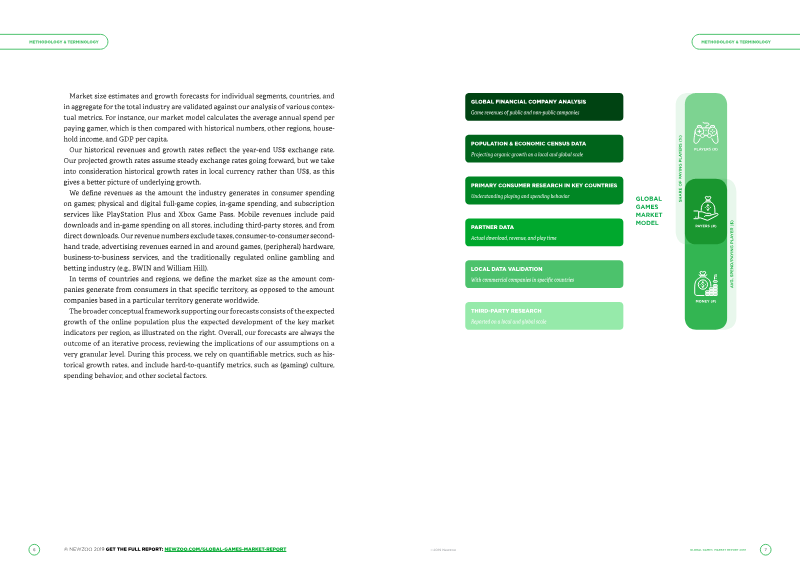

Newzoo · 2019
Report2019 Global Games Market Report
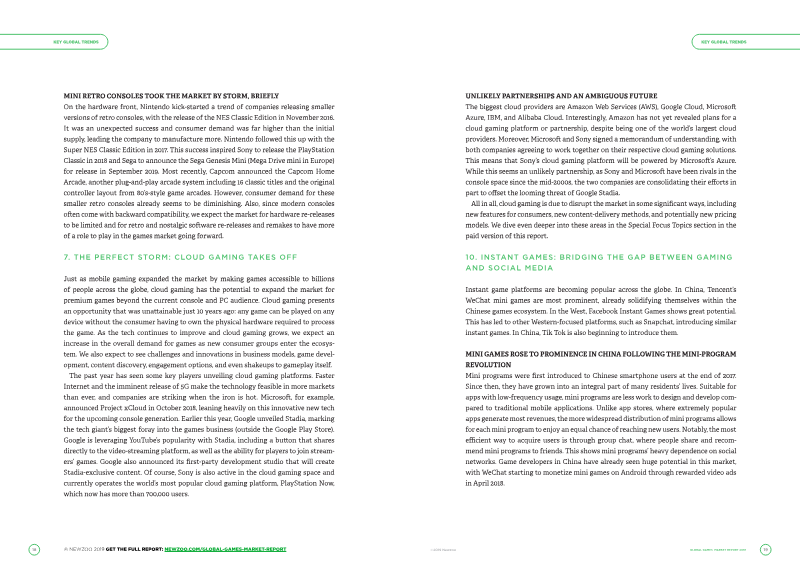
The global games market is experiencing robust expansion, with total revenues projected to reach $152.1 billion in 2019, representing a 9.6% year-on-year increase. This growth trajectory suggests a long-term valuation of $196 billion by 2022. Mobile gaming serves as the primary engine of this industry, consistently accounting for nearly half of all global revenue. While the Asia-Pacific region maintains its status as the largest geographic market, the United States is poised to overtake China as the leading individual country for gaming revenue, bolstered by significant strength in the console sector. Meanwhile, Latin America is emerging as the fastest-growing region, signaling a broader diversification of the global player base. Industry evolution is increasingly defined by the games-as-a-service model and a transition toward social-centric experiences. Platforms facilitating instant, social-integrated gameplay are driving higher retention rates, while the rise of cloud gaming and high-quality remakes of classic titles are reshaping consumer engagement strategies. The financial health of the sector remains concentrated among major players, as the top 35 public game companies generated $114 billion in 2018. Despite regulatory headwinds in specific territories, the industry continues to prioritize deep consumer insights to navigate these shifts. To better capture the nuances of this changing landscape, a new gamer segmentation framework categorizes consumers into eight distinct personas based on their hardware ownership, viewing habits, and playing behaviors. This analytical approach reflects a broader industry shift toward understanding the multifaceted nature of modern players. By synthesizing macroeconomic data with primary consumer research, these findings underscore a market that is not only growing in total value but is also becoming more sophisticated in how it monetizes and retains its global audience.

Institute for Digital Economy · 2019
ReportCzech Video Game Industry: PC, Console and Mobile Game Developers in Czech Republic 2019
The Czech video game industry has established itself as a high-growth, export-oriented pillar of the national digital economy. By 2018, the sector reached annual revenues exceeding CZK 3 billion, consistently outperforming the domestic film industry despite operating without formal state subsidies. Comprising approximately 76 primarily domestic companies, the industry maintains an export rate between 90 and 99 percent. These studios are characterized by a focus on PC and console development, with a strong emphasis on innovation in simulation, virtual reality, and artificial intelligence. The transition to digital distribution platforms like Steam and mobile marketplaces has lowered entry barriers, allowing independent studios to bypass traditional publishing models in favor of community-driven development and crowdfunding. Despite this commercial success, the industry faces structural impediments that threaten its long-term global competitiveness. The sector is dominated by micro and small enterprises that struggle with limited access to private capital and a lack of specialized domestic investment vehicles. Furthermore, the industry is hindered by a severe shortage of skilled labor, exacerbated by the absence of dedicated academic programs and restrictive visa regulations for non-EU talent. These challenges are compounded by administrative hurdles and a lack of legislative frameworks to support student internships or industry-specific research and development. To sustain its trajectory, the industry requires a shift toward systematic government support comparable to that provided to other creative sectors. Strategic recommendations include the establishment of a dedicated game industry fund, the implementation of targeted R&D incentives, and the modernization of educational curricula to align with technical and artistic market demands. By addressing these systemic gaps in financing, labor policy, and export promotion, the Czech video game sector can better compete with neighboring markets and solidify its role as a leader in high-value digital innovation.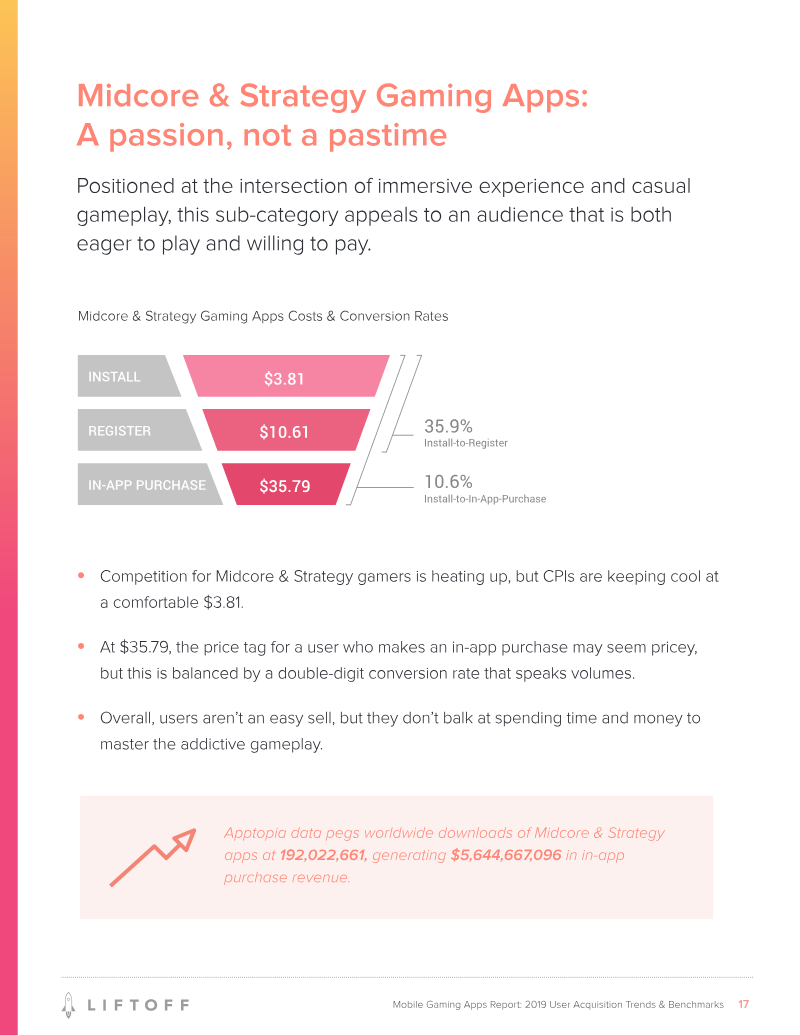

Newzoo · 2019
ReportMobile Gaming Apps Report: 2019 User Acquisition Trends & Benchmarks
The 2019 mobile gaming landscape is defined by a period of unprecedented consumer spending, with gaming apps accounting for 74% of total app store revenue. While the market continues to expand, user acquisition costs have escalated, reaching an average of $35.42 to acquire a single paying user. This environment necessitates a strategic approach to platform and regional selection, as Android currently offers a more cost-effective reach than iOS. Seasonal trends also play a critical role in performance, with the third quarter emerging as a peak period for high conversion rates and optimized acquisition costs. Geographically, the market presents a stark contrast between established and emerging territories. North America, Japan, and South Korea remain the most expensive regions for acquisition but continue to lead in long-term retention and in-app purchase revenue. Conversely, Russia, Brazil, and the broader EMEA region offer high-value opportunities characterized by lower registration costs and strong initial conversion rates. While these emerging markets provide a lower barrier to entry, they often struggle with deep-funnel engagement and monetization compared to the high-yield but competitive Asian and North American markets. Genre-specific data reveals that Social Casino and Hyper Casual games are the primary drivers of early engagement, with Social Casino apps achieving a category-leading 14.3% install-to-purchase conversion rate despite high acquisition costs. Hyper Casual games have solidified their position through ad-supported models and high Day 1 retention, effectively targeting non-traditional gamers in markets like Colombia and Turkey. Meanwhile, Midcore and Strategy titles demonstrate the greatest potential for long-term revenue and sustained engagement, particularly within the EMEA region, where they outperform North American benchmarks in conversion efficiency.
Niko Partners · 2019
Report