Reports in the Market (Overall) category.
The metaverse represents a fundamental evolution of the gaming industry, transitioning from Games-as-a-Service to Games-as-a-Platform. In this new paradigm, virtual worlds function as persistent social hubs where identity, creativity, and commerce converge. This shift is driven by the rise of user-generated content, large-scale simulations, and decentralized economies that blur the boundaries between digital and physical realities. High-profile virtual events, such as major in-game concerts, demonstrate the massive engagement potential of these platforms, often attracting tens of millions of unique participants and generating significant cross-media growth for brands and artists.
Consumer appetite for these social game-worlds is substantial across global markets, with 70% of players expecting the metaverse to increase their total playtime and a significant majority of non-gamers expressing interest in joining. While Western development emphasizes decentralized identity and blockchain integration, the Chinese market is evolving toward a mobile-first, "omni-channel" experience led by major domestic tech giants. These regional differences highlight a broader trend toward "direct-to-avatar" supply chains and the legitimization of secondary markets, where digital assets and virtual real estate can command valuations in the hundreds of thousands of dollars.
The integration of blockchain technology and Non-Fungible Tokens (NFTs) serves as a critical catalyst for this ecosystem by enabling true digital ownership and "Play-to-Earn" models. These innovations transform player activities into viable digital jobs and provide developers with new revenue streams through secondary market royalties. However, realizing the full potential of the metaverse requires significant technological infrastructure, including cloud-native development to support mass concurrency and open standards for interoperability. While challenges regarding global moderation, environmental impact, and regulation persist, the metaverse is poised to become a decentralized, mobile-accessible ecosystem that complements physical reality.
This analysis examines the state of representation and accessibility within the United States gaming market, challenging the misconception that the gaming audience is primarily composed of young, white males. Based on a 2020 study of 1,824 gamers aged 10–65, the research argues that the industry’s future growth depends on its ability to cater to a diverse global population of 2.7 billion players. The thesis posits that strengthening diversity and inclusion (D&I) requires a dual approach: improving the representation of marginalized groups in software and increasing the affordability of hardware.
Key findings indicate that 47% of U.S. gamers avoid titles they feel are not made for them, while over half believe it is important for games to feature diverse characters. This sentiment is particularly strong among LGBTQIA+ players and people with disabilities. Data shows that players of color are often more "serious" gamers than their white counterparts; for instance, Black and Asian PC players skew younger and more female. Furthermore, the popularity of the fighting game genre among Black players is linked to historical arcade accessibility, suggesting that low barriers to entry foster long-term community engagement.
The research highlights a significant correlation between socioeconomic status and gaming habits. Black and Hispanic/Latinx players are more likely to use standard laptops or consoles rather than expensive high-end desktops and are more inclined to use subscription services like Xbox Game Pass to manage costs. Ultimately, the analysis concludes that brands taking active stances on social issues and prioritizing inclusive character design can drive higher engagement and revenue, as gamers increasingly prefer companies that reflect their values and identities.
Gaming has evolved into a near-universal activity, with 86% of internet users across 15 global markets engaging in play as of 2020. While mobile gaming serves as the primary driver for accessibility and broad demographic expansion—particularly among women, families, and older adults aged 55 to 64—consoles and PCs continue to anchor the more committed segments of the audience. This expansion is characterized by a shift toward a digital-first ecosystem where subscription services and digital sales dominate the market. Revenue models have transitioned accordingly, with in-game microtransactions and downloadable content emerging as the primary financial engines, especially among high-spending male millennials and Gen Z players who prioritize social status and character customization.
The landscape is increasingly defined by the convergence of gaming, social media, and live entertainment. Esports followers represent a particularly lucrative and tech-oriented demographic that displays a higher-than-average receptivity to advertising and brand sponsorships. Nearly half of these fans view sponsorships as a natural fit for the medium, and 40% actively support brands that invest in their favorite teams. Engagement is primarily driven through mobile and PC streaming, though traditional television remains a relevant secondary channel for older cohorts. India has emerged as a critical growth frontier within this space, fueled by its massive mobile-first population.
To successfully navigate this environment, brands must move beyond traditional advertising and focus on community integration and exclusivity. Vocal sub-groups, such as streamers and critics, act as essential information hubs and brand ambassadors who influence the broader community. Effective engagement requires a nuanced understanding of these diverse personas, ensuring that marketing efforts provide genuine value to the gaming experience. By fostering community involvement and offering exclusive rewards, brands can convert high-engagement players into long-term advocates within the burgeoning metaverse and competitive gaming sectors.
Mobile gaming has solidified its position as the primary driver of digital games consumption, with global spending projected to extend its lead to 2.9 times that of PC/Mac and 3.1 times that of home consoles in 2021. This growth is underpinned by a significant surge in engagement during the COVID-19 pandemic; by Q1 2021, global users were downloading over 1 billion games per week, a 30% increase over pre-pandemic levels. Consumer spending followed a similar trajectory, reaching $1.7 billion per week, up 40% from late 2019. While the Asia-Pacific region maintains nearly half of the global market share, North America and Western Europe saw the most significant growth in mobile spending during the period.
A central thesis of the market analysis is the convergence of mobile and console experiences. High-performing titles like Roblox and Genshin Impact demonstrate that cross-platform play and real-time social features are no longer novelties but essential drivers of long-term engagement. This trend is supported by the rising popularity of console companion apps and the expansion of PC gaming, with Steam reaching a record 26.85 million peak daily concurrent users in early 2021. Additionally, the rise of game livestreaming on platforms like Twitch and Discord has created new avenues for monetization and community building.
Regarding monetization, survey data from over 3,300 US gamers indicates a shift in sentiment toward in-game advertising. While video ads remain divisive due to their full-screen nature, rewarded video and playable ads have achieved net positive sentiment because they offer an immediate value exchange, such as in-game currency or a trial experience. However, the data warns of ad oversaturation; gamers in high-saturation genres, such as word and trivia games, report significantly more negative opinions of ads compared to those in low-saturation genres like sandbox games. The findings suggest that publishers must balance ad frequency with format quality to mitigate churn.
The livestreaming industry experienced unprecedented growth throughout 2020, driven largely by global quarantine measures that accelerated viewership across all major platforms. Twitch remained the dominant force in the market, with the Just Chatting category emerging as the year's most popular content segment, amassing 1.9 billion hours watched. This was followed by established titles like League of Legends at 1.4 billion hours and Fortnite at 904 million hours. While established platforms led the market, nascent services like DLive also saw significant gains, jumping from 9.7 million hours in the first quarter to a consistent range of 15 to 17 million hours for the remainder of the year.
The year was characterized by the rapid rise of new intellectual properties and viral sensations. Valorant led the pack of new releases with 737 million hours watched, achieving a massive peak of 334 million hours in April alone. Other breakout hits included Among Us, which peaked at 140 million hours in September, and Fall Guys, which reached 106 million hours in August. By the end of the year, titles like Cyberpunk 2077 and Phasmophobia solidified their positions as top-tier content, while World of Warcraft and Call of Duty: Warzone saw late-year surges in viewership due to new updates and seasonal interest.
Individual creator performance was led by xQcOW, who finished 2020 as the most-watched streamer on Twitch. Data provided by StreamElements and ArsenalGG indicates that the industry is shifting toward a mix of traditional gaming and non-gaming content, with Just Chatting maintaining its lead even as major game releases fluctuate. The final month of the year showed a diverse landscape where new titles like Cyberpunk 2077 competed directly with long-standing staples, reflecting a robust and diversifying ecosystem for digital content creators and brands.
The first three quarters of 2020 saw the global gaming industry navigate significant volatility caused by the COVID-19 pandemic, ultimately demonstrating strong resilience and a rapid recovery in deal activity. While private investments dropped sharply in May 2020, the market rebounded by July, closing 100 transactions worth approximately $2.78 billion. This investment activity was heavily concentrated at the later stages, with American companies like Epic Games, Roblox, and Scopely accounting for over 90% of total capital value. Conversely, early-stage venture capital remained more geographically diverse, with U.S. startups representing only 30% of those funds.
Mergers and acquisitions remained robust throughout the period, largely unaffected by macroeconomic instability. The mobile segment led in volume with 41 deals totaling $4.6 billion, while the PC and console segment reached $10.5 billion in value, driven primarily by Microsoft’s $7.5 billion acquisition of ZeniMax. Strategic buyers such as Tencent, Embracer Group, and Stillfront Group continued to consolidate the market. Public offerings followed a similar recovery arc; after a near-total halt in the first half of the year, the market reopened in June with significant IPOs from Asian companies and capital raises by Western firms to fund future acquisitions.
The landscape of financial backers was led by specialized venture funds like Makers Fund, Play Ventures, and BITKRAFT Ventures in terms of deal volume, while KKR and Andreessen Horowitz dominated in total value through large-scale, later-stage investments. Strategic activity was characterized by "mastodons" like Microsoft and Zynga, alongside aggressive consolidation efforts by European holding companies. Analysts expect continued momentum into 2021, driven by the need for content on subscription platforms and the scaling of major mobile publishers ahead of potential public listings.
The global digital games and interactive media industry experienced significant growth in 2020, with total revenue rising 12% year-over-year to $126.6 billion. This expansion was primarily driven by the COVID-19 pandemic, which forced consumers to remain at home and seek alternative forms of entertainment. As traditional leisure activities like professional sports and cinema were suspended, video games became a primary outlet for social interaction and entertainment, with 55% of U.S. residents reporting increased gaming activity as a direct result of the lockdowns.
Market performance was characterized by the dominance of free-to-play titles, which accounted for 78% of total digital revenue, largely fueled by mobile gaming in Asian markets. However, the premium games segment saw the most rapid growth, increasing by 28% as blockbuster releases like Animal Crossing: New Horizons and Call of Duty: Modern Warfare captured consumer spending. Gaming video content also emerged as a major pillar of the industry, reaching 1.2 billion viewers and generating $9.3 billion in revenue. Additionally, the virtual reality sector saw a 25% increase in game earnings, bolstered by the release of high-profile titles and the adoption of standalone headsets like the Oculus Quest 2.
The analysis relies on digital point-of-sale data from publishers, developers, and payment service providers, tracking the monthly spending of 195 million paying digital gamers worldwide. Findings indicate that while the initial surge in spending was tied to pandemic-related lockdowns, the long-term behavioral shifts in gaming habits are expected to persist. Looking ahead, the industry is projected to maintain its momentum, with ongoing trends including the consolidation of major publishers, the rise of subscription-based models, and the continued integration of mainstream brands and public figures into interactive digital spaces.
The report documents investment activity in the global gaming industry from January to September 2020, covering mobile, PC & console, multiplatform, VR/AR, cloud‑native and esports segments. Total deal value reached $27.5 billion across 1,000 transactions, with gaming deals accounting for the largest share ($15.3 billion in 211 contracts). Platform & tech deals contributed $4 billion, esports $685 million and other categories $504 million. Public offerings dominated the capital‑raising landscape, generating $9.2 billion from 51 IPOs and PIPEs, while M&A activity totaled $6.6 billion across 132 deals and private venture investments added $4.7 billion from 254 rounds.
Early‑stage VC activity fell sharply after the COVID‑19 outbreak in May, dropping to 5–7 deals per month, but later‑stage and corporate funding remained relatively stable at 1–2 deals monthly until July. The period saw $2.7 billion raised by developers and publishers, with 69 pre‑seed/seed/Series A rounds and 9 Series B+ deals. U.S. firms dominated later‑stage funding (over 90% of value), whereas only 30% of early‑stage capital went to U.S. startups. Three high‑profile transactions—Scopely ($200 m), Roblox ($150 m), and Epic Games ($1.78 b)—accounted for 78% of total capital inflows.
M&A activity remained resilient, with major deals such as Zynga’s acquisition of Peak Games ($2 billion) and Microsoft’s purchase of ZeniMax ($7.5 billion). Tencent, Zynga, and Microsoft were the top strategic acquirers, collectively exceeding $11 billion in announced deals. Public market activity stalled early in the year but rebounded in June with IPOs from Archosaur Games ($280 m) and Kakao Games ($330 m). The report highlights a shift toward mobile acquisitions, sustained corporate investment despite pandemic disruptions, and a growing trend of large‑scale consolidations in the gaming sector.
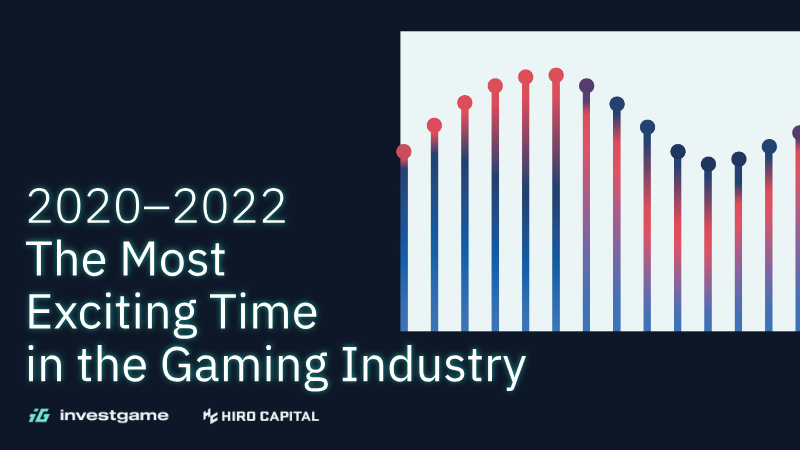
The analysis demonstrates that the gaming sector experienced a pronounced surge in deal activity between 2020 and 2022, with private equity investments peaking at $12 billion in 2021 before receding to $10.1 billion the following year. Mergers and acquisitions reached a high of $41 billion in 2021, cooling to $27.3 billion in 2022, while public offerings peaked at $24.5 billion and collapsed to $4.6 billion amid a macro‑economic slowdown projected to continue into 2023. Despite this contraction, strategic investors such as Microsoft, Sony, and Netflix maintained studio acquisitions, and early‑stage venture capital remained resilient with substantial dry powder poised for future rounds.
Late‑stage transactions contracted sharply in early 2023, with only sixteen deals versus thirty‑one in 2022 and a four‑and‑a‑half‑fold decline in disclosed value from $4.2 billion to $0.9 billion. The top fifteen M&A deals over the period accounted for roughly eighty percent of announced value, dominated by public takeovers—including Microsoft’s purchases of Activision Blizzard and ZeniMax—and characterized by high EV/EBITDA multiples, reaching up to 55×. Venture capital activity stayed robust, led by Makers Fund and BITKRAFT Ventures in both deal count and value. Corporate investments slowed in 2022 but are expected to rebound as regulatory scrutiny eases and large cash reserves, such as Epic’s $2 billion, become available.
The report is framed within a global context, covering all major gaming markets from 2020 through 2022, with particular emphasis on the United States, Europe, and Asia. It focuses on public, private, and venture capital transactions across the industry’s core segments—game development studios, publishing platforms, and emerging technology providers. The findings underscore a transition from high‑volume, high‑valuation deals toward a more cautious investment climate, while highlighting the enduring appeal of strategic acquisitions and venture funding as engines for future growth.
The analysis outlines the evolution of gaming from its early stages to contemporary and projected future states, emphasizing demographic shifts, monetization models, and technological convergence. It identifies a multi‑segment consumer base—ranging from “Ultimate Gamers” to “Time Fillers”—and quantifies engagement levels, noting that 45 % of U.S. gamers aged 10‑30 integrate social features into gameplay, while mobile gaming accounts for a growing share of revenue. The report highlights the rise of “games as a service,” cloud gaming, and esports ecosystems, citing 2020 revenue growth of 29 % in PC games and a 19.6 % increase in mobile downloads, with projected 2023 gamer spend up 21 %. Key platforms such as Fortnite, League of Legends, and Genshin Impact dominate viewership, with streaming hours on Twitch and YouTube rising fivefold between 2018 and 2019. The document also maps global value chains, noting Disney’s acquisition of BamTech for sports streaming rights and AT&T’s expansion into esports content. Methodologically, the study draws on Newzoo Consumer Insights surveys, platform analytics, and industry revenue data from 2002‑2027, covering North America, Europe, Asia-Pacific, and emerging markets. The findings underscore a convergence of gaming with social networking, mobile commerce, and 5G‑enabled cloud services, positioning the industry for continued diversification and higher lifetime value per consumer.
The study demonstrates that European esports audiences are expanding rapidly, with a projected 92 million viewers by the end of 2020 and a year‑over‑year growth of 7.4 %. Enthusiasts—those watching professional content more than once a month—total 33 million, while occasional viewers comprise the remaining 59 million. Revenue forecasts show a global market of nearly €974 million in 2020, rising to €1.6 billion by 2023, with Europe mirroring this trajectory.
Survey data from 10,175 respondents aged 18‑45 across ten Western and Northern European countries reveal that esports engagement is not confined to the youngest cohort; only 33 % of 18‑20 year olds are regular enthusiasts, whereas the 21‑25 age group leads in engagement. Geographic variation is pronounced: Finland shows a 52 % enthusiast rate among 18‑20 year olds, compared to 21 % in the UK. COVID‑19 lockdowns increased viewership in markets with stricter restrictions, and 62 % of respondents in Spain and the UK expect continued higher viewership post‑lockdown.
Gender analysis indicates that 32 % of the audience are women, primarily occasional viewers. Nonetheless, female participation in competitive play is rising, with 60 % of respondents acknowledging growth in women’s involvement. Women spend money on esports products at a comparable rate to men (46 % vs 38 %) and favor physical merchandise, whereas men lean toward digital items such as skins and premium passes.
The research underscores strong cross‑sport interest, with 64 % of viewers also supporting a favorite sports team, and highlights the strategic opportunity for brands to engage this growing, diverse, and monetarily active audience.
The 2020 Game M&A landscape reached a record $33.6 billion in transaction value across 664 deals, with public offerings contributing 45% of the volume and $15.1 billion in 2020 alone, while M&A activity totaled $12.6 billion (potentially $22.2 billion when including recent mega‑deals). The United States dominated the market, accounting for 36% of deal value and hosting four of the top‑10 transactions. Tencent, Embracer, Stillfront, and Zynga were the leading acquirers, together representing 60% of total value. Swedish firms, particularly Embracer and Stillfront, led a domestic acquisition boom that captured 31% of all announced gaming M&A deals.
Investment trends reflected the low‑interest‑rate environment and robust public‑market valuations. Venture capital and corporate funding surged to $5.9 billion, with 363 private deals (55% of transactions) and a pronounced late‑stage focus on multiplatform, mobile, and PC/console titles. Early‑stage VC funding reached $333 million across 82 deals, while late‑stage rounds were concentrated in a handful of large transactions. IPO activity rose to 18 deals ($2.8 billion), led by Asian firms such as Kakao Games and Archosaur, and public PIPE funding exceeded $95 million in the Esports & Other segment.
The Esports & Other sector saw 37 M&A deals totaling $500 million, with control‑type acquisitions dominating (35 of 37). Majority stake takeovers were common, and the segment attracted significant public PIPE funding. Two hardware firms—NACON and Corsair Gaming—raised $350 million through IPOs, while Skillz leveraged a SPAC to achieve a $9 billion market cap. These findings underscore a 2020 environment of heightened M&A activity, concentrated investment in key geographic hubs, and a strategic shift toward multiplatform and esports opportunities.