AI in Games
Generative AI in development, operations and the games themselves.
65 documents

DeNA Co., Ltd · 2023
ReportIntegrated Report: Value Creation Story 2023
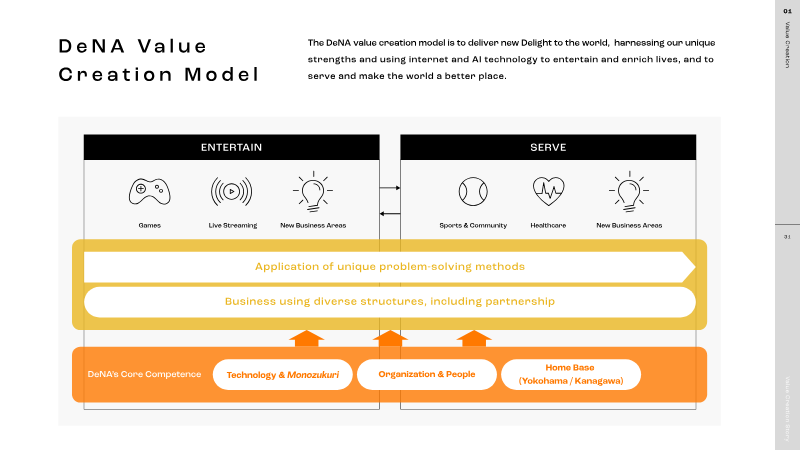
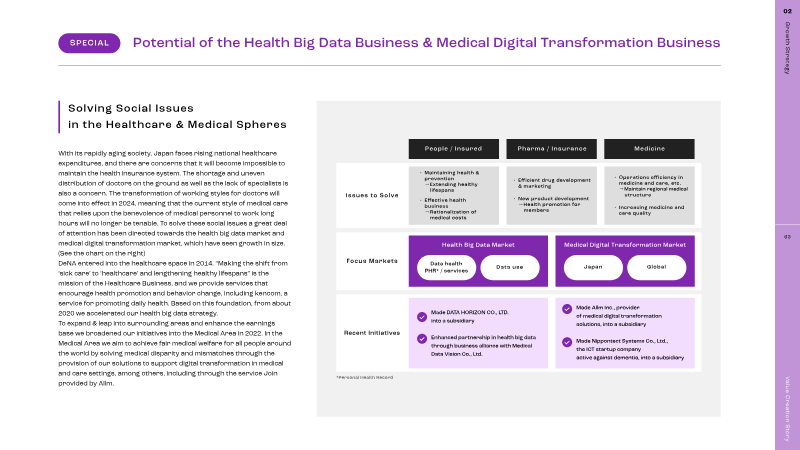
DeNA is undergoing a fundamental strategic evolution, transitioning from a primary focus on entertainment and gaming toward a diversified "Serve" approach that addresses complex social issues. This shift leverages the company’s core competencies in internet technology and artificial intelligence to drive growth across healthcare, medical digital transformation, and urban development. While the capital market historically viewed the organization as a hit-driven game company, the current strategy emphasizes a multi-segment portfolio designed for sustainable, long-term value creation. This transformation is centered in Japan, particularly through its "Home Base" in Yokohama, but maintains a global reach through international medical platforms and strategic intellectual property partnerships. Financial performance in FY2022 reflects this transition, with consolidated revenue reaching ¥134.9 billion. While the game segment faced revenue declines, prompting a shift toward a global pipeline of major IP and partnerships with Nintendo and Shueisha, other sectors showed robust growth. The Live Streaming segment, bolstered by the Vtuber app IRIAM, and the Healthcare & Medical segment, driven by the expansion of the "Join" communication platform and a health database covering 18 million people, have become significant growth engines. The company aims for ¥20 billion in healthcare revenue by FY2024, utilizing M&A and medical IoT to capture a domestic market potential valued in the hundreds of billions of yen. The organizational structure supports this diversification through a sophisticated human capital strategy and a rigorous governance framework. DeNA emphasizes autonomous career development and internal mobility to optimize its workforce across sports, AI, and healthcare initiatives. Governance is maintained through a board with 43% independent representation and a performance-linked compensation structure that aligns management incentives with shareholder interests. Furthermore, the company has integrated sustainability and risk management into its core operations, monitoring climate-related emissions and maintaining robust cybersecurity protocols to protect its expanding digital and medical data ecosystems.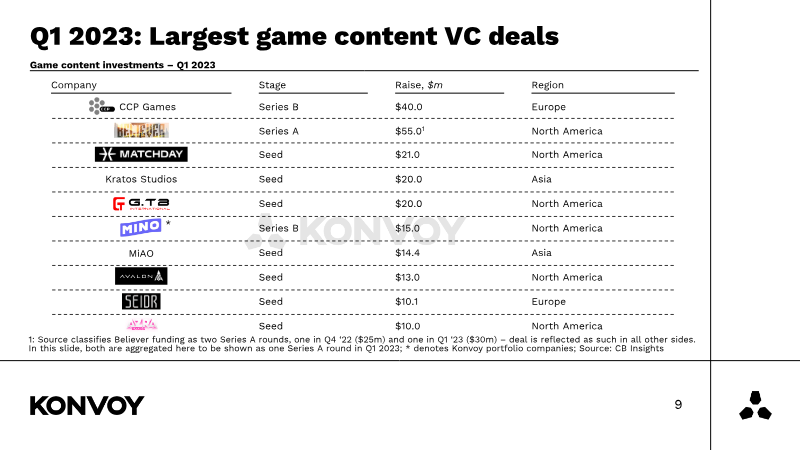
Konvoy · 2023
ReportGaming Industry Report: Q1 2023
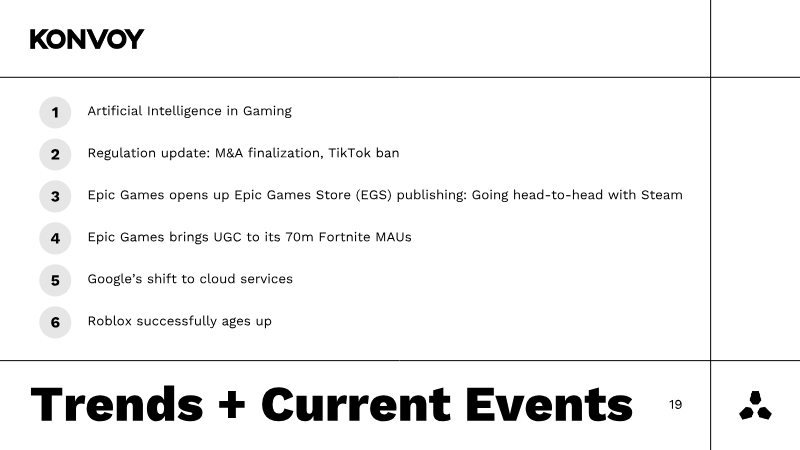
The gaming industry experienced a resilient start to 2023, with a projected global market size of $201 billion, representing a 9% year-over-year increase. Public markets showed strength, with gaming-focused exchange-traded funds (ETFs) recording gains between 10% and 23% year-to-date. While private market venture funding saw a total of $761 million across 109 deals in the first quarter, activity remains concentrated in early-stage investments, as late-stage funding has slowed significantly compared to the peak levels of 2021. Geographically, Asia led global venture funding in the first quarter, followed by North America and Europe. Emerging markets such as Africa and South America saw sporadic but notable deal activity, highlighting a broader global interest in gaming infrastructure and content. Major industry players currently hold approximately $48 billion in cash and equivalents, suggesting a stable environment for potential future mergers and acquisitions despite ongoing regulatory scrutiny regarding large-scale consolidation. Key industry trends in early 2023 include the integration of artificial intelligence for asset generation and conversational tools, alongside a strategic shift by major tech firms toward cloud-based gaming infrastructure. Competitive dynamics are evolving as Epic Games introduces self-publishing tools to challenge Steam’s market dominance and integrates user-generated content into its Fortnite ecosystem. Furthermore, platforms like Roblox are successfully expanding their reach by aging up their user demographic. These developments, supported by a robust schedule of global industry conferences, indicate a focus on platform scalability, content diversification, and the optimization of developer tools to sustain long-term growth.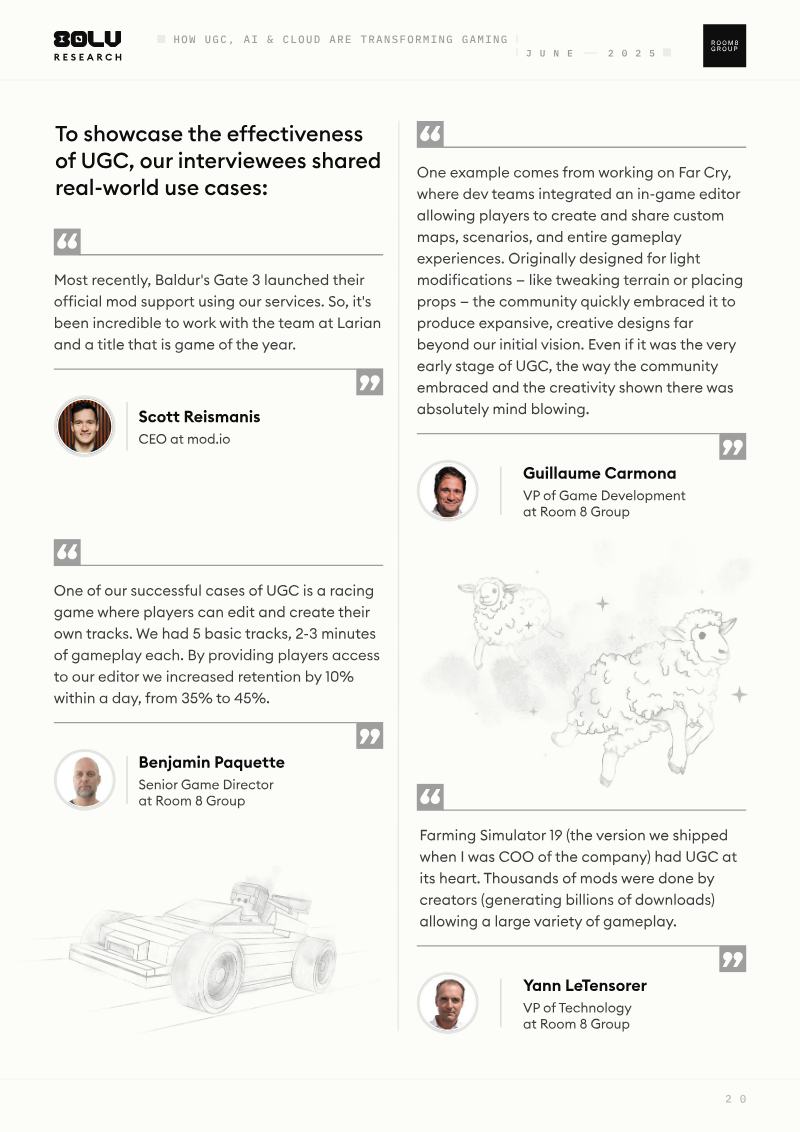
Newzoo · 2023
ReportHow UGC, AI, & Cloud Are Transforming Gaming
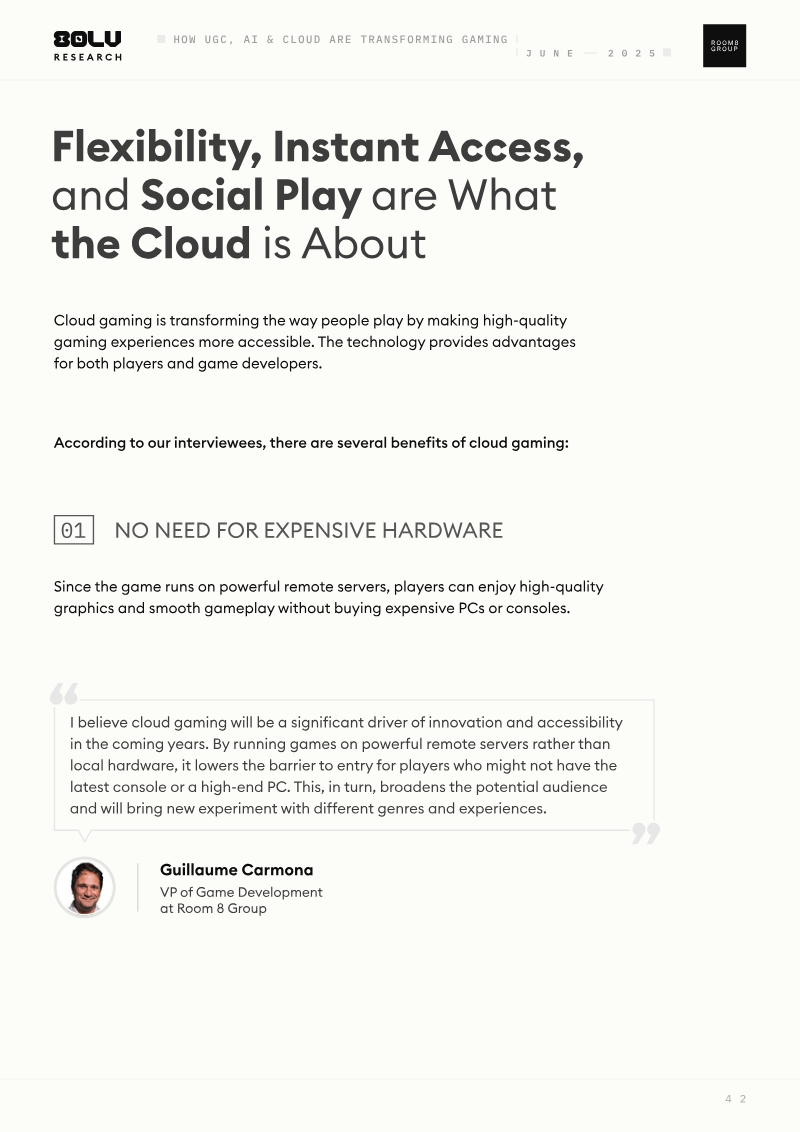
The gaming industry is currently undergoing a fundamental transformation driven by the social behaviors of Gen Alpha and Gen Z, over 90% of whom utilize gaming as their primary interactive outlet. This demographic shift has catalyzed the rise of User-Generated Content (UGC), artificial intelligence, and cloud infrastructure, collectively democratizing development and allowing indie titles to compete with AAA productions. The cloud gaming market is expanding rapidly, reaching nearly 400 million users within four years, while the integration of AI in gaming is projected to achieve a $4.2 billion valuation by 2029. UGC has emerged as a critical driver of retention, with dominant platforms like Roblox, Minecraft, and Fortnite accounting for 19% of total global playtime and distributing over $1.3 billion to creators in 2023. To overcome the technical and legal hurdles of content creation, the industry is increasingly turning to generative AI, a sector expected to reach $1.8 billion by 2025. These tools automate complex processes such as texture upscaling and level generation, lowering the barrier to entry for creators across diverse genres. While cloud technology offers the potential for real-time updates and massive concurrency, infrastructure limitations remain a significant bottleneck. Approximately 76% of players identify latency as a primary concern, suggesting that while 5G will eventually facilitate mass consumer adoption, the immediate utility of the cloud lies in B2B applications like secure playtesting and instant discoverability. The convergence of these technologies is ultimately moving the industry toward a live-service ecosystem of "endless games," where the boundaries between traditional media and interactive community-driven platforms continue to blur.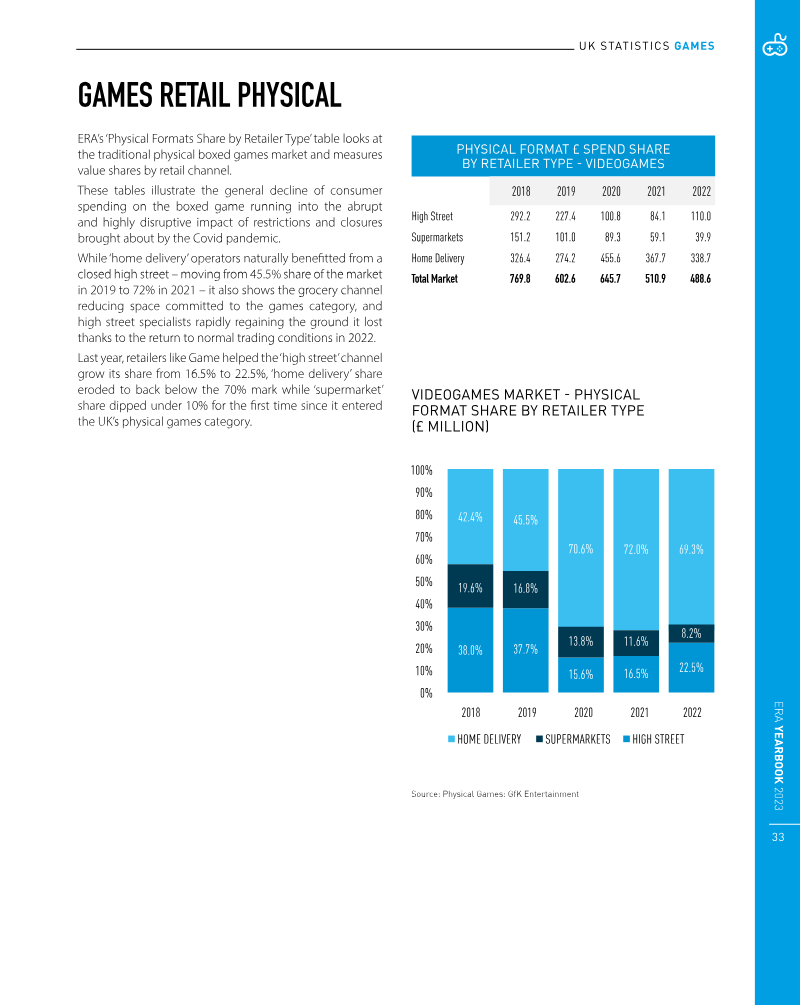

ERA · 2023
ReportCreative Industries in the UK Report
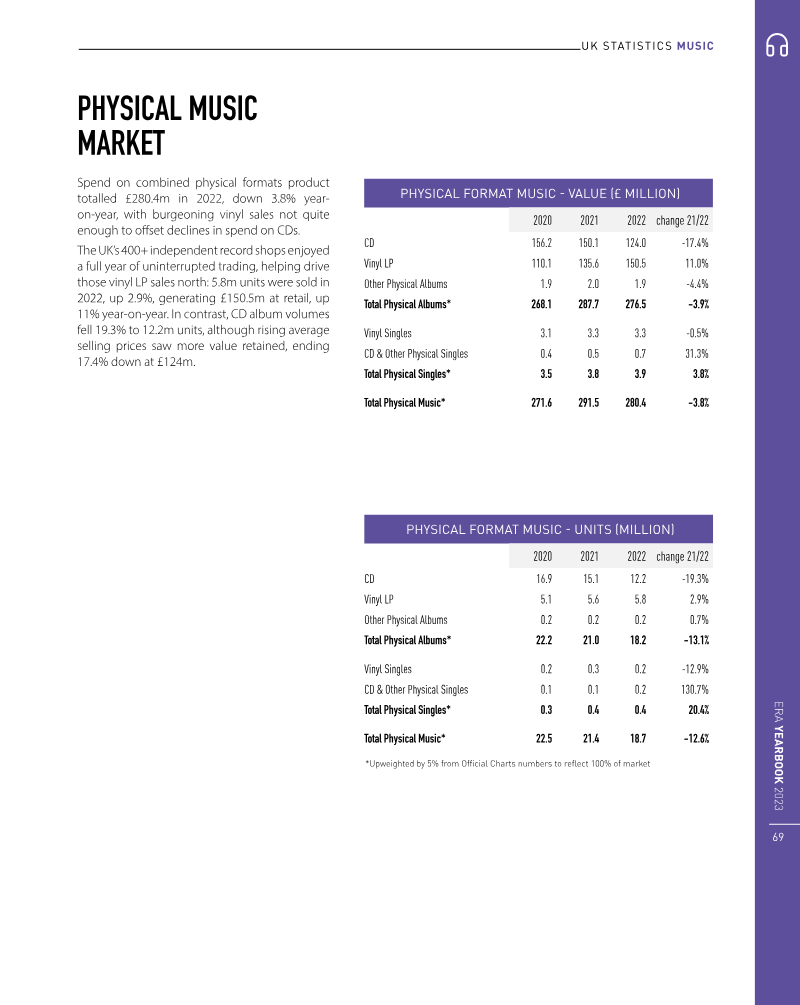
The United Kingdom’s entertainment market reached a historic peak of £11.1 billion in 2022, representing a 6.9% year-on-year increase and nearly doubling its total value since 2015. This growth is fundamentally underpinned by a comprehensive transition to digital consumption, with digital services now commanding a 91% market share across the video, music, and gaming sectors. While physical formats generally continue a long-term decline, specific niches such as vinyl and 4K UHD Blu-ray demonstrate notable resilience, with vinyl revenue surpassing CD sales for the first time this century. The video games sector remains the largest individual segment, valued at £4.66 billion. Digital software sales account for 90% of this spend, led by mobile gaming and console downloadable content. Although hardware sales faced challenges due to global supply chain constraints, the market remains robust, with digital sales for major titles like Elden Ring and FIFA 23 significantly outperforming physical retail. Similarly, the video market reached a record £4.43 billion, fueled by a 17.6% surge in subscription video-on-demand services. Approximately 68% of UK households now maintain an average of 2.5 streaming subscriptions, cementing the dominance of online distribution. The music industry mirrors these trends, with subscription streaming accounting for 84% of its £1.99 billion valuation. Interestingly, 2022 saw a nuanced recovery for physical retail as high-street specialists and independent shops experienced a 12.6% growth in sales following the normalization of post-pandemic trading. Despite this resurgence of local brick-and-mortar outlets, online channels still facilitate nearly 95% of total music spending. Strategic initiatives like Record Store Day and the implementation of advanced data tracking continue to support the industry's evolution, ensuring that both digital innovation and traditional retail advocacy remain central to the UK’s creative economy.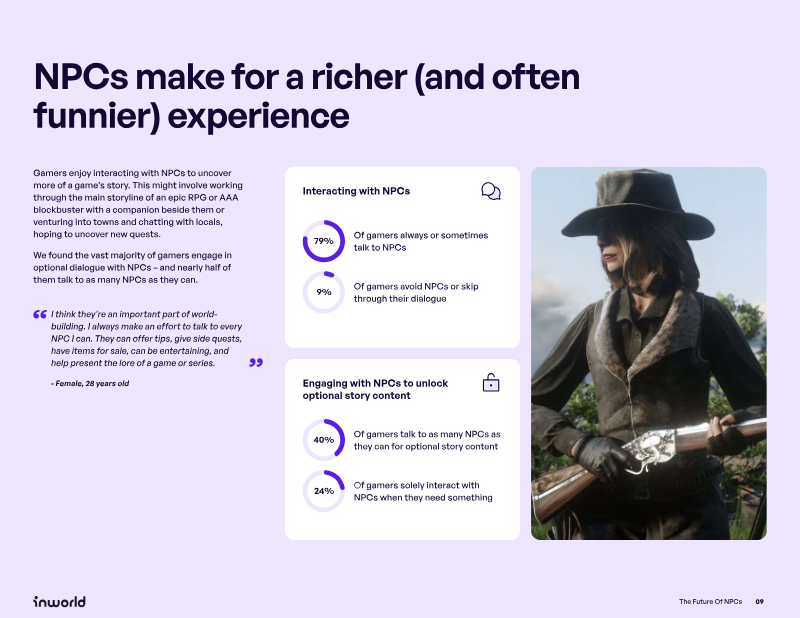
Inworld AI · 2023
ReportThe Future of NPCs
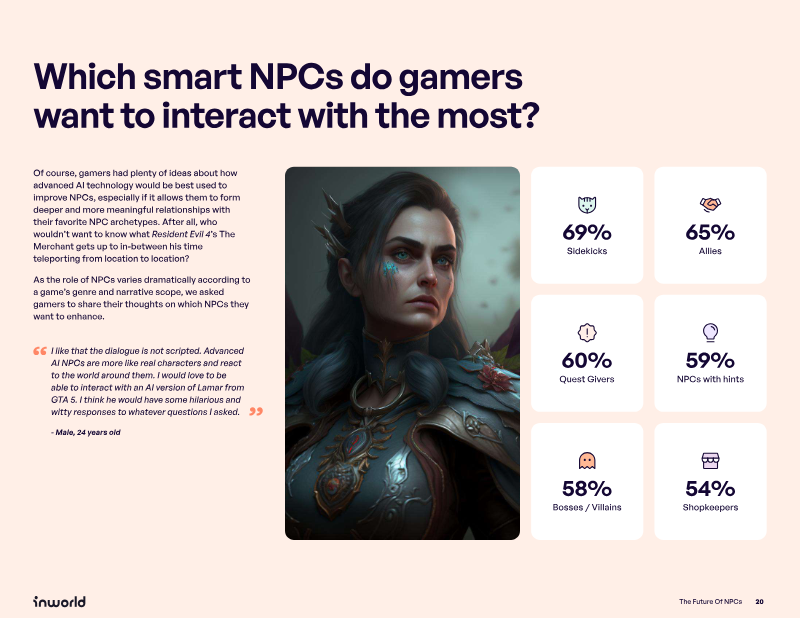
This analysis explores the evolving role of non-playable characters (NPCs) in the video game industry, arguing that while graphical and narrative technologies have advanced, NPC interactivity has remained stagnant. The central thesis posits that integrating advanced AI—specifically large language models and machine learning—is essential for maintaining player immersion and driving commercial growth. By moving away from static dialogue trees toward dynamic, situational awareness, developers can address long-standing player frustrations regarding repetitive behaviors and scripted limitations. Key findings indicate a significant market demand for sophisticated AI integration. Data shows that 84% of gamers view NPCs as vital to their experience, yet 52% are frustrated by repetitive dialogue. The transition to advanced AI NPCs appears to offer a clear financial incentive: 81% of players expressed a willingness to pay more for games featuring intelligent characters, and 79% stated they would be more likely to purchase a title with such features. Furthermore, 88% of respondents believe advanced AI would improve overall gameplay and immersion, suggesting that these technologies could increase player retention and session length. The scope of the research focuses on 1,002 U.S.-based gamers aged 16 to 50 who play at least five to eight hours per week across PC, console, mobile, and VR platforms. Methodology involved a 20-minute survey conducted by Bryter Research, which included a demonstration of generative AI NPC capabilities to gauge participant reactions. The findings suggest that while role-playing and sandbox genres stand to benefit most, there is a near-unanimous consensus (99%) among surveyed gamers that advanced AI NPCs represent a positive value add for the industry.

DeNA Co. · 2022
ReportDeNA Integrated Report 2022
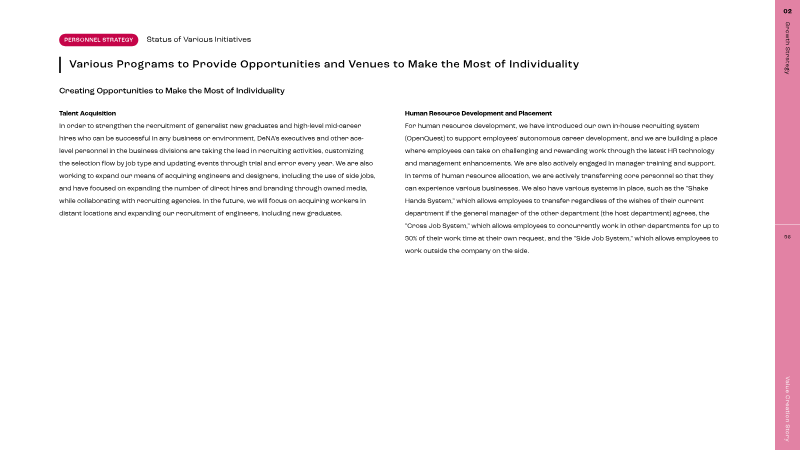
DeNA is undergoing a strategic evolution to diversify its portfolio into two primary pillars: "Entertain," comprising Games and Live Streaming, and "Serve," focusing on Healthcare and Sports. This transition is supported by core competencies in artificial intelligence, agile in-house development, and a regional "Home Base" strategy centered in Yokohama. By leveraging high-potential technologies such as Web3 and health big data, the organization aims to balance stable cash flow from established entertainment properties with high-growth opportunities in medical data and global streaming markets. Financial performance in fiscal year 2021 reflects this transition, with profit attributable to owners reaching 30.5 billion yen and a return on equity of 13.2%. While the Game Business experienced a revenue decline to 74.7 billion yen due to a lack of new hits, the Live Streaming segment saw a 1.4x revenue increase, and the Healthcare segment achieved its first quarterly profit. Strategic capital moves, including the sale of approximately half of the company's Nintendo shareholdings and the acquisition of subsidiaries like IRIAM and DATA HORIZON, have been implemented to increase asset efficiency and expand the medical database to over 15 million insured individuals. Operational and governance structures have been modernized to support this multi-sector growth. The January 2022 establishment of a cross-departmental Product Development Department and a new Group Executive System aims to accelerate business execution and talent cultivation. Personnel strategies now emphasize specialized technical rankings to attract top-tier engineers, while executive compensation is increasingly linked to mid-to-long-term growth indicators. Looking ahead, the strategy focuses on releasing three to five global game titles annually, expanding the Pococha streaming service into the United States and India, and deepening the long-term strategic partnership with Nintendo to secure a robust global presence.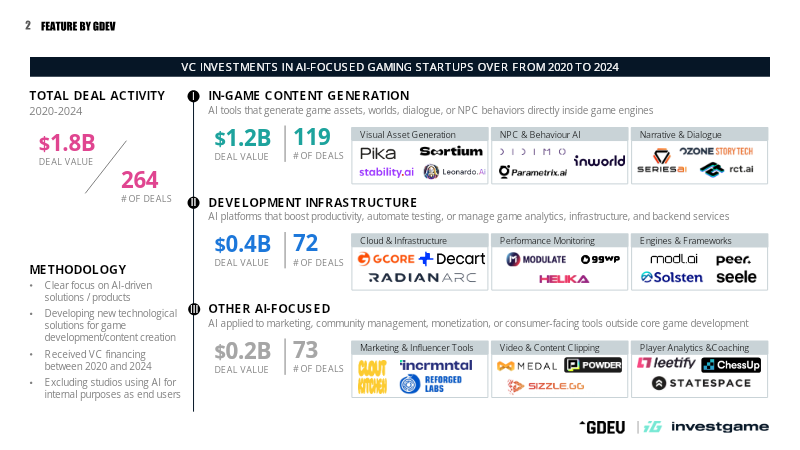
GDev · 2020
ReportAI's Ever-Growing Presence in Gaming: $1.8B in VC Investments
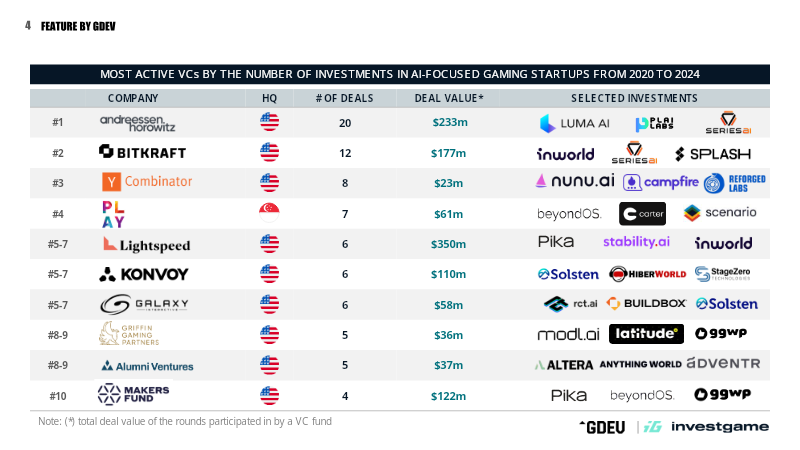
Venture capital investment in AI-focused gaming startups has experienced significant growth, totaling $1.8 billion between 2020 and 2024. This influx of capital reflects a strategic shift in investor interest toward verticalized AI tooling designed to enhance scalability and production efficiency within the gaming sector. By 2024, AI-focused startups accounted for approximately 65% of total deal activity in gaming infrastructure, signaling a move away from broader platform bets toward specialized technological solutions. The investment landscape is categorized into three primary segments: in-game content generation, development infrastructure, and other AI-focused applications. Content generation, which includes tools for creating assets, worlds, and narrative elements, leads the market with $1.2 billion in deal value across 119 deals. Development infrastructure, encompassing productivity tools, testing automation, and backend analytics, secured $0.4 billion across 72 deals. The remaining $0.2 billion was directed toward marketing, influencer tools, and player analytics. Methodologically, the analysis focuses on startups that received venture financing between 2020 and 2024, specifically excluding studios that utilize AI solely for internal production. The data reveals a robust compound annual growth rate of approximately 35% in deal value from 2022 to 2024. While early-stage rounds dominate the market, the average check size has tripled over the five-year period, rising from $2.6 million in 2020 to $7.3 million by 2024. Andreessen Horowitz, Bitkraft, and Y Combinator emerge as the most active investors, with Andreessen Horowitz leading in both the number of deals and total invested capital.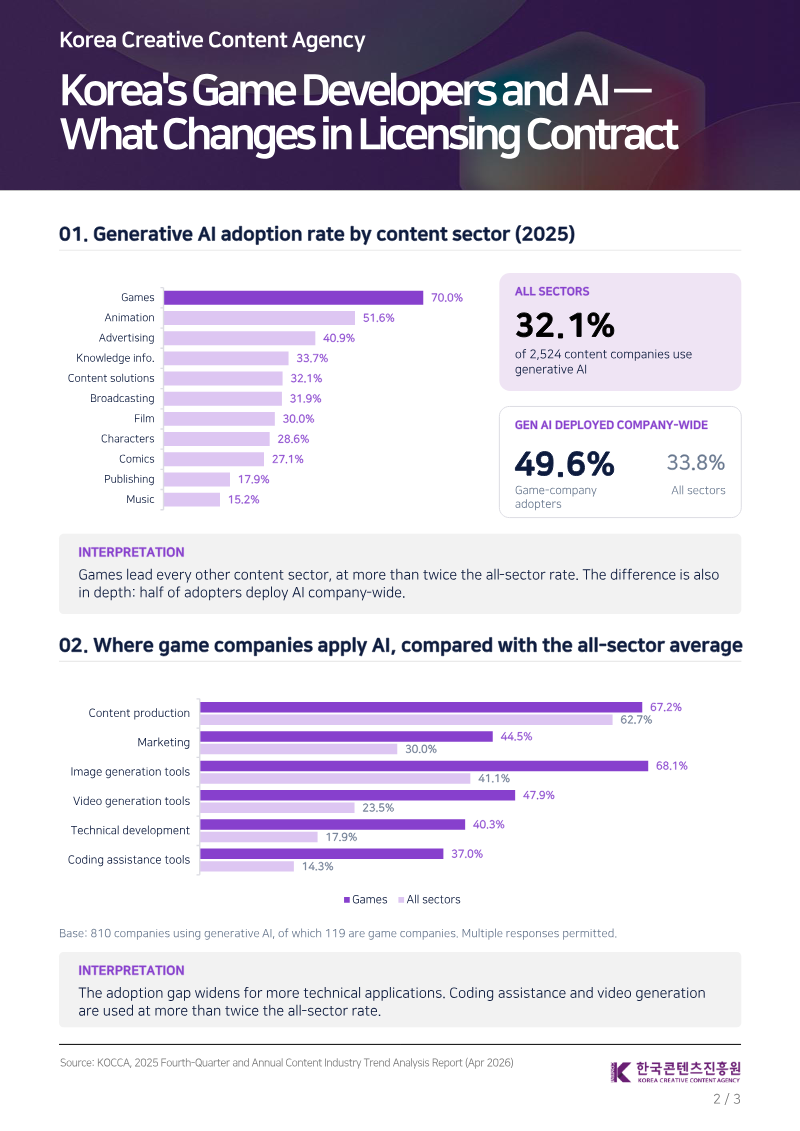

Korea Creative Content Agency
ReportKorea's Game Developers and AI: What Changes in Licensing Contracts
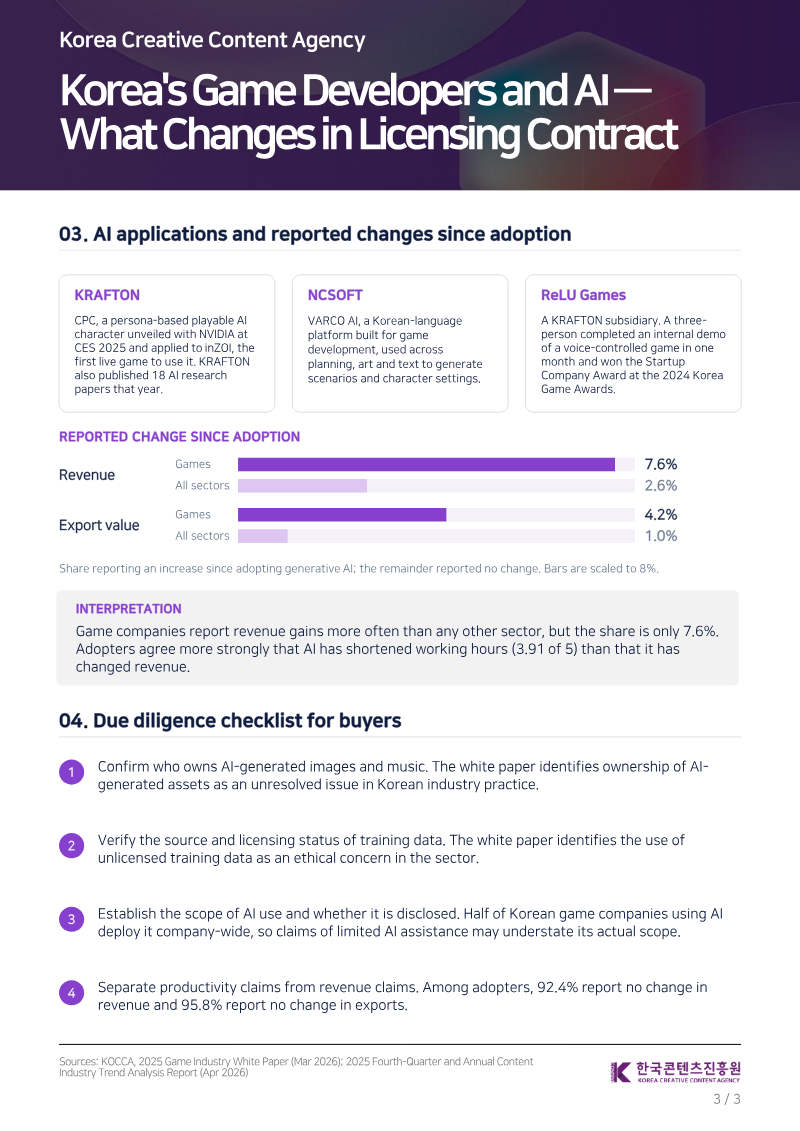
Generative artificial intelligence has become a foundational element of the South Korean game industry, with adoption rates reaching 70 percent, significantly outpacing all other content sectors. Based on data from 2025 industry reports, including a survey of 2,524 content companies, the research highlights that nearly half of these game developers have integrated AI tools company-wide. This widespread deployment is particularly pronounced in technical domains, where the use of coding assistance and video generation tools occurs at more than double the rate of the broader content industry. Despite the high level of integration, the tangible financial impact of these technologies remains limited. Approximately 92.4 percent of adopting firms report no change in revenue, and 95.8 percent report no change in export value since implementing AI. Instead, the primary benefit identified by developers is operational efficiency, with firms consistently reporting shorter working hours. While high-profile companies like KRAFTON and NCSOFT are successfully utilizing AI for persona-based characters and development platforms, these productivity gains have not yet translated into widespread commercial growth. For international buyers and stakeholders, these findings necessitate a shift in licensing and due diligence practices. Because AI is now a standard component of the development lifecycle, contracts must explicitly address the ownership of AI-generated assets and the provenance of training data to mitigate legal and ethical risks. Furthermore, buyers should exercise caution by decoupling productivity claims from revenue projections, as the current industry data suggests that AI adoption is currently a tool for internal optimization rather than a direct driver of increased market performance.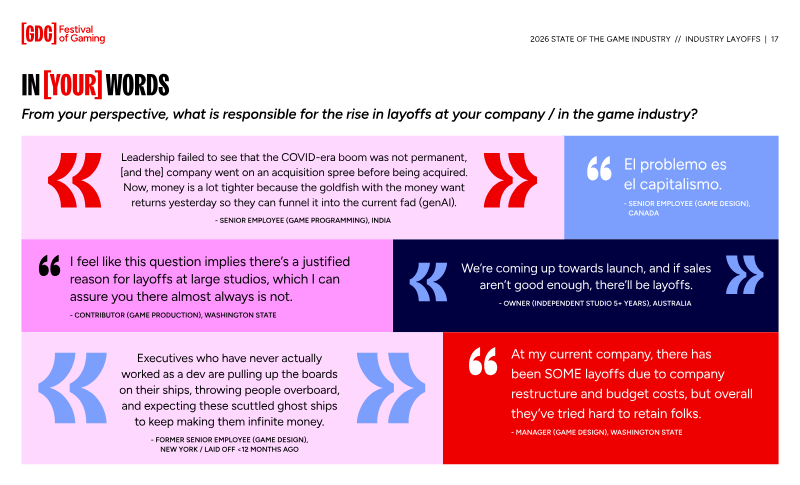

Informa
ReportState of the Game Industry 2026
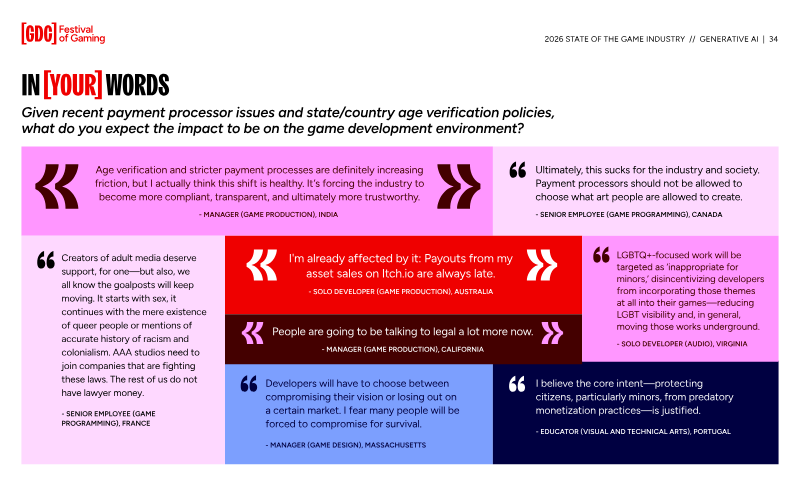
The global game industry is currently navigating a period of profound instability characterized by widespread labor volatility and shifting technological paradigms. Over the past two years, 28 percent of industry professionals have experienced layoffs, a trend driven by aggressive restructuring, project cancellations, and budget tightening within major AAA studios. This economic contraction has created a precarious environment for entry-level talent, as students and educators report diminishing career prospects. Compounding these challenges, the industry faces significant operational strain from persistent labor demands, with 87 percent of full-time employees reporting regular overtime or crunch, often exceeding 50 hours per week. Technological adoption remains a point of intense friction, particularly regarding generative AI. While over one-third of developers utilize AI for coding and brainstorming, sentiment has soured, with a majority now viewing the technology as a threat to job security and ethical standards. Infrastructure preferences are also evolving, as Unreal Engine has surpassed Unity as the primary development tool, and the PC remains the dominant platform, bolstered by the rising popularity of the Steam Deck. Meanwhile, the investment landscape has tightened, forcing many developers to rely on self-funding as regulatory pressures regarding age verification and payment processing create additional hurdles for independent creators. In response to these systemic pressures, there is a marked shift in labor relations and workplace culture. Support for unionization has reached 82 percent among US-based professionals, reflecting a desire for greater collective bargaining power amidst ongoing burnout. Furthermore, the industry is grappling with the intersection of global policy and internal culture, as US immigration and social regulations complicate international business, and marginalized workers report significant changes to diversity, equity, and inclusion initiatives. Despite these headwinds, the sector continues to prioritize accessibility, with one-third of developers actively integrating inclusive design features into their projects.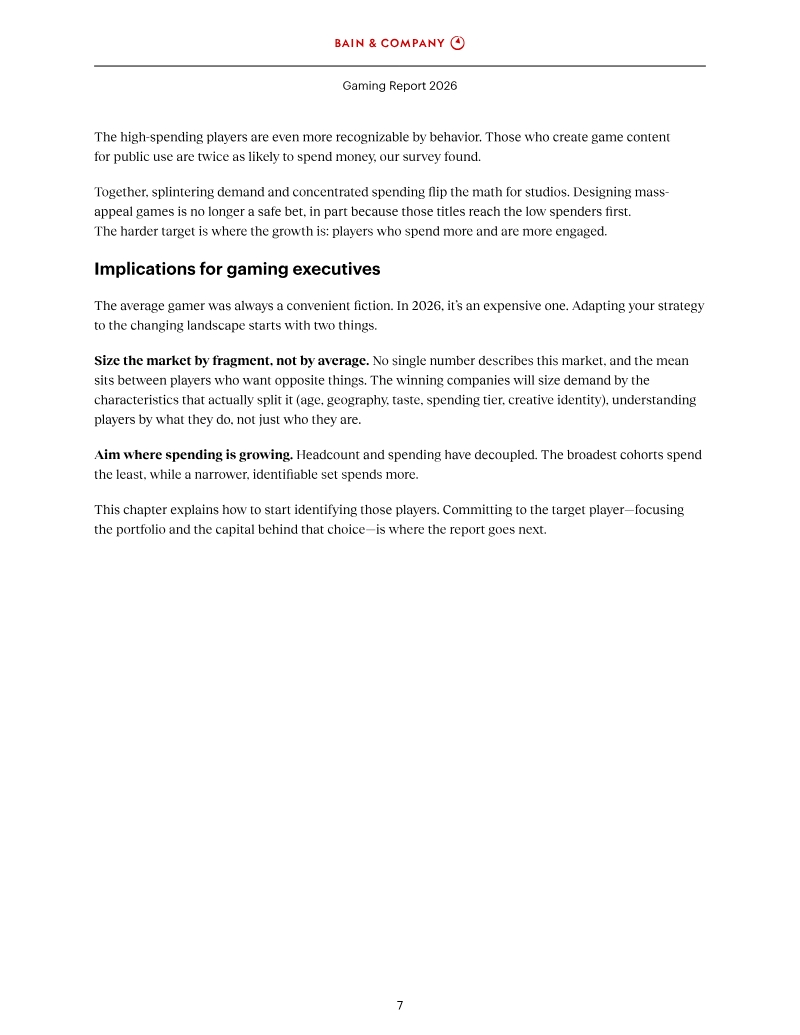

Bain & Company
ReportGaming Report 2026: Choose Your Player
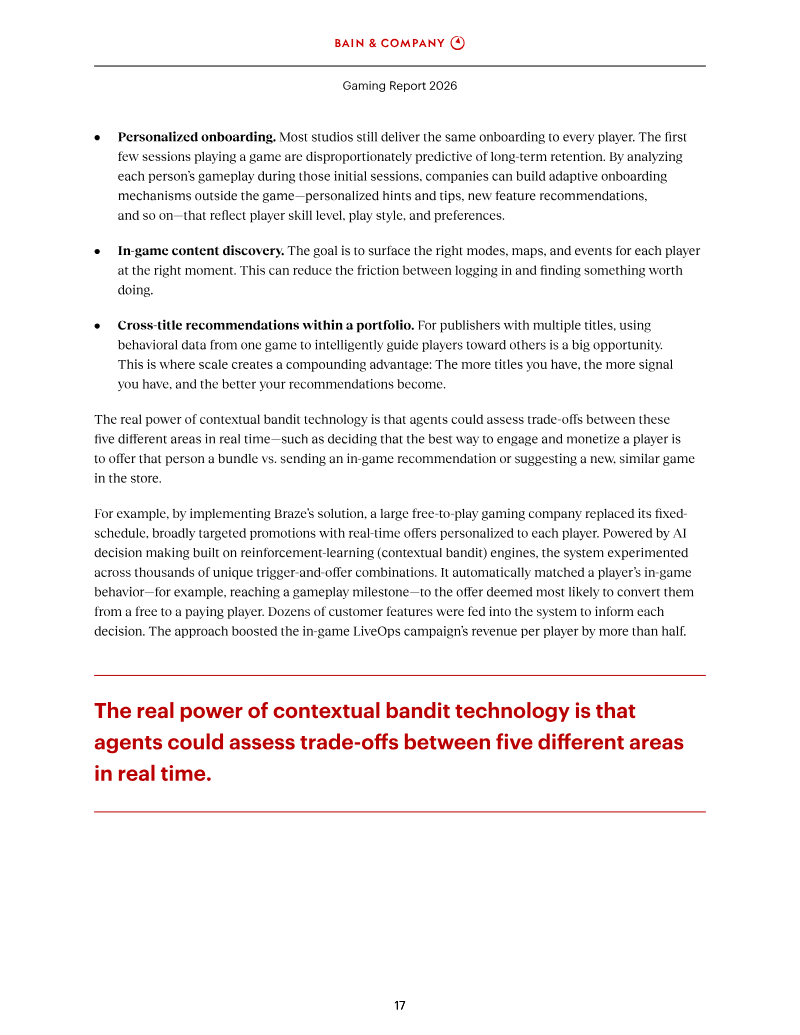
The gaming industry has reached a critical inflection point where the concept of the average player has become obsolete. Market fragmentation across age, geography, and playstyle necessitates a shift away from broad, mass-appeal strategies toward highly targeted engagement models. Because unfocused titles are increasingly prone to failure in a saturated market, studios must prioritize direct relationships with core, high-value player segments. This strategic pivot is essential for maintaining profitability as growth plateaus across the global sector. To navigate this landscape, developers are increasingly deploying AI-driven personalization to deliver real-time, one-to-one experiences. By utilizing advanced algorithms, studios can optimize in-game offers and retention mechanics, effectively moving beyond traditional segmentation. This technical integration is most effective when paired with a robust direct-to-consumer distribution strategy. Currently, three-quarters of top-grossing mobile titles have established proprietary web stores to bypass platform fees and capture higher margins. These direct channels are proving to be a significant financial lever, with successful implementations now accounting for over one-third of total revenue for leading publishers. Ultimately, the transition to a direct-to-consumer model requires more than simple discounting; it demands a sophisticated engagement engine capable of leveraging granular player data. As companies migrate their portfolios toward these owned channels, they reduce long-term incremental costs and gain greater control over the player lifecycle. Executives who prioritize the development of these internal infrastructures are better positioned to sustain growth and maximize revenue in an increasingly competitive 2026 market environment.

mixi
ReportMedium-Term Vision: Our Growth Strategy in the We-Time Economy
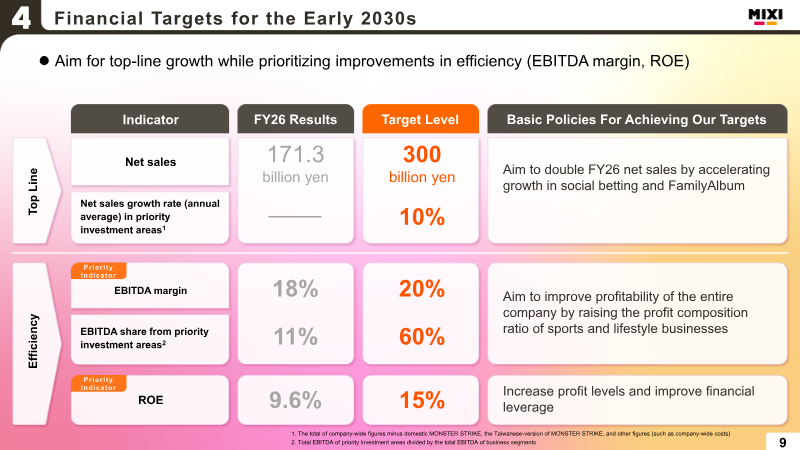
The We-Time Economy serves as the central strategic framework for future growth, predicated on the belief that artificial intelligence will increase leisure time and heighten the value of shared, trust-based human experiences. By facilitating social interaction through digital platforms and services, the organization aims to capture a significant portion of a global market estimated at US$10–15 trillion. The core thesis posits that shared emotional experiences—ranging from social betting and sports entertainment to family-oriented digital products—create high-retention, high-profitability ecosystems that rely on word-of-mouth growth and community engagement. Financial targets for the medium term include doubling net sales to 300 billion yen, with a specific focus on scaling the sports and lifestyle segments. To achieve these objectives, the company is implementing a rigorous business portfolio management strategy. This involves classifying business units based on growth potential and profitability relative to a 6.18% weighted average cost of capital. Resources are dynamically allocated to high-growth areas, while underperforming units are subject to restructuring or divestment. Key growth drivers include the global expansion of social betting through PointsBet, the scaling of the FamilyAlbum economic sphere, and the continued monetization of domestic intellectual property like MONSTER STRIKE. Operational efficiency and shareholder value are prioritized through a commitment to raising the EBITDA margin to 20% and the return on equity (ROE) to 15%. Governance reforms, including the appointment of independent directors to lead compensation committees and the alignment of executive incentives with long-term performance, support these financial goals. The company has also committed to a more robust shareholder return policy, targeting a 40% dividend payout ratio to reflect its transition into a sustained profit growth phase.
InvestGame
Report