University of Waterloo
7 reports, presentations and talks by University of Waterloo in the Game Industry Library, the newest “Beyond Competitive Gaming: How Casual Players Evaluate and Respond to Teammate Performance” (2025).
Documents
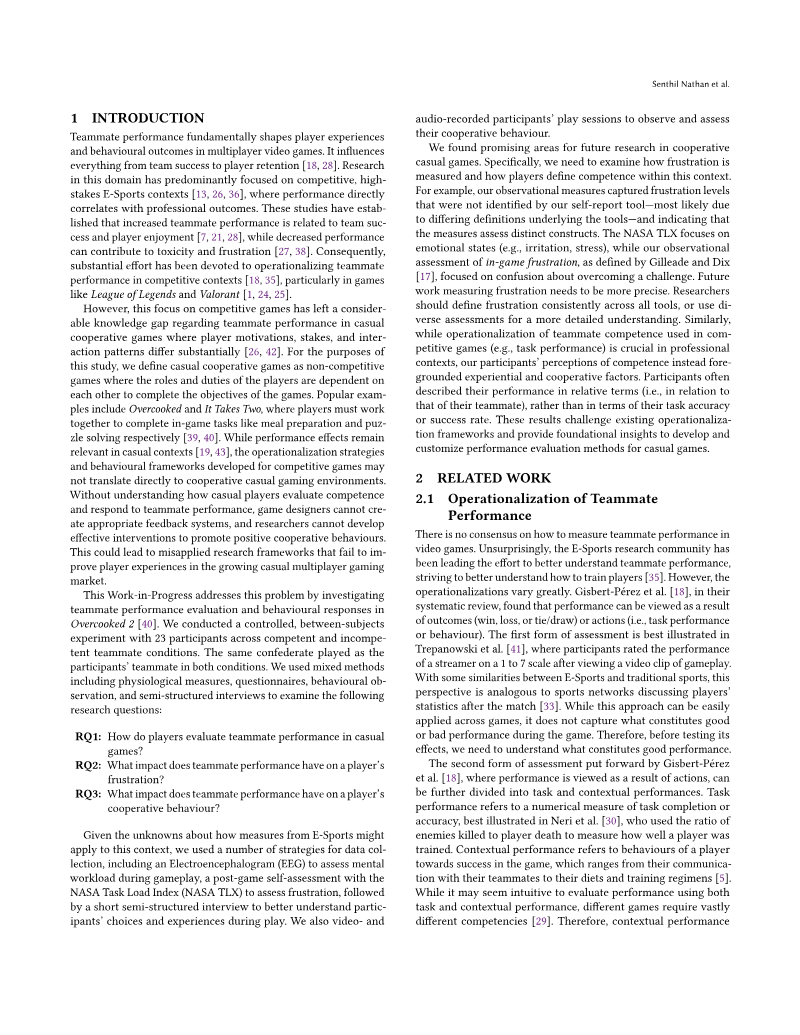
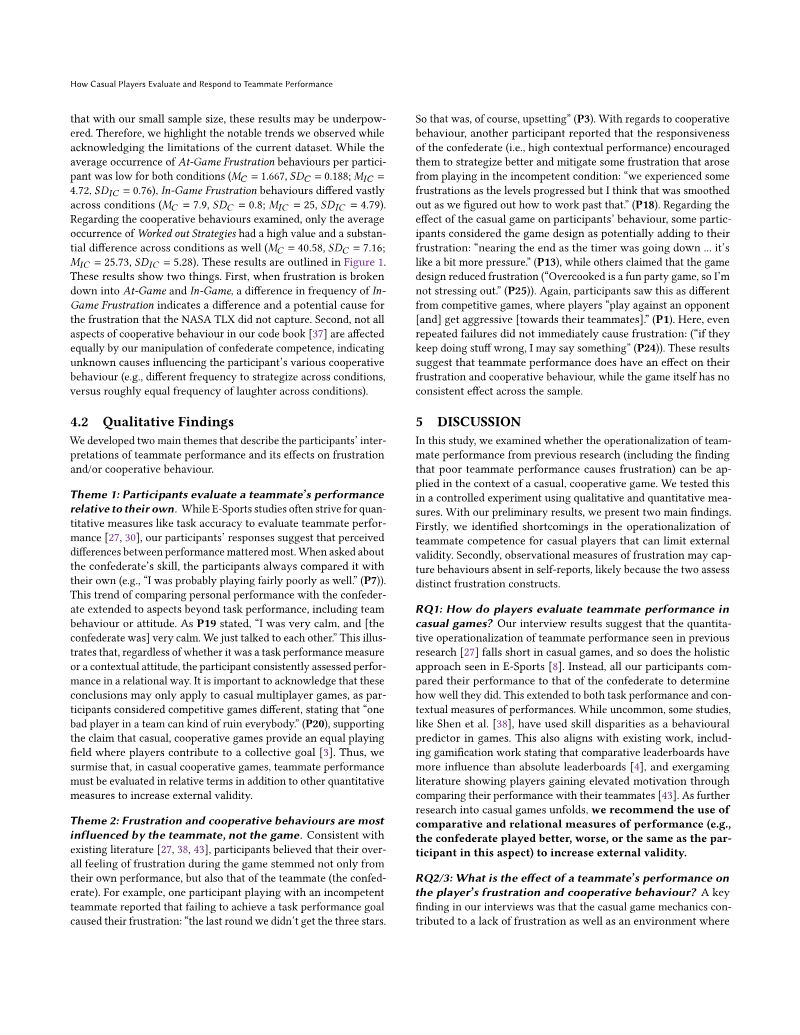
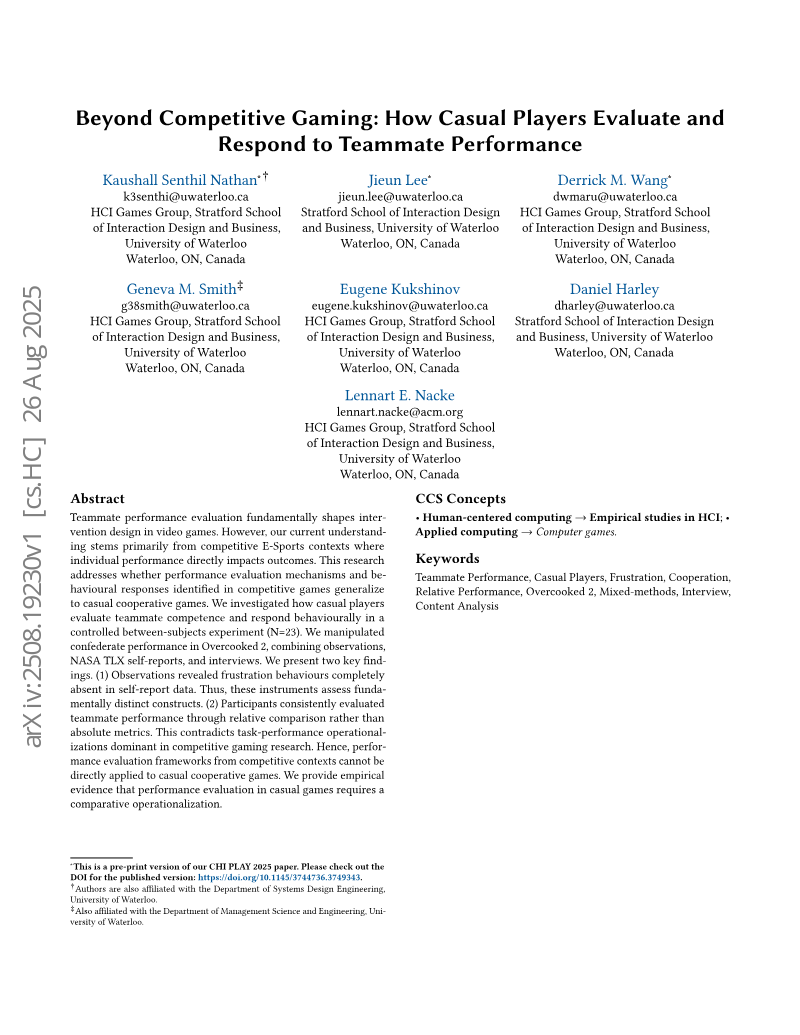
Beyond Competitive Gaming: How Casual Players Evaluate and Respond to Teammate Performance
Casual gaming environments operate under distinct psychological frameworks that diverge significantly from the performance-based metrics utilized in competitive esports.
- Casual players evaluate teammate performance through relative comparison to their own skill level, rather than by applying the fixed, absolute standards often used in competitive E-Sports research.
- Self-reported frustration (measured via NASA TLX) and observational measures of frustration capture distinct constructs, with observational data identifying frustration behaviors that participants failed to report.
- In a controlled study of 23 participants playing Overcooked 2, teammate performance significantly influenced both the frequency of cooperative behaviors and the player's subjective experience of frustration.
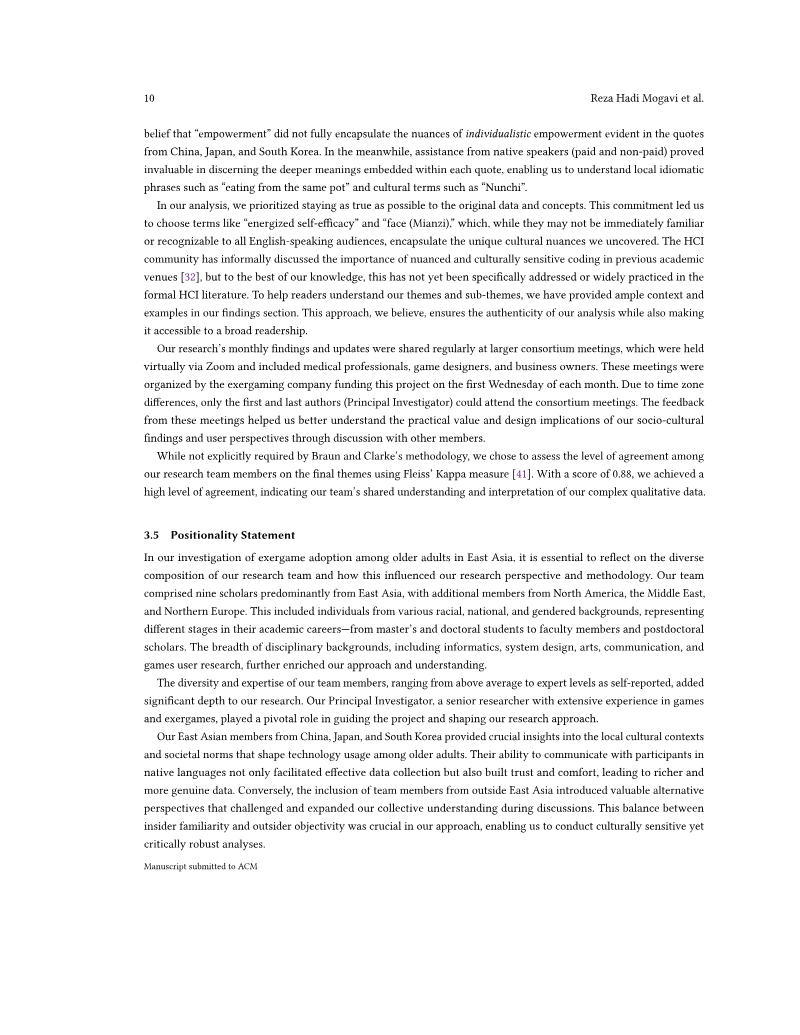
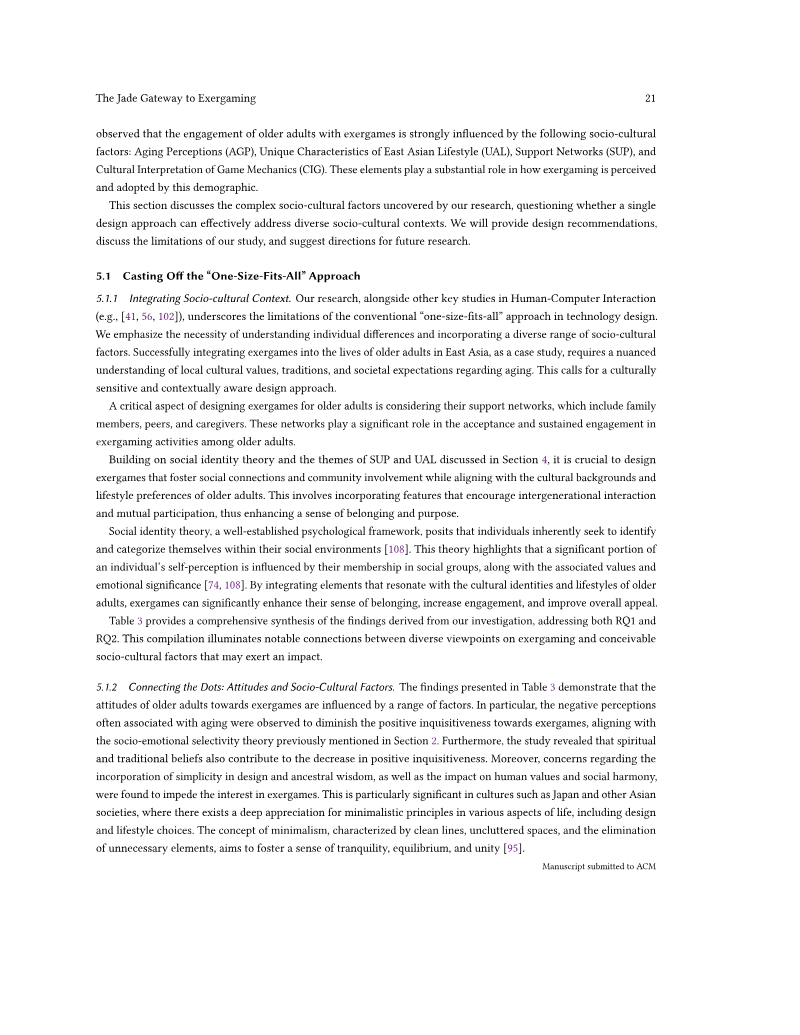
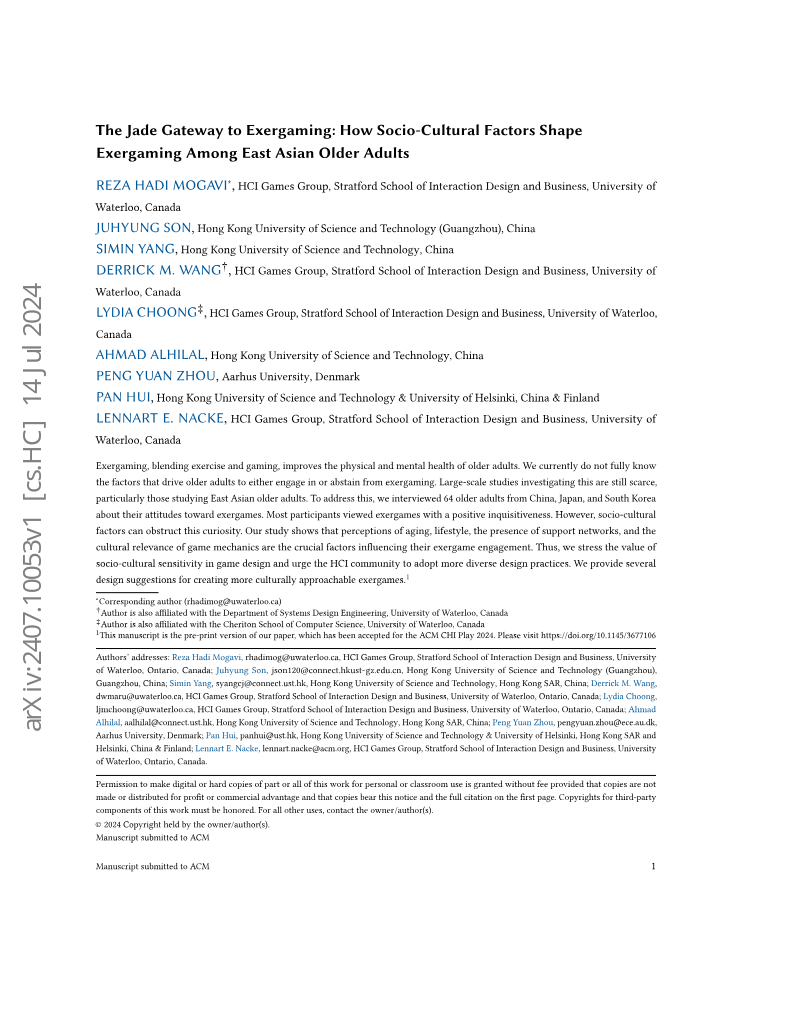
The Jade Gateway to Exergaming: How Socio-Cultural Factors Shape Exergaming Among East Asian Older Adults
Exergaming adoption among older adults in China, Japan, and South Korea is fundamentally mediated by a complex interplay of socio-cultural values, traditional philosophies, and perceptions of aging.
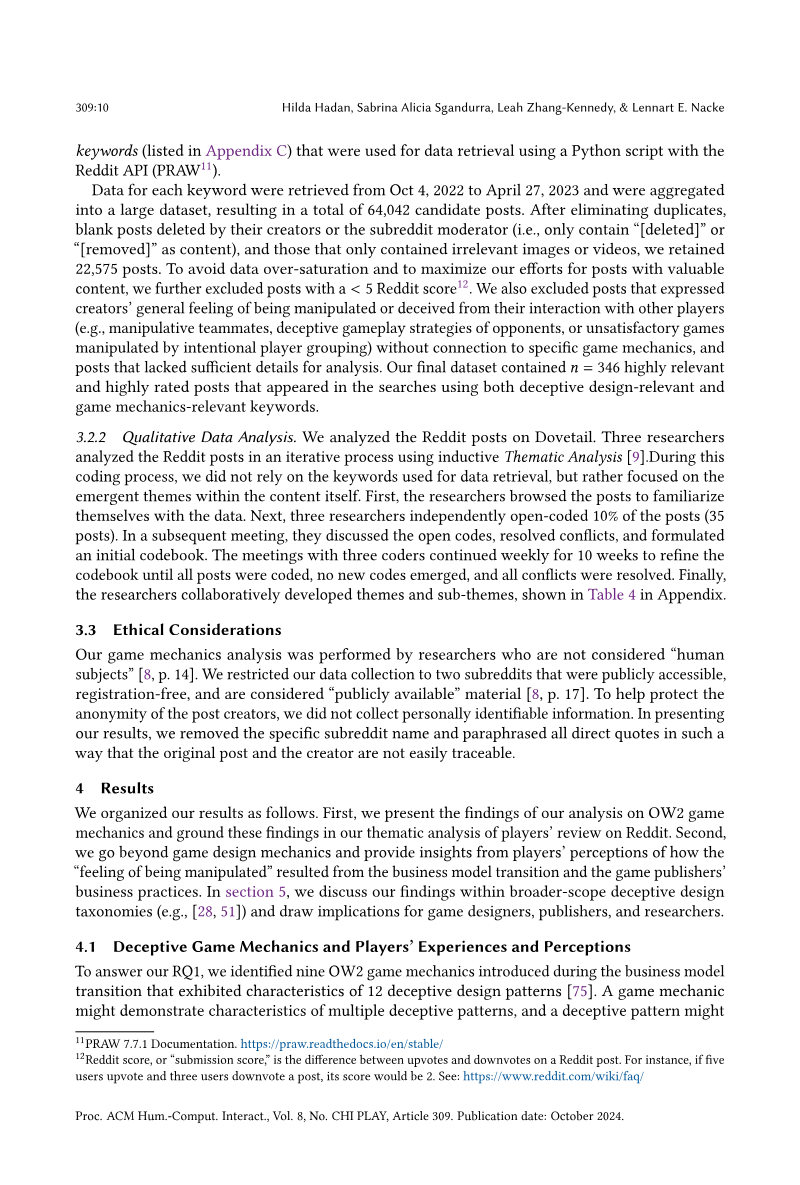
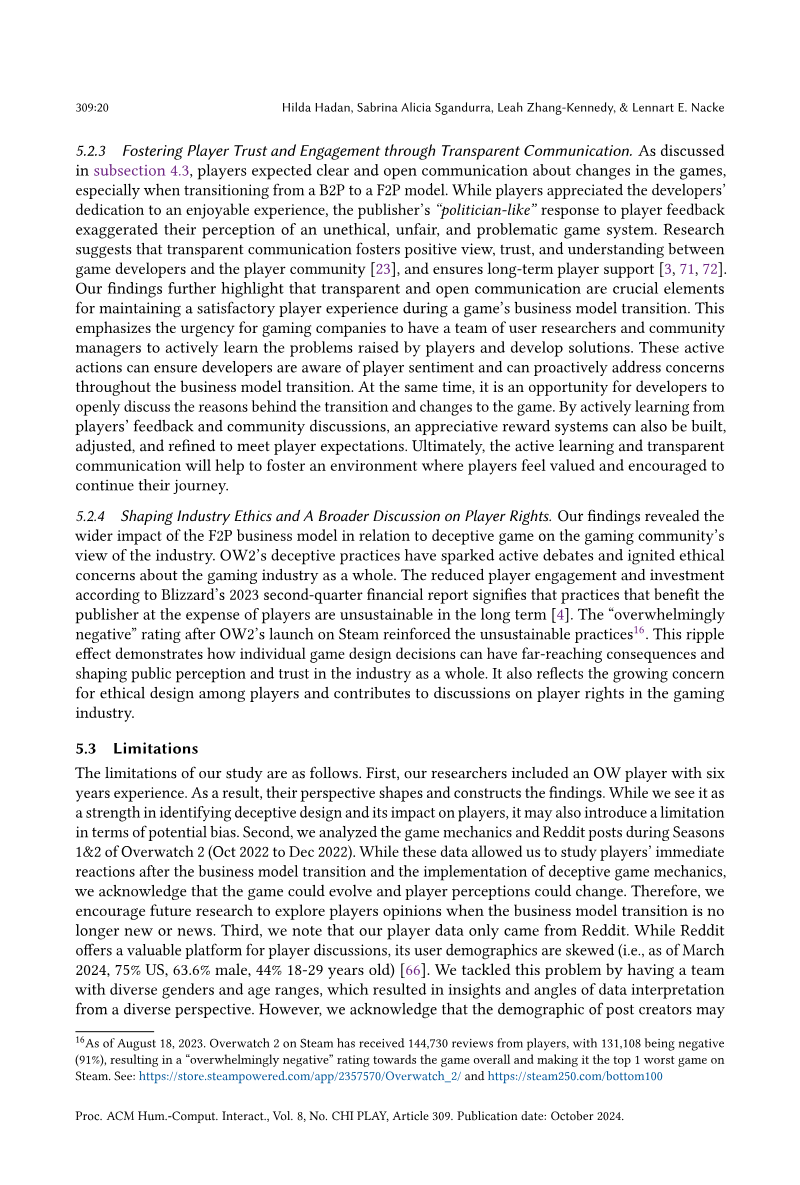
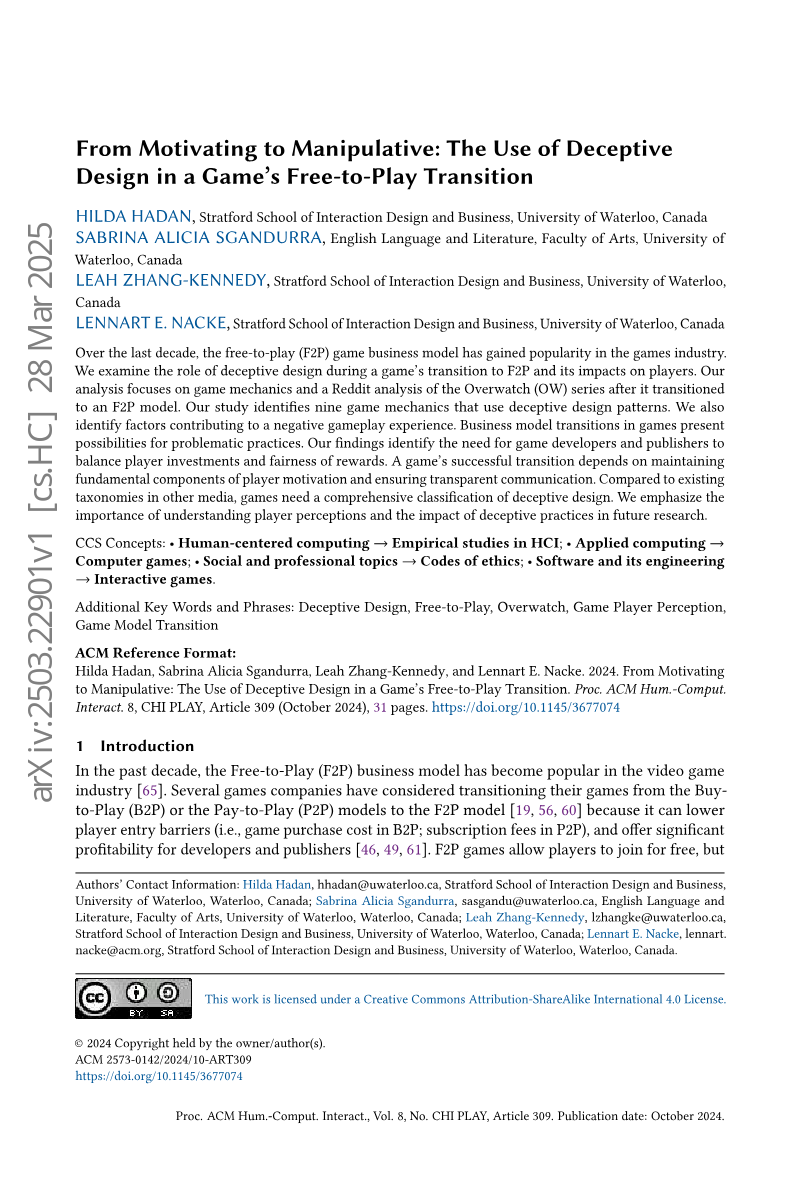
From Motivating to Manipulative: The Use of Deceptive Design in a Game's Free-to-Play Transition
The transition of the Overwatch series from a buy-to-play model to a free-to-play framework illustrates a significant shift toward the integration of deceptive design patterns, commonly referred to as dark patterns.
- The transition of Overwatch 2 to a free-to-play (F2P) model introduced nine specific game mechanics utilizing deceptive design patterns, such as 'Grinding' and 'Infinite Treadmill' within battle passes and challenge systems.
- Analysis of 346 highly relevant Reddit posts revealed that players perceive the removal of earnable lootboxes and the shift toward paid battle passes as a degradation of the reward system, negatively impacting trust in the developer.
- Players identified 'time-sinking' mechanics, specifically daily, weekly, and seasonal challenges, as manipulative tools designed to force continuous engagement through periodically resetting goals.
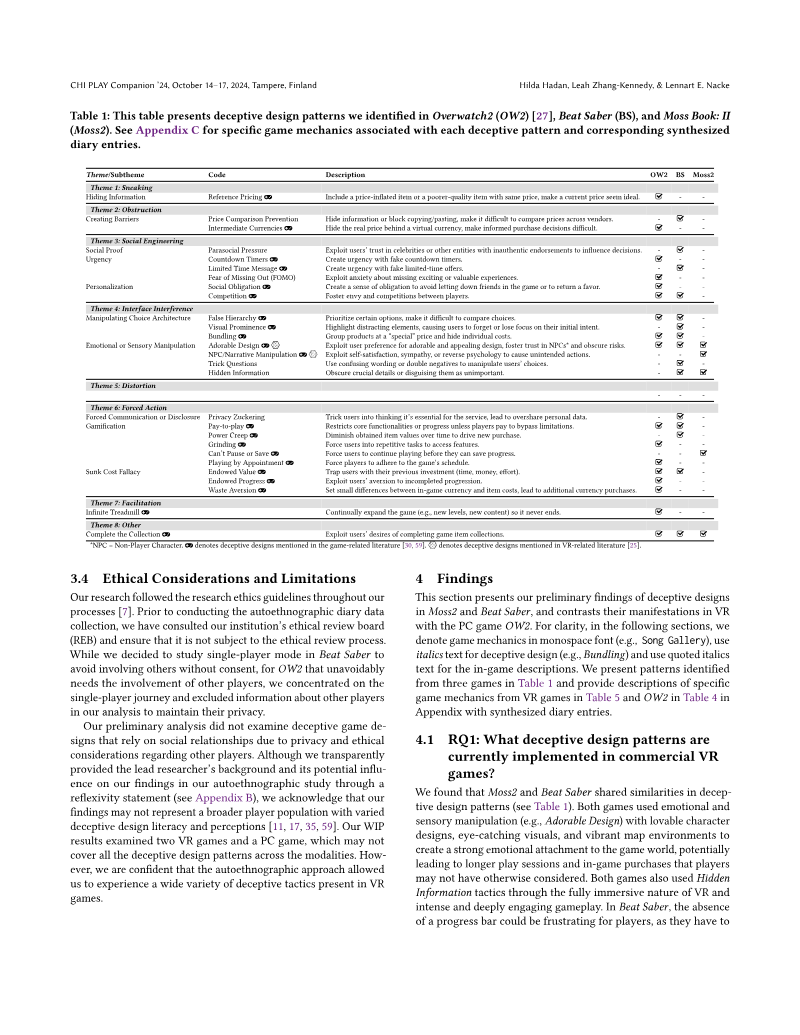
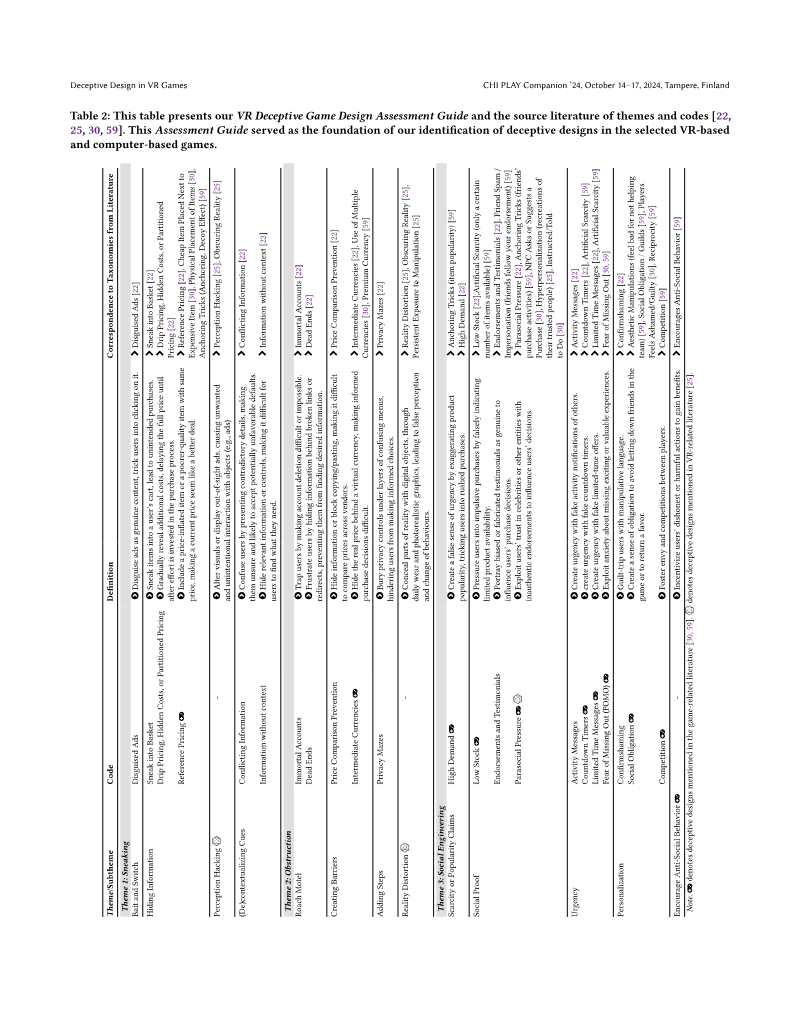
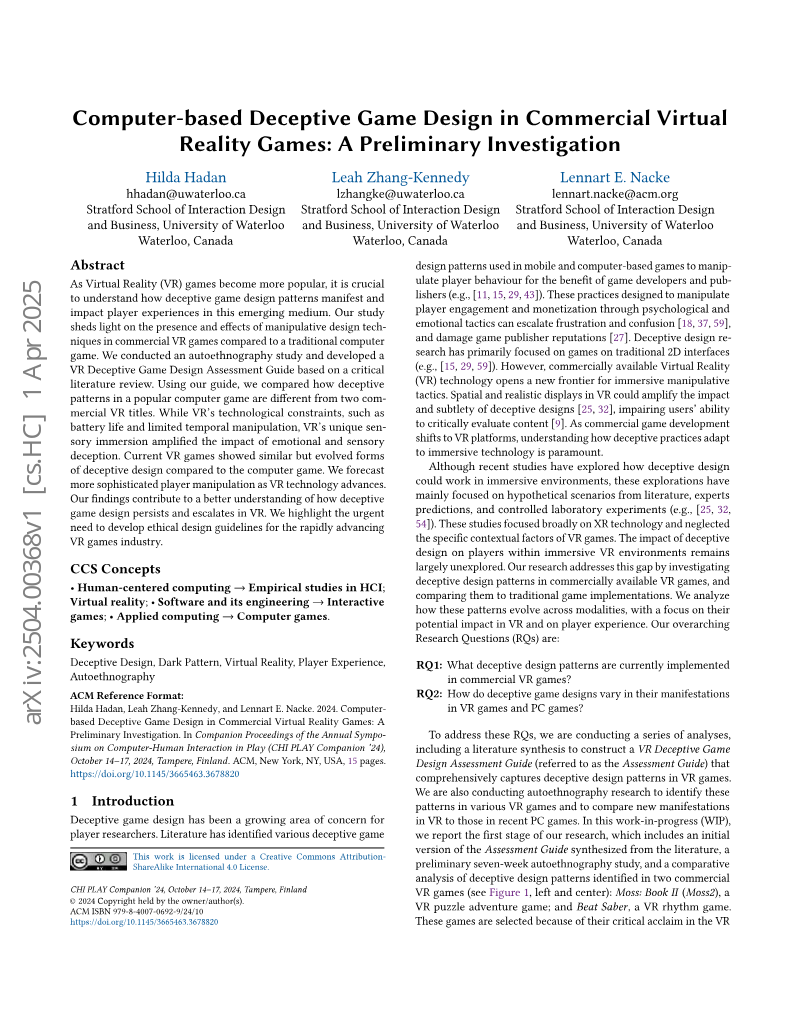
Computer-based Deceptive Game Design in Commercial Virtual Reality Games: A Preliminary Investigation
Deceptive game design patterns, originally identified in traditional 2D computer gaming, are increasingly migrating into immersive virtual reality environments, where they are amplified by the medium’s unique sensory and psychological capabilities.
- Virtual Reality (VR) intensifies player engagement and immersion, creating unique opportunities for deceptive design patterns to amplify psychological and sensory manipulation compared to traditional 2D interfaces.
- An autoethnographic study of Overwatch 2, Moss: Book II, and Beat Saber identified that VR-specific deceptive designs—such as 'Adorable Design,' 'Complete the Collection,' and 'Data-Fueled Manipulation'—are used to drive player behavior and monetization.
- VR-unique features like spatial 3D visuals, haptic feedback, and sensor data allow developers to blur the lines between reality and virtual environments, potentially misleading users about product quality or game mechanics.
Culture Clash: When Deceptive Design Meets Diverse Player Expectations
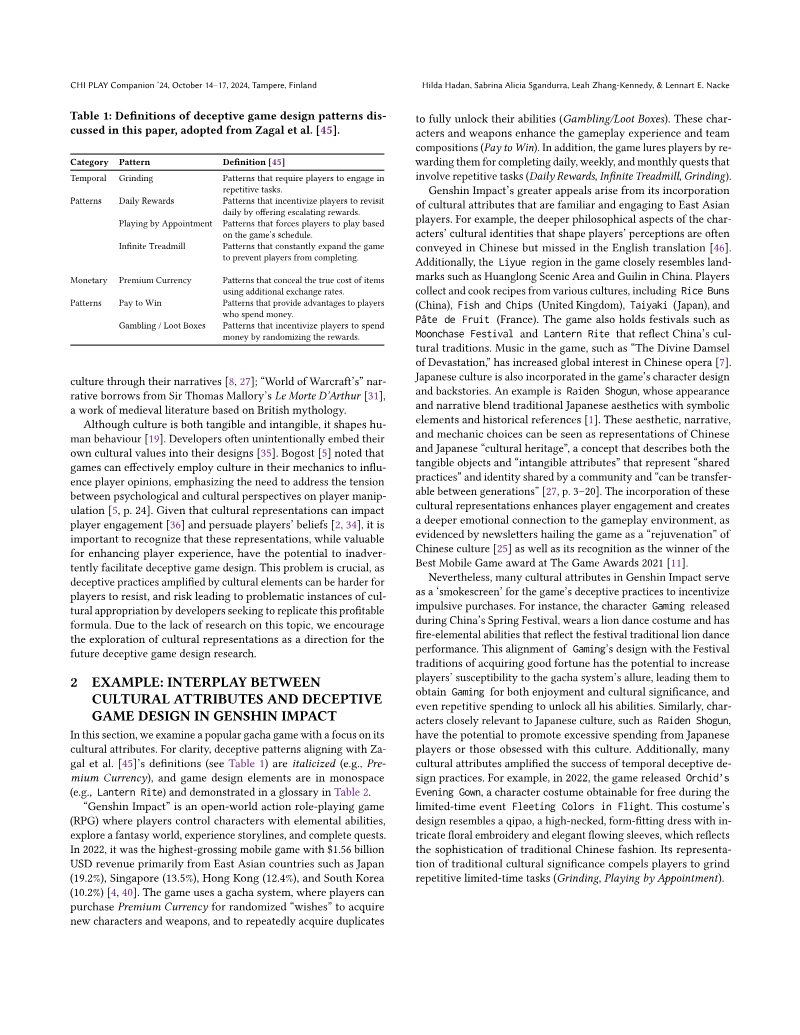
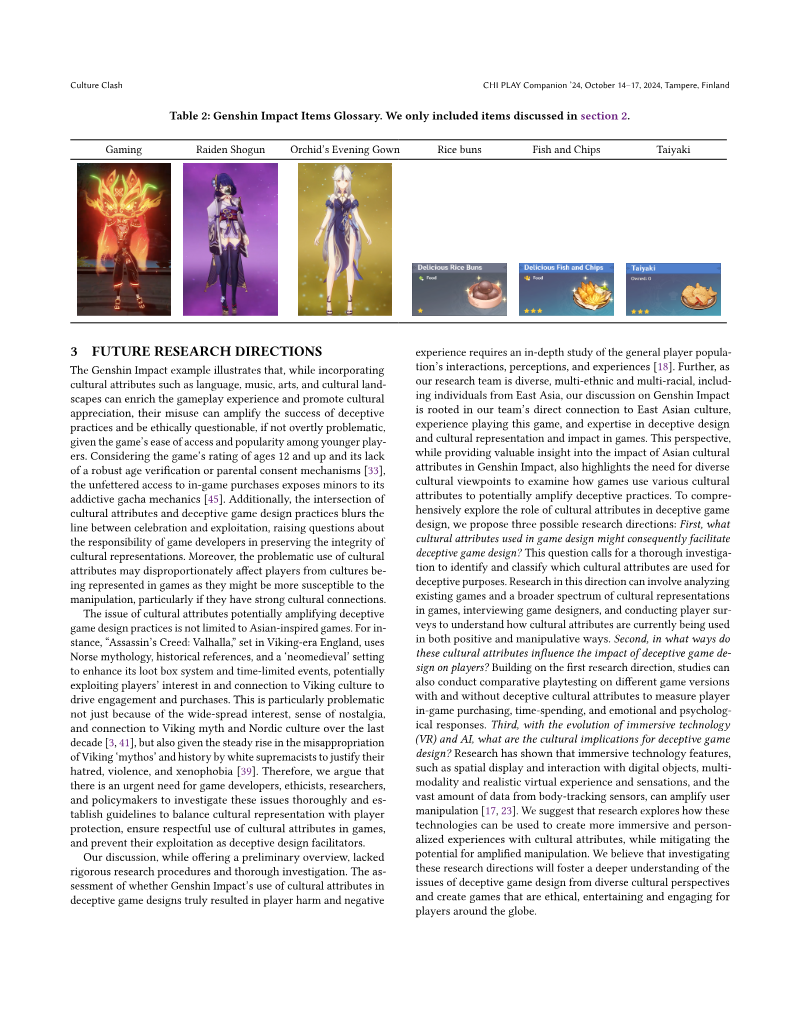
This analysis explores the intersection of cultural representation and deceptive design in video games, positing that developers often utilize cultural attributes—such as language, aesthetics, and historical narratives—to amplify the effectiveness of manipulative monetization strategies.
- Developers are increasingly utilizing cultural elements like language, aesthetics, and historical narratives as a 'smokescreen' to increase the effectiveness of manipulative monetization strategies.
- Genshin Impact serves as a primary case study for leveraging cultural festivals, traditional fashion, and regional landmarks to incentivize repetitive spending and time-intensive gameplay in East Asian markets.
- Titles such as Assassin’s Creed: Valhalla utilize historical and mythological references to drive engagement with loot box systems, potentially exploiting player nostalgia and cultural identity.
Explainability via Interactivity: Supporting Nonexperts' Sensemaking of Pretrained CNN
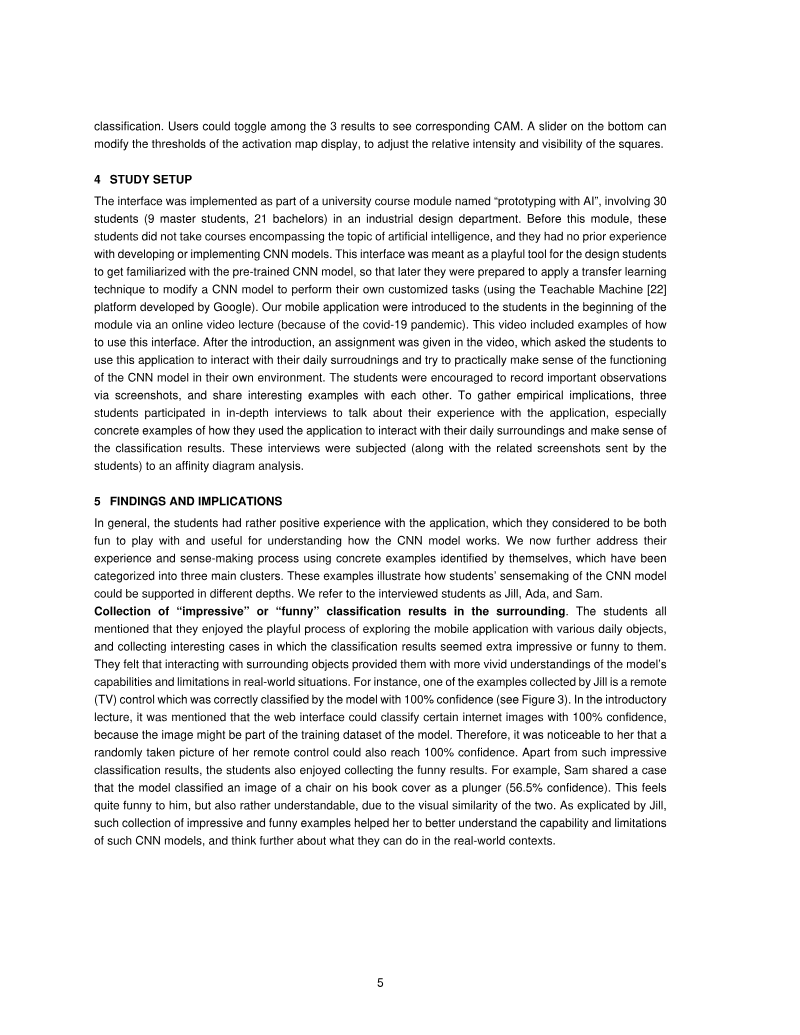
The research introduces a mobile application designed to help non-expert users, specifically design students, understand the decision-making processes of pretrained Convolutional Neural Networks (CNNs).
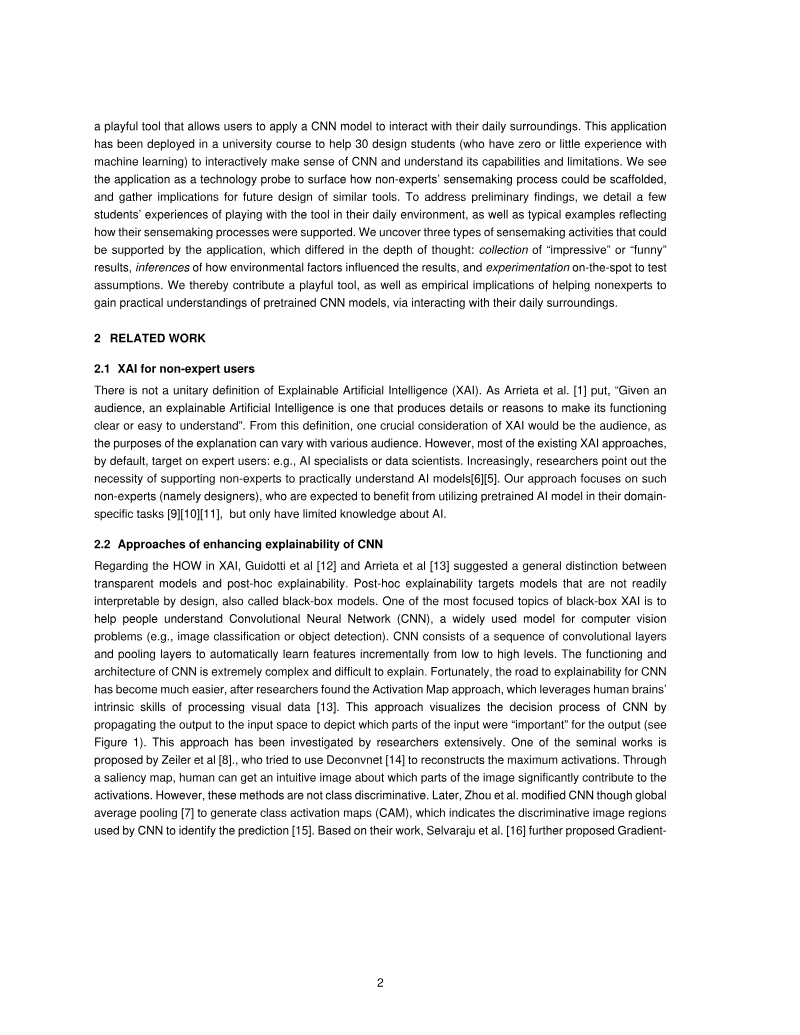
- A mobile application using Class Activation Maps (CAM) allows non-expert users to visualize which image regions drive a Convolutional Neural Network's (CNN) classification decisions, helping them understand model capabilities and limitations.
- The tool utilizes TensorFlow.js and the MobileNet model, which is pretrained on the ImageNet database to recognize over 1,000 object categories, enabling immediate, installation-free use on mobile devices.
- In a study of 30 industrial design students, the tool facilitated three levels of sensemaking: collecting anecdotal examples of model performance, inferring how environmental factors like lighting and adjacent objects influence predictions, and conducting controlled experiments to test specific hypotheses.
A Visual-Inertial Hybrid Controller Approach to Improving Immersion in 3D Video Games
The integration of visual-inertial hybrid controllers represents a significant advancement in 3D gaming, aiming to bridge the gap between physical player movement and digital interaction.
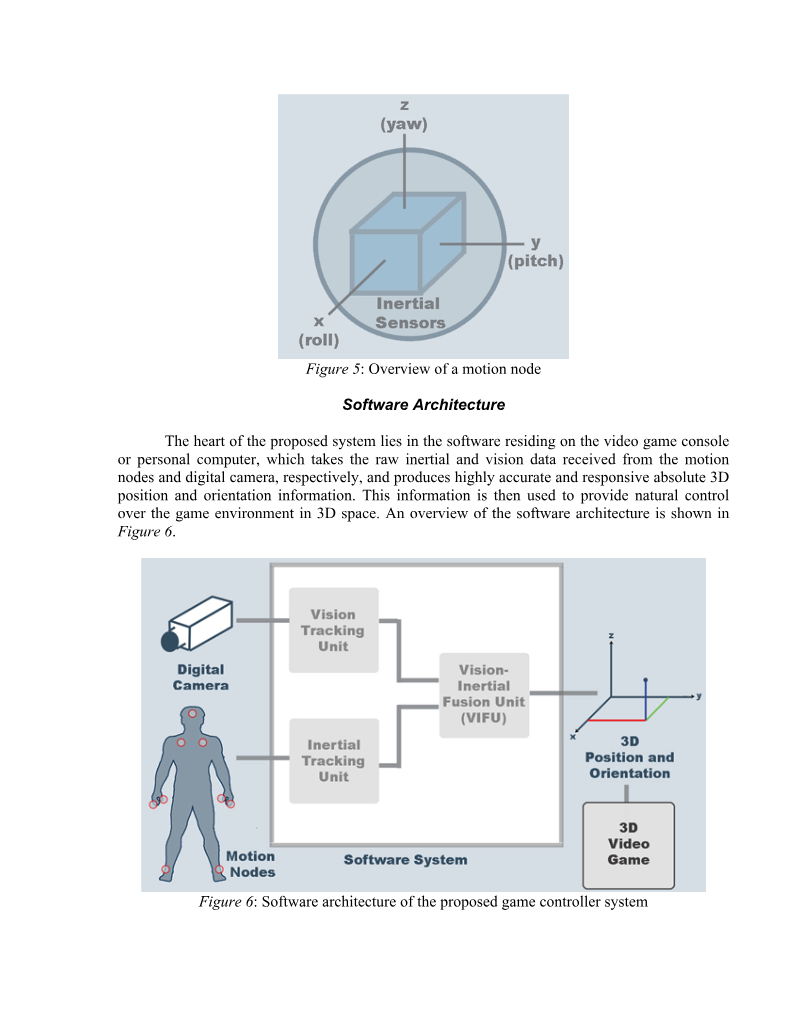
- Visual-inertial hybrid controllers combine vision-based tracking with inertial sensor data to eliminate common issues like visual occlusion, computational latency, and sensor drift.
- The system utilizes a Vision-Inertial Fusion Unit supported by an error-state complementary Kalman filter to achieve high-frequency responsiveness and absolute spatial accuracy.
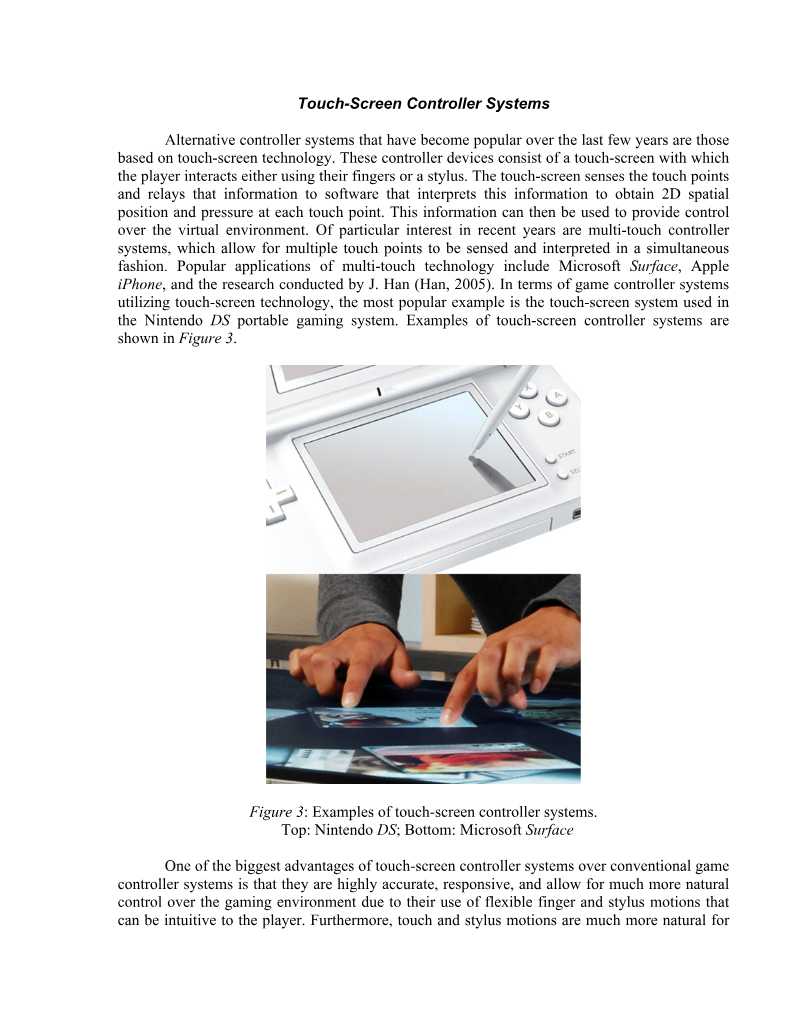
- Low-cost micro-electromechanical systems (MEMS) are leveraged to provide precise 3D positioning, overcoming the hardware constraints and 2D limitations of traditional light-based or touch-screen interfaces.
Do you work at University of Waterloo? Get a free report of how these documents are read and cited here.