University of Ontario Institute of Technology
5 reports, presentations and talks by University of Ontario Institute of Technology in the Game Industry Library, the newest “Towards Democratisation of Games User Research: Exploring Playtesting Challenges of Indie Video Game Developers” (2024).
Documents
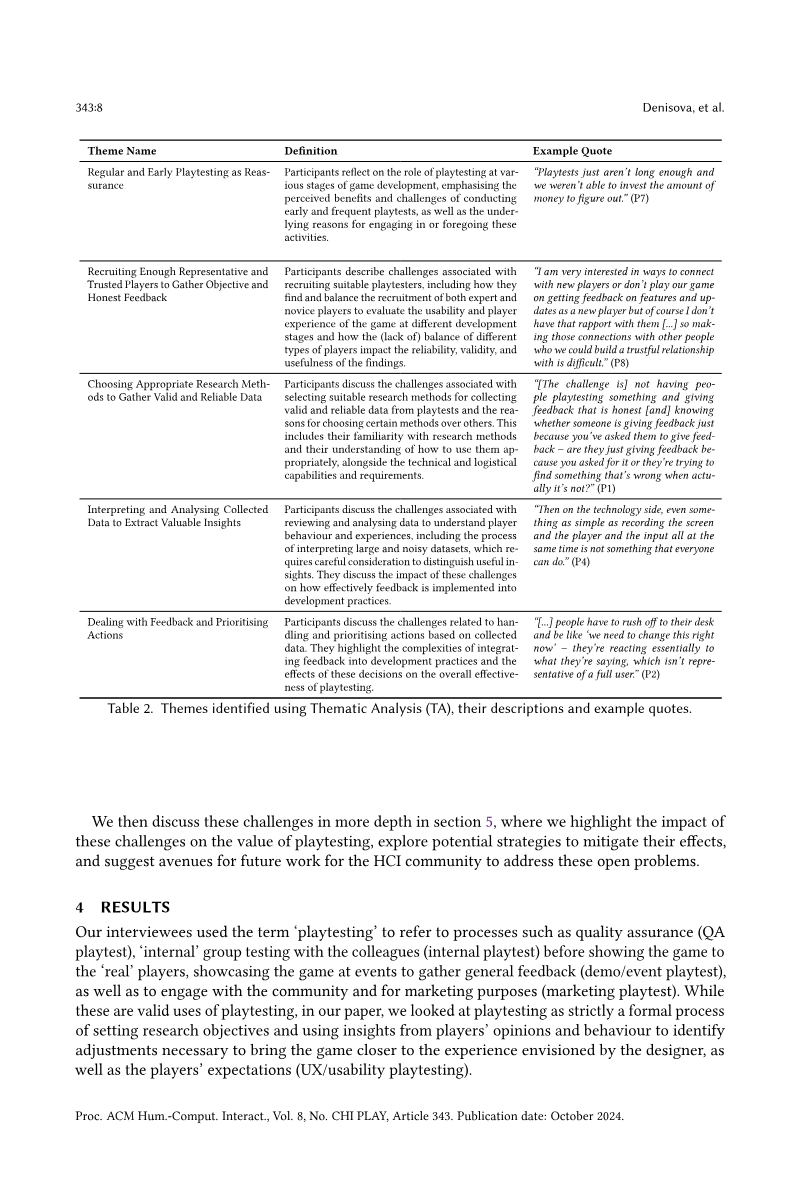
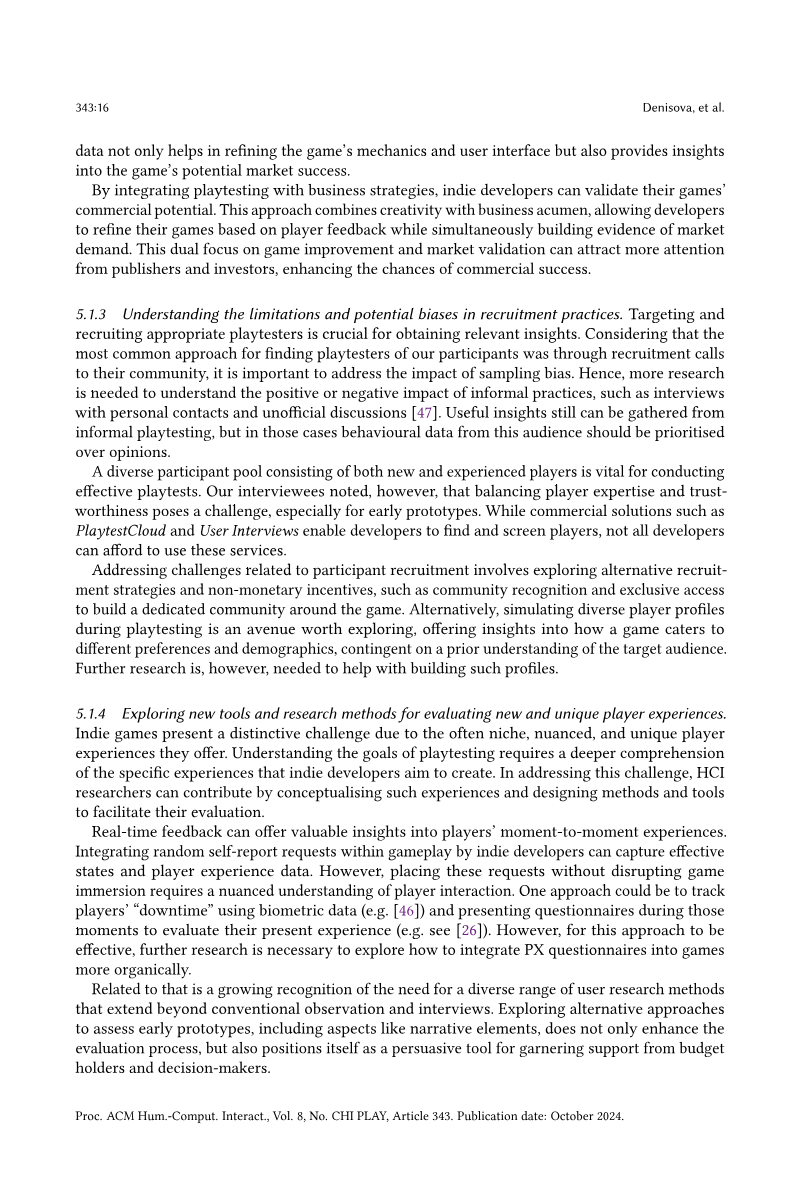
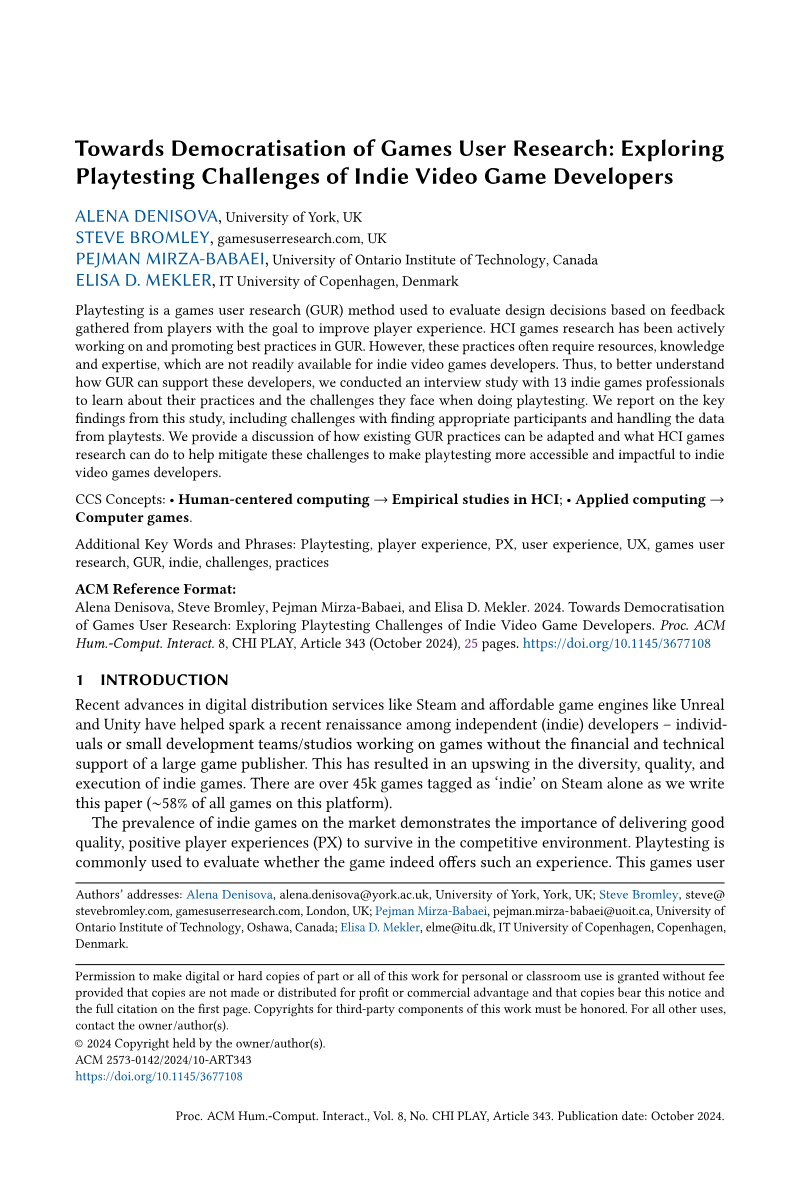
Towards Democratisation of Games User Research: Exploring Playtesting Challenges of Indie Video Game Developers
Independent game developers face a significant disconnect between the formal principles of Games User Research and the practical realities of resource-constrained production environments.
- Indie developers lack dedicated physical spaces for playtesting, forcing them to rely on suboptimal environments like office desks or public events, which compromises data reliability and introduces observer bias.
- The absence of formal Games User Research (GUR) training leads developers to react impulsively to isolated player feedback rather than using structured, objective-based evaluation methods.
- Recruitment for playtests is predominantly limited to existing community members, creating significant sampling bias that can skew results and misrepresent the experiences of broader, non-expert player audiences.
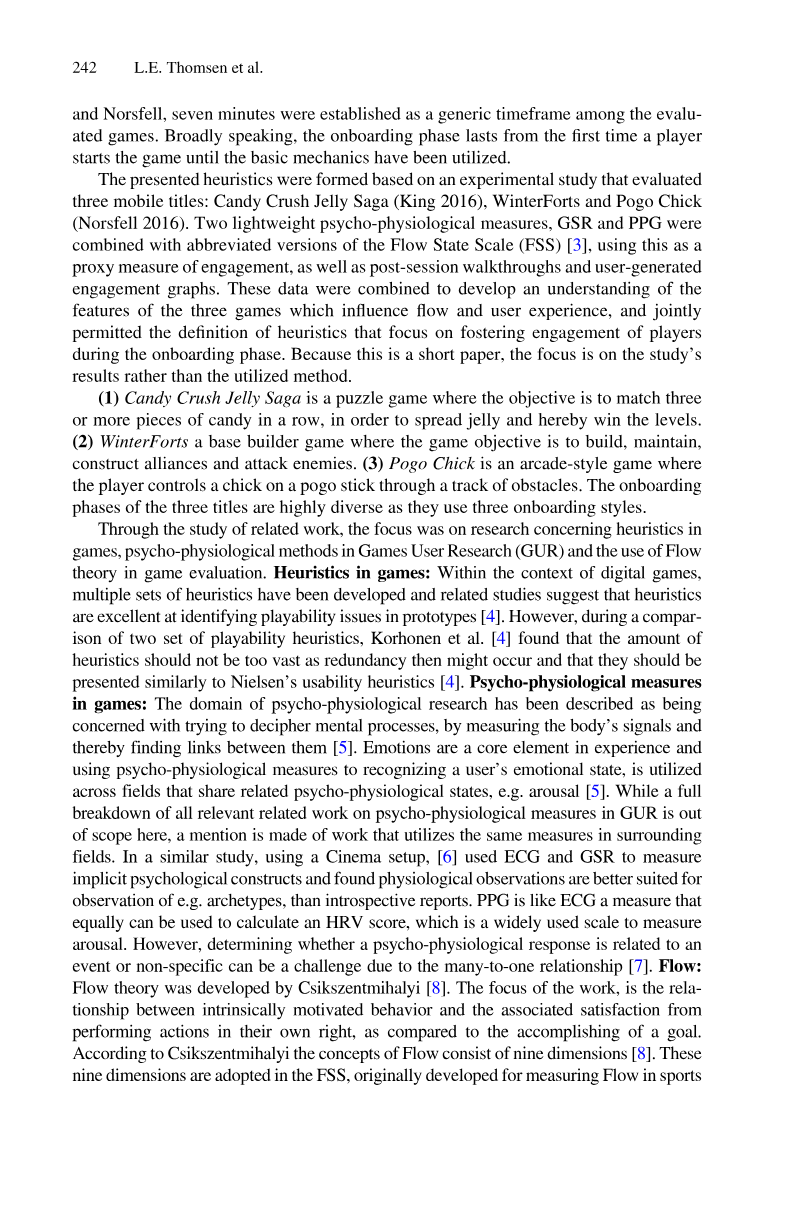
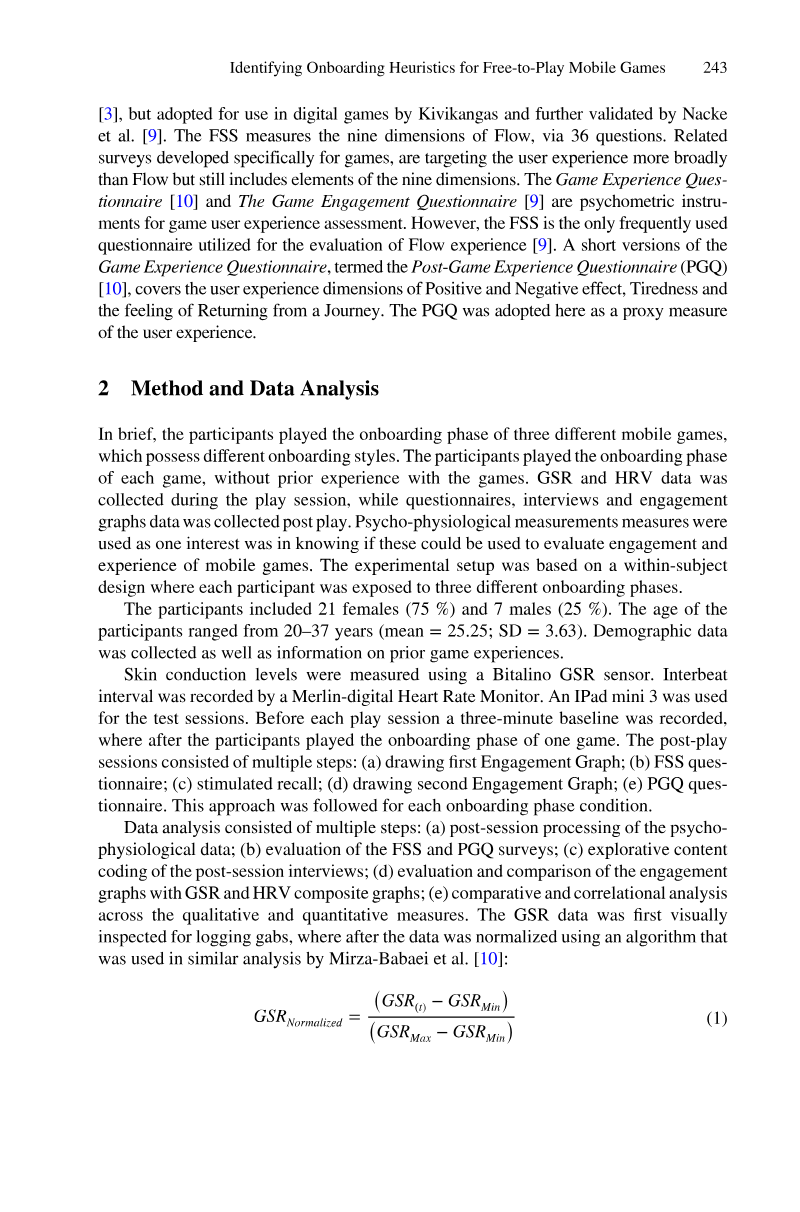
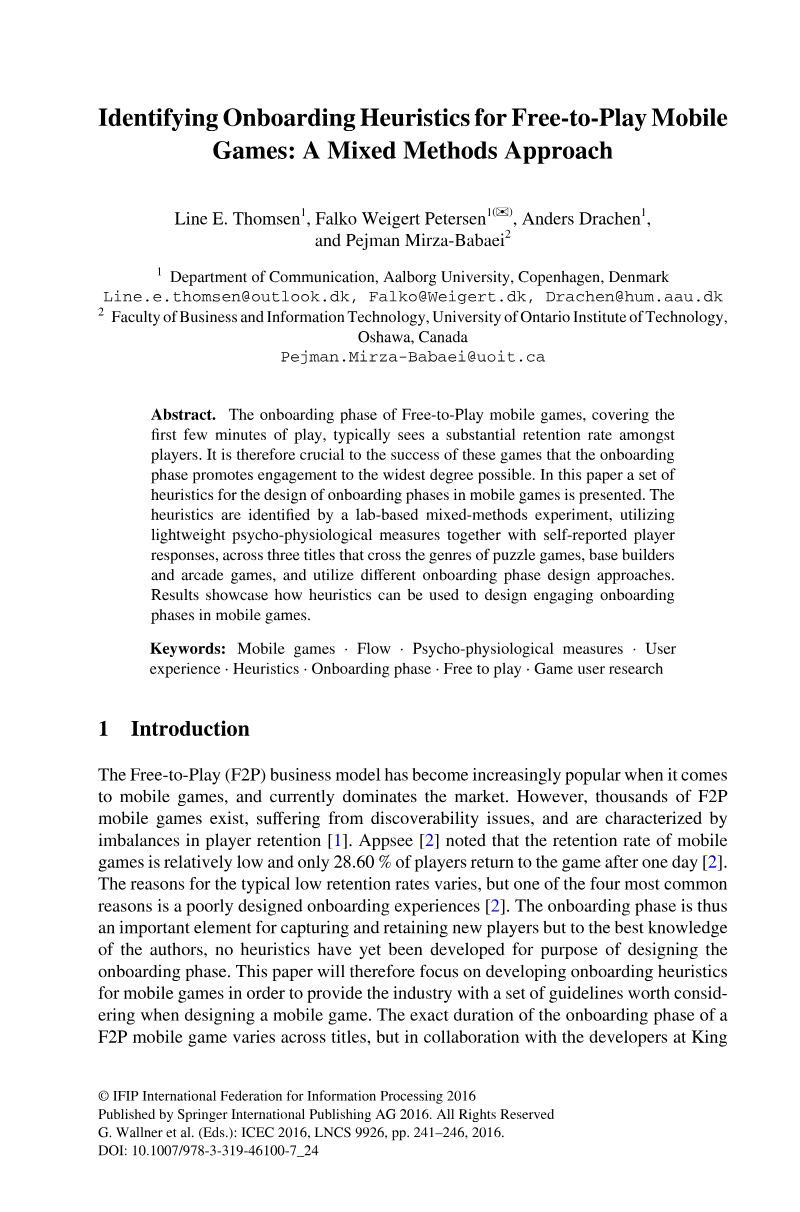
Identifying Onboarding Heuristics for Free-to-Play Mobile Games: A Mixed Methods Approach
The onboarding phase of free-to-play (F2P) mobile games is a critical determinant of long-term player retention, yet the industry has historically lacked standardized design guidelines for this initial experience.
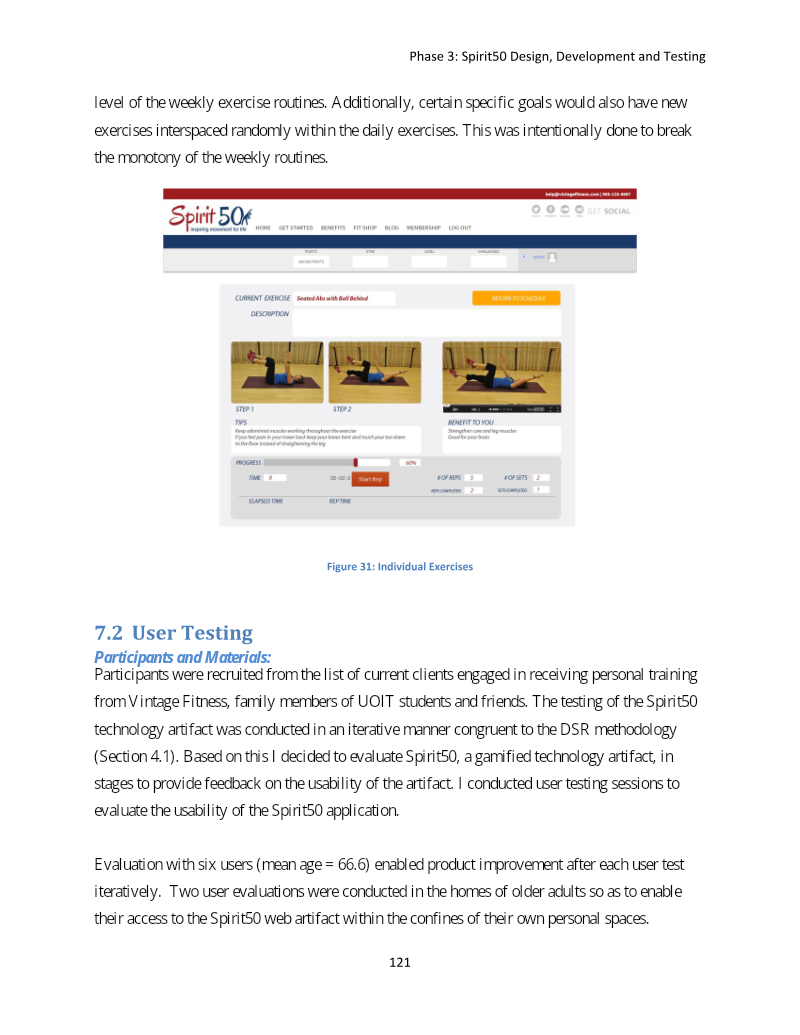
Adaptive Engagement of Older Adults' Fitness through Gamification
This research investigates the efficacy of gamification in promoting physical activity among adults aged 50 and older, a demographic increasingly susceptible to the health risks of sedentary lifestyles.
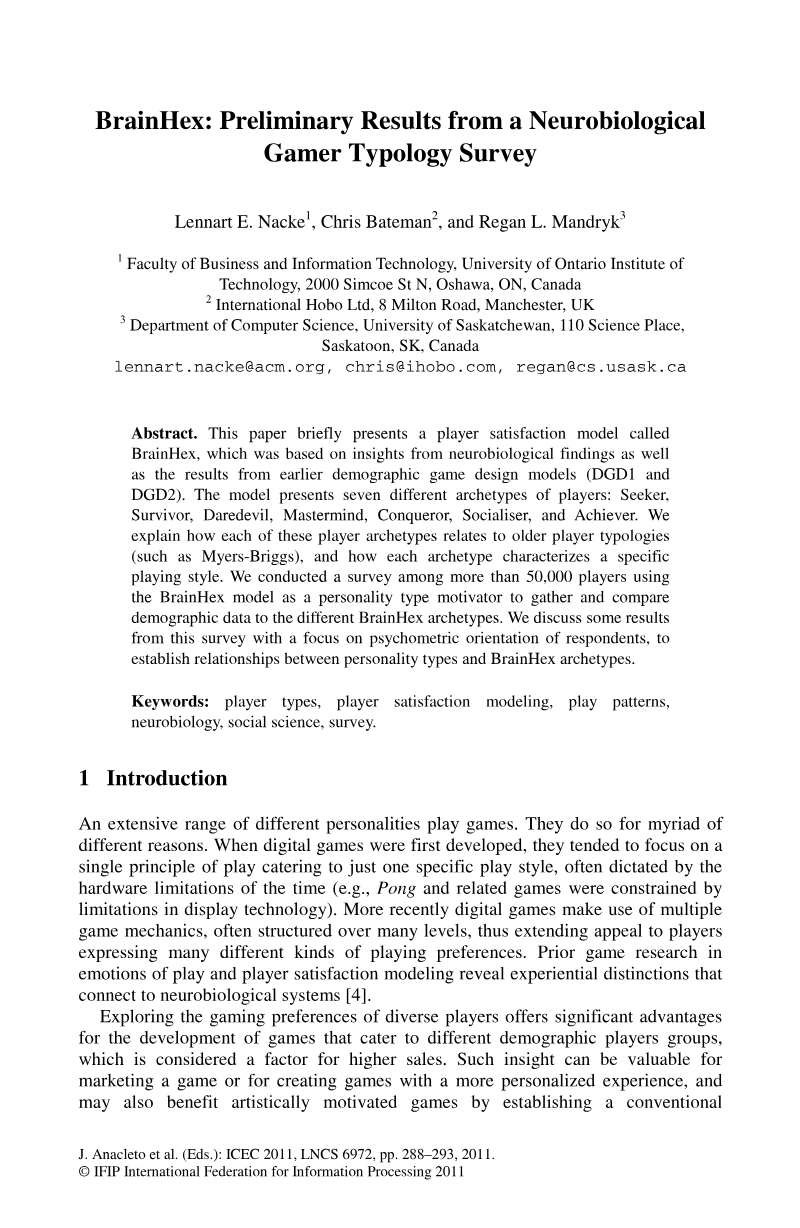
BrainHex: Preliminary Results from a Neurobiological Gamer Typology Survey
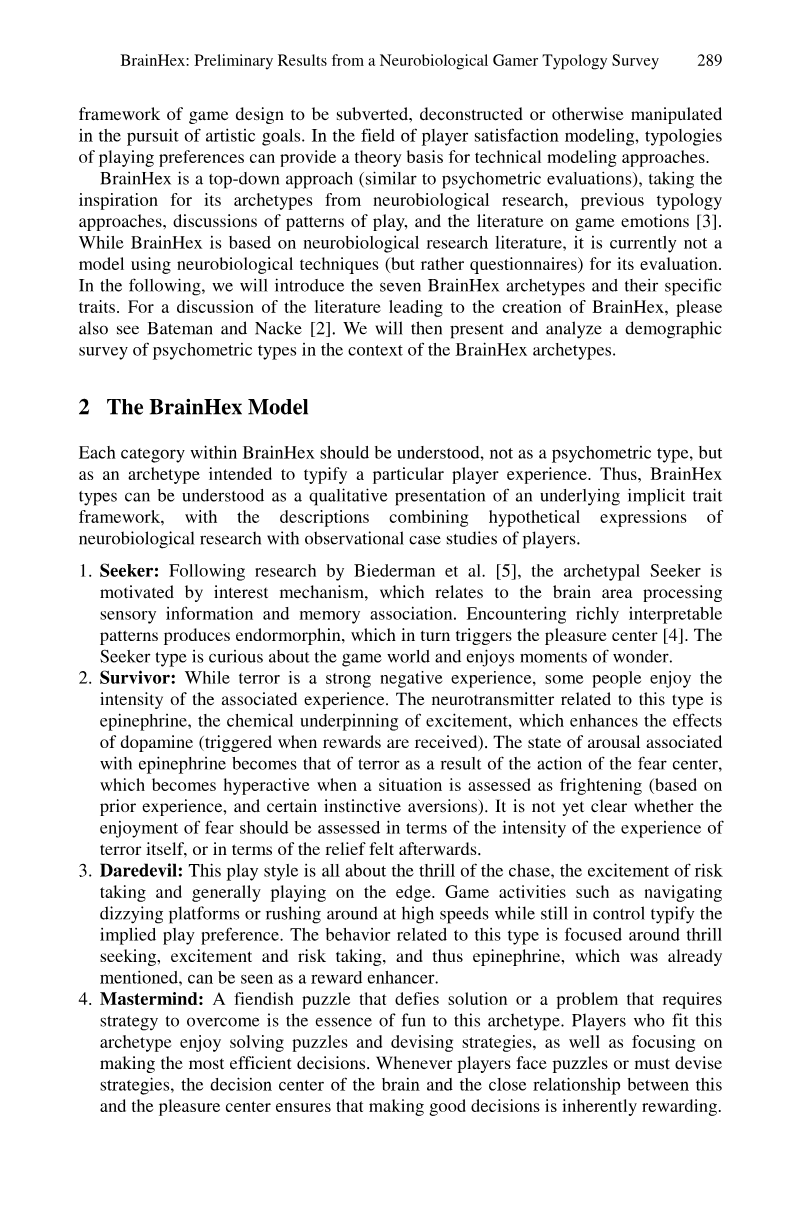
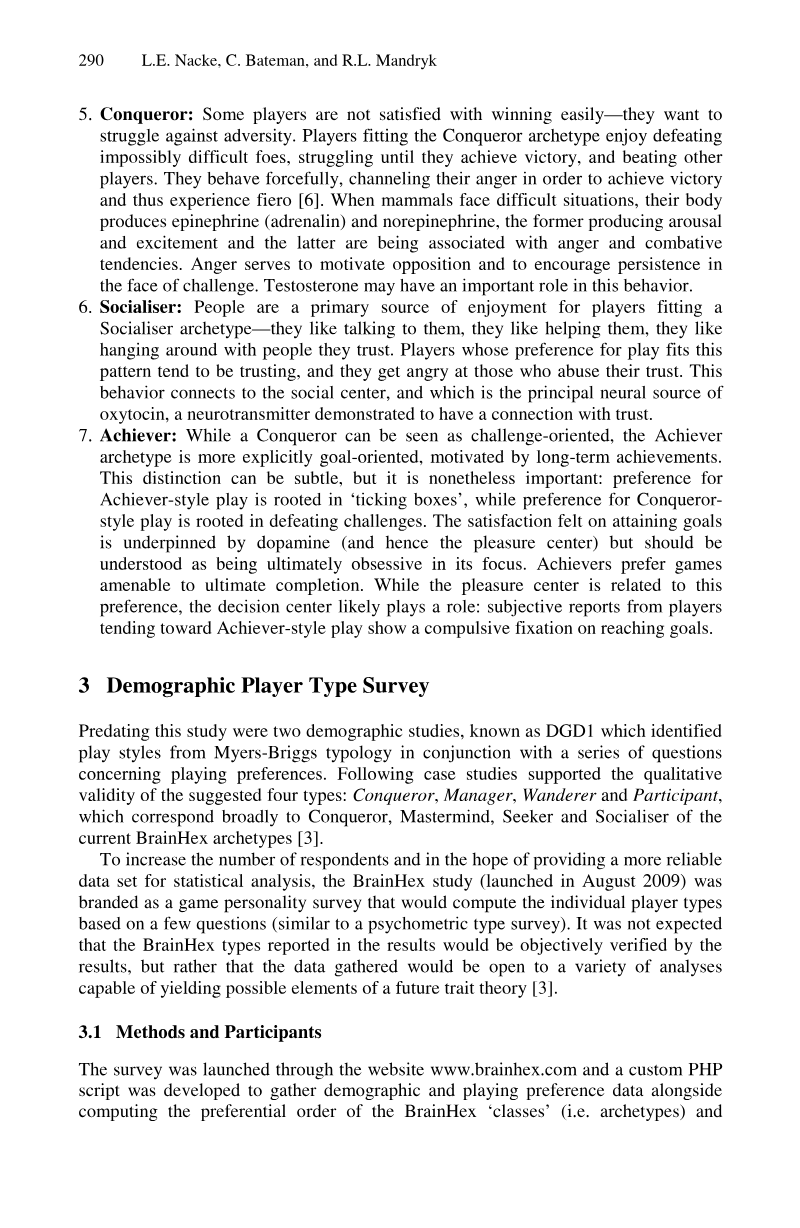
The BrainHex model serves as a player satisfaction framework that categorizes gaming preferences into seven distinct archetypes: Seeker, Survivor, Daredevil, Mastermind, Conqueror, Socialiser, and Achiever.
GPU-Based One-Dimensional Convolution for Real-Time Spatial Sound Generation
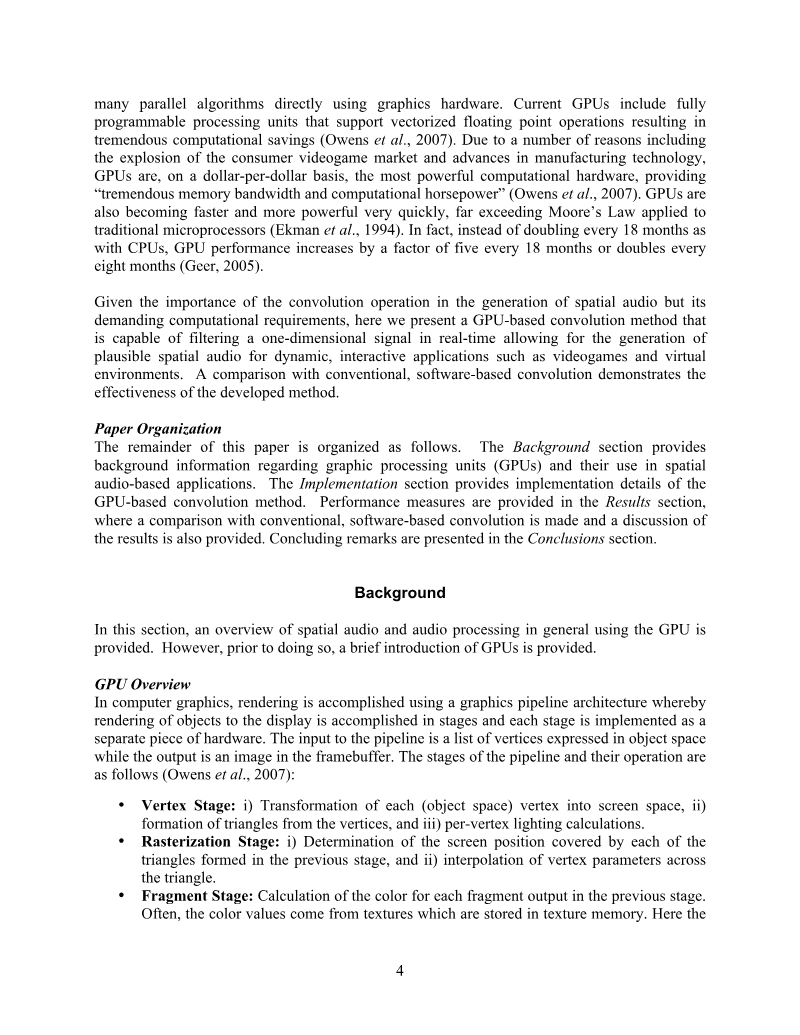
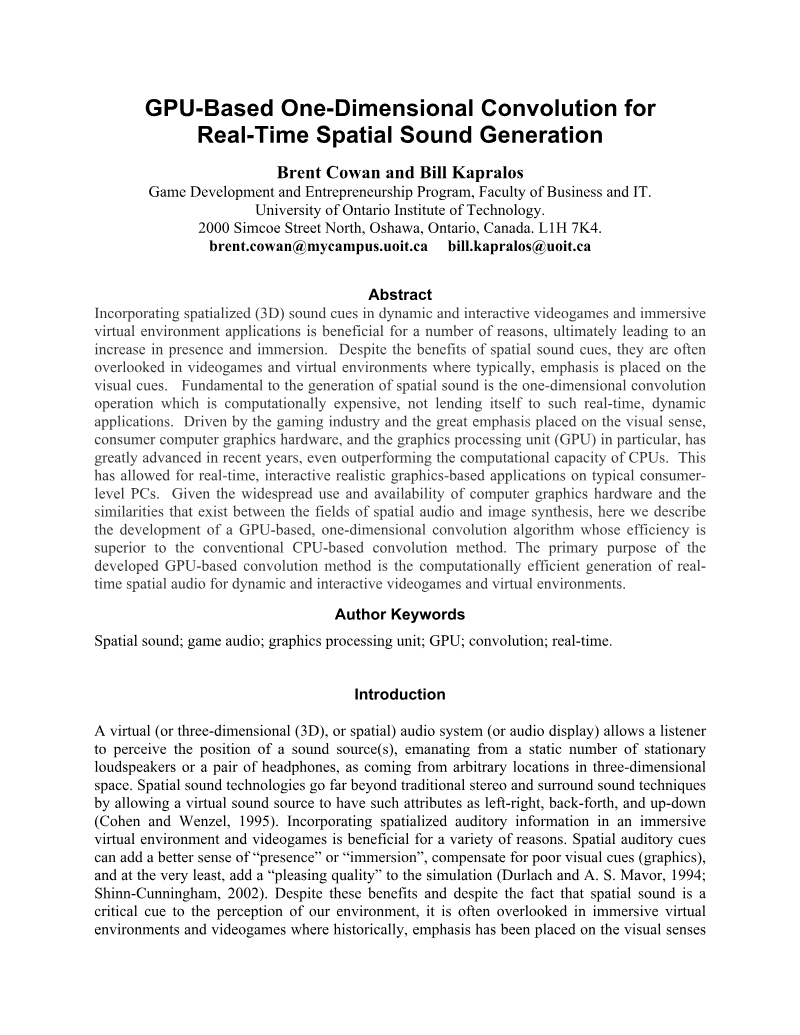
Real-time spatial audio generation remains a significant computational bottleneck in immersive virtual environments and video games, primarily due to the intensive processing requirements of binaural room impulse responses.
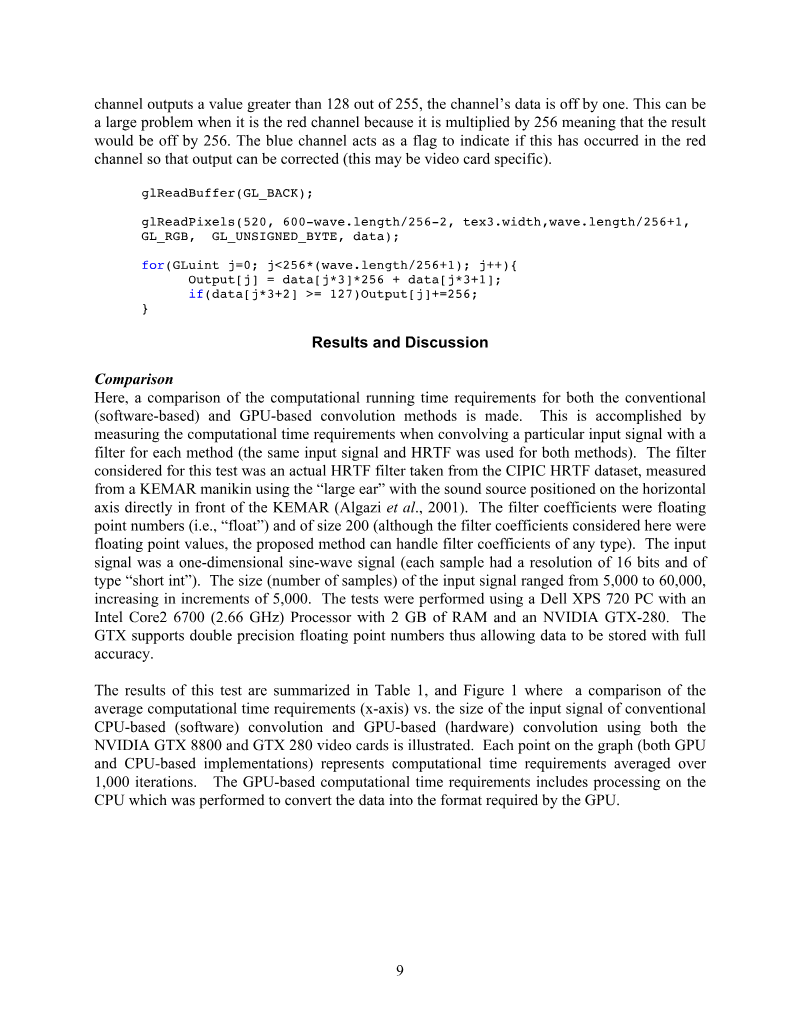
- Offloading 1D convolution for spatial audio to the GPU reduces processing time from 45.27 milliseconds on a CPU to approximately 1 millisecond on an NVIDIA GTX-280.
- The GPU-based approach maintains the low latency required for real-time auralization by processing 60,000 samples with a 200-coefficient filter in a fraction of the time required by traditional CPU architectures.
- Implementing 1D convolution via the OpenGL Shading Language allows developers to repurpose graphics pipelines for non-graphical acoustic computations.
Do you work at University of Ontario Institute of Technology? Get a free report of how these documents are read and cited here.