Goldsmiths University of London
4 reports, presentations and talks by Goldsmiths University of London in the Game Industry Library, the newest “Developing Effective UX Guidelines for HUD Design: A Practical Approach for Independent Game Developers” (2025).
Documents
Developing Effective UX Guidelines for HUD Design: A Practical Approach for Independent Game Developers
Independent game developers frequently encounter significant obstacles when designing Heads-Up Displays, primarily due to a lack of accessible, actionable, and genre-specific UX frameworks.
- Independent developers struggle with existing HUD design resources because they are overly academic, lack visual examples, and are poorly organized for practical implementation.
- A study involving 16 independent developers identified that current industry UX frameworks fail to address the specific resource constraints and practical needs of smaller studios.
- New, genre-specific HUD guidelines for racing games were developed and rated significantly higher for relevance and convenience than traditional, abstract design resources.
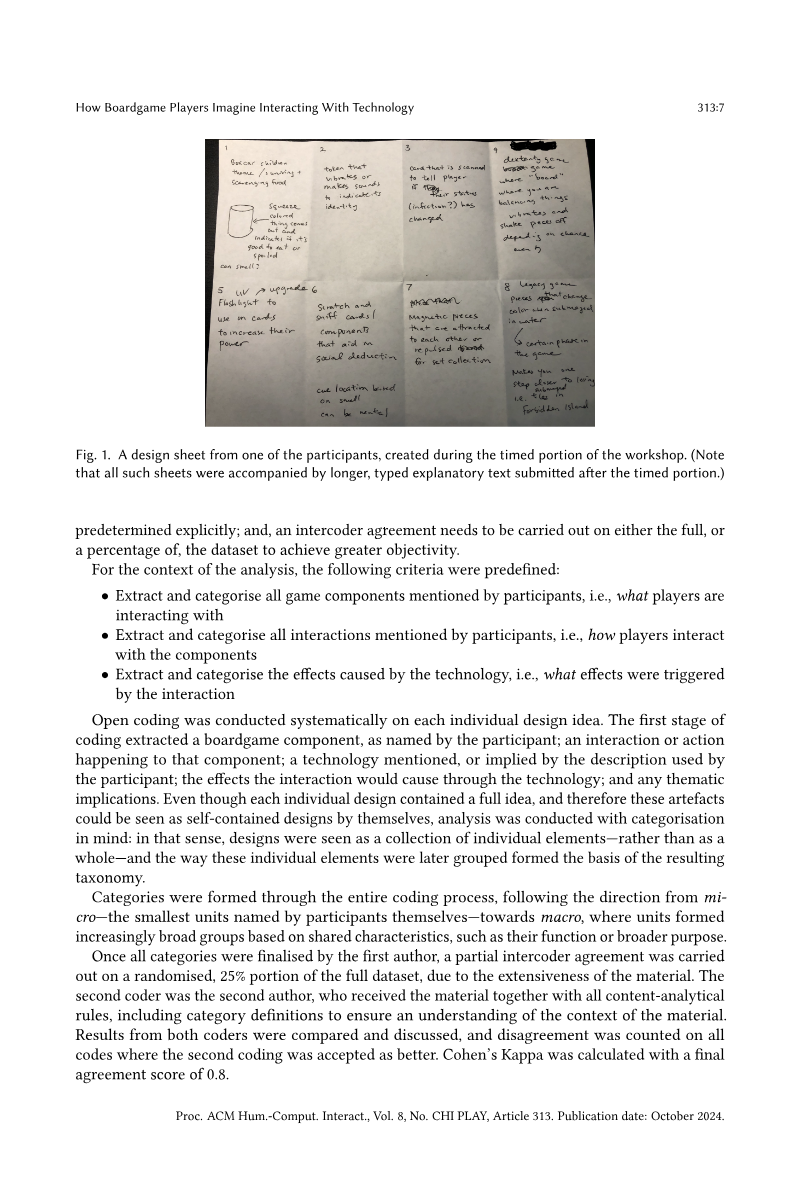
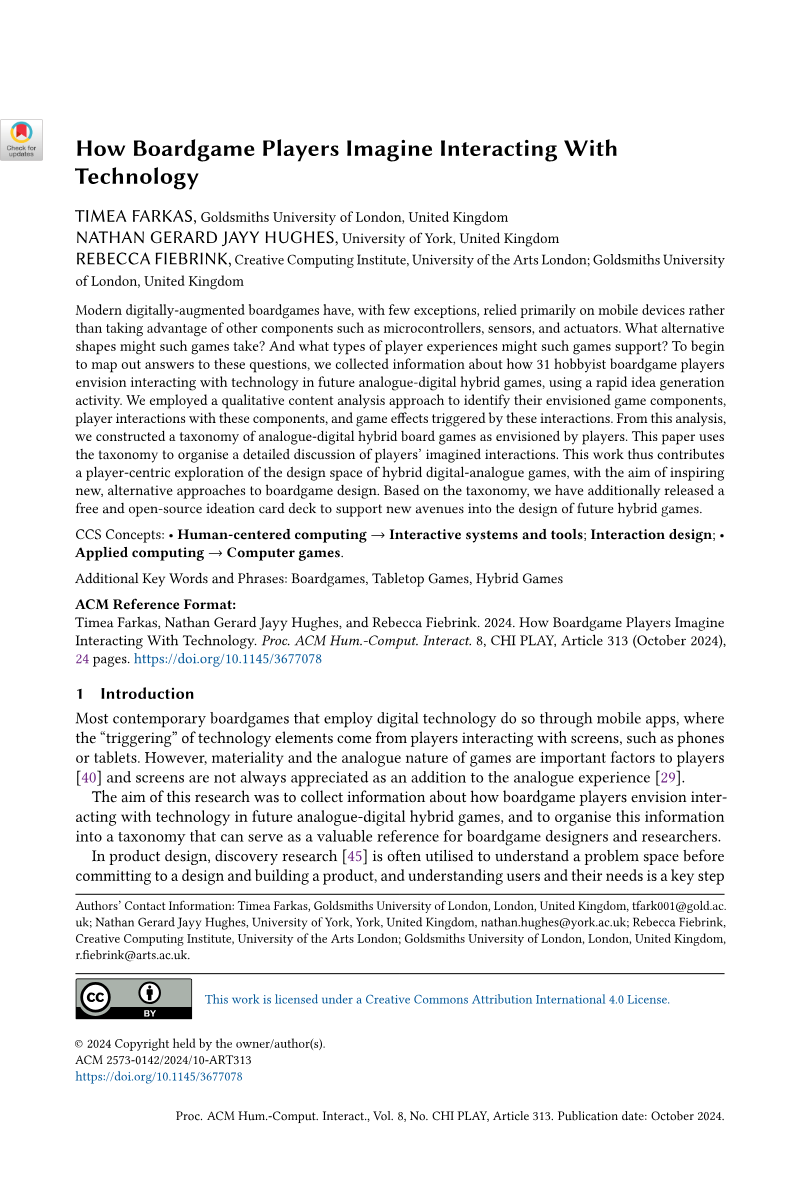
How Boardgame Players Imagine Interacting With Technology
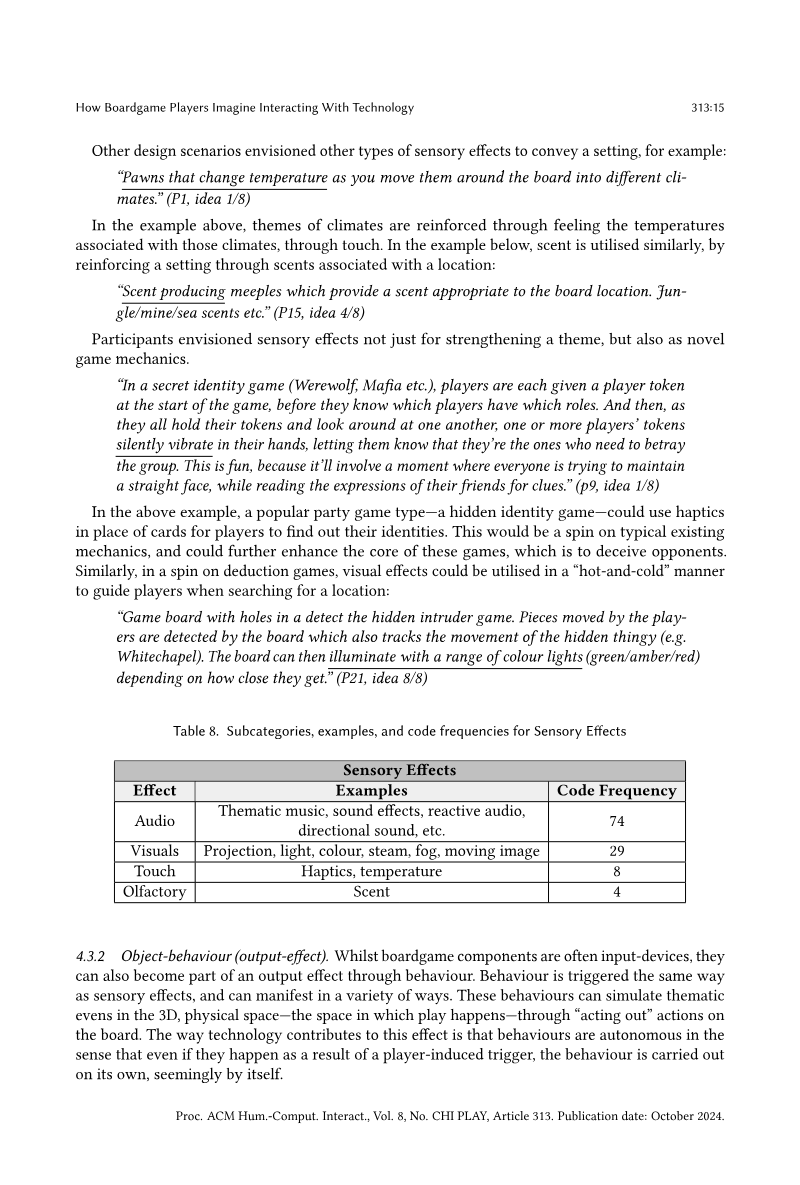
The integration of technology into tabletop gaming is evolving beyond simple mobile application companions toward deeply embedded, invisible systems that prioritize thematic immersion.
- Hobbyist boardgame players envision a shift away from screen-reliant mobile apps toward integrated technology, such as sensors and actuators, that preserves the tactile nature of traditional components.
- A taxonomy of 31 participants' ideas identified game pieces (96 mentions) and play areas (75 mentions) as the most common components envisioned for technological integration, followed by cards (46) and dice (26).
- Players prioritize 'thematicness'—the degree to which a game world feels realized—suggesting that technology should be used to provide sensory feedback like audio (74 mentions) and visual effects (29 mentions) rather than just automating housekeeping tasks.
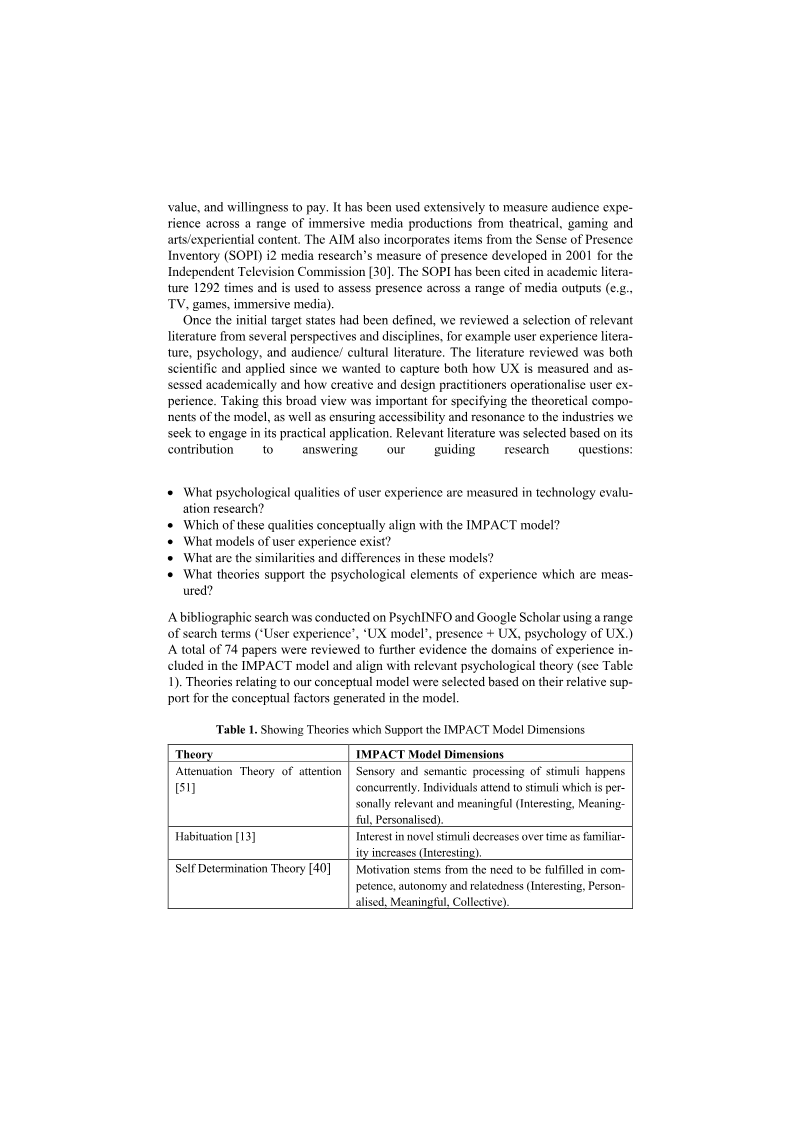

Targeting IMPACT: A New Psychological Model of User Experience
The IMPACT model establishes a comprehensive psychological framework designed to shift the focus of user experience design from purely functional metrics to the cultivation of specific, high-value psychological states.
- The IMPACT model shifts user experience design from functional metrics to six psychological dimensions: Interesting, Meaningful, Personalised, Affective, Collective, and Transportive.
- Designers should utilize high-contrast sensory inputs, variable reward schedules, and social integration to trigger specific, high-value psychological states in users.
- Long-term player loyalty and satisfaction are driven by cognitive and emotional engagement rather than functional efficiency alone.
What Data do Players Rely on in Social Deduction Games?
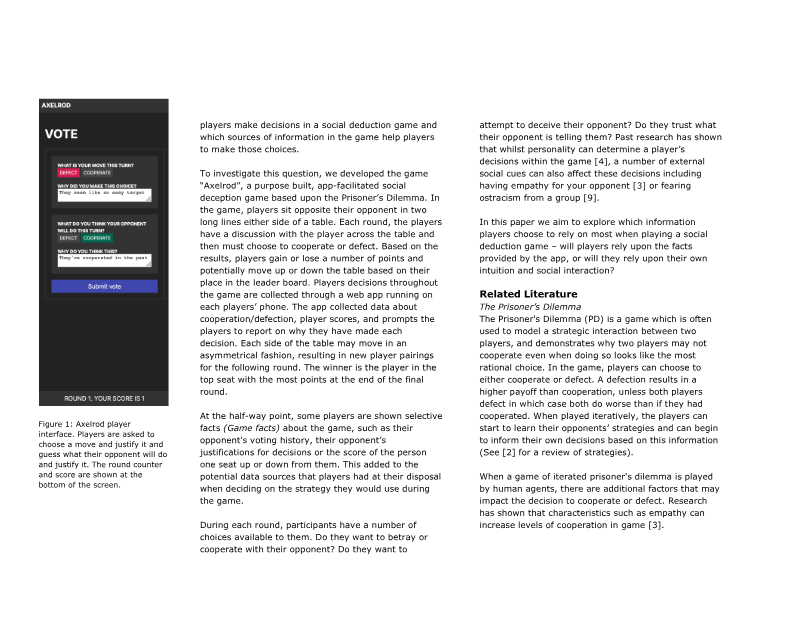
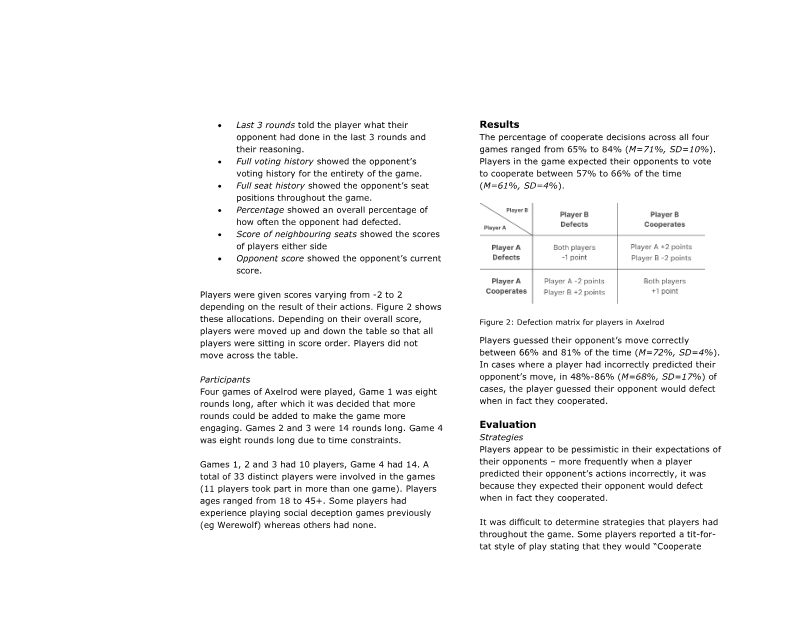
This study investigates the decision-making processes of players in social deduction games, specifically focusing on how individuals determine whether to cooperate or betray opponents in an iterative Prisoner’s Dilemma environment.
- Players in social deduction games overwhelmingly prioritize personal intuition and social interaction over objective, system-provided data when making decisions.
- Objective 'Provided Data'—facts about opponents such as voting history or scores—was the least utilized information source, cited by only 2.3% of players as a factor in their decision-making.
- Players rely on five distinct information sources: Current data, Observed data, Historical data, Meta data (outside relationships), and Provided data.
Do you work at Goldsmiths University of London? Get a free report of how these documents are read and cited here.