The provided collection of resources serves as a comprehensive guide for mobile game User Acquisition (UA) professionals, offering practical insights, templates, and case studies to optimize campaign performance. The primary thesis is that mastering UA is an achievable goal when grounded in real-world data, rigorous testing, and strategic application of proven frameworks rather than relying on industry speculation.
The content covers the 2025 calendar year, focusing on the mobile gaming sector with specific attention to Meta and Google Ads platforms. Key findings emphasize the necessity of structured UA funnels, the efficacy of creative testing—such as leveraging AI tools like MidJourney—and the economic realities driving controversial industry practices like the use of "fake ads." The analysis suggests that while some tactics may be polarizing, their prevalence is often dictated by underlying economic pressures that studios find difficult to ignore.
Methodologically, these resources are built upon a combination of direct campaign management experience, proprietary UA templates, and primary research. This includes a notable survey of high-value players, supported by a $5,000 investment, to better understand user motivations regarding advertising content. By synthesizing these diverse data points, the collection provides actionable guidance for UA managers, indie developers, and founders looking to navigate the complexities of modern mobile marketing. The materials range from foundational setup guides for new campaigns to advanced analysis of specific game titles, such as the 4X genre entry Kingshot, aiming to demystify the "black box" nature of major advertising platforms.
The mobile gaming landscape in 2025 is defined by a shift away from simple media buying toward a holistic, data-driven strategy that integrates creative production, game design, and sophisticated analytics. AppLovin has solidified its position as the primary user acquisition channel, though its efficacy remains tethered to high in-app purchase volume and the ability to feed its optimization algorithms with consistent, high-velocity creative assets. To remain competitive in a post-IDFA environment, developers must maintain a multi-channel presence across platforms like Facebook and TikTok, prioritizing a cadence of two to three creative refreshes per week to sustain engagement and mitigate platform-specific volatility.
Success in this era is no longer defined by low cost-per-install metrics, which are increasingly viewed as vanity indicators. Instead, profitability is measured by the alignment of acquisition costs with long-term retention and lifetime value. This transition has fundamentally altered the role of the senior user acquisition manager, who must now function as a hybrid strategist capable of leveraging AI-driven tools to overcome production bottlenecks. By focusing on storytelling, motion design, and optimized onboarding funnels, teams can navigate the complexities of modern user acquisition to drive sustainable growth.
The industry’s appetite for this strategic evolution is reflected in the rapid expansion of specialized knowledge-sharing platforms. Authentic, no-fluff content strategies—exemplified by the growth of industry-focused newsletters and podcasts—have become essential resources for professionals seeking to navigate these shifting dynamics. By fostering highly engaged communities through bold, transparent analysis, these platforms provide the critical insights necessary to thrive in an increasingly competitive and technically demanding global market.
The mobile user acquisition landscape is increasingly defined by the strategic use of playable advertisements, particularly as spending shifts toward AppLovin and various SDK networks. The primary objective of current creative strategies is to leverage core gameplay mechanics through high-frequency iteration, ensuring that ads remain engaging and relevant to evolving player preferences. By focusing on the granular details of ad design, developers can effectively differentiate their products even within saturated genres.
Key trends observed in November 2025 highlight the dominance of specific mechanics, most notably within the solitaire and sorting genres. Solitaire-based playables have proliferated, with success driven by constant creative refinement rather than reliance on a single, static ad template. Similarly, sorting mechanics—where users organize items into matching sets—have proven highly versatile, allowing developers to skin the same fundamental interaction to fit diverse themes ranging from food and flowers to animal-based games.
Beyond mechanical replication, successful ad performance is increasingly tied to sensory and aesthetic experimentation. High-performing campaigns, such as those for Vita Mahjong, have moved beyond displaying standard gameplay to incorporate deliberate variations in color palettes, textures, and sound design. These adjustments are designed to evoke specific emotional responses and capture the attention of diverse player segments. Ultimately, the data suggests that the most effective playable ads are those that maintain a simple, intuitive hook while undergoing rigorous, iterative testing to optimize engagement and prevent creative fatigue.
The mobile gaming industry remains deeply divided over the use of deceptive advertising, often referred to as fake ads. The primary thesis is that while these advertisements are widely disliked by the general player base, they persist because the underlying economics—specifically the relationship between cost per install and long-term revenue—can make them a viable, albeit controversial, growth strategy for certain studios. The central determinant of success is whether the lower cost per install achieved through deceptive creative outweighs the negative impact on retention and return on ad spend.
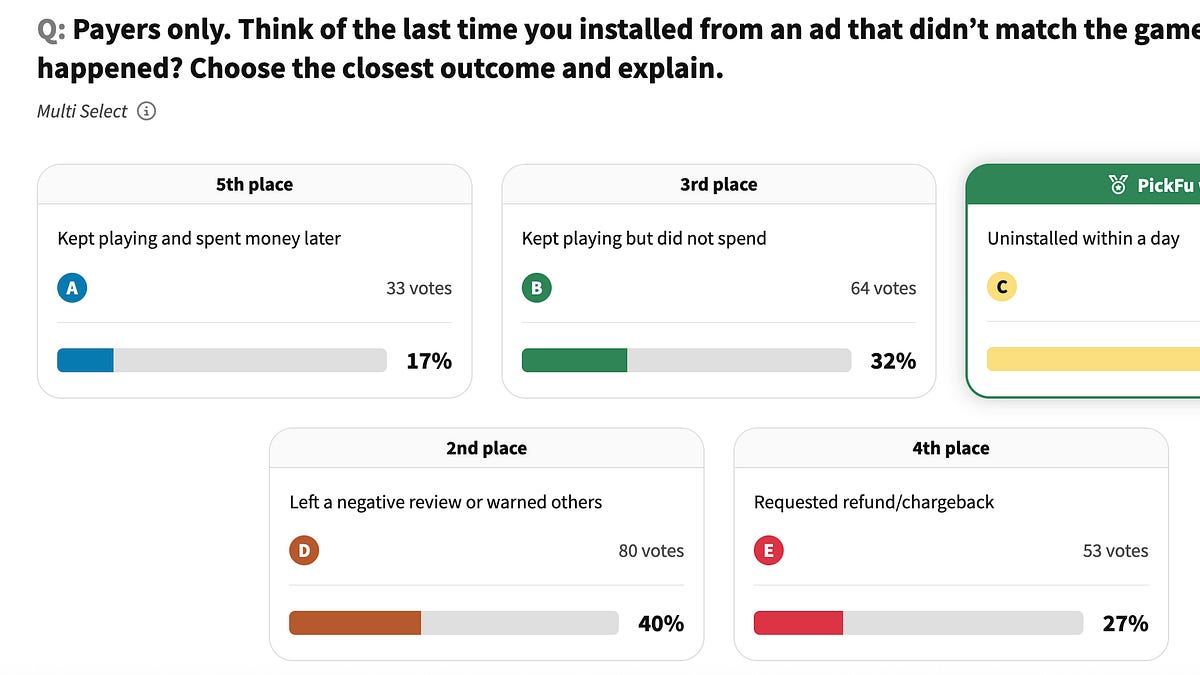
Data derived from a $5,000 survey of mobile players, including high-spending whales, reveals a stark disconnect between user sentiment and actual behavior. While 75% of users uninstall a game immediately upon discovering the gameplay does not match the advertisement, and 40% leave negative reviews, a critical 17% of whales choose to remain and continue spending. This subset of players effectively subsidizes the high churn and refund rates—which reach 27%—associated with misleading marketing tactics.
The findings highlight a psychological gap where player frustration does not always translate into a total cessation of spending. For growth and user acquisition professionals, the decision to utilize fake ads is purely mathematical: if the revenue generated by the small percentage of retained whales exceeds the costs incurred by the mass exodus of misled users, the strategy remains economically rational. Ultimately, the industry must weigh the immediate benefits of lower acquisition costs against the long-term risks to brand trust and product reputation.
The provided text outlines a Minimum Viable Campaign Setup (MVCS) designed to assist indie developers and user acquisition managers in navigating Google Ads. The primary thesis is that Google Ads has evolved beyond a opaque, automated black box, now offering specific levers that allow marketers to guide algorithmic performance. By moving away from outdated, standard target cost-per-acquisition (tCPA) models, advertisers can leverage modern tools to achieve more predictable results.
Key findings emphasize that the platform’s current bidding logic has shifted toward a value-based model, mirroring the high-value optimization strategies common on Meta. To effectively utilize these changes, the framework advocates for the use of audience signals to provide the algorithm with necessary guidance. This approach is intended to replace guesswork with a structured, data-informed map, ensuring that campaigns are optimized for actual user value rather than relying solely on automated machine learning.
The scope of this guidance is focused on performance marketing for mobile applications and games, specifically targeting beginners or small teams seeking a streamlined, efficient entry point into the Google Ads ecosystem. By prioritizing a simplified, non-segmented framework, the methodology aims to minimize the technical complexity typically associated with performance marketing, providing a practical, repeatable template for launching initial campaigns in the 2025 digital advertising landscape.
The mobile marketing landscape is currently undergoing a significant shift as AppsFlyer introduces ten new product offerings designed to refine user acquisition and data management. The primary objective of this evaluation is to cut through industry hype by mapping these new tools to practical, actionable use cases for mobile game developers and marketers. By focusing on real-world application rather than theoretical utility, the analysis seeks to identify which innovations provide tangible value in an increasingly complex digital ecosystem.
The central finding of this assessment is that Signal Hub stands out as the most transformative addition among the new suite of products. Its capacity to reshape mobile game growth is attributed to its integration of AI-driven agents that automate user acquisition insights, alongside advanced segmentation capabilities that specifically target high-value payers. Furthermore, the product suite emphasizes the importance of fraud-resistant data, which is critical for maintaining the integrity of marketing performance metrics in a post-privacy environment.
The scope of this analysis covers the 2025 product release cycle within the mobile gaming industry. The methodology relies on hands-on testing and practical application of the tools to determine their efficacy in improving creative win rates and optimizing marketing spend. By prioritizing functional utility over standard marketing narratives, the analysis provides a strategic framework for developers to leverage these new technologies to enhance their growth operations and improve overall return on investment.
The publication outlines a promotional strategy for a user-acquisition-focused newsletter, centered on a Black Friday sales event. The primary objective is to drive subscriptions and product sales by offering discounts on educational materials, such as e-books regarding creative frameworks and soft-launch strategies for mobile games. The initiative serves as a vehicle to transition free readers into paid subscribers by highlighting exclusive benefits and long-term value propositions.
Key components of the promotional offer include a 50% discount on storewide products, with additional incentives for members, such as early access and supplementary discounts. Beyond the immediate sales push, the strategy emphasizes a shift toward a more community-oriented, high-touch model for paid subscribers. Starting in 2026, the author plans to expand benefits for annual subscribers to include increased access to ask-me-anything sessions, priority status for 1:1 consultations, and the potential formation of an exclusive user community.
The content reflects the ongoing professional focus of the author, who specializes in user acquisition and creative strategy within the post-IDFA mobile gaming landscape. By leveraging seasonal marketing tactics, the author aims to solidify a recurring revenue model while positioning the newsletter as a premium resource for industry professionals seeking actionable data and expert guidance. The approach underscores a transition from static content delivery to a service-based model that prioritizes direct engagement and personalized consulting for dedicated subscribers.
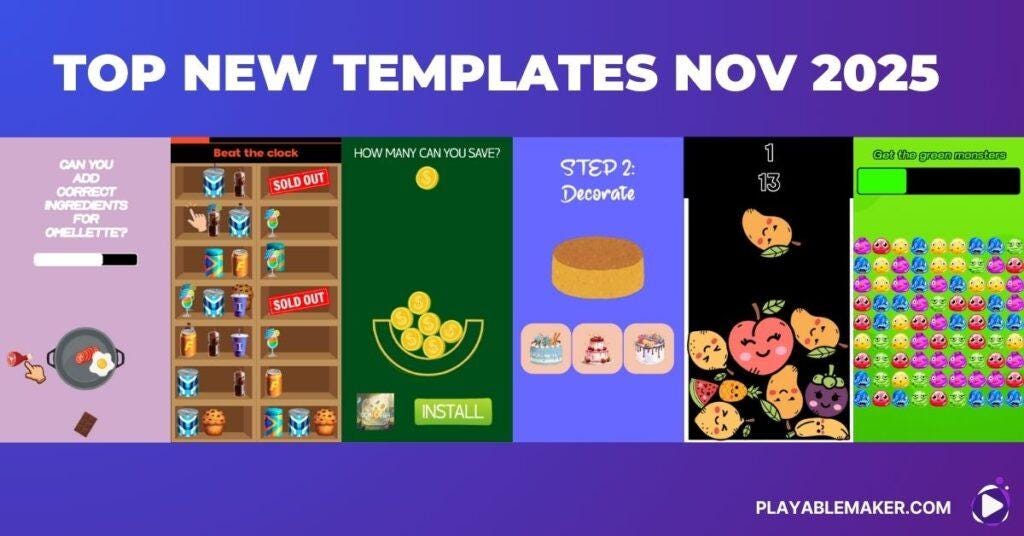
The mobile user acquisition landscape is currently defined by a significant shift toward increased spending on SDK networks and the strategic utilization of AppLovin. Within this environment, playable advertisements have emerged as a critical creative vehicle for mobile games and applications. The primary objective is to identify and analyze the most effective interactive ad formats that drive user engagement across diverse gaming genres as of October 2025.
The prevailing trend in high-performing playable advertisements centers on decision-based mechanics. These interactive experiences require users to make choices that directly influence the outcome of the ad, such as determining positive or negative results for in-game scenarios. Common thematic applications of this trend include narrative-driven tasks like saving families, repairing vehicles, preparing food, managing village resources, or engaging in monster combat. By forcing the user to actively participate in the decision-making process, these ads foster higher levels of engagement compared to passive creative assets.
This analysis reflects the broader evolution of creative strategies in the mobile gaming industry, emphasizing the necessity of interactive storytelling to capture user attention. While the scope of the findings is focused on the performance metrics of October 2025, the underlying trend highlights a move toward gamified advertising that mirrors the core loops of the games being promoted. These insights serve as a foundational guide for developers and marketers looking to optimize their user acquisition efforts through refined creative briefs and interactive ad design.
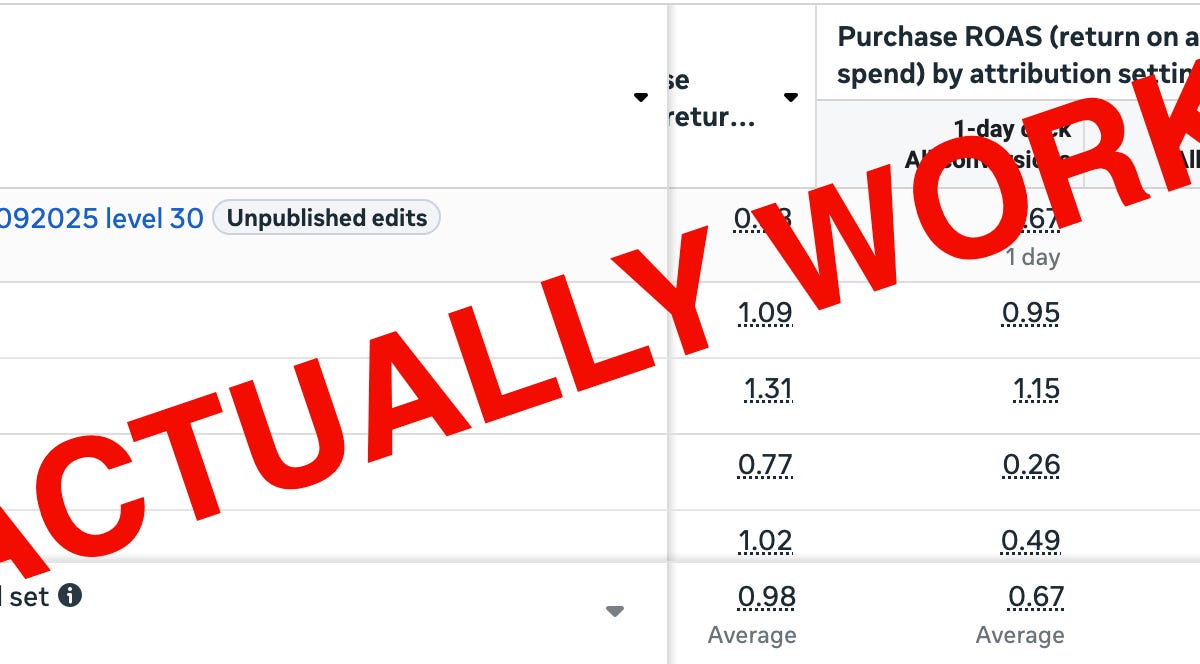
The mobile user acquisition landscape continues to evolve, with a primary focus on optimizing performance in a post-IDFA environment. The current industry discourse emphasizes the necessity of shifting from volume-based metrics to value-based optimization, particularly within Meta’s advertising ecosystem. Recent algorithmic changes on Facebook have made value optimization a critical lever for driving improved campaign outcomes, suggesting that while cost-per-install metrics remain stable, the underlying quality of user signals requires more sophisticated management.
The scope of this analysis covers global mobile game marketing, specifically targeting user acquisition managers, indie developers, and founders. The methodology centers on providing actionable, template-driven guidance for launching and scaling campaigns across major platforms like Meta, with upcoming expansions into TikTok and Google. By offering practical frameworks for campaign setup and creative strategy, the content aims to bridge the gap between high-level platform updates and day-to-day operational execution.
A recurring theme is the strategic caution regarding seasonal creative production. While the industry often pivots toward holiday-themed assets during specific times of the year, there is an underlying warning against over-adjusting creative processes at the expense of core performance metrics. Ultimately, the focus remains on refining technical campaign configurations and value-based bidding strategies to ensure sustainable growth in an increasingly complex and privacy-restricted digital advertising environment.
Mobile game development is undergoing a fundamental transformation as studios abandon deceptive advertising practices in favor of sophisticated, integrated onboarding funnels. By embedding accessible, hyper-casual mini-games directly into the initial user experience, developers are successfully bridging the gap between broad-appeal marketing and complex core loops. This creative-first approach, which now spans 4X strategy, puzzle, and social casino genres, effectively lowers customer acquisition costs while simultaneously fostering higher long-term engagement and lifetime value.
This strategic shift reflects a broader industry movement toward a holistic model where marketing concepts and game design are developed in tandem. By utilizing these so-called Trojan Horse funnels, studios can mask intricate mechanics behind high-appeal themes, ensuring that the transition from initial interest to deep gameplay is seamless. This integration is particularly critical in the current post-IDFA landscape, where precise user targeting is increasingly difficult and revenue must be maximized through a tighter alignment of ad monetization and in-app purchase structures.
Looking toward 2026, the industry is prioritizing genre-merging and innovative acquisition strategies to maintain profitability for niche, high-monetizing titles. As developers refine these funnels, ongoing research into player sentiment remains a priority to ensure that these creative-first strategies resonate with audiences. Ultimately, the success of modern mobile gaming hinges on this convergence of marketing and design, which transforms the onboarding process from a simple entry point into a vital component of the game’s overall economic and retention strategy.
The primary objective of this framework is to provide a streamlined, actionable user acquisition strategy specifically tailored for mobile games that derive the majority of their revenue from in-app advertising (IAA) rather than in-app purchases (IAP). Traditional acquisition models, which prioritize purchase-based optimization, often fail for hybrid or ad-heavy titles because they misalign with the game’s shorter payback periods and lower lifetime value profiles. By shifting the focus away from purchase-centric algorithms, developers can avoid costly inefficiencies and ensure that Meta’s machine learning models are trained on the correct revenue signals from the outset.
The proposed methodology centers on a Minimum Viable Campaign Setup (MVCS) designed for small teams and indie developers. This approach emphasizes simplicity, advocating for a structured, low-complexity environment that minimizes manual adjustments. Key components of the framework include a specialized event-tracking architecture for ad-driven monetization, defined budget-pacing rules, and a scalable 21-day roadmap. The strategy also outlines a sustainable creative production plan, ensuring that marketing efforts remain manageable without detracting from core game development.
By implementing these battle-tested guidelines, developers can navigate the complexities of Meta’s advertising ecosystem with greater precision. The framework serves as a foundational guide for launching campaigns that prioritize efficiency and data-driven growth, allowing teams to scale only when performance metrics justify further investment. Ultimately, the approach mitigates the risk of common pitfalls, providing a clear, step-by-step operating rhythm that balances technical rigor with the practical constraints of smaller game studios.
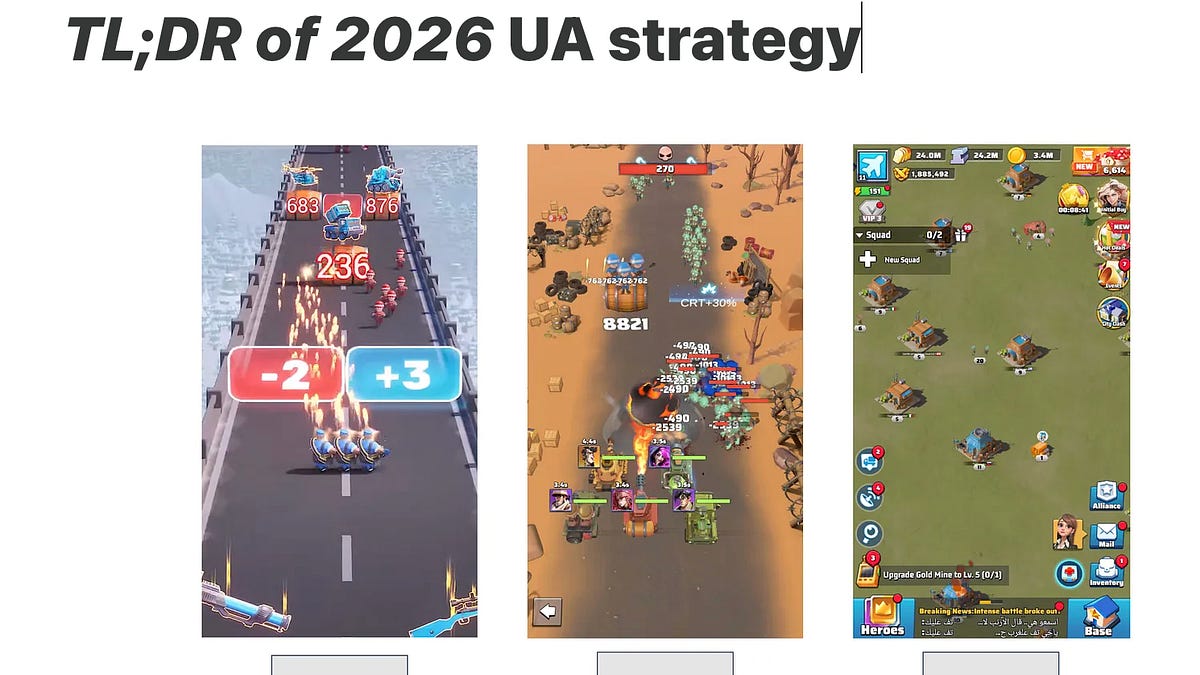
The primary objective of this analysis is to provide mobile game developers and marketers with a strategic framework for optimizing user acquisition (UA) performance in 2026. By identifying seven specific creative trends, the content aims to help teams refine their advertising assets to better capture audience attention and improve conversion rates. The core thesis posits that aligning creative production with these emerging industry trends is essential for maintaining competitive advantage and maximizing the efficiency of advertising budgets.
A central finding highlighted in the analysis is that these identified creative trends currently account for 53% of total ad spend within the mobile gaming sector. This significant allocation underscores the industry-wide shift toward specific visual and narrative styles that resonate with modern players. By leveraging these data-backed insights, marketers can move beyond generic advertising approaches and implement more targeted, high-performing creative strategies.
The scope of this guidance is focused on the global mobile gaming industry, specifically targeting the 2026 fiscal year. The methodology relies on expert industry observation and performance tracking to distill complex market behaviors into actionable creative briefs. By providing a structured template, the content serves as a practical tool for UA managers to streamline their creative workflows, ensure consistency across campaigns, and ultimately drive higher returns on investment in an increasingly crowded digital marketplace.