Showing 30 of 291 results · 0.47s
Sep 2025
The Retro Handheld Goldrush
Video Games Industry Memo
dichotomy between low-cost, mass-market devices and premium, enthusiast-grade hardware. This growth is fueled by the perceived over-complexity of modern gaming and the limitations
Article1 pages
Mar 2021
What If Games Were Small: Push to Talk #12
Push to Talk
costs of "AAAA" mainstream game development and the creative liberation found in extreme hardware limitations. The central thesis posits that as major industry players spend hundreds of millions
Article
Jul 2026
The State of Games: May 2026
The Game Business
characterized by notable successes for specific franchises alongside broader challenges for major hardware manufacturers. The market landscape was defined by strong commercial momentum for high-profile titles, specifically
Article1 pages
Mar 2022
Cook Serve Forever Announcement Splash Deconstructed
GameDiscoverCo
franchise's previous entry. Broader industry analysis reveals shifting dynamics in the console and subscription markets during early 2022. Microsoft reported its best non-holiday quarter for Xbox
Article
Sep 2022
Game Trailers: Breaking Down a Key Discovery Mistake
GameDiscoverCo
experience. The broader industry landscape shows a significant shift in platform roles, with hardware declining from 47% to 36% of total earnings over the last decade, while third
Article
Sep 2023
What Steam Review Count Tells Us About Your Game
GameDiscoverCo
pivot toward a multi-platform, mobile-integrated future. It highlights the challenges of hardware parity between the Xbox Series S and X and notes emerging industry programs like
Article
May 2026
The U.S. Gaming Market: April 2026
Circana, PWN Games
same period in 2025. Content sales rose 2 % to $3.837 billion, while hardware revenue climbed 34 % to $261 million, driven largely by the Nintendo Switch 2’s strong
Article1 pages
Nov 2019
Will xCloud and Caffeine.tv Be Game Changers? Winners and Losers in the Escalating Streaming Wars
SuperJoost
represents a strategic effort to achieve the industry’s long-sought goal: delivering console-quality gaming across platform-agnostic mobile devices. This move serves as a tactical countermeasure
Article
Mar 2024
A Look Ahead to the Year in Games
Video Games Industry Memo
keel as companies prioritize core business models over speculative technologies like the metaverse. Hardware and major franchise milestones are expected to drive momentum in the latter half
Article
Jan 2024
What's Q1 2024 Got in Store on Steam?
GameDiscoverCo
entries such as War Hospital and Momodora: Moonlit Farewell. Beyond the PC market, console and VR performance data from the 2023 holiday season shows continued dominance by established
Article
Mar 2023
PC & Console Games: Predictions for 2023
GameDiscoverCo
developers are increasingly adopting a "PC first, console later" strategy, utilizing Steam Early Access to refine titles before committing to console ports. Market dynamics also reveal a squeeze
Article
Mar 2026
For Nex's Upstart Console: The Buzz Is Good and the Game Budgets Are Low
Game File
developer of the motion-controlled Playground console, is navigating a complex growth phase characterized by strong consumer demand balanced against significant supply chain volatility. Despite achieving notable market
Article1 pages
Sep 2021
Epic vs. Apple: Will the Walled Garden Get Breached?
GameDiscoverCo
like Microsoft, which seek to establish independent storefronts and subscription services on mobile hardware. Beyond legal developments, current industry data reflects a period of market correction. Following
Article
Sep 2026
The German Games Industry: 2026
game
revenue reaching €4.2 billion. This downturn is largely attributed to a decrease in hardware sales, which fell by 8%, while game sales saw a 1% decline. Conversely, online
Article1 pages
Nov 2025
Arc Raiders and AA Titles Redefine Success Metrics in 2025
Sparkers
development to AI investment, and Xbox’s 29% year‑over‑year drop in hardware revenue coupled with an ad‑supported Game Pass tier. Financial highlights include
Article1 pages
Mar 2019
Apple Arcade: Subscription-Based Mobile Gaming
SuperJoost
helping the company reach its $50 billion services revenue target and offset slowing hardware sales. While the service provides a vital platform for small and medium-sized developers
Article
Aug 2020
Plus: Two Weeks of Steam Madness in One!
GameDiscoverCo
million wishlists, and The Riftbreaker, which utilized effective wishlist accumulation strategies. On consoles, Diablo II: Resurrected emerged as a dominant force across both Switch and Xbox. The data
Article
Apr 2026
The AI-Driven RAM Crisis Explained: Part 1
AI and Games
gaming industry is currently navigating a severe hardware supply crisis characterized by significant price volatility and component shortages. This instability stems from a fundamental shift in semiconductor manufacturing
Article1 pages
Feb 2019
What's Next for Sony's PlayStation: New Revenue Models, Content, and Cloud Gaming
SuperJoost
strategic ambiguity to avoid premature commitments while preparing for the next generation of hardware and the looming influence of cloud gaming. The scope of the commentary extends beyond
Article
Feb 2026
Phil Spencer Retiring from Xbox, Microsoft AI Exec Asha Sharma Taking Over Gaming Division
Game File
commitment to prioritizing high-quality game development and strengthening the core Xbox console experience. She explicitly stated that the division will avoid flooding the ecosystem with artificial intelligence
Article1 pages
Feb 2022
Steam's Boss Talks Subscriptions, NFTs, Hardware
GameDiscoverCo
Deck to support Xbox Cloud Gaming. The scope of the analysis extends to hardware, where the Steam Deck is positioned as a foundational "stepping stone" for future innovations
Article
Aug 2020
Three Key Discoverability Takeaways From the Epic/Apple Lawsuit
GameDiscoverCo
Data indicates that for social-centric free-to-play phenomena, console platforms can significantly outperform PC and mobile. For the 18 months ending July 2020, PlayStation 4 generated
Article
Apr 2021
The Evolution of Steam Tags
GameDiscoverCo
console markets as of mid-2022. The findings highlight how Steam’s organic, community-driven tagging system has created a superior discovery engine compared to console storefronts
Article
Jun 2024
Our Industry News (03/06/24 - 09/06/24)
Sparkers
adapter, effective 7 August, signals a strategic shift away from VR hardware expansion and the absence of an imminent PS VR3 release. The briefing also lists new game
Article1 pages
Jul 2026
Xbox Presses Reset
Video Games Industry Memo
million-subscriber target, stagnating at 30 million. This shortfall, compounded by a hardware install base of 35 million units compared to the PlayStation 5’s 94 million
Article1 pages
Aug 2023
Your Early Access Launch Is Your Launch
GameDiscoverCo
leniency for the "early development" label. Beyond Steam metrics, the scope includes global console market share data from 2019 to 2021 derived from UK Competition & Markets Authority filings
Article
Feb 2022
Steam Deck: What You Should Know About Discovery
GameDiscoverCo
traditional storefronts to a portable ecosystem integrated with existing user libraries. Unlike traditional console launches where a limited software selection creates a "land rush" for early titles
Article
Feb 2022
What Does 'Success' Really Mean for PC/Console Games in 2021?
GameDiscoverCo
contract work. The scope of the analysis covers the global PC and console market, with a specific focus on the Steam platform and subscription services like Xbox Game
Article
Apr 2024
Vladimir Putin’s Video Games Console
Video Games Industry Memo
initiated a formal exploration into the development of a domestic video game console, operating system, and cloud gaming service. This directive, signed by President Vladimir Putin in early
Article1 pages
May 2026
What Xbox Players Are Asking For: And the Thing They Just Got
Game File
Thieves, Forza, Gears of War and a new Halo game to rival consoles. A second‑tier request seeks free access to online multiplayer, while additional high‑volume suggestions
Article1 pages
The Retro Handheld Goldrush
Sep 20251 pages3k words
Summary
The retro gaming handheld market has evolved from a niche hobbyist interest into a significant global industry segment. Driven by a demographic of gamers in their thirties with disposable income and a desire for nostalgic experiences, the market is characterized by a dichotomy between low-cost, mass-market devices and premium, enthusiast-grade hardware. This growth is fueled by the perceived over-complexity of modern gaming and the limitations of current subscription-based models offered by major platform holders, which often fail to provide comprehensive access to classic back catalogs.
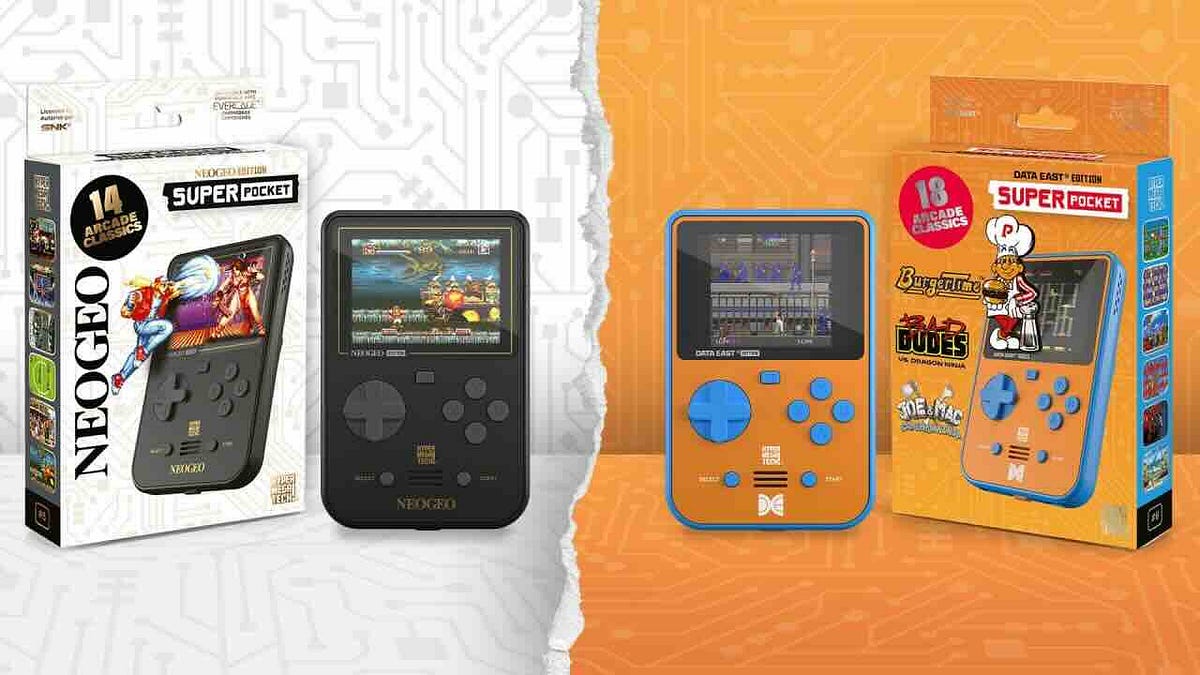
Market research indicates that the global retro console sector reached a valuation of $3.8 billion in 2025, with projections estimating growth to $8.5 billion by 2033. In 2024 alone, approximately 950,000 retro handheld units were sold worldwide. The industry is currently populated by a mix of manufacturers, including companies like Blaze Entertainment, which utilizes officially licensed content, and various other firms producing devices that range from affordable, mass-produced units to high-end hardware utilizing authentic emulation.
The industry’s expansion is supported by a shift toward physical collectability, mirroring trends seen in the music industry with vinyl records. While some manufacturers rely on software-level emulation—often existing in a legal gray area regarding ROM distribution—others focus on hardware-level emulation or licensed cartridge ecosystems to provide a more authentic, tactile experience. Despite the ease of digital emulation on modern smartphones, the demand for dedicated, physical hardware persists as a way to bypass the "faff" of technical configuration and satisfy the consumer preference for focused, simplified gameplay. As the average age of the gaming population continues to rise, the market for retro-focused hardware is expected to maintain its upward trajectory.
Insights
- The global retro console sector was valued at $3.8 billion in 2025 and is projected to reach $8.5 billion by 2033.
- Market demand is driven by gamers in their thirties who prefer dedicated, simplified hardware over the complexity of modern gaming and subscription-based models.
- Approximately 950,000 retro handheld units were sold globally in 2024, reflecting the segment's transition from a niche hobby to a significant industry.
- The market is split between mass-market, low-cost devices and premium, enthusiast-grade hardware that utilizes authentic emulation or licensed cartridge ecosystems.
- Companies like Blaze Entertainment are capturing market share by leveraging officially licensed content to differentiate themselves from the legal gray areas of general ROM distribution.