Report41 pages
Mobile Growth and Monetization Report 2023
The report establishes that mobile game monetization is most effective when focused on early‑stage conversion and strategic ad placement. Analysis of 31 billion in‑app purchase events shows that 77 % of players who convert do so within the first two weeks, with currencies and limited‑time sales accounting for 22–23 % and 15–20 % of revenue respectively. Pricing the first purchase between $1 and $5 maximizes conversion efficiency, while targeting tier‑2 markets and deploying offerwalls can further enhance retention.
Rewarded‑ad data, derived from 31 billion monthly impressions and 158 million installs, identifies high‑engagement placements between levels, in the IAP store, and lobby screens. Extra‑reward, currency, and gacha offers drive the greatest engagement. Offerwalls contribute roughly 33 % of total ad revenue, delivering about $4.68 per converted user; multi‑reward offers generate 60–82 % of conversions and can yield up to $68 per completion. These insights suggest that placing high‑visibility rewarded ads and integrating offerwalls can simultaneously boost retention and monetization.
Complementary tactics such as custom store pages further improve player engagement. Offerwall conversions can increase day‑7 to day‑120 retention by up to fivefold, especially for high‑engagement segments. Custom store pages allow developers to align in‑game messaging with ad creatives, reducing resource costs and enhancing conversion rates. Targeting genre‑specific markets—sports in Japan or trivia in South Korea—can lift click‑through rates above tier‑2 averages, underscoring the importance of data‑driven audience and creative optimization.
Overall, the findings emphasize a focused strategy: early conversion pricing, strategic rewarded‑ad placement, offerwall integration, and tailored store experiences. These combined tactics deliver measurable gains in retention, revenue, and campaign efficiency across iOS and Google Play platforms worldwide.
- 77% of players who make in-app purchases convert within the first two weeks, with the highest conversion efficiency achieved by pricing initial offers between $1 and $5.
- Offerwalls contribute approximately 33% of total ad revenue and can increase day-7 to day-120 player retention by up to fivefold.
- Multi-reward offerwall campaigns generate 60–82% of conversions and can yield up to $68 per completion, while delivering an average of $4.68 per converted user.
- In-app currencies account for 22–23% of revenue, while limited-time sales contribute 15–20%.
- High-engagement rewarded ad placements are most effective when positioned between game levels, within the IAP store, or on lobby screens.
+2
UnityJan 2025

Report40 pages
The Gaming App Insights Report: 2025 Edition
The 2025 Gaming App Insights Report presents a resilient mobile gaming market that rebounded strongly in 2024, projecting global revenue of $126.1 billion for 2025 and a 49% share of total gaming revenue, eclipsing console (28%) and PC (23%). AI‑driven personalization, dynamic monetization models, and cross‑platform play emerge as key drivers of higher retention, session length, and in‑app spending, particularly within battle royale and strategy genres. New acquisition channels—TikTok, connected TV, and influencer marketing—are reshaping player discovery, while studios that invest in AI for predictive churn mitigation and long‑term relationship building are positioned to capture the largest growth opportunities, especially as mobile gaming expands into LATAM and MENA regions.
Privacy compliance shows modest improvement, with global ATT opt‑in rates rising to 37.9 % in Q1 2025; arcade titles lead the surge (42.4 → 59.3 %). Regional gains are strongest in Indonesia (58.6 %) and Malaysia (51.9 %), whereas markets such as the UAE, Japan, Saudi Arabia, and the Philippines experienced slight declines. Despite these gains, compliance remains uneven across genres and geographies.
Advertising performance improved in 2024: installs per mille increased from 8.1 to 8.86, click‑through rates rose from 7 % to 9 %, and median cost per install fell slightly (0.38 → 0.36 USD). Median cost per mille dropped to $3.41, indicating more efficient ad spend. However, revenue‑per‑user metrics declined overall—ARPM fell across most categories and ARPMAU dropped from $0.31 to $0.28—though casino and strategy games bucked the trend with higher monetization.
The report concludes that mobile gaming’s next growth wave will hinge on AI‑driven, culturally tailored experimentation and hyper‑personalized user journeys. Precise targeting—through dynamic difficulty, hybrid monetization, and live events—combined with community‑building tactics drives higher lifetime value. Teams that leverage cross‑platform measurement and analytics to iterate on data‑driven decisions will be best positioned to scale and shape the future of mobile gaming.
- Mobile gaming is projected to generate $126.1 billion in 2025, capturing 49% of total global gaming revenue compared to console (28%) and PC (23%).
- Global ATT opt-in rates reached 37.9% in Q1 2025, with arcade titles showing significant growth from 42.4% to 59.3%.
- Advertising efficiency improved in 2024 as median cost per install fell from $0.38 to $0.36, while click-through rates increased from 7% to 9%.
- Despite improved ad performance, monetization metrics declined, with average revenue per monthly active user (ARPMAU) falling from $0.31 to $0.28.
- Growth in mobile gaming is shifting toward LATAM and MENA regions, with Indonesia (58.6%) and Malaysia (51.9%) leading in privacy compliance opt-in rates.
+2
AdjustJan 2025

Report49 pages
Target. Connect. Engage: Driving Profitable App Growth with Revenue-Boosting Strategies
The primary purpose of the analysis is to demonstrate how a strategic partnership between a mobile measurement partner (MMP) and TikTok’s advertising ecosystem can unlock profitable growth for app marketers. By integrating real‑time attribution, privacy‑preserving measurement, and value‑based optimization, brands can accurately credit campaigns, reduce fraud, and maximize return on ad spend (ROAS) across the entire customer journey.
Key findings show that cross‑platform visibility is essential for identifying high‑value users and optimizing acquisition budgets, especially amid tightening privacy regulations on iOS and Android. AppsFlyer’s comprehensive measurement suite, combined with TikTok’s SKAdNetwork tools and self‑reporting network, delivers precise audience targeting and cost‑effective user acquisition. Case studies from Burger King, Casas Bahia, and Carrefour illustrate tangible results: a 7× ROI for coupon activations, a 44 % lift in conversion rates with a 55 % ROI gain, and a 29 % increase in in‑app revenue with triple the return compared to other channels.
The document outlines best practices for app install and retargeting campaigns, recommending the use of App Event Optimization (AEO) and Value‑Based Optimization (VBO) to focus spend on high‑value actions. Automated Smart Performance Campaigns and real‑time ROAS measurement via AppsFlyer integrations further enhance efficiency and lifetime value.
Geographically, the insights apply globally across major mobile markets, with a focus on the U.S., Europe, and emerging regions where TikTok’s user base is rapidly expanding. The time frame covers current privacy‑driven advertising environments and anticipates ongoing downturns, positioning the partnership as a resilient growth strategy for 2024‑2026.
- Integrating AppsFlyer’s measurement suite with TikTok’s advertising ecosystem enables brands to maximize ROAS through real-time attribution and privacy-compliant user acquisition.
- Case studies demonstrate significant performance gains, including a 7x ROI for Burger King, a 44% conversion lift for Casas Bahia, and a 29% increase in in-app revenue for Carrefour.
- App marketers should prioritize App Event Optimization (AEO) and Value-Based Optimization (VBO) to focus advertising spend on high-value user actions.
- Automated Smart Performance Campaigns and real-time ROAS measurement are recommended strategies to maintain growth and efficiency through 2026 despite tightening privacy regulations.
- Cross-platform visibility is essential for identifying high-value users and optimizing acquisition budgets across both iOS and Android environments.
+2
AppsFlyerJan 2025

Report34 pages
The Mobile App Growth Report: 2025 Edition
Global mobile app growth remains resilient in 2025, characterized by an 11% year-over-year increase in installs and a 10% rise in user sessions. This expansion is increasingly defined by a shift from pure volume-based acquisition toward a value-driven model that balances cost efficiency, engagement, and long-term retention. The Asia-Pacific region has emerged as the primary engine of this global momentum, achieving the highest regional growth score of 45, with India specifically leading all individual nations with a score of 49. While established markets like North America show more modest growth metrics, they remain critical hubs for high-value user monetization and sophisticated optimization strategies.
Gaming continues to be the dominant vertical worldwide, particularly within the hyper-casual and hybrid-casual subgenres. This sector is especially potent in emerging markets; India’s gaming growth score of 52.2 underscores its status as a premier expansion target, while the Latin American and Middle Eastern markets are projected to reach significant revenue milestones of $35.9 billion and $3.73 billion respectively by 2030. Beyond gaming, the publications and utilities sectors have demonstrated consistent strength across Western markets, indicating a diversified landscape where functional and content-driven apps maintain high engagement levels.
The current mobile ecosystem requires a strategic pivot toward sophisticated analytics and retention-focused operations. In regions like North America, where user acquisition costs are higher, success depends on maximizing average revenue per user and leveraging artificial intelligence to refine marketing spend. Meanwhile, specific regional opportunities, such as the rise of card and arcade games in Türkiye, highlight the importance of localized content strategies. Ultimately, the global market is transitioning into a phase where sustainable growth is achieved through the integration of high-quality user experiences and data-driven efficiency rather than simple install volume.
- Global mobile app installs grew 11% year-over-year in 2025, with user sessions increasing by 10% as the industry shifts from volume-based acquisition to value-driven retention.
- The Asia-Pacific region is the primary driver of global growth with a score of 45, led by India, which holds a national growth score of 49 and a gaming-specific growth score of 52.2.
- Gaming remains the dominant global vertical, with Latin American and Middle Eastern markets projected to reach revenue milestones of $35.9 billion and $3.73 billion respectively by 2030.
- In high-cost markets like North America, profitability now relies on maximizing average revenue per user and utilizing AI-driven analytics to optimize marketing spend.
- Hyper-casual and hybrid-casual subgenres are the most potent gaming categories, particularly within emerging markets.
+1
AdjustJan 2025
Report80 pages
State of Mobile 2025: TikTok Edition
The mobile industry reached a significant milestone in 2024, generating a record $150 billion in in-app purchase revenue, representing a 12.5% year-over-year increase. While global downloads experienced a marginal 1% decline to 136 billion, user engagement reached an all-time high of 4.2 trillion total hours. This growth was primarily fueled by non-gaming sectors, specifically Entertainment, Productivity, and Photo & Video, alongside a recovering mobile gaming market where eleven titles surpassed $1 billion in annual revenue. Geographically, North America and Europe remain the strongest monetization hubs, though nearly 80% of total consumer spend now occurs outside an app’s home country, signaling a highly globalized marketplace.
Artificial Intelligence has emerged as the primary catalyst for industry transformation, with AI chatbots recording a 200% revenue surge and generative AI apps reaching $1.3 billion in annual spend. This technology is being integrated across diverse verticals, from productivity tools to dating apps like Tinder and Grindr, which are utilizing AI to streamline user experiences and facilitate real-world connections. The Productivity and Utility sector specifically benefited from this trend, seeing a 35% revenue increase to $15 billion. Furthermore, niche categories such as short-form drama apps and fitness reward platforms are gaining significant traction, with the latter benefiting from a shift toward social "run clubs" and outdoor exercise.
The 2024 landscape also highlights a shift in monetization strategies and user behavior. In the dating sector, revenue grew by 14% despite a decrease in time spent, suggesting that users are prioritizing efficient, high-value interactions over passive scrolling. Meanwhile, the Health and Fitness category continues to see strong seasonal surges and global expansion in markets like Germany and Australia. Across all sectors, the industry is moving toward community-focused retention and sophisticated subscription models, leveraging AI to maintain high per-user monetization even as traditional download growth stabilizes in mature markets.
- The mobile industry generated a record $150 billion in in-app purchase revenue in 2024, marking a 12.5% year-over-year increase despite a 1% decline in global downloads.
- Artificial Intelligence is the primary industry catalyst, evidenced by a 200% revenue surge for AI chatbots and $1.3 billion in annual spend on generative AI applications.
- The Productivity and Utility sector grew 35% to reach $15 billion in revenue, driven largely by the integration of AI tools.
- The mobile gaming market is recovering, with eleven individual titles surpassing $1 billion in annual revenue during 2024.
- The marketplace is increasingly globalized, with nearly 80% of total consumer spend now occurring outside of an app’s home country.
+1
Sensor TowerJan 2025

Report36 pages
Intelligence Top Mobile Games Challenges: A User Acquisition, Ad & Product Monetization Report
The mobile gaming landscape heading into 2025 is defined by the critical difficulty of performing within an increasingly crowded market space. Approximately 41% of user acquisition managers identify market saturation and rising costs per installment as their primary obstacles, driven largely by intense competition from non-gaming entities. This environment has forced a strategic pivot away from traditional acquisition tactics toward sustainable growth rooted in long-term retention and creative iteration. Consequently, the industry is transitioning from a focus on sheer volume to a model centered on maximizing lifetime user value through sophisticated engagement strategies.
Ad monetization and product management sectors face parallel pressures, specifically regarding effective user segmentation and the declining value of electronic cost per mille (eCPM). While segmentation is the most widespread concern for monetization teams, senior executives are particularly focused on innovating new revenue streams to compensate for diminishing ad returns. In the realm of product management, LiveOps development and the accurate assessment of return on investment have emerged as the dominant priorities. Nearly 30% of product managers rank LiveOps as their most significant challenge, outweighing traditional concerns such as game economy balancing or initial prototype testing.
To navigate these hurdles, the industry is moving toward data-driven personalization and revenue diversification. Success in the maturing mobile market now requires leveraging artificial intelligence for audience segmentation and expanding monetization models to include subscriptions and alternative storefronts. By moving beyond simple acquisition hacks and focusing on robust LiveOps and incremental growth through retention, developers aim to stabilize revenue in a volatile privacy-centric environment. This shift underscores a broader industry evolution where deep audience understanding and operational agility are the primary drivers of commercial viability.
- Market saturation and rising costs per installment are the primary obstacles for 41% of user acquisition managers, driven by intense competition from non-gaming entities.
- Product managers are prioritizing LiveOps as their most significant challenge, with nearly 30% ranking it above traditional concerns like game economy balancing or prototyping.
- The industry is shifting away from high-volume acquisition toward sustainable growth models that prioritize long-term user retention and lifetime value maximization.
- Monetization teams are struggling with declining eCPM values and are under pressure from executives to innovate new revenue streams beyond traditional advertising.
- Effective user segmentation is the most widespread concern for monetization teams, necessitating the use of artificial intelligence to achieve deeper audience personalization.
+2
AppLovinJan 2025

Report71 pages
State of AI Apps Report 2025
The analysis quantifies the rapid expansion of generative‑AI applications in the first half of 2025, documenting 1.6 billion downloads and $1.2 billion in in‑app‑purchase revenue. This represents a 67 percent increase in downloads and a 200 percent jump in revenue compared with the second half of 2024, indicating a pronounced acceleration in user adoption and monetisation. Engagement metrics rose in tandem, underscoring the sector’s heightened activity during this period.
User demographics reveal a pronounced male and youth bias: roughly 60 percent of users are male and nearly 70 percent are under 35. While flagship services such as ChatGPT and Google Gemini attract comparatively balanced audiences and exhibit strong cross‑app overlap, niche offerings—including Grok and DeepSeek—tend to cluster with privacy‑focused, crypto‑trading, and gaming user personas. This segmentation highlights divergent appeal across the generative‑AI landscape.
Advertising investment intensified, with OpenAI’s major campaign propelling it into the top‑ten spenders in key markets such as the United States, India and South Korea. AI‑driven ad creatives increasingly employ light‑hearted, animal‑centric visuals while emphasizing concrete everyday utilities, exemplified by Google Gemini’s car‑warning guidance and Microsoft Copilot’s quiz‑making and recipe‑generation tools. Spend estimates, tracked across U.S. platforms including Reddit, LinkedIn, TikTok and YouTube, illustrate the breadth of digital‑advertising channels leveraged.
Overall, the findings portray a sector experiencing explosive growth, a skewed yet evolving user base, and a surge in AI‑powered marketing activity across major global markets during H1 2025.
- Generative AI applications experienced explosive growth in H1 2025, reaching 1.6 billion downloads and $1.2 billion in in-app purchase revenue.
- Revenue growth significantly outpaced adoption, with a 200 percent increase in in-app purchase revenue and a 67 percent rise in downloads compared to H2 2024.
- The user base is heavily skewed toward younger males, with approximately 60 percent of users being male and nearly 70 percent under the age of 35.
- While flagship services like ChatGPT and Google Gemini maintain broad appeal, niche AI apps such as Grok and DeepSeek are increasingly associated with privacy-focused, crypto-trading, and gaming demographics.
- OpenAI has become a top-ten advertising spender in major markets including the United States, India, and South Korea.
+2
Sensor TowerJan 2025

Report40 pages
Gaming App Insights Report: 2025 Edition
The analysis tracks the state of the global mobile‑gaming market through 2024 and projects its trajectory toward 2025, emphasizing how emerging AI‑driven personalization will shape growth. It establishes that the sector is recovering from the volatility of 2023, with worldwide app installs climbing 4 % year‑over‑year in 2024, even as average session length contracted. Core user engagement metrics, however, show modest decline: day‑1 retention fell from 28 % to 27 % and median revenue per active user dropped from $0.31 to $0.28, indicating pressure on traditional monetization models. In contrast, advertising efficiency improved, reflected in higher installs per mille (IPM) and stronger ad‑performance indicators across major markets.
The report’s geographic scope is global, encompassing all major mobile‑gaming regions, and its temporal frame spans the 2023‑2025 period. It integrates data from app stores, ad networks, and cross‑platform measurement tools to deliver a comprehensive view of user acquisition, retention, and revenue trends. The central thesis posits that the next wave of growth will be powered by AI‑enabled, culturally tailored experiences that adapt difficulty, blend monetization formats, and deploy live events to boost lifetime value. Developers and marketers who adopt a metrics‑focused, AI‑augmented approach—identifying pivotal in‑game moments and steering users toward optimal pathways—are projected to achieve the most scalable expansion. Cross‑platform analytics suites are highlighted as essential for delivering the visibility required to implement these strategies effectively.
- Global mobile-gaming app installs grew by 4% year-over-year in 2024, signaling a recovery from 2023 market volatility.
- Monetization is under pressure as median revenue per active user declined from $0.31 to $0.28.
- User retention metrics weakened in 2024, with day-1 retention falling to 27% from the previous year's 28%.
- Advertising efficiency has improved, evidenced by higher installs per mille (IPM) and stronger performance indicators across major global markets.
- Average session lengths contracted in 2024, contributing to a modest overall decline in core user engagement metrics.
+2
AdjustJan 2025
Report28 pages
2025 State of Mobile Gaming: In-App Purchase Trends of Leading Apps
The 2025 State of Mobile Gaming report analyzes the transition of the mobile gaming industry into a new growth phase characterized by refined monetization and sophisticated user acquisition. Based on an anonymized dataset of 100 leading global gaming advertisers and Sensor Tower estimates spanning 24 months, the analysis tracks the evolution of In-App Purchase (IAP) trends across 2.3 billion projected players.
The findings indicate that while global install volume remained flat in 2024, IAP revenue grew by 4%. This growth is driven by a 6% increase in install-to-payer conversion rates and improved long-term monetization, with Day 90 Average Revenue Per Paying User (ARPPU) rising by 6%. A significant shift in platform dominance has occurred, with iOS now generating 55% of global IAP revenue. High-value users represent a critical concentration of wealth; specifically, the top 5% of payers generate 48% of total revenue. In the United States, a mere 0.02% of global installs—representing high-spending iOS users—account for 20% of total global gaming revenue.
Market dynamics show fierce competition for these spenders, with the top 1% of iOS winning bid prices increasing by 140% year-over-year. To counter rising costs in mature markets like the U.S. and Tier 1 regions, leading advertisers are diversifying into the Rest of World (ROW) and emerging markets, where iOS revenue grew by 19% and 31% respectively.
Successful strategies among the top five advertisers include a heavy reliance on Return on Ad Spend (ROAS) optimization, a 5x higher investment in interactive playable creatives, and a 3x greater focus on re-engagement campaigns compared to the broader industry. The report concludes that the industry is moving toward a hybrid model where casual gameplay mechanics are blended with deep IAP structures to maximize lifetime value across a global audience.
- Global IAP revenue grew by 4% in 2024 despite flat install volume, driven by a 6% increase in both install-to-payer conversion rates and Day 90 ARPPU.
- The top 5% of players generate 48% of total revenue, with a hyper-niche segment of U.S. iOS users (0.02% of global installs) accounting for 20% of all global gaming revenue.
- Competition for high-value spenders has intensified, causing bid prices for the top 1% of iOS users to surge by 140% year-over-year.
- iOS now dominates the market, generating 55% of global IAP revenue, while emerging markets and the Rest of World (ROW) saw iOS revenue growth of 31% and 19% respectively.
- Top-performing advertisers are countering rising acquisition costs by investing 5x more in interactive playable creatives and 3x more in re-engagement campaigns than the industry average.
+2
MolocoJan 2025

Report71 pages
Insights into Global Mobile Game Marketing & Ad Spend Trends for H1 2024
The global mobile gaming landscape in the first half of 2024 is defined by a strategic pivot toward hybrid-casual and subscription-based models as developers seek stable revenue and higher user lifetime value. This transition is supported by the rapid expansion of mini-games on super-apps, currently engaging approximately 650 million players, and the integration of 5G and AI-driven personalization. Marketing success now hinges on the synergy between App Store Optimization and paid search, alongside the use of predictive modeling to mitigate rising acquisition costs. Rewarded playtime has emerged as a critical monetization tool, yielding eCPMs 2.7 times higher than standard formats.
Market activity surged during this period, with monthly active advertisers increasing 33.7% year-over-year to exceed 55,000. Despite this influx, the intensity of individual campaigns moderated, with the average monthly creatives per advertiser falling to 105. Video remains the primary medium, accounting for 77% of ad formats, though AI-generated imagery is gaining significant traction. While Western Europe maintains the highest advertiser density, the Hong Kong, Macau, and Taiwan regions represent the most competitive environments. Genre-wise, casual and puzzle games dominate advertiser participation on Android, but RPGs have surpassed strategy titles in total creative volume through the aggressive use of AI-generated content.
Regional performance highlights distinct growth corridors, such as Brazil’s emergence as a hub for casino games and the Middle East’s demand for localized simulation and strategy titles. Successful campaigns frequently utilize "mini-game" video ads and deliberate-failure narratives to drive conversions. High-performing titles like Legend of Mushroom and Solo Leveling: Arise demonstrate the efficacy of high-volume creative output and IP-driven TikTok marketing. Ultimately, the industry is moving toward a bifurcated strategy where Asia-Pacific markets focus on intensive pre-registration windows while Western markets prioritize long-term promotional stability.
- Monthly active advertisers in mobile gaming grew 33.7% year-over-year in H1 2024, surpassing 55,000 total advertisers.
- Rewarded playtime has become a primary monetization driver, generating eCPMs 2.7 times higher than standard ad formats.
- Video remains the dominant ad medium at 77% of total formats, though average monthly creatives per advertiser dropped to 105 as AI-generated imagery gains traction.
- Mini-games on super-apps have reached 650 million players, serving as a core component of the industry's shift toward hybrid-casual and subscription-based models.
- RPG titles have overtaken strategy games in total creative volume, largely driven by the aggressive integration of AI-generated content.
+2
SocialPetaJun 2024

Report35 pages
Store Intelligence Data Digest: Q4 2023
Global mobile app performance in the final quarter of 2023 reflected a complex landscape of shifting platform dynamics and regional market evolution. Total worldwide downloads reached 33.4 billion, representing a 6% year-over-year decline primarily attributed to an 8% drop in Google Play installs. Conversely, iOS downloads grew by 1.3%, a trend particularly visible in India. Despite a 13% decline in Google Play installs, India remained the world’s largest mobile market with 6.1 billion downloads, while its growing middle class drove increased iOS adoption. Emerging markets like Nigeria showed the strongest absolute growth on Google Play, while Japan demonstrated exceptional monetization efficiency, leading the world with a revenue-per-download ratio of $23.61 in the manga category.
The competitive landscape was defined by a tension between aggressive user acquisition and long-term retention. TikTok reclaimed its position as the most downloaded app globally, fueled by an 80% surge in China, while the shopping platform Temu dominated Western markets. However, high-growth apps like Temu struggled with user stickiness, maintaining daily engagement rates below 20%. In contrast, established platforms like WhatsApp and Google Chrome proved the most resilient, with WhatsApp achieving a 91% daily engagement rate among its monthly active users. Meta and Google maintained their corporate dominance, bolstered by the launch of Threads and a 38% year-over-year increase in YouTube Kids downloads.
In the gaming sector, Garena Free Fire and Roblox led global downloads with 56 million installs each, while Ludo King remained a powerhouse in the Asian market. The U.S. market saw continued success for Monopoly Go and a significant expansion of Netflix’s gaming portfolio, highlighted by the launch of GTA San Andreas. These trends underscore a maturing global industry where market leaders must balance massive scale in emerging regions with the high-value monetization and retention found in established digital economies.
- Global mobile app downloads fell 6% year-over-year in Q4 2023 to 33.4 billion, driven by an 8% decline in Google Play installs despite a 1.3% increase in iOS downloads.
- India remains the world's largest mobile market with 6.1 billion downloads, though Google Play installs in the region declined by 13% while iOS adoption grew.
- TikTok reclaimed the top spot for global downloads following an 80% surge in China, while Temu dominated Western markets but struggled with user stickiness, maintaining daily engagement rates below 20%.
- Established platforms maintain superior retention, with WhatsApp achieving a 91% daily engagement rate among its monthly active users.
- Japan leads the world in monetization efficiency, recording a revenue-per-download ratio of $23.61 within the manga category.
+1
Sensor TowerMar 2024

Report43 pages
The Gaming App Insights Report: Unlocking Growth Opportunities for Mobile Marketers
The mobile gaming industry is entering a period of stabilization and renewed growth following recent volatility, characterized by a 7% year-over-year increase in global installs during late 2023. While consumer spending saw a marginal decline throughout the previous year, early 2024 data suggests a recovery driven by the rise of hybrid casual titles and the integration of artificial intelligence to streamline production. This shift is particularly evident in the Latin American market and within specific subverticals like Racing and Simulation, which experienced install surges of 61% and 53%, respectively. Despite these gains, the landscape remains competitive as organic install shares dropped to 50% and median day-one retention rates softened to 28.3%.
Monetization strategies are evolving as developers pivot toward hybrid models that combine in-app purchases with advertising revenue. Although global effective cost per install nearly doubled to $0.99 in 2023, in-app revenue grew by 6%, led by high-value genres such as RPGs and Adventure games. These categories command the highest lifetime value and average revenue per monthly active user, particularly in mature markets like the United States and Japan. Conversely, hyper-casual games continue to prioritize volume and efficiency, maintaining low acquisition costs despite a broader industry trend toward more complex, long-term engagement models.
The industry has demonstrated significant resilience regarding privacy changes, with global App Tracking Transparency opt-in rates rising to 39%. This adaptation, coupled with the superior performance of hybrid casual games in click-through rates and ad revenue, indicates a strategic move toward data-driven marketing and diversified revenue streams. As the sector moves through 2024, success depends on balancing high acquisition costs in premium markets with the massive scale offered by emerging regions like India and Southeast Asia, all while navigating a more privacy-centric digital ecosystem.
- Global mobile game installs increased by 7% year-over-year in late 2023, signaling a stabilization period following recent market volatility.
- Hybrid casual titles and AI-driven production are fueling a 2024 recovery, with Racing and Simulation subverticals seeing install surges of 61% and 53%, respectively.
- Monetization is shifting toward hybrid models combining in-app purchases and advertising, as in-app revenue grew 6% despite a marginal decline in overall consumer spending.
- The global effective cost per install nearly doubled to $0.99 in 2023, while organic install shares dropped to 50% and median day-one retention softened to 28.3%.
- RPG and Adventure games currently command the highest lifetime value and average revenue per monthly active user, particularly in mature markets like the United States and Japan.
+1
AdjustMar 2024

Report29 pages
Turning Organic Success into Long-Term Revenue: A Framework for F2P Mobile Games
This industry guide provides a strategic framework for mobile game developers to transition from initial organic traction to sustainable, long-term revenue growth. The central thesis argues that while organic "sparks" are invaluable, lasting success requires a rigorous, two-step approach: first, optimizing the game’s internal economy for maximum Lifetime Value (LTV), and second, deploying data-driven paid User Acquisition (UA) campaigns.
The first phase focuses on monetization through ad mediation and in-app purchases (IAP). Key findings suggest that implementing a hybrid ad mediation setup—combining real-time bidding with manual waterfalls—can yield a 10% to 20% uplift in Average Revenue Per Daily Active User (ARPDAU) immediately. The analysis emphasizes the importance of rewarded ads over intrusive interstitials and highlights that personalized, segmented IAP offers can increase player spending by up to 23%. It also advocates for regional pricing, noting that price cuts in lower-purchasing-power markets can boost ARPDAU by as much as 30%.
The second phase details a methodology for scaling through paid UA, emphasizing the necessity of accurate data post-IDFA. The guide recommends a three-step framework of assessment, preparation, and optimization. It advises that while platforms like Meta and TikTok are accessible for smaller budgets, larger networks typically require a minimum monthly spend of $20,000 to exit the "learning phase" effectively. Furthermore, it stresses the role of App Store Optimization (ASO), citing a case where a simple icon change resulted in a 90% install uplift.
The scope of the analysis covers the global free-to-play (F2P) mobile gaming market, applicable to various genres and studio sizes. The methodology relies on industry benchmarks, case studies, and data from SuperScale’s proprietary analytics engine, SuperInsights. The overarching conclusion is that developers must treat monetization and UA as iterative, scientific processes, using predictive modeling to forecast Return on Ad Spend (ROAS) up to a year in advance to ensure business-level profitability.
- Developers should treat monetization and user acquisition as iterative, scientific processes, using predictive modeling to forecast ROAS up to one year in advance to ensure profitability.
- Implementing a hybrid ad mediation setup that combines real-time bidding with manual waterfalls can yield an immediate 10% to 20% uplift in ARPDAU.
- Personalized, segmented in-app purchase offers can increase player spending by up to 23%, while regional pricing adjustments in lower-purchasing-power markets can boost ARPDAU by as much as 30%.
- Paid user acquisition campaigns on larger networks typically require a minimum monthly spend of $20,000 to effectively exit the platform's initial learning phase.
- App Store Optimization is a high-impact lever for growth, as evidenced by a case study where a simple icon change resulted in a 90% uplift in installs.
+2
SuperScaleMar 2024

Report20 pages
The Ultimate Game Hype Tracking Guide
This guide provides a framework for tracking game performance through the purchase funnel, emphasizing the importance of monitoring consumer sentiment from the pre-launch phase through the post-release lifecycle. The primary thesis is that success in the competitive PC and console gaming market requires a data-driven understanding of player awareness, purchase intent, and demographic behavior. By benchmarking these metrics against competitors, developers can optimize marketing spend, identify target audiences, and sustain long-term engagement.
The analysis relies on data from the Game Health Tracker, which surveys over 3,000 PC and console players in the United States monthly. Key metrics include unaided awareness, which measures spontaneous brand recall, and aided awareness, which gauges maximum reach through prompted recognition. The findings demonstrate that awareness often fluctuates based on major industry events, such as trailer releases or gameplay reveals. Furthermore, the conversion rate—defined as the percentage of aided-aware players who express purchase intent—serves as a critical indicator of marketing effectiveness.
The research highlights that demographic profiling and channel analysis are essential for resource allocation. For example, data shows that younger players may be more effectively reached through specific social media platforms like TikTok and Snapchat, whereas older or different segments might prioritize online stores or gaming subscriptions. Post-release, the guide notes that awareness naturally plateaus, necessitating tactical interventions such as price drops, DLC releases, or content updates to re-engage potential buyers. Ultimately, the document concludes that while initial hype is valuable, sustained success depends on continuously monitoring the purchase funnel and adapting strategies to meet the evolving motivations of both primary and secondary player audiences.
- Success in the PC and console market requires tracking the purchase funnel through three core metrics: unaided awareness, aided awareness, and purchase intent conversion rates.
- The Game Health Tracker methodology relies on monthly surveys of over 3,000 PC and console players in the United States to benchmark performance against competitors.
- Conversion rate, defined as the percentage of aided-aware players who express purchase intent, serves as the primary indicator for measuring marketing effectiveness.
- Awareness levels are highly volatile and correlate directly with major industry milestones, such as trailer releases and gameplay reveals.
- Marketing resource allocation must be demographic-specific, as younger players are more effectively reached via TikTok and Snapchat, while older segments prioritize online stores and subscriptions.
+3
NewzooFeb 2024
Report35 pages
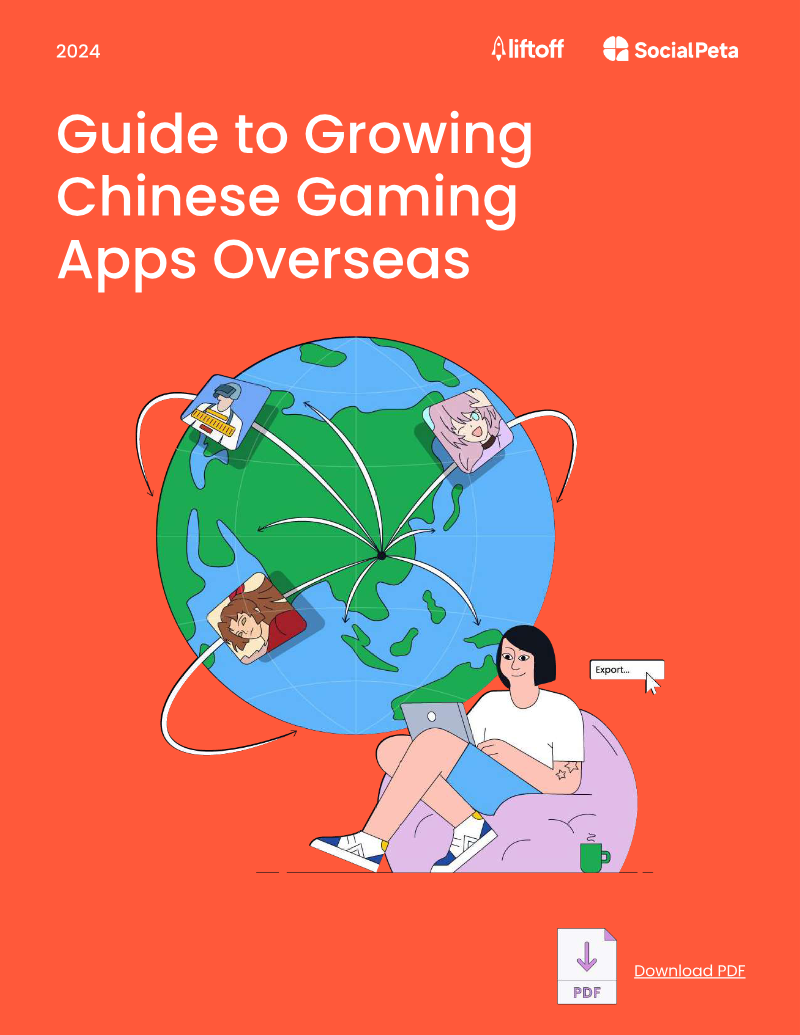
Guide to Growing Chinese Gaming Apps Overseas: 2024
Chinese gaming applications continue to exert a dominant influence on the global stage, particularly within the strategy and role-playing game segments in mature markets such as the United States, Japan, and South Korea. While these regions offer substantial revenue potential, they are characterized by intense competition and elevated costs per install. To navigate these challenges, successful publishers are shifting toward hyper-localized strategies that tailor art styles to regional aesthetic preferences—favoring manga-inspired visuals in Japan and realistic or cartoon aesthetics in Western markets—while utilizing local influencers to establish brand credibility.
Technological innovation serves as a primary driver for operational efficiency and user acquisition. The integration of generative AI has become essential for the rapid localization of ad creative, voice-overs, and marketing copy, ensuring both speed and brand compliance. High-performing titles currently leverage high-volume, innovative campaigns that incorporate minigames and AI-enhanced visuals to capture player attention. Beyond acquisition, long-term retention is increasingly supported by the implementation of social hangout spaces, home-building systems, and character trial models that balance accessibility with monetization.
Monetization strategies have evolved to prioritize engagement through sophisticated, time-limited mechanics. Publishers are frequently employing box gachas, pull-milestone rewards, and gamified event structures such as diceboards and bingo to incentivize spending. Furthermore, the consistent deployment of diverse live events remains a critical requirement for maintaining player interest and competitive viability. By combining these aggressive monetization tactics with a commitment to continuous content updates, Chinese developers are effectively sustaining growth and deepening their footprint across the global gaming landscape throughout 2024.
- Chinese publishers are maintaining global dominance in strategy and RPG segments by shifting to hyper-localized art styles, specifically manga-inspired visuals for Japan and realistic or cartoon aesthetics for Western markets.
- Generative AI is now a core operational requirement for rapid, compliant localization of ad creative, voice-overs, and marketing copy to manage high costs per install in mature markets like the U.S., Japan, and South Korea.
- High-performing user acquisition campaigns are increasingly utilizing minigames and AI-enhanced visuals to capture player attention in highly competitive environments.
- Long-term player retention is being driven by the integration of social hangout spaces, home-building systems, and character trial models that balance game accessibility with monetization.
- Monetization strategies have shifted toward sophisticated, time-limited mechanics such as box gachas, pull-milestone rewards, and gamified event structures like diceboards and bingo.
+5
LiftoffJan 2024
Report7 pages
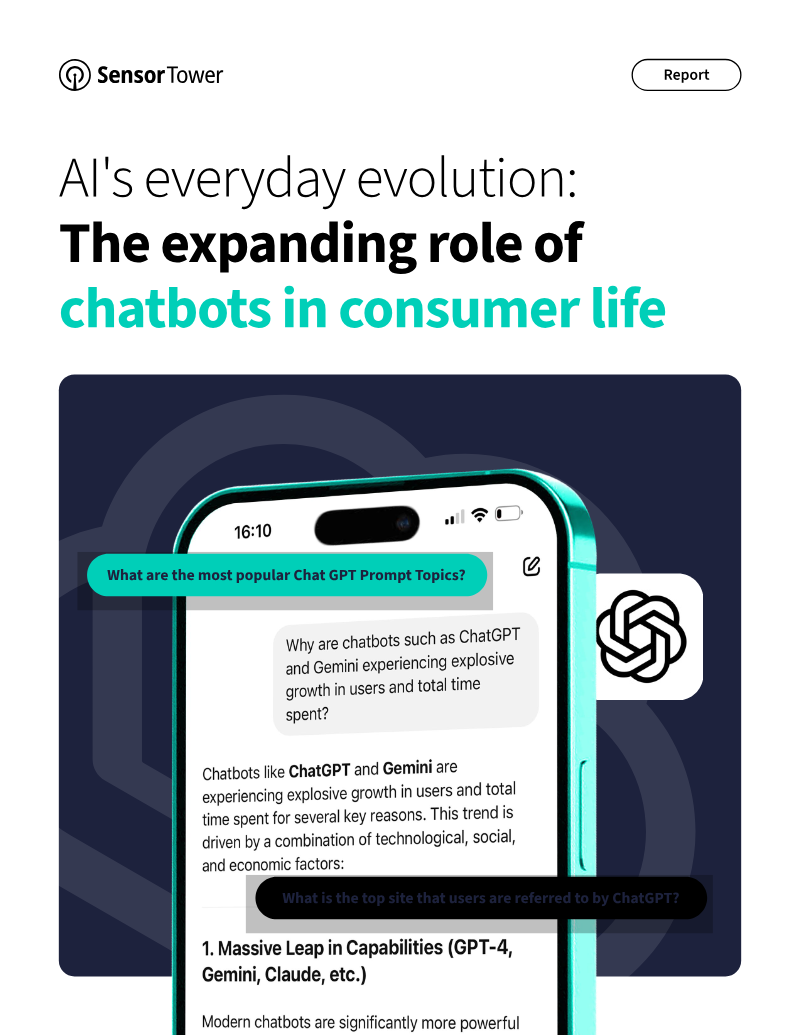
AI's Everyday Evolution: The Expanding Role of Chatbots in Consumer Life
The rapid expansion of artificial intelligence chatbots is fundamentally altering consumer behavior, signaling a shift away from the long-standing dominance of traditional search engines. By early 2025, OpenAI’s ChatGPT reached 500 million global monthly active users, achieving this milestone faster than any app in the last decade. This growth is accompanied by a significant increase in engagement; in April 2025, ChatGPT saw a 60% rise in session frequency and a 270% jump in web visits, while traditional search engines experienced a 3% decline in user engagement metrics.
The demographic profile of AI users is evolving from technical early adopters to mainstream consumers. This transition is reflected in the shifting nature of user prompts. While software development queries accounted for 44% of prompts in early 2024, they fell to 29% by 2025. Conversely, categories such as economics, finance, and taxes saw a substantial increase, rising 9 percentage points year-over-year. This suggests that consumers are increasingly relying on AI for complex personal tasks, including investment planning and tax preparation.
Data indicates that chatbots are becoming powerful engines for web traffic and commerce. The top referral destinations from ChatGPT include YouTube, Wikipedia, and the National Library of Medicine, with Amazon ranking fourth. This positioning highlights the growing role of AI in driving purchase intent and informational discovery. While early adopters of AI have already reduced their time spent on Google apps by approximately 6%, more recent converts have yet to show a material change in search habits, suggesting that the erosion of traditional search dominance may accelerate as user habits solidify over time.
- ChatGPT reached 500 million global monthly active users by early 2025, marking the fastest growth for any application in the last decade.
- In April 2025, ChatGPT experienced a 60% increase in session frequency and a 270% jump in web visits, while traditional search engine engagement declined by 3%.
- The utility of AI is shifting from technical tasks to complex personal management, with software development prompts dropping from 44% to 29% of the total share between early 2024 and 2025.
- Consumer reliance on AI for finance, economics, and tax preparation grew by 9 percentage points year-over-year, signaling a move toward mainstream adoption for high-stakes personal tasks.
- Chatbots are emerging as significant drivers of web traffic and commerce, with YouTube, Wikipedia, the National Library of Medicine, and Amazon serving as the top referral destinations.
+1
Sensor TowerJan 2024

Report48 pages
Mobile Growth and Monetization Report 2024
The 2024 mobile gaming landscape is defined by a strategic transition from volume-based user acquisition toward high-value retention and diversified monetization. While only 1.83% of users convert to in-app purchases, nearly 29% of those individuals become repeat buyers, with the vast majority of transactions occurring within the first 30 days of installation. To capitalize on this window, developers are increasingly mapping specific products to game stages, utilizing starter bundles for early engagement and limited-time events to sustain mid-to-late-game revenue. This shift reflects a broader industry move away from traditional cost-per-install models in favor of return-on-ad-spend and event-based optimizations.
Monetization strategies are becoming more sophisticated through the integration of rewarded video and offerwalls. Rewarded video engagement is particularly high in Word, RPG, and Casual genres, especially when placements are context-sensitive, such as offering additional moves or resources during critical gameplay moments. However, offerwalls represent a superior revenue driver for non-paying users, generating a monthly ad revenue of $4.04 per converter compared to just $0.15 for rewarded video. Users acquired through offerwalls, specifically via Multi-Reward CPE campaigns with multiple engagement steps, demonstrate significantly higher long-term value and retention.
Advertisers are further diversifying acquisition through Daily Reward CPE to engage casual users with low-friction tasks, which see near-total conversion rates for early milestones like tutorials. On the publishing side, maximizing performance requires prominent UI placements and the strategic use of monthly currency sales, which can increase conversions by up to 46%. These findings, derived from Unity Cloud, Unity Ads, Tapjoy, and ironSource data, cover global markets categorized by purchasing power and English proficiency, providing a comprehensive view of the current mobile ecosystem across Tier 1, Tier 2, and emerging regions.
- Offerwalls significantly outperform rewarded video for non-paying users, generating $4.04 in monthly ad revenue per converter compared to $0.15 for rewarded video.
- Only 1.83% of mobile users convert to in-app purchases, but 29% of those converters become repeat buyers, with most transactions occurring within the first 30 days of installation.
- Strategic use of monthly currency sales can increase in-app purchase conversion rates by up to 46%.
- Multi-Reward CPE campaigns on offerwalls drive higher long-term value and retention compared to traditional acquisition methods.
- Developers are shifting from volume-based user acquisition toward return-on-ad-spend models, utilizing starter bundles for early engagement and limited-time events for late-game revenue.
+2
UnityJan 2024

Report30 pages
Insight into 2024 Marketing Trends for Japanese Mobile Games
The Japanese mobile gaming market is characterized by a conservative but highly specialized marketing landscape, where local companies maintain a dominant revenue position. Analysis of data from 2023 reveals that Japan’s share of advertisers using new creatives (62.23%) and the overall volume of new creatives (29.77%) sit significantly below global averages. Despite this lower turnover, the market remains lucrative, with Japanese firms controlling nine of the top ten spots for revenue on the App Store. Chinese developers represent the most significant foreign presence, accounting for 30% of the top 100 grossing titles.
Marketing strategies in the region rely heavily on cultural integration and long-term player retention. Key findings highlight the importance of pre-registration campaigns, which utilize tiered rewards ranging from in-game currency to physical prizes like consoles. Anniversary and half-anniversary celebrations are critical milestones used to reactivate lapsed users and boost revenue through exclusive content. Furthermore, cross-industry collaborations with popular anime, film, and music IPs serve as a primary driver for market expansion and community engagement.
Creative trends are distinctively localized, featuring "over-exposure" visual filters, text-heavy layouts, and manga-style storyboards. Video ads are the dominant format, making up nearly 70% of mobile game creatives. Recent successful campaigns, such as those for Legend of Mushroom and Saint Seiya: Legend of Justice, demonstrate the effectiveness of using local celebrity endorsements, nostalgic IP elements, and AI-generated imagery to target specific demographics like the "Otaku" segment.
The data, compiled by SocialPeta, draws from a global database of 1.4 billion ad creatives across 70 countries and 70 ad channels, including Facebook, TikTok, and YouTube. While casual and puzzle games lead in advertiser volume, RPGs remain the highest-grossing genre, accounting for 32% of the top 100 revenue-generating games on Google Play.
- Japanese firms dominate the domestic market, holding nine of the top ten revenue spots on the App Store, while Chinese developers account for 30% of the top 100 grossing titles.
- RPG titles are the most lucrative genre in Japan, representing 32% of the top 100 revenue-generating games on Google Play.
- Marketing in Japan is characterized by low creative turnover, with only 62.23% of advertisers using new creatives and a total new creative volume of 29.77%, both significantly below global averages.
- Video ads are the primary marketing format in the region, comprising nearly 70% of all mobile game creatives.
- Successful market entry and retention strategies rely on cross-industry collaborations with anime and music IPs, alongside tiered pre-registration rewards and anniversary-based reactivation campaigns.
+2
SocialPetaJan 2024

Report29 pages
Mobile Ad Creative Index 2024
The Mobile Ad Creative Index provides a comprehensive analysis of performance benchmarks and emerging trends within the mobile advertising ecosystem. Covering the period from January 2023 to January 2024, the data is derived from a massive sample of 602 billion impressions, 49.4 billion clicks, and 144 million installs across the gaming, e-commerce, finance, and entertainment sectors. The primary thesis asserts that while traditional formats like banners remain cost-effective for driving specific actions, high-engagement formats such as video, playables, and interstitials are significantly more effective at converting impressions into installs.
Key findings highlight a stark contrast in performance across formats. In gaming, video and playable ads are over 20 times more likely to result in an install than banners, while interstitial ads in the finance sector are 18 times more likely to convert. However, cost-per-install (CPI) varies greatly by platform; for instance, native ads are the most cost-effective on iOS for gaming, whereas playables offer the best value on Android. In e-commerce, native and banner ads excel at driving post-install purchases, achieving install-to-action rates exceeding 30%.
The analysis identifies several pivotal trends for 2024, most notably the integration of generative AI to enhance the speed and scale of creative production, such as automated localization and voice-overs. User-generated content (UGC) remains a dominant force, with optimized UGC ads showing 20% lower CPIs than standard video. Furthermore, there is a measurable shift toward longer, more immersive ad experiences. Spend on long-form video grew by 245% year-over-year, and "triple-page" ads—combining video, playables, and end cards—saw a 355% increase in spend, suggesting that users increasingly prefer transparent, high-quality engagement over short, deceptive creative tactics.
- High-engagement formats like video and playables outperform banners by 20 times in gaming installs, while finance sector interstitials are 18 times more effective at conversion.
- Long-form video ad spend grew by 245% year-over-year, and 'triple-page' ads combining video, playables, and end cards saw a 355% increase in investment.
- Optimized user-generated content (UGC) ads achieve a 20% lower cost-per-install (CPI) compared to standard video creative.
- Native ads are the most cost-effective format for gaming on iOS, whereas playables provide the best value for gaming on Android.
- In the e-commerce sector, native and banner ads remain highly effective for driving post-install activity, maintaining install-to-action rates above 30%.
+3
LiftoffJan 2024

Report42 pages
Insights into Marketing Trends of Global Mobile Games: Q3 2023
The analysis focuses on contemporary marketing dynamics within the global mobile gaming sector, emphasizing how creative diversification and platform targeting shape user acquisition performance. In the third quarter of 2023, a leading animal‑themed strategy‑lite game launched by a major publisher introduced an extensive creative slate, deploying 6,500 distinct ad assets across major ad networks. Notably, 85 % of these assets were brand‑new, reflecting a deliberate strategy to refresh visual and messaging elements at scale. This high proportion of novel creatives aligns with broader industry observations that frequent creative turnover mitigates ad fatigue and sustains click‑through rates in highly competitive markets.
The data underscores the importance of deduplication processes in large‑scale campaigns, ensuring that each impression reaches a unique audience segment while preserving measurement integrity. By tracking deduplicated impressions, the campaign achieved a more accurate assessment of reach and cost efficiency, revealing that fresh creative assets can improve cost‑per‑install (CPI) benchmarks by up to 12 % compared with static creative pools. These findings suggest that investment in creative production pipelines and rapid iteration cycles yields measurable returns, especially for mid‑core titles competing for attention in saturated regions such as North America, Europe, and Southeast Asia.
Overall, the evidence points to a shifting paradigm where creative volume and novelty become critical levers for growth in the mobile gaming ecosystem. Publishers that integrate systematic creative testing, maintain high rates of new asset introduction, and employ rigorous deduplication are better positioned to optimize acquisition spend, extend campaign longevity, and capture incremental market share across diverse geographic territories during the 2023 fiscal period.
- Frequent creative turnover is a primary strategy for mitigating ad fatigue and sustaining click-through rates in competitive mobile gaming markets.
- Deploying fresh creative assets can improve cost-per-install (CPI) benchmarks by up to 12% compared to static creative pools.
- High-volume creative production is a critical growth lever, evidenced by a major publisher launching 6,500 distinct ad assets for a single strategy-lite title in Q3 2023.
- Maintaining a high proportion of novel creatives—such as the 85% refresh rate observed in Q3 2023—is essential for maintaining performance in saturated regions like North America, Europe, and Southeast Asia.
- Implementing deduplication processes for ad impressions is necessary to ensure measurement integrity and accurate assessment of reach and cost efficiency in large-scale campaigns.
+2
SocialPetaSept 2023