Saints Row: The Third
Game
2 documents in the library are about Saints Row: The Third, from writers such as DiGRA and Game Developers Conference. Each has a summary and key insights with the page they come from.
Connections
Each row is a game or company named alongside Saints Row: The Third, each column a document, oldest first. A mark means that document names it. Select a row to see those documents.
Documents about Saints Row: The Third
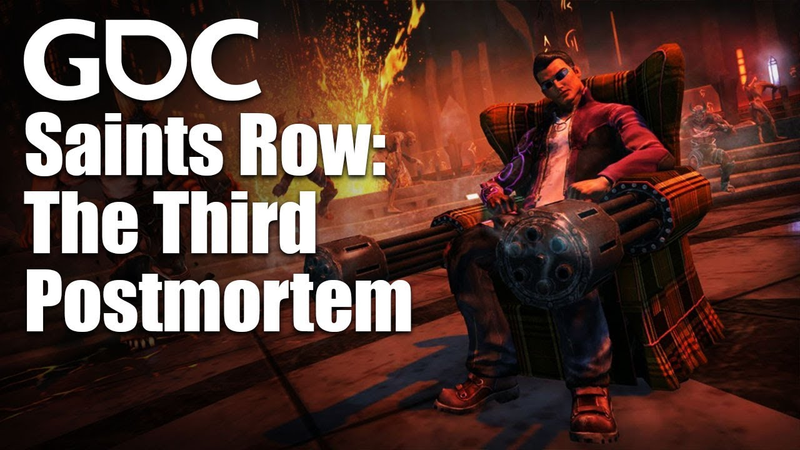
Designing Over the Top - Saints Row: The Third Postmortem
Saints Row: The Third represents a pivotal shift in the franchise’s trajectory, moving away from the inconsistent narrative and gameplay identity of its predecessors toward a unified, self-aware, and intentionally over-the-top experience.
- The development team successfully unified the franchise's identity by pivoting to a self-aware, over-the-top tone after a difficult six-month development reset.
- Rigorous scope management involved 26 scheduled reviews, which resulted in the removal of approximately 4,000 man-days of work to maintain focus on core pillars.
- To align a team where 80 percent of staff were new to the series, the studio prioritized early prototyping, pre-visualization, and cross-disciplinary collaboration over static paper specifications.
Understanding Videogame Cities
"Understanding Videogame Cities" argues that fictional game cities can be analyzed with the same rigor applied to physical cities, using Saints Row: The Third's Steelport as its central case.
- The report argues that fictional videogame cities can be analyzed with the same rigor as physical cities, using a three-part framework of constitutional, representational, and experiential orders that blends Lefebvre's spatial triad with Douglas Allen's criteria.
- Its central thesis is that a city's character emerges from the interplay between its built structure, its visual and symbolic representation, and the embodied experience of moving through it.
- Using Saints Row: The Third's Steelport (2011) as the central case, the analysis finds that territory control and monuments, such as the Magarac Island statue destroyed late in the game, visibly express the city's power dynamics.