1 free read left. Create a free account for unlimited reading + AI research.
Create free account
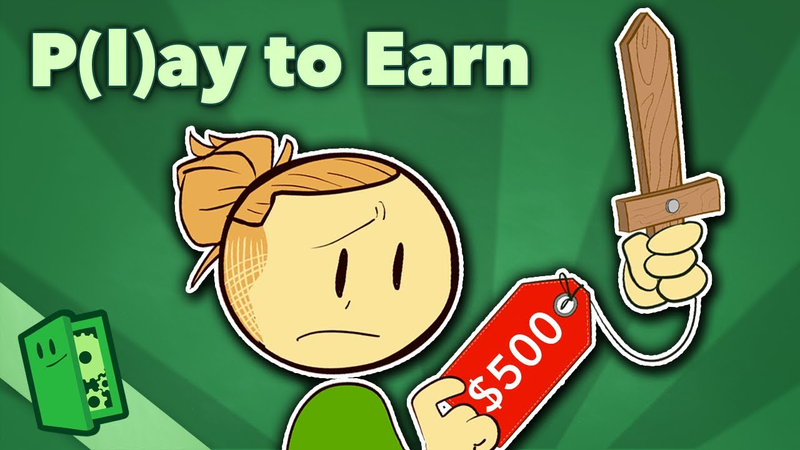
Will Play to Earn Games Remain Legal? - Extra Credits Video Games
Key insights
6 takeaways- 01Blockchain-based gaming systems are inherently susceptible to inflation, botting, and fraud, which frequently undermine the experience for legitimate players.
- 02The transition from closed-loop to open-loop economies, which allow for real-world cashing out, exposes developers to significant legal risks including money laundering, securities regulation, and complex tax liabilities.
- 03Integrating crypto-assets into loot box mechanics creates direct conflicts with gambling laws, as virtual items can be repurposed as digital currency for illicit betting.
- 04Consumer protection is a major concern because developers often retain the ability to unilaterally alter or remove NFT-based benefits, leading to potential litigation and player alienation.
- 05Play-to-earn models suffer from the overjustification effect, where the emphasis on extrinsic financial rewards diminishes the intrinsic enjoyment and engagement of the game.
- 06Play-to-earn experiences should be classified as a distinct market segment separate from traditional gaming and subjected to the same rigorous regulatory oversight as the casino and gambling industries.
Ask AI about this video
Transcript
All the way back in 2018. Oh, wow, in my very first Extra Credits episode, actually. We discussed the blockchain and how it might affect the gaming industry. Oh, Zoe, we were so young. Now, smash cut to the darkest timeline in 2022 and it seems like it was time to chat about it again. More specifically, today, we wanted to focus on the latest wave of play-to-earn blockchain games where players acquire, buy, and sell virtual items in an open, decentralized marketplace. Because what we've seen so far has been not encouraging. Massive scams, huge environmental impacts, and many, many big gaming names completely and utterly failing to read the room when it comes to rolling out play-to-earn features in their existing games. Despite all this, along with some recent market indications that this could already be dying down, the crypto trend probably isn't going anywhere anytime soon since there's so much money already invested in it. Plus, the crypto faithful really do believe that play-to-earn is the future of gaming. But, if that's true, why isn't everyone hyped for it?
Thanks so much to Brilliant for continuing to support our passion for lifelong learning. To help us untangle this issue, we've once again brought in our friends Joe Newman and Jonathan Downing, both attorneys at Ties Law Group. Joe and Jonathan not only have experience with legal issues surrounding crypto, but since they both worked together at EA, they've also seen firsthand the problems that come with real-life speculation in virtual worlds. Of course, as always, this video is not legal advice. Their opinions are their own. See a real-life lawyer for any real-life ups, etc., etc. And we'll link to their bios and blog in the description. Also, while we're disclaiming things, as lawyers, Joe and Jonathan have to keep a bit of distance and nuance in their approach to things. But, as players, they're not very jazzed about the play-to-earn model. And frankly, neither are we. Now, we recognize that upping the stakes with real money can be a way to make some activities more engaging for some people. But, it's just not what personally excites any of us about this medium. And even if it was the way we're seeing it implemented doesn't give us
much confidence in its long-term sustainability. But, let's back up for a second because to understand play-to-earn, we first need to understand open-loop versus closed-loop economies. Most games today have closed-loop economies. You pay real money to access the game itself and any in-game entitlements like battle passes, skins, and the like. And once money is spent in the closed-loop, you can't get it back out barring a refund. Meanwhile, open-loop economies allow for cashing out, i.e., selling your in-game stuff, usually to other players, for a real-world payout. Now, as you can imagine, open-loop economies present a lot of legal challenges. For one, you'll need to make sure your game isn't used for money laundering, which is a lot more common in games than you might think. Second, if you sell unique crypto assets that increase in value solely based on the efforts of others, you may be subject to SEC security regulations. And third, since cryptocurrencies are taxable as property under IRS guidelines, you might be surprising your players with major tax liability. All of this means a lot of work for your legal
team and the very real possibility of federal investigations and fines if you get it wrong. But, that's not all. Remember all those cases about loot box mechanics and how developers argued that they weren't illegal gambling in part because the prizes you got for them had no real-world value? Well, what if you operate a pay-to-earn model and charge money for loot boxes containing crypto assets? As in, assets specifically designed to be traded for real-world value. Yeah, you could be in some trouble there. Actually, there's already precedent for this. As you may have heard back in 2016, the Washington State Gambling Commission discovered that third-party gambling sites were using Counter-Strike weapon skins as the equivalent of digital poker chips since Valve let users trade them outside the game for real money. Now, Washington State forced Valve to shut down these skin betting sites, but now imagine how they would have reacted to skins as NFTs. Lastly, you can't forget the consumer protection issues with a play to earn model. For instance, what if you advertise to players that their NFTs will unlock amazing benefits in game, but then you have to rebalance that game
to adjust or remove those benefits, or even shut the game down altogether? Your players are not going to be happy, and you better believe they'll call their lawyers. And we're not even going to get started on the dangers of advertising crypto to kids. Child protection groups are going to have a field day with that one. Okay, but let's say for the sake of argument that you have a crack team of legal experts to help you out here. Well, even so, there's still plenty of non-legal issues to consider as well. Because real money is involved, open-loop economies are much more attractive to fraudsters, griefers, hackers, and botters. And reversing the harm from these abuses is especially difficult in a decentralized system. These economies also commonly experience rampant inflation from players gaming the system, making it impossible for new players to afford even basic items. Heck, look at the Diablo 3 auction house for a historical example of this. Also, pursuing play-to-earn risks alienating not only your player base, but also possibly your own employees and partners. As we saw when indie publisher Team17 was publicly slammed by its own developers following an NFT push. But there's one more reason so many
companies have gotten in trouble over the inclusion of open-loop play-to-earn systems. Because these systems cater to a very specific player motivation, aka to make money, their inclusion often comes at the expense of other player motivations, such as exploration, socializing, artistic expression, relaxation, and more. In fact, there were many psychological studies, which we'll link to in the description, that show introducing extrinsic rewards to an activity causes people to lose interest in the intrinsic rewards inherent with that activity. Ironically, upping the stakes may lead to less interesting games with lower player retention. And to us, this is the crux of the problem. Play-to-earn is, at best, a distraction for those who play games to enjoy playing games. And at worst, play-to-earn has the potential to be downright predatory. Joe has heard truly awful stories of people financially devastated by crypto-related scams. Uninformed consumers who paid into real-deal, federally prosecuted Ponzi schemes, buying expensive graphics cards thinking there was an actual physical
crypto mine that they were helping to excavate. We've seen crypto games advertised as free-to-play, but where any meaningful participation required spending money on NFTs, and other games that were built purely to get the players to purchase a specific currency and drive up its price before the creators bailed. So, given the current landscape, it's our opinion that play-to-earn blockchain-enabled experiences should be kept separate from traditional gaming experiences, and sold, marketed, and regulated as their own distinct section of the market, similar to how casino games, aka games that gamble with real money, are kept separate from video game marketplaces. Now, of course, whether or not these experiences could survive that separation/regulation without a steady stream of traditional players to recruit is another story, and we don't have time to delve into that right now. But, we're curious. What do you all think? Are there examples of play-to-earn experiences you've seen done right? Or are you in the camp that thinks crypto gaming is never fine, truly? Let us know where you land in the comments below, and we'll be sure to read the polite ones. And while you gather your thoughts, maybe you'd be interested in checking
out a fun and interactive course that teaches you about the technology behind the blockchain and digital currency some games use, from our friends over at Brilliant. You know, without anyone trying to sell you brain coin or whatever. You know by now that many of us in the EC community are passionate lifelong learners. Heck, you're probably one of them yourself, who are curious about a bunch of topics, but also want to learn about them on our own schedules, which is why we think Brilliant, the interactive learning environment focusing on science, technology, engineering, and mathematics, you know, the whole STEM set, is perfect for learning at your own pace in a fun and interactive way, replacing traditional lectures with hands-on lessons, complete with visual examples, and a storytelling approach that really helps all the information stick. Recently, our studio director, Jeff dove headfirst into Brilliant's course on algorithm fundamentals because he's always looking for new ways to optimize things like our Google search results and better understand the almighty YouTube algorithm. And because the other day I was reading about that back and forth on whether or not Google had actually created an AI, I jumped into Brilliant's courses on neural
networks to get a better understanding of how they function and hopefully glean some tips to survive the inevitable robot uprising. Oh, it's coming. So, if you're a curious learner just starting out or a seasoned pro, you should check out Brilliant to level up your learning by going to brilliant.org/extracredits and signing up for free. Ooh, and the first 200 people that go to that link will also get 20% off an annual premium subscription, which added bonus helps our channel make shows like the one you just watched. As always, thanks so much for your support. I believe that was cat for thanking Ahmed Ziad Turk, Alicia Bramble, Angela Valenciana, Arclight Games, Casey Muscha, Dominic Valenciana, and Joseph Blain for being legendary patrons.
Summary
The integration of blockchain technology and play-to-earn models into the gaming industry has largely resulted in negative outcomes, including legal complications, predatory financial schemes, and diminished player engagement. While proponents argue that decentralized, open-loop economies represent the future of gaming, the current implementation often prioritizes financial speculation over core gameplay, leading to significant regulatory risks and ethical concerns.
The primary legal challenges stem from the transition from closed-loop economies—where in-game purchases are final—to open-loop systems that allow for real-world cashing out. This shift exposes developers to risks involving money laundering, securities regulation, and complex tax liabilities. Furthermore, the introduction of crypto-assets into loot box mechanics creates potential conflicts with gambling laws, as seen in historical precedents where virtual items were used as digital currency for illicit betting. Consumer protection remains a critical issue, particularly regarding the potential for developers to unilaterally alter or remove NFT-based benefits, which invites litigation and alienates the player base.
Beyond legal hurdles, play-to-earn models suffer from inherent design flaws. The focus on extrinsic financial rewards often triggers the overjustification effect, where players lose interest in the intrinsic enjoyment of the game. These systems are also highly susceptible to inflation, botting, and fraud, which can devastate the experience for legitimate users. Given these factors, the industry should treat play-to-earn blockchain experiences as a distinct market segment, separate from traditional gaming, and subject them to the same rigorous regulatory oversight applied to casino and gambling industries. This separation would protect consumers from predatory practices while acknowledging that the current model is fundamentally at odds with the goals of traditional game design.

















Comments