1 free read left. Create a free account for unlimited reading + AI research.
Create free accountArticle GWI
1 free read left. Create a free account for unlimited reading + AI research.
Create free accountArticleGWI
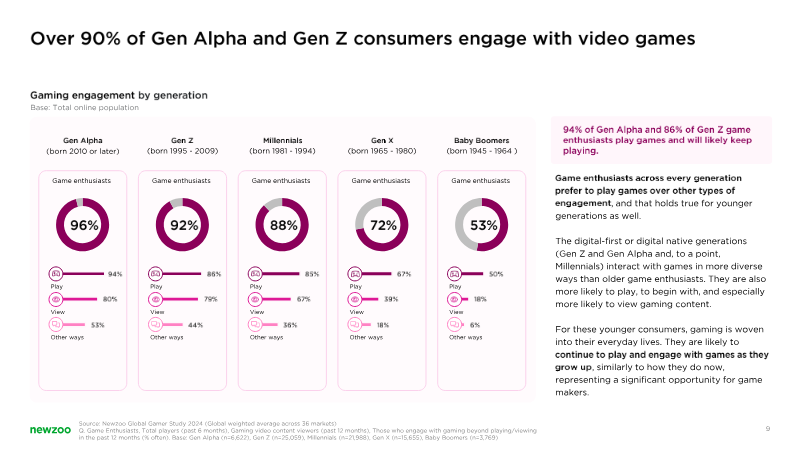
The gaming industry has reached a level of ubiquity comparable to television, necessitating a shift away from the outdated, monolithic label of "gamer." As of mid-2020, 87% of global internet users engage in gaming, a significant rebound from a pre-2019 decline. This growth is largely driven by mobile accessibility, which has successfully bridged gender and age gaps. For instance, female participation among 16-24-year-olds has reached parity with males at 92%, while engagement among the 55-64 demographic has risen to 67%.
The analysis, based on GWI core survey data and custom research conducted in the UK and U.S. during July 2020, argues that blanket marketing strategies are no longer effective. Because gaming now encompasses diverse subcultures with distinct motivations, brands must move beyond broad demographics. The research highlights that players of specific franchises, such as the community-oriented Endless series versus the more individualistic Call of Duty base, require tailored communication strategies that respect their unique cultural values and engagement preferences.
Furthermore, the distinction between casual and habitual gamers is critical for advertising efficacy. While casual gamers represent a massive 48% of the UK and U.S. internet population, they are generally more sensitive to intrusive advertising and costs. Conversely, habitual gamers—who make up 19% of the population—are more likely to engage with social features and tournaments. By segmenting audiences based on these underlying motivations rather than the generic "gamer" tag, brands can better navigate the $250 billion gaming market, ensuring that outreach efforts are both relevant and brand-safe.
The games and companies this document names on the inner ring, other documents about them on the outer one. Select a cover to see it up close and open it in a new tab; drag to move, pinch or Ctrl + scroll to zoom.

GWI · 2025

GWI · 2023

GWI · 2023

GWI · 2022

GWI · 2022

GWI · 2022

GWI · 2021

GWI · 2021



GWI · 2021

GWI · 2020

GWI · 2019

GWI · 2019
Anzu · 2026