1 free read left. Create a free account for unlimited reading + AI research.
Create free accountArticle Replay. The Polish Journal of Game Studies
1 free read left. Create a free account for unlimited reading + AI research.
Create free accountArticleReplay. The Polish Journal of Game Studies
Distilling the key insights…
Mainstream video game publishers increasingly leverage user-generated content as a strategic marketing tool to drive engagement on social media platforms. By analyzing the official Facebook pages of four major titles between 2014 and 2015, it becomes clear that publishers curate specific forms of fan participation—predominantly visual media like fan art and cosplay—to align with the platform’s aesthetic requirements. These featured posts, which account for 8% to 24% of total content, serve as a cost-effective alternative to traditional promotional materials while simultaneously incentivizing further community activity.
This practice functions as a sophisticated mechanism for managing fan capital, where the visibility granted to creators acts as a reward for their contributions. However, this dynamic creates a complex ethical landscape regarding the commodification of fan labor. While publishers often credit original authors, the systematic use of user-generated content allows corporations to capitalize on community creativity without direct financial compensation. Furthermore, the increasing prevalence of contests designed to secure broad, royalty-free rights to fan works suggests a shift toward institutionalizing the extraction of unpaid labor under the guise of community building.
Ultimately, the integration of fan content into official communication channels serves to deepen brand loyalty while minimizing marketing expenditures. Although this visibility can enhance the cultural standing of individual fans within their respective communities, it simultaneously raises significant concerns regarding the exploitation of creative output. The reliance on visual-centric fan contributions highlights a strategic prioritization of content that is easily consumable and highly shareable, effectively transforming the fan base into an extension of the publisher’s own promotional apparatus.
Each row is a game or company this document names, each column a document, oldest first. A mark means that document names it. Select a row to see those documents.
Replay. The Polish Journal of Game Studies · 2026
Replay. The Polish Journal of Game Studies · 2026
Replay. The Polish Journal of Game Studies · 2026
Replay. The Polish Journal of Game Studies · 2026
Replay. The Polish Journal of Game Studies · 2026
Replay. The Polish Journal of Game Studies · 2026
Replay. The Polish Journal of Game Studies · 2024
Replay. The Polish Journal of Game Studies · 2024
Replay. The Polish Journal of Game Studies · 2024
Replay. The Polish Journal of Game Studies · 2024
Replay. The Polish Journal of Game Studies · 2024
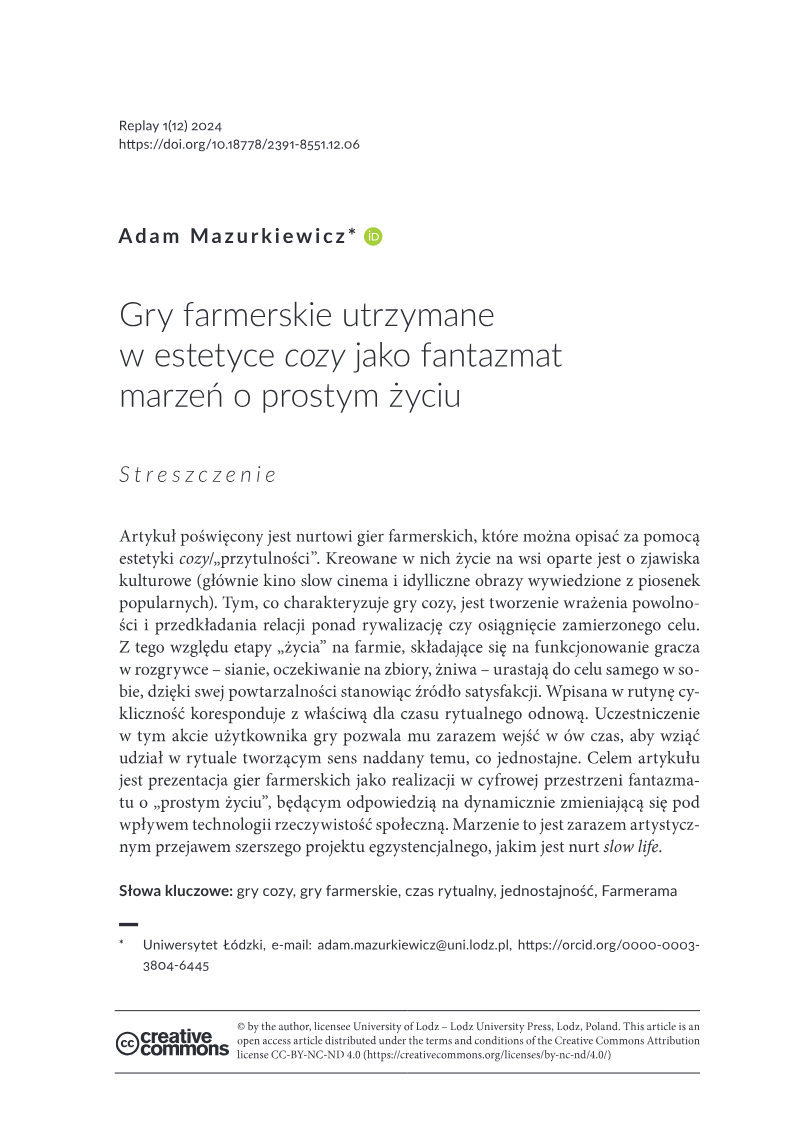
Replay. The Polish Journal of Game Studies · 2024
Zurich University of Applied Sciences · 2026