Loading the document
1 free read left. Create a free account for unlimited reading + AI research.
Create free accountWhitepaper DiGRA
1 free read left. Create a free account for unlimited reading + AI research.
Create free accountWhitepaperDiGRA
Classification depends on which criteria are chosen.
The document, "What Is a National Video Game?", explores the complex and often ambiguous criteria used to define the national status of video games. It challenges the assumption that national identity is an inherent and objectively observable characteristic of games, proposing a framework for organizing academic study and addressing practical classification issues in national game databases. The research stems from a collaborative effort across publicly funded grant projects in Poland, the Czech Republic, and Switzerland, with a particular emphasis on examples from Central and Eastern Europe to increase the visibility of games from that region.
The methodology involved an initial review of existing video game databases and academic literature, leading to the identification of five general categories for assessing national status: developer, game world (including location and cultural references), language, gameplay, and target audience/marketing. These categories were then systematically applied to a corpus of ten purposively selected academic publications, primarily journal articles and book chapters, representing various countries. The analysis focused on how each category was discussed within these publications and the definitional issues associated with them.
Key findings indicate that the most frequent marker of national status is the game's developer being based in a certain country, though the specific meaning of "developer location" (e.g., legal entity, funding, studio location, workforce background) is often unclear, especially with transnational companies and outsourcing. The second most common marker is the game's engagement with national history, geography, or culture. However, these two primary markers can sometimes conflict, as illustrated by examples like Baldur's Gate III (Belgian developer, non-Belgian game world) or Deus Ex: Mankind Divided (Canadian developer, Czech setting). The remaining three categories—language, gameplay, and target audience/marketing—are less frequently represented in the academic literature but still hold significance, such as the use of original game engines in Central and Eastern Europe or gameplay shaped by local cultural memory. The paper concludes by advocating for diverse definitions of national video games tailored to different scholarly purposes, focusing on the design and production side of games rather than reception.
Each row is a game or company this document names, each column a document, oldest first. A mark means that document names it. Select a row to see those documents.
DiGRA · 2026

Jason Schreier · 2026
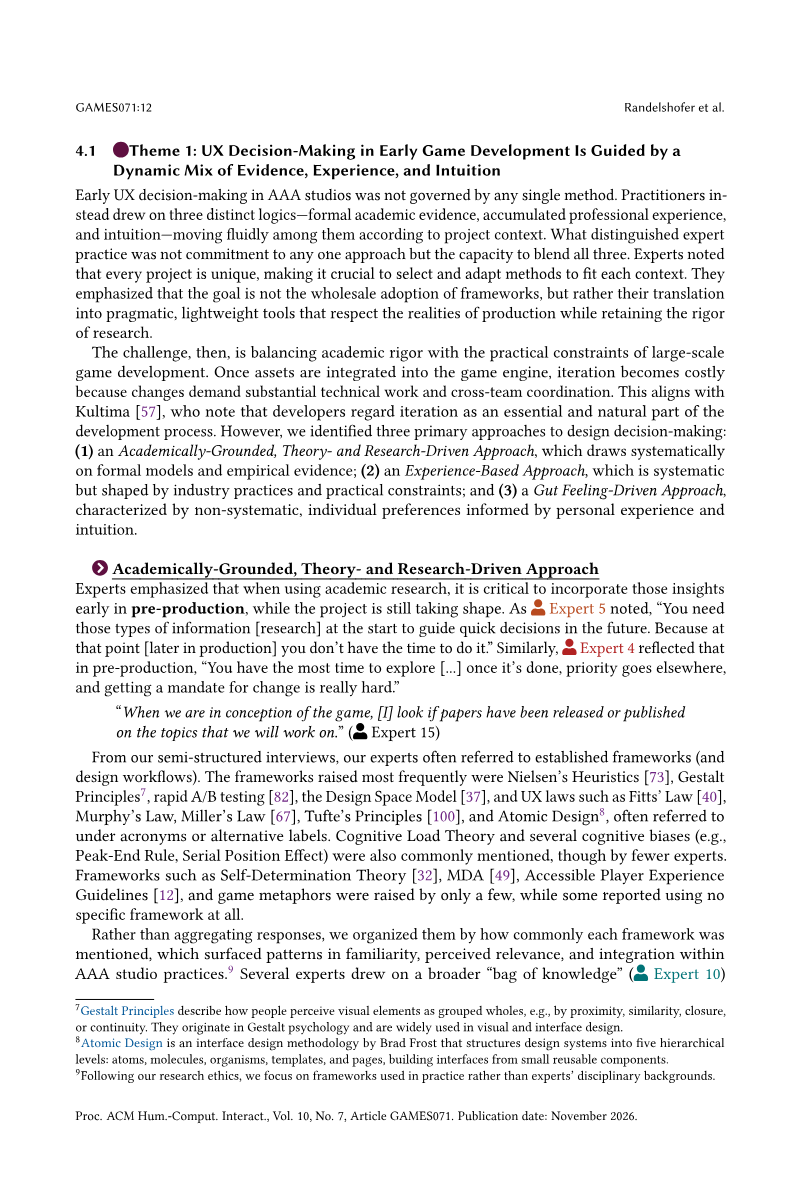
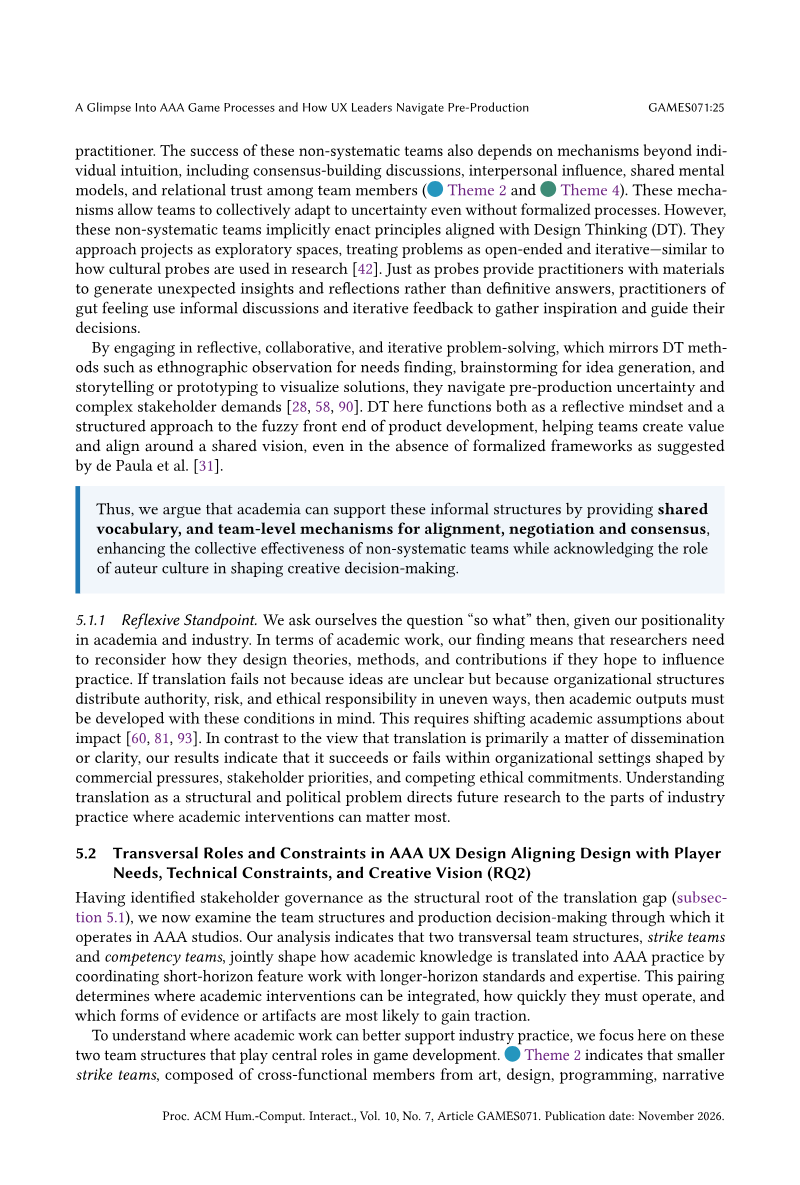
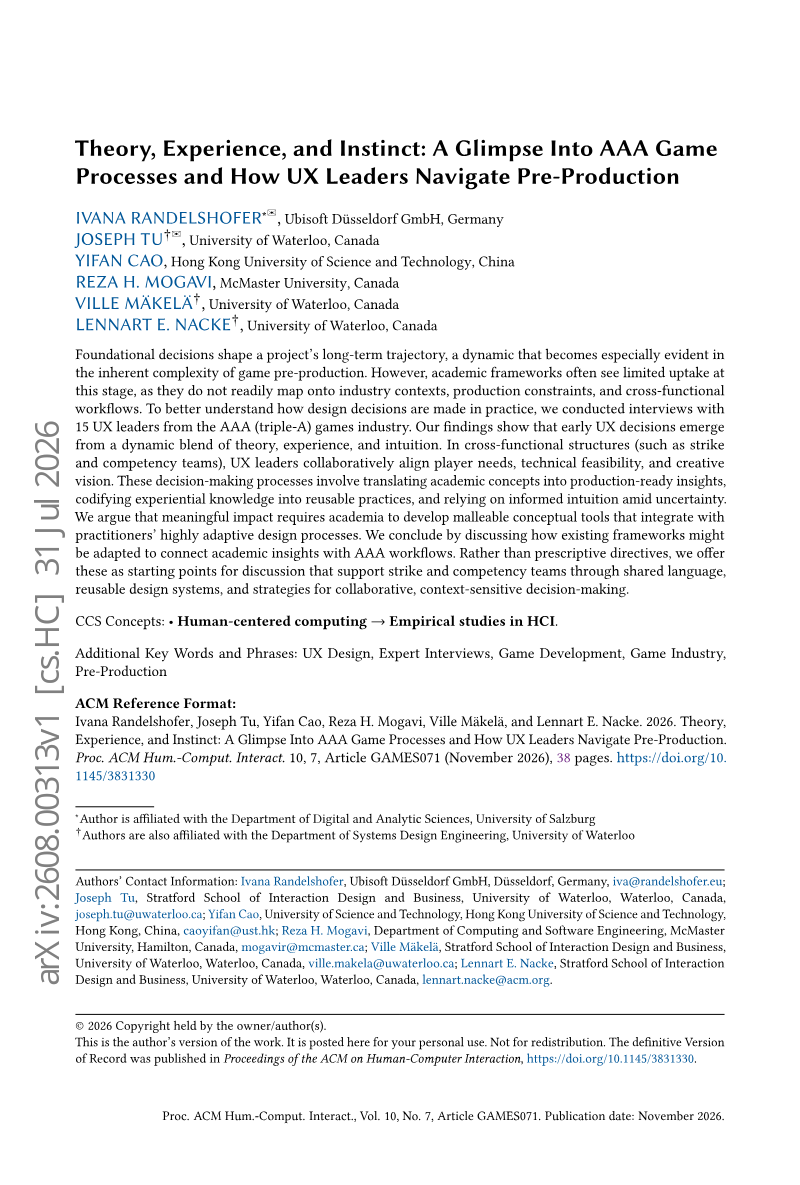
Proceedings of the ACM on Human-Computer Interaction · 2026

Two & a Half Gamers · 2026

Naavik · 2026

Jason Schreier · 2026

Game Developers Conference · 2026
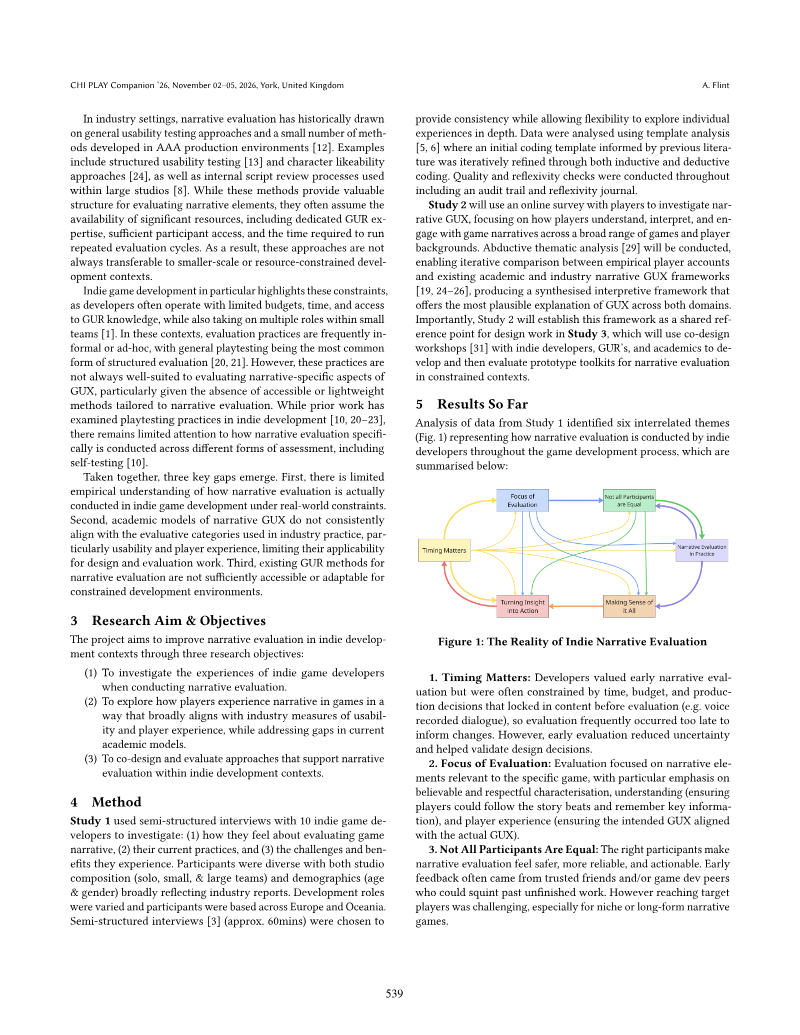
University of York · 2026
Association for Computing Machinery · 2026
University of California Santa Cruz · 2026

Thomas Brush · 2026

PocketGamer.biz · 2026

Jason Schreier · 2026































