VideoNaavik
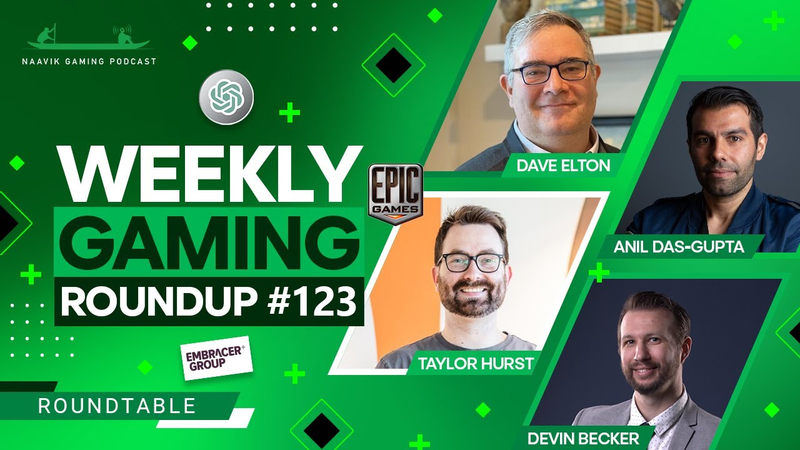
VC Funding Down / Fortnite Kid Safety / OpenAI Drama / Embracer Restructure
24 Nov 202375 min video
Transcript
[Music] welcome to the navic gaming podcast where it is our mission to explore the business and future of video games we bring together the industry's brightest Builders investors and thinkers to keep a pulse on current events dissect emerging Trends and games share Lessons Learned and have a great time this podcast is also part of novic growing ecosystem which ranges from free and premium research to Consulting and advice services for more information visit [Music] www.nic.edu in Europe and Beyond founded by clous Amel the team's early Investments include Skype Spotify Facebook and airbn
B and since raising its first Fund in 2012 lakar now manages an aggregated volume of over 2.8 billion EUR across their early and growth stage funds the team actively advises and supports portfolio companies and marketing recruitment technology product development and Regulatory Insight accompanying Founders from seed to early stage growth stage or exit Lake star's games and media team has made 18 Investments including 1047 games zebede modulate and Trace if you're interested in learning more or getting in contact with the lakar team simply go to lar.myflorida.com some of us yeah we're happily uh not
celebrating Thanksgiving Day whilst the only three people in the world four people in the world who aren't well here in Canada we've already did our uh Thanksgiving celebration we do celebrate it in October uh da ahead of the curve to thank you a lot faster than Americans do well you're welcome Dave and uh so Taylor why don't you tell us about yourself yeah yeah so yeah we we do celebrate Thanksgiving tomorrow so I guess we have three three separate Thanksgiving celebrations but I'm the principal at Convoy uh we're an early stage gaming fund focusing on preed seed series a investments prenomen in the technology infrastructure and platform side so the main difference is we do not invest in in game studios specifically but have been there for five years now and we are on our our third fund uh which was uh the most recent one for $150 million and have now done about seven Investments out of that one and we'll be continuing to invest in in the gaming space going forward
awesome I'm sure everyone will look forward to hitting you up now if you want to if you want to throw out your email and ask for that spam yeah yeah my email is taylorc convoy. VC please feel free for anybody to to to reach out always always looking to to chat with more people in the space awesome well we'll obviously be chatting today and we've got some great topics we uh surprisingly haven't been short on topics lately it's uh it's been actually pretty busy somehow going into the winter here uh we've got some stuff around games VC funding which unfortunately isn't great news not all this is good news uh epic uh has been going through some interesting times as well with uh fortnite and kids playing the game obviously uh so that should be interesting to dig into a bit open AI if you've been paying attention over the weekend a lot of fun there we're just gonna kind of sum it up and and get into what that might mean some good thoughts uh here from Dave on live operations uh because he wants to follow up from last week so that should be a good uh tie on if you didn't if you didn't catch last week of course make sure to do that as well so you can catch what he's talking about and then Embrace her with uh good
news as always unfortunately Aaron not here to cheer them on but we will definitely get into it but why don't we just kick off with the games of VC funding here so um according to pitchbook and their uh Q3 gaming report um last quarter VC firms closed 113 deals for disclosed 857 million uh and this is unfortunately another decline uh as compared to both previous quarter and Q3 of 2022 so quarter on quarter uh we see a decrease of about 10% year onye about 50% um and really looking also at the deal value the value decreased a fair chunk about 35% compared to Q2 and 68% compared to uh this time last year so uh just a quick recap in Q2 um there actually was a slight increase uh in the total value of deals uh but the total
number of deals decreased uh 29% um and one of the things I was actually curious to do is take a look at back at um when it comes to uh the interest rates because one of the comments has always been um you know well the cost of money is a lot more expensive these days as compared to what it has been uh and so one of the things I did was I took a look back at 2018 which was approximately when interest rate were fairly close to where we are today and took a look at where our you know where the deal values were the number of deals were happening um and it was actually some some fairly close similarities between the two so I'm starting to wonder you know as we get into um the real normal which is probably where our interest rates are today uh maybe a slight decrease over the the next uh next coming quarters and that but I'm I'm not really seeing a huge decrease we're not most likely not going to go back to to the days of
almost free money um I wonder if we're also now looking at probably The New Normal in terms of deal transactions value of deals um and uh and I'm really happy that Taylor's here because I'd love to get his take on this being the expert uh and instead of myself just commenting from the uh from the sideline where's the money Taylor yeah so so what I would add to this because uh so Convoy also releases a a report on the the the private you know the private markets and games funding and it goes a little bit further back than you know focusing on that that last year and the way we actually view this is is funding is actually just returning to that preco level instead of moving off of all that hype which I mean I think it was warranted you know during during Co obviously everyone was at home the the only good news you were really getting was uh you know on on any news channel was everyone seem to be playing video games um and so that was really great for the market anybody could go and honestly with that and low interest
rates it was a perfect storm for being able to raise raise capital I think you know alongside of um you know these these more hyped up IPOs like your robots your Unity your your your applo and you know everyone going public it it it seemed like gaming was that that area we had to invest in and what what I think really happened here was and and this is going to be I would say a a a hot opinion or a Hot Topic here is I don't think games investment games investing on the studio side is actually a a truly like a venture fundable uh model it it requires a lot of capital and when you when it comes to the VC space generally you're looking for these Milestones that that allow you to get to that next stage and when it comes to games going from you know initial funding to to an alpha to to your beta so then finally releasing a product and we're talking about four or five years where you you may be waiting for any significant Revenue attraction and to me I don't think that is actually how how
Games should be should be judged but the issue is is that doesn't align with how how VCS fund companies and so anecdotally we we are seeing a lot of generalist firms pulling back and so I think that is the majority of this this funding decreases the games funds and you know your entertainment funds are are still interested in this space but there's not that support um from the generalist side or at that growth level anymore because it it's not warranting that that valuation increase or that that that extra funding you you truly do need to get to that next stage and so I think a lot of the I I I do believe a lot of this um the concern around like this decrease in funding is is partially due to just this this uptick funding that Co had um and allowed for and obviously you know like Dave mentioned you know 0% interest rates Capital was cheap not only for startups before VCS as well who you know needed to deploy this Capital you you know you can't sit on the silence and just collect management fees forever and
so it it is definitely getting tougher um and I think games companies are being hit the hardest out of a lot of uh a lot of other sectors because it's just it's it's to me not a safe bet and you know no one knows what games are going to be successful I don't think the majority of people would have chosen you know or would have predicted the Among Us hype or or um or fall guys getting as popular as it did but everyone wanted to chase this you know who's going to be funny the next fortnite and I think we quickly found out people that are going to do that are the Publishers the Publishers have the money to do it they have they have the balance sheet they have the the wherewithal to to understand that waiting four or five years is is actually worth it and it's not only worth it but it's necessary and so we we are seeing a lot of capital within the games industry shift from content over to more scalable Technologies and platforms that people are looking for but those don't warrant the amount of funding that game studios did so we're at a point now where all of this is
depressed and I think we're going to continue to see this but when I think when you do zoom out a little bit more it's it's not as bad of a view as the the data shows over the last year even two years but when you go back to pre-co we we are pretty in line with with where that was and but I am I I I do think we're going to see a lot of VCS that are not focused on gaming really take a step back and and be comfortable waiting for those series a series B uh rounds when when companies are able to really prove that they have the ability to maybe reach scale yeah and I think I think you're absolutely right I think we're we're returning to what the actual normal is I think too many people unfortunately took the levels that we were seeing during covid as The New Normal uh when as you said it was really just a blip you know I think it would do a lot of people really a lot of good if we kind of took our our industry growth curve just lopped off the covid uh bump
that we that we saw we'd still see you know a nice actual curve overall going up um you know I I think we'd still see we'd still we'd still see growth in the history overall uh but at a at a much steadier rate rather than sort of um you know out of control rates uh and I think we will still see I personally still think that content is uh investable um but we can have that conversation I think another time Taylor but uh um but but yeah it certainly is uh certainly a lot more challenging especially as everyone's kind of pulling back if if the the sentiment amongst the developers and Publishers is um oh wow things have really hit a downturn then you know that that's going to be a sent that's that's echoed you know pretty far and wide if you know Publishers aren't able to go up to v's and say hey we see see a huge hockey stick in terms of our Revenue
growth over where we were then it's like well why would we fund something that is most likely just going to be fairly flat Taylor's point about the uh General VCS I think is also especially true because some of these funds will have been around now for maybe six seven eight years right and that's when you'd expect that fund to return its investment so if some of these General VCS have just got burnt and not seen any return on their original fund then particularly given today's climate they they're not going to be for it and I think if you look at the general VC Community rather than the more specialized ones how many of them really did manage to make a good return there's not so many right if you if you invested early in someone who got by Zinger or one of these other sort of mobile big ones sure you've done well but for every one of those there's probably 10 that got nothing at all and I think that's one of the reasons too I would also imagine that the lack of follow on rounds for existing companies is also partially responsible for this because it seems to me that anything get funded right now is things that just started up right at the very beginning it's not
those that a little bit further along the line um but interesting to observe anyway yeah and I think I think one other thing to add here is I think I think investors are becoming more cognizant of of the the exit multiples that a Content company justifies and I think that's that that's a little bit tougher to swallow for a lot of them because it's it's great you you can you can if you build a game that generates aund million do in you know in Revenue that's fantastic for the game and that's you know an absolute win but on that exit multiple side you you're not going to see the same that you're going to get from a good General B2B SAS business um you don't you don't have that that that that growth multiple that can be layered on top of this to to Warrant a an exit that also is aligned with Venture scale returns and then I think another area that just isn't talked about that doesn't need to be like you know harped on too much is a lot of that Co hype as well and you know even the the year following was a lot of you know blockchain hype as well you know everyone seem to be building a new blockchain game it was getting overly funded um because everyone you know VCS
and investors wanted those tokens you know they they were seeing these these tokens Skyrocket due to a a low flow that was probably you know pretty or was artificially um heightened due to just I would say some you know almost like scarcity mechanisms within the within that token and I think that allowed a lot of investors to to to throw a lot of cash at it which is also being taken into account in a lot of these uh these reports for games funding because yeah they were blockchain companies but they were games companies as well and I and I think there's a lot of things today that are being looked at in a negative light that is just going to probably affect non-games investors from or impact non-games investors for making investments in this space going forward well I think at this point then it's pretty much just go cozy up with the Saudis or or someone else with that's flushed with cash I think at this point that's still really into games I mean I am kind of curious too like if you if it's Studios that are risky then you start to look at Publishers or start to move up the layers into like bigger companies obviously hey I'm invested in
Microsoft am I know invested in a game company like those kind of things where you're looking at uh companies with Hedges of other kinds that you could return on potentially I imagine there's a potential there but um speaking of people throwing around money and uh and now having to to cut back a little bit epic games uh although in this case they're cutting back I think a little bit more on certain types of content if we get into that yeah so on on this point I think it's it's not just an epic problem it's just epic I think is the most recent uh you know headline story around trying to age restrict skins for for kids under 13 and this is just a much larger problem in the game Space when you're you're building products for a a you know a spectrum of of of age groups and the content itself isn't going to be built for each individual age group you're not going to build four or five different games for your you know your your your zero to to to seven years your seven to 13 13 to 18 18 plus and then you know even older the game is
the game and this this is becoming a much larger problem because there's there's content within these games that is not suitable for each of those age groups and then on top of that you have the the issue of the advertising side of this um this goes into like Roblox where Roblox Roo um has kind of got back and forth on their advertising policies of you know are we are we going to allow you to advertise the kids in 13 are we not um we don't want to have to try to build these silos for for each specific age group but I mean yeah we all saw epic was you know find $500 million for for the practices that they were um they were engaging in it wasn't it it I think there was there there are issues around this when it comes to you know any any short any sort of like dark space um type of uh processes that you're going with you know it shouldn't it it shouldn't be you shouldn't be engaging with any user with these practices but the bigger issue is is how do you engage with your you know these
more um these younger age groups that are much more suitable to to to falling in traps um you know we've heard about this with loot boxes in the past and now advertising and how you sell and um and try to monetize users and with this it's interesting because you know they they got the fine they had excess spending they've now rolled off their um super awesome which was obviously their their child safety and kids tech product but the the actual separation of these entities is now focus more on the advertising side and I think a lot of companies are not going to want to be engaging in any advertising practices to to miners it's just they don't want to take that risk even if it is safe and that's you know now we have super awesome um buying back or acquiring the advertising Tech while epic is going to continue to um manage their their age verification service which is still a necessary necessary product but this this to me is one of the the biggest problems that we're going to face in the next you know three two to
five years is how are we going to solve the problem that kids are be kids are becoming more digital so they're going to be within your ecosystems and they're going to be engaging within um these ecosystems with age groups that can be advertised to can engage in these practices have the ability to make their own decisions but it's it's it's this constant question of is this a is this a is a developers problem or can this be solved with with some sort of technology to make this more safe for kids and have and allow parents to have more um confidence that their kids are engaging with the content that is suitable to them and so we're I I'm really interested to see how this plays out because I think we're we're we're just seeing the back and forth of you have ROBLOX of of Epic we'll see it with Activision and the you know the the Microsoft ecosystem and Playstation Sony's ecosystem and how do you manage the you know the the business side of the company where we need a mon our users and make the most money as possible but also make sure that we're
not going to be um allowing these children or any anybody to access content that is not suitable to them yeah and I think um this is a fun one and that we'll use fortnite as example so fortnite's rated teen you're supposed to be 13 and up in order to play it uh I can guarantee you there's a huge number of people that are playing fortnite that are not 13 my kids played fortnite before they were 13 my son still plays it he's not 13 yet um so I think there's going to be that question of there is the what the game was rated so they went through the proper channels in terms of getting their games rated through the ESRB um but what is the reality of who's actually playing and I think when you start looking at um you know the reality of who's actually playing that's when groups outside of the games industry are really going to want to start getting
involved um you know there's certainly uh a level of responsibility on the part of the publisher but at what point you know is the publisher going to say look we've made a game for a 13-year-old and and older we've told everyone that you should be 13 and older in order to play it are they responsible for that six-year-old that's playing the game because their parents said yes you you can go and play this game um and I think that's a big challenge for Publishers because you know they're they're saying you know we're doing everything right but it's not it's the parents and the kids themselves that are making the decisions to play so is the publisher at fault for that because at some point um you know then comes in the the question for you know first person shooters that are rated you know mature um as you start putting in advertising methodology or you know tracking of data that uh you're not
supposed to be doing with miners um but those games are played by miners you know at what point does that transition from a Publisher's responsibility to uh the parents responsibility don't the app stores have controls for this stuff anyways like to to block like parental restrictions like you be like hey you can't install games that are for adults like and and teens I would imagine 100% yeah you can go on the console and you can set up as parental controls you cannot play not that fortnite's on the App Store but you know in general but but on consoles though right or Playstation you can set those parental controls up I can guarantee you that little Timmy will be saying all of my classmates are playing fortnite you have to let me play fortnite otherwise they will make fun of me I'll will be ostracized by the class no one will play with me everyone's playing that so I'm missing out on that just wait till that GTA 6 trailer hits
well yeah I mean I'm sure I'll get requests for GTA and that still be the same answer no thought n yeah I was going to say there the feeling with tech is it can't always solve everything right even if you did think oh this game looks innocuous enough and I'll allow my child to play the game who's to say that then later on there isn't some content that you weren't aware of that's also an issue I was going to mention though that is it not Sony or someone who's experimenting using facial recognitions if you're playing the game and it recognizes that you're not the person you said you are uh wellow I don't know if they've done no no I believe there was a patent or something and we discussed it in the previous round table that you could do something like that um or as P Taylor's Point perhaps you need to gate off certain games like with epic is very notable how they put more and more content that is you know targeting different audiences in the same product there's this Festival mode that they've announced coming out soon right which is they bought harmonics a few years ago so they're going to basically have like you know a rock band type thing in their game that's probably the sort of thing that you're okay with your your kids
playing although I suppose it depends on the music right it could be like the 50s all over again don't you be listening to that rock and roll you you Nippers right but then you could have it that way but then you know you might be happy for your child to experience that part of game but you don't like the kind of Hardcore Battle Royale aspect of it so it is hard and where does the responsibility lie I actually don't think it lies with with the publish so much as long as they adhere to the guidelines because what else can you do you know if it's not your fault you've gone over legal things but perhaps I'm saying that as someone who comes from the development side so maybe I'm biased yeah and and and and that this is the issue is the the Publishers I I do believe are doing what they can to be align with whatever regulatory body they need to be but but the issue is is I think the regulatory bodies just are looking at this as it's not on us it is on you all people are going to get around this this doesn't change the fact that you you're collecting data from a you from a minor and and then the the other side of this is there's so many
regulatory bodies across you know on the local side of this where you may have the ESRB kind of managing this from like a high level perspective but every you know every country or you know organization has their or has their ability to say well we're gonna we're going to change a little bit we want we actually want a little bit more and and gaming inherently is global that that is the the best way to to monetize your your product as to get it to as many people as possible but when you're talking about going to to dozens if not over 100 different countries you may have 50 plus different regulatory bodies you have to try to manage and and be aligned with and understand where is that child uh or where is that player base what is their age what are the rules that that I have to follow there how does that affect uh the the game content that they have access to and what what we're actually seeing more of is game Publishers that are usually on the I would say you know double A to single a side just saying we're not going to allow anybody under 17 or under 18 no one can play this game we're
actually not even going to go into markets that um are I would say a little bit more blurry on on their on their on their regulations because we're just not even going to risk it I would I would rather lose out on that um that potential Revenue than take the risk of getting the fine that would would come with breaking these breaking these rules and so this this is this is just becoming I think extremely messy um and I think Publishers are just going to be forced to either say hey we're just going to we're we're either big enough to be able to eat the fine and we're just going to we're just going to proceed the way we're doing this which we do believe is is the the right way we do believe we are putting up the correct guard rails but if a kid you know uses a VPN or uses their parents credit card or lies lies about who they are like we we really can't do anything about it and we're going to try to manage what what data we are collecting or what what advertising were we we're allowing on the platform what type of content is and it's just we're just going to take that risk or it's just hey we're we're going to cut
out 50% of our market and we're just going to focus on the one that we can control and it's just it's it's not it's it's just not as straightforward as I think most people would want it to be and I think this is going to come down to there's going to need to be some agreement that's like this is the Baseline as long as you're doing this we're all good uh but we're just not there yet and that's why we're seeing yeah Roblox and epic in just the last few months issuing new policies rolling back these policies trying to figure out some middle ground um and it it it's just not clear where where we're where we're going to end because gaming gaming is already where it's at kids are going to kids are gonna play yeah I mean I think at this point too it's obviously the ugc stuff that's really exacerbating the problem in the sense that when a game's rated normally like you know what the content is going to be and therefore it's rated according to that I mean in theory Right Live service games could technically be a problem as well right because they introduce new content over time that could be you know violating the spirit of what they were rated under for example if they wanted to try and sneak something in uh because you we're
talking about like you run into something later but at the same time like ugc stuff's the big problem and I do remember Roblox was trying to introduce a thing too where they were like oh we're gonna have a section for like the older kids and then I don't I don't know if that ever even went through I feel like that that that just flopped immediately people was like no I want to play with the older kids and that's the problem is kids generally want to be older and want to act older uh and that's going to drive them to always kind of like find ways to violate that right then uh you know it's always going to be a problem but like you know it's uh it's going to be government it's going to be Publishers and it's going to be parents and everyone's going to have to like have a part in it right like no one's going to really be able to get off scottf free out and then hopefully the the fines that are paid go towards improving the situation and not just towards like you know government fine uh treasuries essentially but uh speaking of of of things shaking up because of safety issues potentially open AI had a real fun weekend for a lot of people uh I imagine a lot of people really uh kind of worried about their future there at
just to recap kind of what happened in up for those of you that weren't glued to X this weekend uh and all the drama that came from that essentially what happened was the board which you know separate from the shareholders uh basically fired Sam Alman the CEO was like nope you're out see you like and with almost no notice to anyone like very very short notice to the shareholders to the staff to Sam mman it sounded like himself like I think it was announced over like a Google Hangout was like you know peace out H you're gone and that's it like and so you know obviously that was a pretty dramatic firing but what followed was even more dramatic in the sense that the people that wanted to come with him turned into a much much bigger situation where uh you know the President also left and about 90 plus percent of the staff was like volunteer to just resign like they signed a letter saying be like we're out if he's out like we're going to go out of the jobs because what happened was Microsoft was like we're happy to have more of open AI at 49% we're happy to just take the brains with us and offer
jobs to everyone even Salesforce was offering jobs like pretty much was everyone was like yeah dude we'd love a piece of that like please bring your brains over here and so uh the board was kind of like oh uh that that's not a good plan and pretty much tried to like find a way to negotiate and be kind of like oh we're sorry and then it started to look like that was falling through and he was just and and Microsoft basically was like cool they're starting a new company both Sam Altman and the former president uh Greg I I don't remember his exact last name uh we're just going to come over start a new company and whoever wants to come over here cool like they're going to be a big part of that and then uh it did end up eventually getting negotiated where it was basically like tell you what I'll come back if you pretty much wipe the board and just like no just get rid of them because they're the problem at least in uh I mean we don't know a lot of the details uh in terms of what went down uh supposedly had to do with like Sam mman not being like totally like transparent about stuff uh foret the exact terminology use kind of weird terminology but basically saying like oh you know he wasn't he wasn't being transparent with this kind of thing and
it it could have been over for-profit stuff it could have been over ethical stuff safety stuff there's a lot of you know things being thrown around but basically they ended up agreeing to that Microsoft was like okay that's fine with us like because we know now we're going to be super tight with open AI this point because we did that everyone's gonna be like our homies and therefore like this is a good thing for us so that's fine and so basically Sam Alton's back president's back and everyone wiped off the board except for one person which is Adam D'Angelo got to stay and they brought in a former Salesforce co-ceo Brett Taylor Who's like a Silicon Valley guy who's been around for a long time and interestingly an economist and former treasury secretary back in like 9901 Larry Summers uh so it's like those two and uh and and Adam D'Angelo so so Elia Helen and Tasha are all out uh of the board which uh are the ones we're definitely having conflict with it seems like so uh so yeah big big change up there but even bigger for Microsoft because now they're in a position where like they were up to 49% this is the company that's still kind of leading the
pack and they're still up against Google and being perfectly honest Google stuff is terrible uh in comparison to most of what we've seen from uh open AI so far like even in the the big implementations personal opinion of course but uh generally like in benchmark test it's just not up to par yet uh where Google wants to be so this is a huge win I think for for Microsoft uh even if it like didn't ultimately end up at their camp and uh I think you relevant for gaming because mic s even more involved in gaming now after they finally acquired uh the the Unicorn that was getting shot at from every direction uh and and managed to pull that in and obviously you know like Activision Blizzard didn't announce they're using anything with AI but let's be real it's going to be involved in game production they're going to look to cut costs and things uh as people are getting laid off from all these companies uh AI will be involved in that and Microsoft will now be much more position to have a piece of that blizzard did mention that well just quickly in your game things saying Microsoft not looking at it blizzard did have something they reported that they
were looking to use it to generate assets for World of Warcraft so um yeah yeah because it kind of makes sense with the kind of don't necessarily have to support the highest St art style you need to make loads of content all of the time so you might see something come out of this I got a feeling they probably already went down some other route already but you know now he can bring everything in house so don't be too surprised if you see things in games even quite soon as a result of this I do think that overall the the end scenario is probably the best it possibly could be for Microsoft with the one exception and I'm sure Microsoft would love to have someone on the board now um not sure how much of a warning they even though they're you know 49% shareholder that they got that Sam was being fired it sound like they didn't get hardly any and that's why uh CEO was really really pissed off from at least from public yeah things uh it was a fun tennis match to watch just all the things that are happening going back and forth between
where is he where is he where is he um but I do think in the end is actually probably the best uh n scenario for Microsoft um you know there is still a lot of controversy there's still is a lot of risk around Ai and this gives uh Microsoft still you know open access to everything at open AI um but they don't have to necessarily take any of the reputational risk of uh if things go south and they don't have to have all of those things on necessarily directly on on their servers and on their side it's on the B side of things right they gotta worry about they they they still are able to do a bit of an arms length um you know be able to hold open AI at an arms length what they're doing so if it goes well they're able to take full advantage of it you know just as they are right now their integration inside Bing um and if it goes south then well it's separate from Microsoft and a little bit safer for them yeah and I I would just say I W it was super fun to watch obviously just
sitting you know being able to watch it from the sidelines I don't think we'll ever know what really happened at least in the short term of you know how this happened so quickly to the you know the the The Golden Child of of AI being being open AI but yeah this it seems like the winner is Microsoft here um they they obviously have they're they're now seen as more valuable I think they're honestly gting a lot of respect from from the AI community I think there was always that concern of oh big tech companies acquiring you know our you know this AI Golden Child the COO standing up for him right and standing up for all the employees yeah and I and so it is it seemed just like a massive misstep from the board I think it's very clear now you know with hindsight obviously was a massive misstep but how quickly this happened um and from all of I think our assumption was this happened you know within like a 24 48 hour period of just decision- making fired released a statement and everyone's just caught off guard for it but yeah you have Sam Alman and Greg Brockman back back with
the company full steam ahead without the board that seemed to be um you know like this this counterweight to to what they wanted to do and it's it's it's very clear that yeah Microsoft came out on top but I think there is some interesting um aspects of this that over the next you know let's say year we we'll see how this gets in integrated into anything within the you know Xbox game studios and the that larger ecosystem because I think there are there you know now they have the they they have the resources they have the capital they have the you know I think gosh if I if I remember correctly I I really hope this quotes not this isn't wrong but it was like Microsoft allocating like 5050 billion dollars worth of of computing to to open now to continue to train these models I mean that's not just going to go into to Chad GPT and and Dolly I mean this is probably going to go into how how do you you know fix the the Frameworks and processes they use on the game side and you know if we can if we're talking about 10 20% at at a minimum decreases in cost and this is huge for Microsoft
they they they control it they they they're going to have access to everything before anybody else does and it's it it's funny how we we joke about like or how we all talked about you know how how upset Sony was with the Activision Microsoft acquisition but I mean this this seems like a leg up on Sony now so I mean Sony's not anywhere anywhere near um any of these larger um you know AI companies you you obviously have Google who was kind of you know Ste back from gaming but now you have Microsoft with arguably the most powerful and successful games or or AI company um in in history and well I I think that's gonna be really really interesting from just I think our perspective on on this on this call is just how does this change Xbox game studios how does this change Microsoft's game strategy going forward because Microsoft's at the wheel now and they they they they they have access to to stuff that no other games company has and I do think that the actions by Microsoft over the weekend in in trying to hire Sam uh was as much defensive as
it was in support of uh the open ey openi team uh if Sam had gone to a competitor if Sam had gone to Google if Sam had gone to Salesforce of samon gone to another competitor to Microsoft that would have been a big thing you know and I I really do think that it was much of uh you know very publicly it was we love open a we're going to support everyone one there behind the scenes it was oh my God if they take their technology and knowhow to somebody else we're actually a big loser right here um so I do think it was as much defensive as it was uh supportive absolutely there was another twist I did actually forget to mention that I wanted to bring up as well which was like kind of one of the last minute twists where the board actually tried to see about merging with anthropic uh for for their Claud model and anthropic was just like nah we're good and just rebuffed them and so uh there was like some some potential conflict of interest
where some of the board members had written papers for example that had been saying that anthropic was doing like better from a you know an ethical safety standpoint than open AI kind of bashing open AI a bit publicly I mean there's some some unfortunately the way that everything's set up with open a is very complicated when it comes to conflicts of interest and missions and profit and everything like that so that was kind of an interesting Twist from anthropic especially anthropic you know kind of going like no we don't we don't want to get involved in this uh and so you know so it's good though because we still have some competition then right like that would obviously not been great for anthropic and open AI to be one thing we need like competition here between these different tools uh that may be good at different things uh especially for games but I do wonder if you know even if Microsoft's not involved as much in the future if they uh start to you know shape things a little bit in terms of like hey here's what we want to use open AI for and obviously uh you know gpg 5 was in the work supposedly and they needed a whole bunch of power
to uh do a bunch of the training for that to the point where IID heard rumors that they were even like uh Sam was even looking at trying to get chips made uh and kind of bypass Nvidia for for having enough processing power for this stuff and obviously the compute credits from uh Microsoft are making a huge difference as well but I do wonder if like uh games might get a little bit more benefit out of GPT 5 if now that they've seen that use case right that they've seen they put GPT out there they saw how everyone used it which was part of the point of doing that and now they could be like well games are a use case maybe we can make sure that something's in there for games as well when we train GPT 5 like some possibility that we could see like AI shaping towards some more specific use cases or just incorporating more of the general ones that people happen to like find a use for chat GPT with yeah the anthropic news or or or rumor was was extremely interesting because I it I as I understand and again I I always want to um preface us with we're we're just pontificating on a lot of on a lot of
stuff and a lot of rumors but as far as I understand the the the initial issue with the the board had was Sam or Sam had with the board was um one of the board members had written that research paper you know judging the the safety and and alignment of of models of different companies and and you know they're you know kind of raiding them and obviously putting anthropic at at the top and open AI behind them and that was obviously a concern where you have a board member essentially writing this scathing research piece uh about how how far behind you are on what they believed was important which was the safety and Alignment side and then you know when when you lose a CEO you try to do the merger to try to bring in and Dario to be the new CEO of this product but now you have you have two you you you have two products and two companies that are going after this problem differently and it seemed like that was trying to that that that was almost like we have to save ourselves we have to bring in you know what we consider the next best and we have to bring in the next best that aligns with the reason why we fired um
the CEO of of open AI being salmon uh that was you know this it it just it just seemed like the the board wanted to take over they they whether or not the the issues they solve were were true they wanted to they wanted to push the company in the direction they wanted to go and the one they felt was the right direction and and yeah it was it was it seemed like that was that was shut down very quickly by anthropic it was just no we're we're we're on our own path we're going to do what we want to do we're not here to save you all I think at the end of the day the repercussions of this probably won't be obvious for a while like you said we w't know the whole story but also like why this happened is likely to have some kind of impact on the future right like if if say for example like the board had a good reason or not for what they did now they're not there and therefore whatever Sam was going to do or wants to do like is likely to continue to happen possibly depending on the new board so I think you know we it may be subtle it may not be but we will likely see repercussions down the road uh whether that be on safety and ethics or for-profit motives
or something like that who knows right like you said we're pontificating we're all getting like just little bits of news it was interesting as well like catching elon's commentary of course uh you know as kind of as sort of uh more publicly rivalrous nature with uh open AI in the current state and and some of the other people involved and all that so interesting takes there if if you're bored and want to look at more of the drama for fun till we get the sort of Tiger King style Netflix special on this but uh I mean you know well we'll find out right hopefully in the end though I think we're all hoping this is going to be good for games um and not Skynet but we don't really know right this is kind of cats out of the bag at this point so we'll see but uh I think Dave had some interesting continuing thoughts on live operations because of course you know that discussion in itself is now a live Ops there we go it just keeps on going on um yeah no I I I just want to build upon uh some of the points that were made last week I think there was a fantastic discussion that was going on around live operations um and uh and really just
want to take my OPP this opportunity to add in some of my own thoughts um for me some of the points that I look at in terms of uh what's going on today and I'm speaking a little bit more towards the console and PC side of live operations than mobile um if you look back to when you know uh a lot of the games or a lot of the plans for games uh were being made uh which was you know probably two or three years ago um it was a different time it was a different place people were seeing how much money that mobile was bringing in and and people look towards live operations as being the one the main driver for that um and you know if you look at when companies are putting together their road maps in terms of here's when the games are coming through um especially when it comes to the larger companies um at Capcom for example uh I was
responsible for a fiveyear rolling road map for the for uh for mobile but uh the you know console and PC side does the same thing what that meant I think at that point where people were seeing a lot of money a lot of Revenue a lot of attention towards live operations and said okay let's bring that into the console world into the PC World without doing enough of a deep dive in terms of what that actually means to actually do that so I remember when EA for example was starting to make the switch from Pure console and PC or package goods and started making the move not just DLC but moving towards uh the the games of the service uh model um where uh it it it really is a a different thought process in terms of how a game is made how a game is built how a game is
designed and it um there were there were people that you know initial were like hey you know free to play very interesting um I don't understand how to design a game for that I don't understand how to actually make a game that where you'd actually block content off make it behind pay walls versus building something that's an experience where someone paid their money at the beginning and we're going to give everything to them there were people that had a hard time understanding the differences in in designing games that fashion and it's the same thing as the difference between building DLC content and running live operations they are not the same thing DLC content is really just an extension of your development time period you are building a chunk of content and you're plopping it in place but you're not going through the same process as you are with live operation where you not only are generating content but you're also getting those feedback loops really good live
operations are ones where you're always listening to the what the consumers are doing on a day-to-day basis not I'm planning out six chunk you know six months worth of work and then plopping it down it is looking at that data from a day-to-day perspective what can we do to improve going you know from a day-to-day perspective what do we do to build content that's in reaction to the to the consumers and so that really is a much different mindset and I think as people start looking at um well let's add in live operations they weren't taking account that that is not only a switch in terms of what the business model is but it's also a switch in terms of how do you staff that that group of people how do you and then going all the way to the beginning of how do you design a game to allow for proper live operations to happen happen right from the get-go because that does require you to set up the game from the start in terms of how
you build your core Loops how you build all of the the onion layers of the game to allow for live operations if you think about a lot of this stuff is almost extending uh MMO design from back in the day right because the thing the other thing that I think doesn't get mentioned often enough about these is this is generally not single player games we're talking about is generally multiplayer game environments and I think that's also a big factor that running long running multiplayer game environments even if they're not live Ops is difficult to do and managing an economy in there or even if it's not an economy just people interacting with each other in some way or another uh it's difficult to do over like even a six month span it is it is and you're you're even adjusting you know what what features you're paying attention to what features you decide you're going to double down on other ones where like look you know people are just not playing this they're not digging this the the retention is not there the engagement isn't there so let's refocus and move to a different feature set um now the other part that I think also
gets a little bit lost at times is the cost of content and if you look at mobile games where people are building out their live operation schedules unless you are something like a gench and impact where you are throwing literally thousands of people at building content trying to build content to a certain scale of uh visual quality visual Fidelity your costs become almost on an exponential curve so as you look at trying to build out you know if if I'm building out um new content for a hyper casual a hybrid casual I can build at a new level in a day or two if I'm trying to do that for a level of quality that is a Sony level of quality a Microsoft level quality an Activision EA that is a ton of people a ton of time and a ton of cost and you're not able to get to that
same level of ability to react to what your consumer is feeding to you on that on on those charts you know that your your kpis that you're looking at on a daily basis so you're you're not able to react as quickly and the cost of doing those reactions is a lot more as compared to what you're seeing inside the mobile space so I think um as so there's the comment about you know there are uh you know major companies that are now starting to pull back on the live operation side of things for their for their games and I think that is actually in recognition of you know it's not as simple as just saying hey we're going to do live operations on our games now it's recognition of the games need to be built so that it can have a effective live Ops the cost structure is different
and how you're Staffing out your team is different and I think it's people are now starting to recognize that those are a lot of compounding factors in trying to get live operations right and the risk uh the risk profile on the console and PC side when that cost of content is that much higher is also now that you have that much higher risk as well um so I I think those are some of my thoughts um in terms of uh you know some some of the reasons why there's some of that step back um and uh part of me now wonders is um and this is interesting as we get into some of the embracer discussion are midsize Publishers potentially in a better place to be able to do live operations if their visual Fidelity isn't necessarily the same level their cost and risk structure isn't the same as trying to do you know live operations for God of War for um Activision you
know for Call of Duty uh or you know any of those that we the really high level quality of of fidelity I'll throw in the one final twist too before I throw it over to a nil which is that uh the other thing is the tech infrastructure on these in dealing with Publishers uh I mean not Publishers but the The Gatekeepers of consoles or uh the the app stores in that if you want to change content you either have to have a very complex Tech infrastructure to be able to do that without shipping an update or you have to go through the process of shipping an update on Console you're going through certification processes and all that complicated stuff to ship and update on the App Store you're still dealing with like every time you know you go to ship an update to Apple you're rolling the dice and hoping they don't deny it for some random reason on Google site as well there's you know delays you don't know exactly when that update might go live and all these things like just extra complicate the the stuff if you don't have the tech infrastructure necessary to push like overthe a updates and I've seen like you know companies
have to learn that on the Fly where they're like oh we're slowly shifting some more this data to be like in the cloud or to be like in a way that we could push out but you've got to worry about like Safety and Security you can't have that client side where people can get to it all that kind of stuff then you have people data mining because you're trying to ship stuff out early and like there's just so much to that but uh some say NL as well I was going to touch on what you just said there and actually was a question for Dave does it surprise you though that they're pulling back so in in such significant ways given the time it takes to get there because I was going to say someone who's experienced both those worlds both the kind of console PC side and the mobile side that mobile didn't just start as kind of live service and having these amazing feedback loops right it started of just kind of being the same kind of box products and let's try the occasional update oh these are working quite well maybe we should do more updates oh hear me out what if we did these updates like every every two weeks what about every week what about every day that's what they're doing on Facebook right and it took time and an Tech that you've just mentioned building their Deon and I guess it doesn't surprise me for example that like you
know if you had a portfolio of 12 games like whoa whoa W that's way too many but I kind of feel that like you can see that the returns are there and you've got to kind of tough it out right like how many failed mobile products were there before a company actually gets the one that becomes like the cash cow for the company so it does surprise me a little bit if they're like completely pulling back on the strategy because yeah I just feel that like you know you know that the rewards are there it's not going to be something you solve and you got to build up that experience and knowhow and everyone always underestimates it from both sides like people on a console side don't realize how fast you're supposed to go then you might start hiring people from the mobile world who think they know everything they're like well why does it take so long because they're not used to the quality and so you know you almost have to get this new team together you know make them a nucleus of them and and then try to get it but I do find it very interesting what you said about the midsize Publishers that is quite possible I think if you got a strong product that the community really likes I I often reference bal's gate even though that game did take a long time to make but it's maybe not as AAA as like
you know a superstar game maybe on on Console or PC could be done but if you take something that players actually like and then you can start building it and then that may actually not hold you back so that's quite an interesting point but I I rambled a lot so I see what you think about things does this leave some room then for for contractors to maybe be live Ops experts uh in a situation where you're like hey we don't have like we're great at developing the initial game we're great at developing content we're not great at live op side uh you know will work with a contractor who's great at managing that and be a managed service like like I remember for example when um uh Rainbow 6 was like having trouble constantly scaling the keeping the game uh updated while also managing the people on other projects to the point where they're like hey Ubisoft Barcelona you're not doing enough right now why don't you help us with our game balance we'll just task you with just that where like they start to peace mail out certain areas that require you know certain amounts of time and stuff they just don't have the staff capacity for or maybe the technical capacity or maybe the knowhow like you're talking about like you know smaller level people maybe not having you know the same level
skills or people that are pulling back maybe they could pull back and contract it out to someone else because you know there's a lot of companies struggling for cash right now that I'm sure would love to be contracted out to and and leverage that expertise that they have yeah I'm I'm certain that they would um I think the for some of the larger ones I think you you are going to get into the challenge of what your pipeline actually looks like so um when it comes to uh midsize or smaller companies you know they're probably going to be working inside Tech stack that's very familiar working inside Unity uh you working inside on real um for some of the larger companies you're going to be dealing in proprietary tech stocks so you know frostbite for EA as an example um so there will be some elements that you will be able to uh to put out but um I think in other cases there will be a bit of a challenge uh 100% right that you know the Tex act needs to be designed with the the game up front uh Devin so yeah it those those decisions in terms of how you're going
to distribute content has to be made early on uh it's again something you can't just bolt on bolt on at the end and um I think even companies that have both the the mobile side and the console side um I know at least in in some of the earlier days there was the um a little bit of the no we make real games we make console games you mobile people you don't make real games you you're just making till they got jealous of the money making fluff I you know I think even today when people look at you know mobile makes over 50% of the overall Revenue inside the games industry I think there still is a in many cases a pretty hard defined line between the real games of console and PC and then the mobile stuff I think it's weird too when like we're very us-centric in terms of like uh not only that point of view but also like where a lot of the stuff happens right like because the US is such a big part of the games industry as it is and we are like a very kind of like uh you know like us versus them when it comes to Gamers versus mobile
people and we're not one of those Nations that's like very mobile first kind of thing I think that creates this kind of weird dichotomy and so we're like almost going through these weird growing paints as games are like starting to try and get there like you know with Apple trying to show off like hey we can have real games on our phones now like that sort of thing like where it's we're trying to get parody right like obviously we're we're obviously not getting the Nokia engage again anytime soon hopefully but that sort of like idea of like well we want to bring it down to that level you know we tried to do tablets that didn't really kind of fill that game Space uh we haven't really found like a good in between and there's people trying to release like PlayStation portal or you know you've got the handhelds like the steam deck that're trying to kind of be that in between so real Gamers can still play games on the go and then Cloud you know trying to make its way in there and stuff like that so it seems like we're trying to find that middle ground but with the US kind of being a big part of that whereas like I think if Japan was like you know running this all day be like yeah dude mobile games are just fine fine like handheld's a great part of it like we don't have this dichotomy here and I think the big part of that
though even a lot of this even goes back to where how gaming started in each of the regions so I think where you look at uh in terms of that that divide between console and PC exists more North America and in Europe because if you look at how games grew inside both of those areas uh it was very much um you know North America console package Goods Europe uh PC but still packaged Goods uh Asia as you look at how their game infrastructure raised up uh in many cases it was server based it was free to play and so you know the easiest way to access games in many cases outside of the you know some of the cafes was on your on your mobile device so certainly you know looking at how how gain cultures grew up uh certainly had a an influence on that but uh but yeah um but I'm really I am interested especially as I start seeing more midsize Publishers uh start popping up uh I am curious to
see you know what the difference is and I guess we'll just wait till games as a Services mixed with the blockchain it just only gets crazier right you got to figure out that Tech stack too but uh speaking of huge mismatches of game culture and whatnot embracer uh you know unfortunately going through some more uh is it Growing Pains or shrinking pains at this point and know o that is a low blow I feel them well firstly commiserations to anyone that's affected it's never nice to say about this but I think this is still an interesting topic because embracer group is something that we talk about the round table quite a lot because of their kind of strategy over the last couple years actually having Taylor here would be pretty good to get his take on it I have to say so let's just go through the bad news first so they're laying off 900 people which is 5% of its total Workforce you know if you remember they went on a huge acquisition spree over the last couple of years and built up quite the portfolio they have said that since the end of Q too they have uh been working on restructuring and that has something that has been ongoing over the
last two years um but you know they say that you know they're not going to comment on specifics but further restructuring closures buyout are in process and you know that can lead to additional headcount reductions but potentially that means they maybe not done in terms of buying ulca but who are affected it's it's been rumored that the free radicals uh devs who make time Splitters has been closed that would be very sad that's a very beloved game um Crystal Dynamics who make tomb raid there they lost 10% of its Workforce there's layoffs at beam dog who make nights of the Old Republic if we're ever going to see that version of the game you know which is something a lot of people are waiting for send Studios you make Pino effects there's allegedly up to 15 projects that they say have been written down um I'm not quite sure what that means they claim that's not the same as being uh you know written off something else may I don't know they some accountant speak maybe we can look into what exactly that means but I guess they're never going to see the the light of day and perhaps the biggest news is that gearboxes allegedly up for sale who of course make Borderlands which would be huge so there's a lot to kind of take on there um you know for me like I say I
do I wonder especially given like you know I like it when our round tables sort of do come full circle so starting from the top of the show to kind of now with like the VC funding scenario is this just because maybe they were overzealous in the early days and you know I think the feeling at the time was they were buying a lot of companies at the very top of what their valuation was compared to what they were is this more that they feel that they can extract more out of it with a better more more Consolidated strategy and what does this mean for like the overall industry going forwards yeah it's it's it's clear that or it's it's clear to or I I believe it's clear that what's happening in the games industry is it's just getting more competitive it's it's extremely hard to consistently release games now that are going to be these these massive hits obviously if if you look at kind of some of these larg the largest companies like your Sony's your microsofts your your EAS they have these ongoing franchises that are they're they're ingrained into the gaming ecosystem and you know
they're going to come out every single year at the exact same time they're gonna they're gonna be adopted by the exact same users as much as we all tell ourselves I'm not buying the next Call of Duty I bought the next Call of Duty the day it was available every time and I think when you look at embracer and and their structure they do have a lot of blove titles they have a lot of um these these developers and Publishers that are absolutely um you know loved by the by their Community but what what I what I get concerned about is those communities aren't AR aren't growing in the same way that other franchises are and it's just making it extremely hard to justify investment going forward um and I mean we obviously yes Sav I don't know if you guys talked about it before yeah Savvy pulled out of their deal which I mean that might even just be more so the issue here I mean we go back to you the discussion the very beginning of that that that's an investment that's an investment in the growth of embracer and their ability to continue to release content and it seems like Savvy may have either you know
whether or not it has to do with anything internally at Savvy probably looked at that and said the investment return opportunity is not as as clear as as we were hoping for these these games are not going to probably be the the the Call of Duty um live Ops type of experience or or fortnite where we're g we're going to be generating billions of Revenue a year off of them they'll they'll get released hopefully be successful at launch but just like a lot of a lot the games I think within their portfolio those first 30 days are what's most important for them and I think it's getting to that point now where the portfolio that embracer has has built is not in line with what the market is looking for especially from an investment perspective and it's just it's it yeah you know and and you know like you like you said it's we never want to we're never celebrating layoffs it's but it's it's Pro it does seem like this is a necessary concern it's they they you cannot you cannot support that many games that I think are are are too relyant on initial game sales um you
know could you do Borderlands as a full live service game and in the last 10 years maybe but I don't think you can I really just I don't think the game's built for that it's it's it's built for that you know 2000s early early 2000s to you know 2010s time frame which I'm gonna buy a game I'm gonna get a full game and that that's it and you're going to sell 50 million copies of it for 70 bucks and fantastic but but that's not what the game industry wants anymore or at least like what the consumers want anymore they want a game that's going to be changing over time you you you may be able to do this on a one-off like I think God of War is always a great example of this fantastic game not built for live service but every year you know every five seven years it'll sell just like Grand Dub's Auto but you got to put so much Capital behind that and I just don't know who's taking the risk on embracers portfolio that they'll be able to invest invest in those game titles and and see a return that that that's worth it I think uh part of the other challenge that
embracer is having I think really in many cases just comes down to uh expectations around Marketplace uh is there organic growth is just not there not to the levels where it really needs to be I think if you look at that that strategy of bringing together a portfolio of companies and games um you know it makes sense that they were always increasing the value of the company but they were doing it through m&a but there was the expectation that organic growth was going to be the thing that once you've kind of got that that giant bowler rolling down the hill that are you know the organic growth was going to be the thing that helped keep it moving and um as more and more reports have come back uh in terms of what embracer games have been able to do that organic growth hasn't been at the level that it required especially as you know the cost of their debt has been increasing you know that much more it's not being offset by the organic growth
that the the compan is seeing so I think it's that is a big part of it I think interestingly if you look at what other big companies have been through in the past as well and I'm G to point at both EA and Activision in this particular case there was a time when EA and Activision they published a ton of games oh a lot of games but these are games that were doing a million units two million units half million units and what they came to the realization was you know it's not worth us doing all of these games instead of us having a very large portfolio of a bunch of games that maybe do a million units in sales two million units in sales let's make sure that all the games we do are five 10 15 20 million unit sales and only do those and what happened at both Activision and and EA when they came to that
realization they not only shed the titles they unfortunately also laid off a good chunk of people um because they realize you know that they they're spreading a whole bunch of people across number titles let's just concentrate them on on a few it makes me wonder that what like you know we're talking about the bigger companies that embracer picked up and like what their fate might be but I I worry about the smaller companies underneath those companies so was a lot a lot of these companies they bought had a lot of subsidiaries and other companies they picked up along the way like you know asmodi which is even in video games has like a ton of like board game companies underneath it and then a lot of these other game companies also have subsidiaries and it's like what happens then to those kind of ones I don't think they get peace mailed off like do they just get uh oh sorry we got to make internal cuts at your company which means cutting that subsidiary and things like that like this is not just like a problem for those bigger Acquisitions that were announced so much as even the ones within them I would I would worry about yeah and I and and and I I I actually really think it's a good
point that Dave brought up on this the the m&a strategy as a business and why this works for some companies and doesn't work for other ones like it's it's it's it's you know I you brought this up it's I I bet far more people know who gearbox is than embracer is but Embrace their owns gearbox and but when you think about this from like a an ecosystem perspective it it works the m&a strategy works if your plan is to keep as many people within your ecosystem as possible this is why Xbox and Sony strategy is either we're going to have our first- party Studios we're going to go acquire Studios because we want to keep people in the Playstation or Xbox ecosystem respectively um and and and that and and that's extremely valuable but embracer doesn't have an ecosystem their ecosystem is just it's we just own a bunch of Studios we're going to hope we're going to fund them we're going to hopefully distribute these games into other ecosystems but there's there's almost no way way to keep these users within your ecosystem which then helps with this like Dave brought up the organic growth of your other games um
like you you could you know Activision getting acquired by blizzard is is great for sorry Activision getting acquired by Microsoft is great because now this game is going to be you know recognized in the Microsoft ecosystem obviously they know they theyve mentioned they're not going to take it out of other ones but getting people to play in that ecosystem allows you to discover other games in the ecosystem which then increases the value of your entire portfolio of games gearbox is probably not helping embracer increase the the revenue or users of other games and that is just the strategy does not work you become you just become a holding company and with yeah with with debt becoming more expensive how do you continue to fund all these companies you have these are each individual siloed projects that you have to be that have to be successful on their own there's no there's no Coss there's very little cross-pollination obviously they probably do some through like email marketing or whatever it is of yeah these are all my customers in this game I'm just going to send them that we have another you know they should download this game but that just doesn't work from a consumer perspective that's why
platforms are are important and key to the success of these largest games companies Nintendo Sony uh Microsoft like they're they're big because they're they're not just a games company they're a platform they they their their brand is at the top of that not not these individual subsidiaries that yeah your hardcore Gamers on understand but the majority of it just say yeah I I have an Xbox I play the Xbox games no one's saying I play embracer games and that and that is an issue it's just it's just there's there's there's no there's no brand value behind the the overall organization it's all in these individual subsidiaries that can be successful on their own but can also fail on their own and drastically affect the the bottom line of that of that parent organization I guess last B of question is is that an opportunity for Sony to to step in and be like hey maybe we can pick up some of these kind of cheap that you know we've been kind of slow on picking up companies outside of Bungee and stuff like that especially when you've got former Square Enix properties mixed in there right where that's that's an opportunity for them because those obviously align well with the the customer base of PlayStation
maybe they pick some of that stuff up maybe this is an opportunity to be like cool well we'll go hit the bargain bided embracer and start to shore up our competitive you know nature against Microsoft now that they've got you know uh all of Activision Blizzard and everything else going on I think they're maybe a couple inside there but I mean if you look at where embrace was purchasing their their companies was more um more the mid-tier level uh and I think it would take a bit it would take more than just investment inside purchasing the company I think it would be an investment inside the company and and the teams themselves to ramp them up to something that is the equivalent of okay now you guys are making God of War um so I think it would it would be a a bit of an expensive uh purchase not just on initial price but um what the secondary cost would be um
but there certainly are some interesting games in there I mean I one of the things I love Sony for is their single player games and you know Tomb Raider has been that in the past and I think that you know that is an example of a game that that could be that again well now they've got the portal so you could play it from another room in your house there we go so lots lots of great stuff going on today uh you know obviously good news and bad news I think it's going to be kind of that for a while here I think we're going to have kind of some ups and downs as the game business goes through a bit of a ShakeOut which is you know it sounds like a little bit necessary but obviously painful uh and we always hope that uh everyone here you know involved in these ends up in the right places uh some good places or you know maybe panelists on the show at the very least you know so they got something to do but uh you know lots lots of uh stuff coming forward I I imagine as well for embracer and all the companies underneath it um I imagine some games might get canceled some games might get pushed forward hopefully not kicked out prematurely but I guess we'll have to wait and see hopefully they'll be able to like stabilize in the near
future we won't have to talk about layoffs hopefully too much more into 2024 I I mean I hope we're kind of uh hitting the end of that because obviously is something we've talked about a lot and that's because it's a big part of the industry right now unfortunately but we hope all of you out there listening especially if you have been affected by those layoffs are doing well and managing to find some way to uh to have a happy holidays and move into that positively even if it's through some contract work or something else like that um but you know do your best and I just wanted to thank our panelist of course and we've got our you know new panelist here Taylor thank you for coming on and and our our fill in panelists as well coming in from the the non- Thanksgiving countries uh so we appreciate that as well and of course listeners uh you're probably catching this a little after turkey day so uh you know thanks for listening uh hopefully you know maybe maybe taking a break away from the uh the family for a minute to to tune in hopefully but uh anyways have a happy holidays I want to thank you you all for listening and we will catch you next week if you enjoyed today's episode whether on YouTube or your favorite
podcast app make sure to like subscribe comment or give a five-star review and if you want to reach out or provide feedback shoot us a note at podcast nov. or find us on Twitter and Linkedin plus if you want to learn more about what novic has to offer make sure to check out our website www.nic.edu newsletter novic digest or contact us to learn about our wide ranging Consulting and advisory Services again that is www.nic.edu [Music]
Auto-generated captions from YouTube — names and numbers may be misheard.


















Comments