1 free read left. Create a free account for unlimited reading + AI research.
Create free account
Unboxing my INDIE GAME DREAM (collector's edition!!!)
Key insights
6 takeaways- 01The production of a physical collector's edition can serve as a significant career milestone, representing the culmination of long-term professional trajectories, such as the sixteen-year timeline noted in this case study.
- 02Scaling an indie game from a digital-only release to a physical collector's edition is best achieved through strategic partnerships with specialized publishers like Serenity Forge and Tessera Games.
- 03Maintaining high-quality, original 2D art assets throughout the development cycle is essential for producing premium physical merchandise like posters, trading cards, and pins.
- 04Collaborating with established publishers allows developers to offload complex manufacturing and distribution logistics, enabling them to focus on core creative output.
- 05Successful physical product development requires the delegation of specialized tasks, such as music transcription and professional illustration, to external experts.
- 06While individual creative vision remains the foundation of indie development, the ability to commercialize tangible products is heavily dependent on leveraging existing industry infrastructure.
Ask AI about this video
Transcript
16 years ago It was about 16 years ago. I had a dream that I was going to make indie games and I was going to release them on Nintendo. I think it was like Nintendo Wii or something. Uh, I had [music] a dream. My name is Thomas Brush and I made Coma. And it seemed so far away. And I know a lot of you probably feel that way too right now. [music] It feels so far away. I was there and it led to a lot of depression cuz I [music] was kind of an angsty teenager. And also I don't particularly [music] do well at desk jobs. I feel stuffy. I like freedom to be creative. But I can't exactly do it right now cuz of school and um and I don't have all the knowledge to to make the ideas that are in my head. I had that dream. And that dream is is here. It's amazing, actually. It's right there. [laughter] It's right I didn't even see it. Here it is. It's right here.
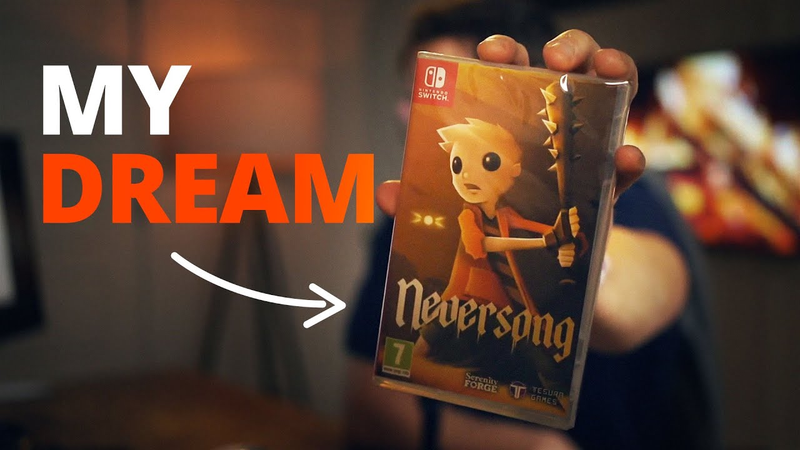
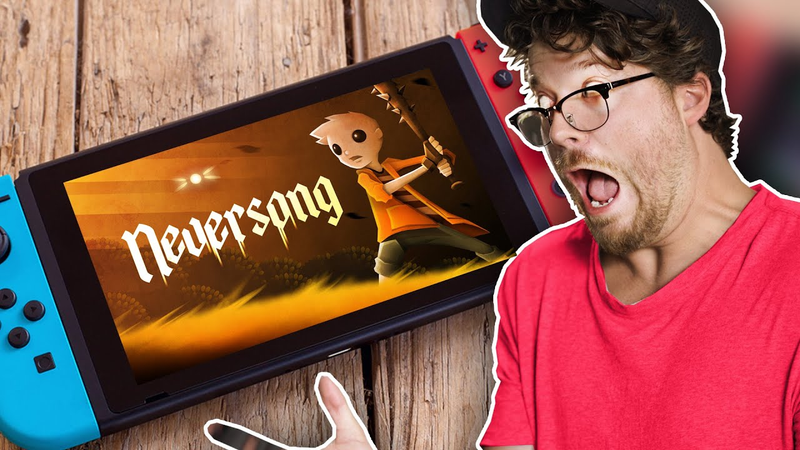
This is the Neversong Collector's Edition. This Not Neversong specifically, although to be honest this is actually a remake of my first game. This was in my head when I was 16 years old releasing a physical copy of one of my games. Um So I want to show you this and by the way, I'm not pitching you this to buy. You can buy it. [music] I don't really I'll be honest, I don't make much money off this. Um But really I want to show you guys the dream manifested and come to reality. I'm not going to promise that you can do it. I'm not one of those people. Just cuz I tell you that my dream manifested doesn't mean yours will. I'll be completely honest there. But I just want to say it happened. And it is real. It's totally real and it wasn't without hard work and dedication and more importantly, I guess humility. The humility to say I don't know everything and I'm going to learn from people. The journey was wild and crazy, but I
want to show you that journey in a box. Pretty cool. It's a little beat up because it came from Europe. So, this is actually the Europe edition. Don't quote me on this, but I believe you can play the Europe edition on in America. Um, so let's open it up, guys. [gasps] What? There it is. Get in focus, boy. What are you doing, Pete? There we go. [laughter] Narisone Collector's Edition. Pretty cool. Hey, that's a good thumbnail. Um, there's the back. Come on. There we go. So, it looks great. The cool thing about this, guys, is I didn't have to do a lot of work for this. This is one of the benefits of working with a publisher. Uh, the publisher is Serenity Forge and also Tessera Games. Is that how you say it? Tessera Games? So, they just worked with a lot of the artwork I had available in like my press kit and they [music] just put it together on this Switch copy. So, it looks great. They did a really, really good job.
So, there's the Switch copy. Let's see what's inside here. [music] Ooh, this is one of my favorite things. The reason why this is the Redwood Field music. The reason I love this is because I didn't write any of this. Even though I wrote the soundtrack, I didn't write any of this. This was a friend of mine who wrote this. He What I mean is, he transposed what I had played. So, I know how to play piano. I don't know how to read it or write it. So, he transposed what I had written for Redwood Field. Gordon, go ahead and play the Redwood Field soundtrack while we talk about this. Um, and also put Chris's name on screen. Ask me what that is. Pretty cool. I like that. Maybe maybe find a frame that, put it at your piano if you got one. Let's take a look. What else we got in this beautiful little box here?
[gasps] What? [laughter] This is a poster from illustrated by my buddy Pete Cooper. Pete Cooper was a Blizzard artist. And guys, he did this work pro bono. So, thank you, Pete. It means a lot to me, buddy. I still got to get you a copy of this. Um so, we need to talk on Discord, but there's the Never Song poster. Beautiful. I wish it wasn't folded, but that's the way it goes. I love that. That's beautiful. Here, what else we got? What? Never Song OST. I'm going to put that in my CD player. I just got to go to the dump and find it. Um so, there's There's the tracks. There's the back.
Again, artwork from Pete Cooper. Beautiful work. Beautiful beautiful work. And beautiful music if I do say so myself. That was mastered and ready to go. I believe that was mastered or that we might be mastering the vinyl. I'll show you guys the vinyl soon. And what else we got here? Oh my goodness gracious me. We got us some coma cards. So, in the game, this is what's cool is in the game you collect coma cards. It's kind of like Pokémon cards. But, the collector's edition includes these cards. So, what's really really funny about this, this is prob- it is my fault. Um one of these cards has a character that's not in the game. Actually, he might be in the code base. He just doesn't show up everywhere in the game. But this is Pete. You know, we got Pete here. We got Ganboisa. We got [music] Punkey. Come on, Thomas. Punkey.
That's Gunkey. There's Ren. [music] There's Dr. Smile. There's the Granny. There's Preston. There's Simeon's mother. And then this guy. What? His name is Gross Boy. I don't I honestly don't even know who that is. But [laughter] it's pretty cool. Like there's a character that's not even in the game. Um so there's a set of coma cards. And then last, but certainly not least here, little pin of little Pete ready to get put on your book bag so you can show off to your friends. I asked this to I asked my wife to put this on her purse. I said, "Put that on your purse, honey." She said, "No." I said, "Why?" [music] She said, "Cuz it's an expensive leather bag." So she's not going to do that. Um So there you have it, guys. That is the Never Song Collector's Edition. Really, really excited and proud about this.
Um I'm not proud of a lot of things, but I am proud of this. Because and I feel like I'm allowed to be proud about it because this was a big team effort. And it's one of the reasons why you want to do great great 2D art for your game. If you're making a 2D art game, having [music] a lot of original work that looks beautiful. And you know what's cool is the way that I do my artwork, it's very simplistic. See? Very, very simplistic. Look at Pete's head. It's just a simple circle. His eyes are a circle. His mouth is a circle. His arms are rectangles. His shirt is rectangles. His hoodie is literally just an oval behind him. And even Ren is an oval or a or or a circle. This wouldn't have happened without you guys. You guys were supportive of me when I was making Never Song. But more importantly, uh this is really important to remember. Um this is why you get a publisher. Because y'all aren't going to do this, most likely. Most of you don't even know
how to do this. I don't know how to do this. My publisher helped me do this. And I'm super blessed, super super lucky to do what I do and also look at that right there. [music] That's that's something special for me to look at. It feels really good to show off, too, to your friends. [music] Um but I'll talk to you guys later. Be sure to subscribe for more videos like this about indie game development. Leave a like. Leave a comment below. And yeah. I'll talk to you guys later. Cheers.
Summary
The primary purpose of this account is to document the realization of a long-term professional goal: the production of a physical collector’s edition for an indie game. By showcasing the physical components of the Neversong Collector’s Edition for the Nintendo Switch, the narrative serves as a case study in the culmination of a sixteen-year career trajectory. The central thesis emphasizes that while achieving such milestones requires significant hard work, dedication, and the humility to seek external expertise, the process is often facilitated by strategic partnerships rather than individual effort alone.
Key findings center on the logistical and creative benefits of collaborating with publishers, such as Serenity Forge and Tessera Games. These partnerships allow developers to leverage existing assets—such as press kits and original artwork—to create high-quality physical merchandise without requiring the developer to manage complex manufacturing or distribution processes. The collector’s edition includes curated items such as a musical score, illustrated posters, physical trading cards, and pins, all of which demonstrate the value of maintaining high-quality, original 2D art assets throughout the development cycle.
The scope of this experience is rooted in the independent game development sector, specifically focusing on the transition from digital-only releases to physical retail products. The methodology highlights the importance of professional networking and the delegation of specialized tasks, such as music transcription and professional illustration, to collaborators. Ultimately, the account concludes that while individual creative vision is the foundation of indie game development, the ability to scale that vision into a tangible, commercial product is heavily dependent on collaborative infrastructure and the willingness to outsource production to experienced industry partners.














Comments