ReportVideo Games Europe
Transparent and Fair Purchases of In-Game Content
1 Apr 20244 pages~10 min full read
The initiative seeks to ensure that European players can make informed, transparent decisions when purchasing in‑game content, while safeguarding minors from unintended spending. It builds on the PEGI Age Rating System, now operating in forty countries, and introduces a three‑part policy framework: the PEGI Code of Conduct for purchasable content, additional safeguards focused on younger players, and coordinated information campaigns supported by trusted data.
Statistical evidence shows that 20.8 % of all games receiving a PEGI rating include in‑game purchase options, with 3 % offering paid random items such as loot boxes. An annual Ipsos survey commissioned by Video Games Europe from 2018 to 2024, covering the five largest European consumer‑spend markets, reveals that parental supervision remains high—95 % of Swedish parents monitor spending—and that 76 % of parents report their children do not make in‑game purchases, a figure stable since 2020. Average spend among permitted purchasers fell 21 % in the Netherlands since 2023, and only 11 % of players aged 11‑64 have bought in‑game currency across the surveyed regions.
The PEGI Code of Conduct obliges signatories to display a dedicated icon at the point of purchase, provide receipts, and clearly state the real‑world cost of any virtual currency. For paid random items, it mandates visible notices, confirms that such purchases are optional, and requires transparent probability disclosures in line with data‑protection laws. Additional safeguards include parental tools that default to zero spending for child accounts, separation of transaction interfaces from gameplay, and refund mechanisms for unauthorized purchases. Policies also prohibit the use of in‑game assets for illegal gambling or unauthorised trading, with enforcement powers vested in the PEGI Enforcement Committee.
Information campaigns, such as the Pan‑European “Seize the Controls” effort, aim to raise awareness of these tools and safeguards in national languages, leveraging partnerships with Safer Internet Centres and other stakeholders. The industry welcomes further support from EU institutions and member states to amplify outreach and reinforce responsible spending practices across the European gaming ecosystem.
Video Games Europe · 2026

Video Games Europe · 2026

Video Games Europe · 2026

Video Games Europe · 2026

Video Games Europe · 2026

Video Games Europe · 2026
Video Games Europe · 2025
Video Games Europe · 2025
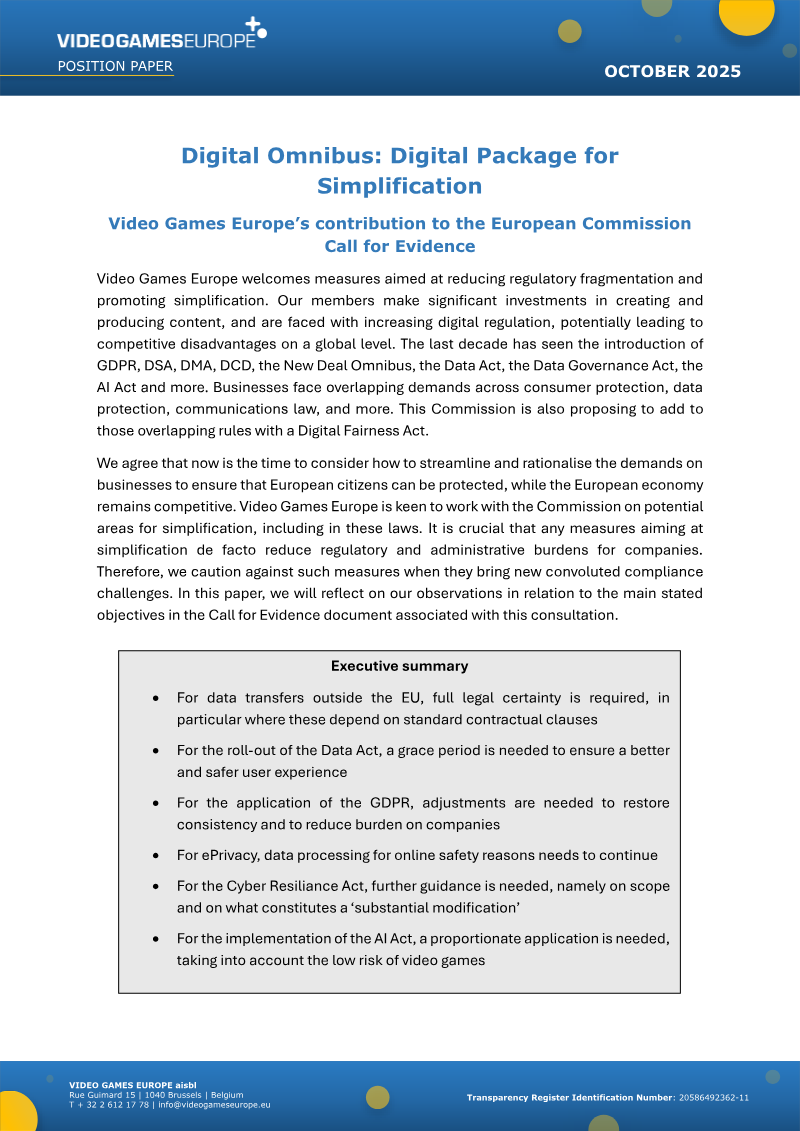
Video Games Europe · 2025
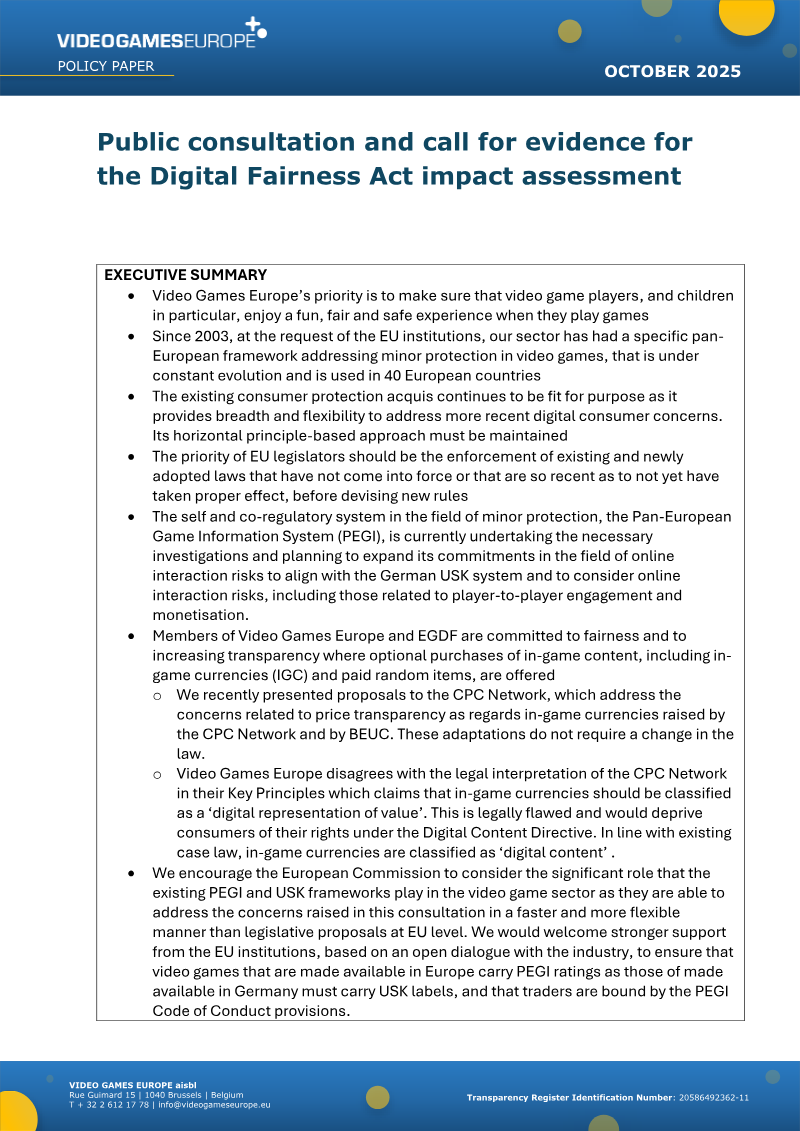
Video Games Europe · 2025
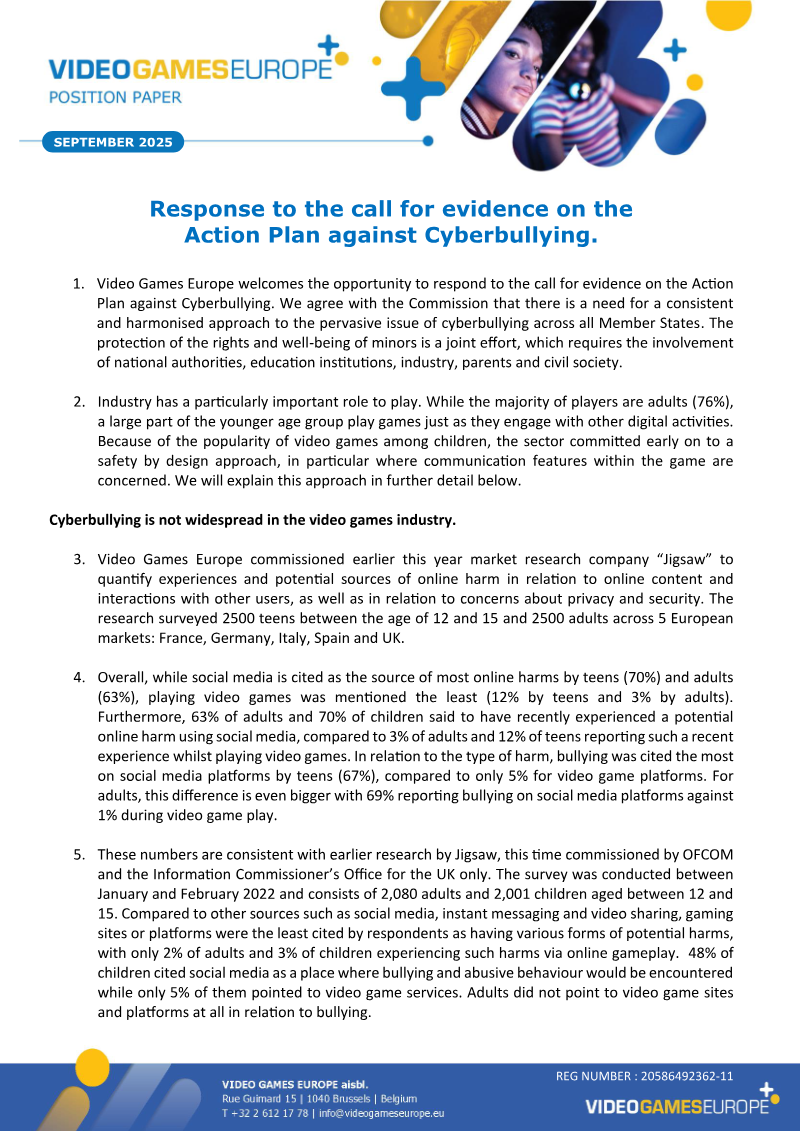
Video Games Europe · 2025
Video Games Europe · 2025
Sensor Tower · 2023
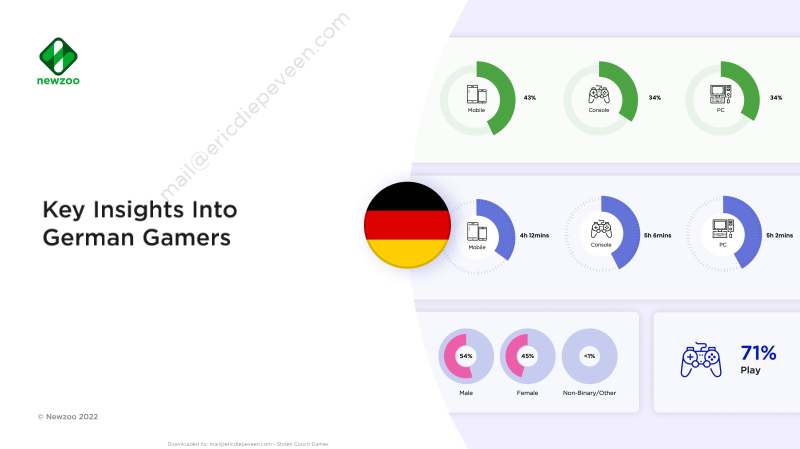
Newzoo · 2022
Bandai Namco · 2021

GDACZ – Czech Game Developers Association · 2020
Institute for Digital Economy · 2019
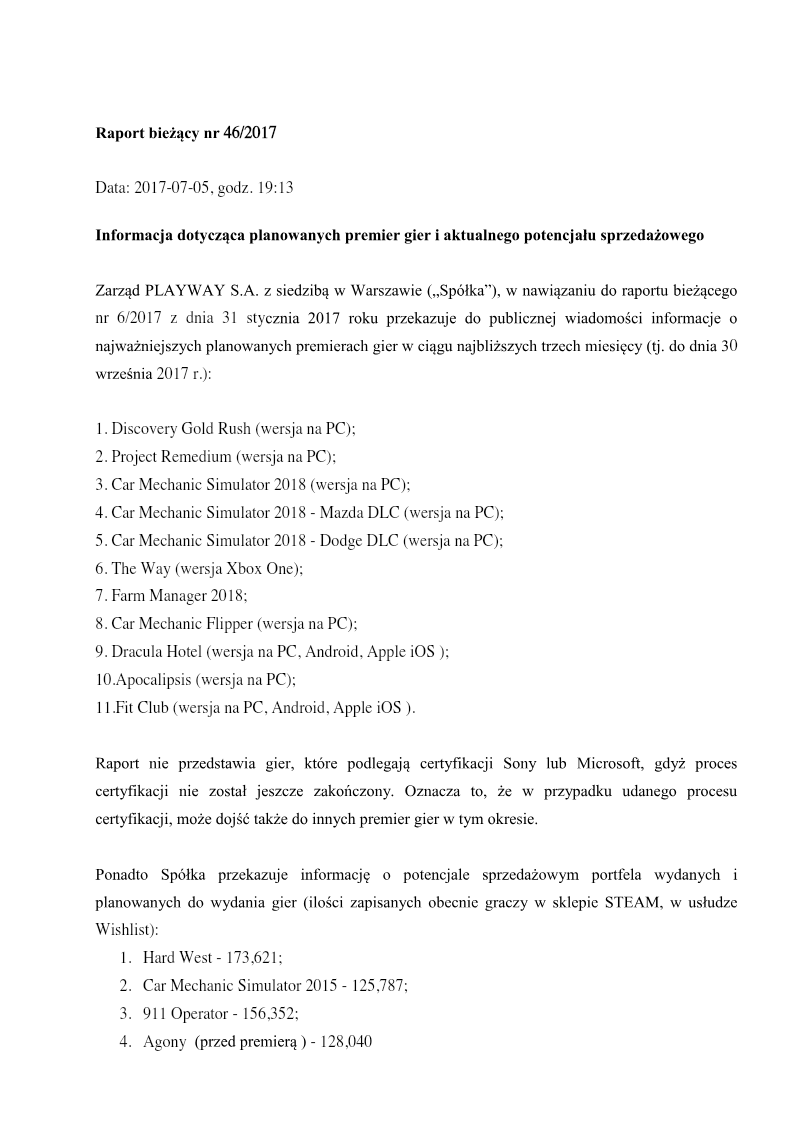
PlayWay · 2017
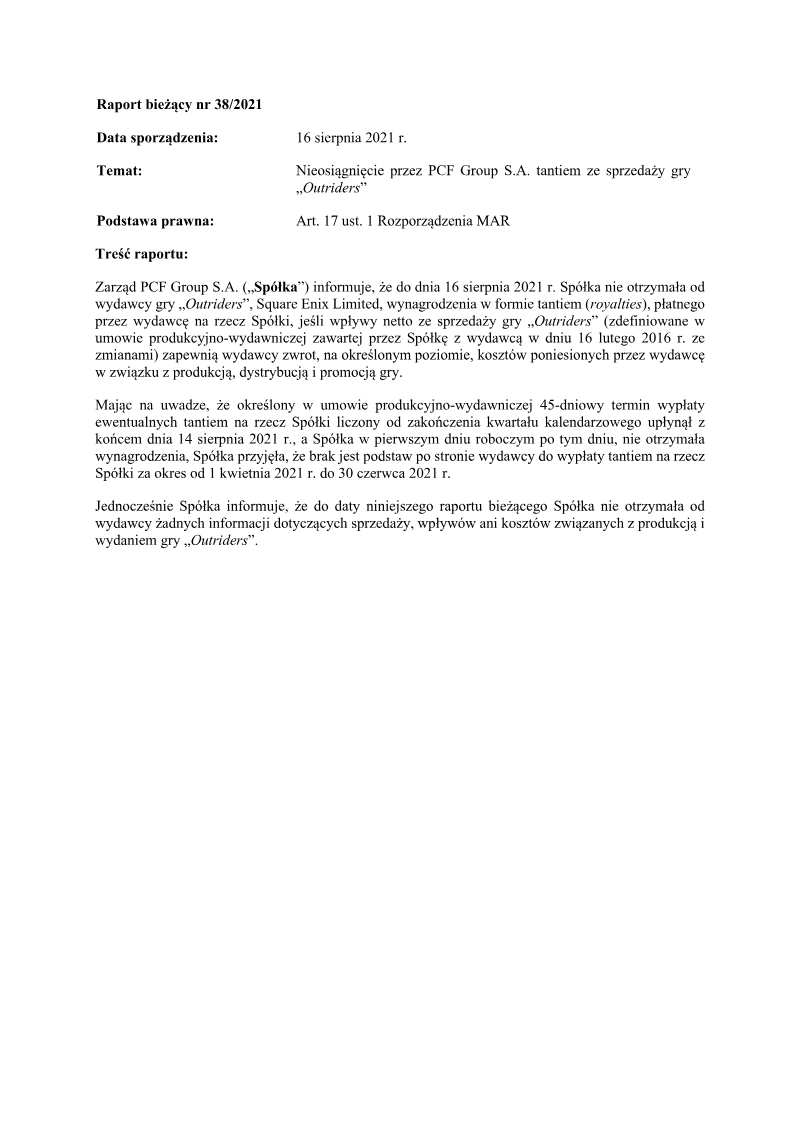
PCF Group
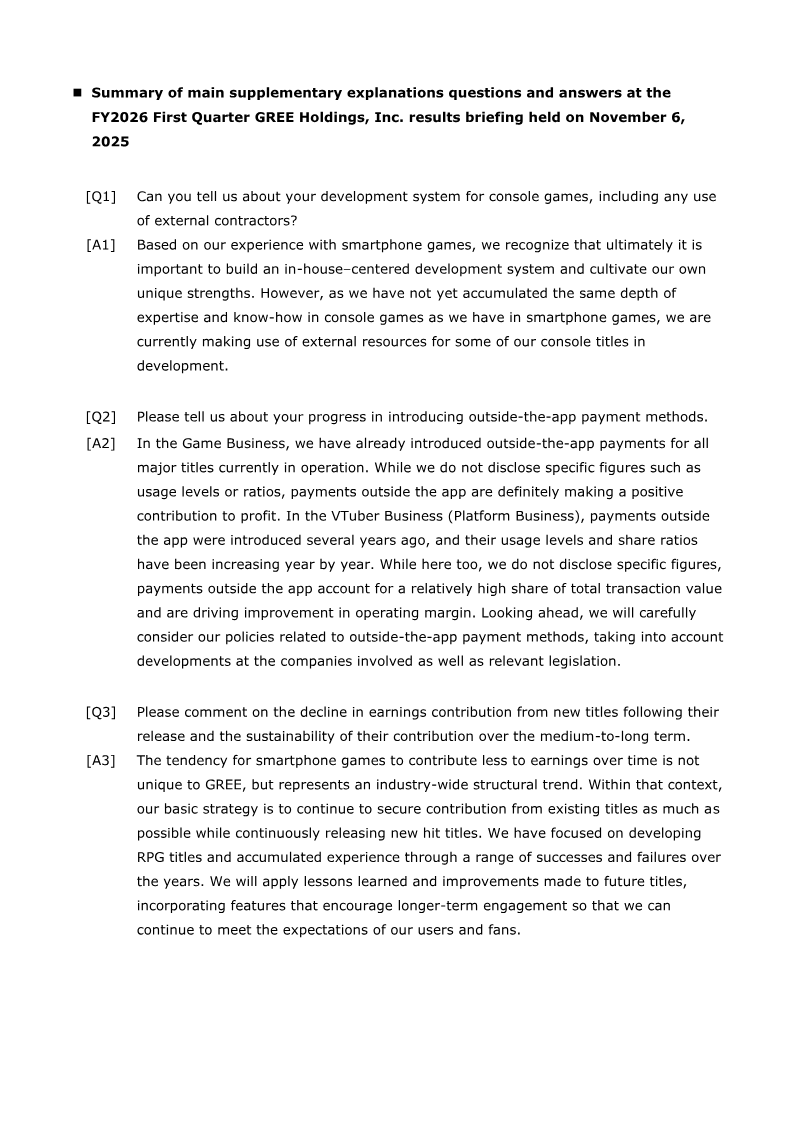
GREE
IIDEA – Italian Interactive Digital Entertainment Association
GREE

King · 2026

Almedia · 2026