1 free read left. Create a free account for unlimited reading + AI research.
Create free account
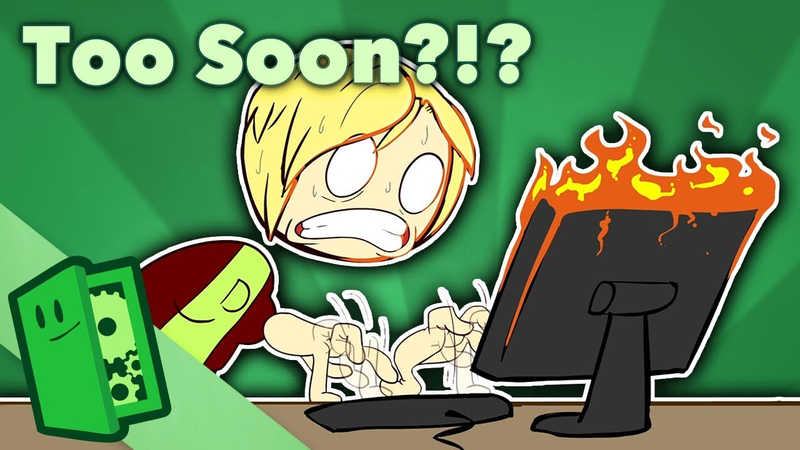
Too Soon?!? - The Challenges of Early Builds and Game Demos - Extra Credits
Key insights
6 takeaways- 01Studios avoid releasing early builds as a practical necessity, as the high cost of production and the lack of a cohesive product until the end of the cycle make early public access technically and operationally unfeasible.
- 02Game development is characterized by a fluid, incomplete state where core components are frequently missing or subject to total removal until the final stages of production.
- 03Early trailers and promotional materials often consist of isolated, temporary assets rather than a functional, unified game, creating a disconnect between public perception and the actual state of development.
- 04Creating playable demos for industry events like E3 forces developers to divert resources toward temporary hacks and workarounds that are discarded immediately after the event, hindering core progress.
- 05The burden of preparing public-facing demos falls heavily on build engineers, who must stabilize a volatile, daily-changing internal codebase at the expense of long-term project development.
- 06Sequels rarely benefit from a head start because developers frequently use them as opportunities to refactor core systems and rebuild foundational engine elements to meet evolving industry standards.
Ask AI about this video
Transcript
It's safe to say no one likes to wait. We all want access to things as soon as possible, particularly entertainment. New movies, TV series, and of course games. We're so excited that we'll even settle for previews of the end product, allowing for it to be incomplete. For example, trailers of movies without the final sound or post effects, a few scenes from an upcoming TV series, or maybe a playable level from a game, or even just a demo of some key mechanics. All this builds up the hype, but it comes at a cost, and one that usually isn't talked about. So today, we've enlisted Curtis, a fellow who worked at NASA on satellite systems before becoming a network programmer on EverQuest, and spending the next 15 years in the industry, to help us talk about it. When it comes to seeing previews of games we're excited about, we all say we'll make allowances for the product not being finished yet, suspending our final judgment in deference to the potential. But in all honesty, this is
kind of a lie we all tell ourselves, and I'm no different. And while we partially covered this in the episode about early access games a bit ago, I think it's worth drilling down into a bit more. The first big misconception about games is that games spend a lot of time in an unfinished state, rather than an incomplete one. Unfinished has the implicit assumption that we know where we're trying to get to, kind of like a road trip. But game development is never like that. You probably have a solid idea and a plan, but it never survives contact with the development team. Incomplete, on the other hand, means just that. All of the pieces don't exist yet. And the missing ones? We might have no idea what they look like. In fact, even some of the pieces that are already completed might be wrong, or in the wrong order, or might end up being taken out entirely. And unlike television or books, games stay in this incomplete stage a lot longer. It's not at all uncommon for a game to to three quarters of the way through their development cycle and still be incomplete. Another big misconception about incomplete games
is that they can be played at all. Of course, some parts can, and it's true most studios try to get a vertical slice or internally playable demo running as an early to mid-project milestone, but that's not always feasible or representative of the final product. And even if it does exist, all the interesting in-development work is usually only accessible through what amounts to a developer's kit and usually requiring access to studio-only assets on private file systems. Not to mention with the lack of a usable UI, usually a game relies on debug or console commands that are completely undocumented and known only to the team. The art, sound, animation, models, and writing is all in flux and in need of polish. It's not something you'd really want to see. And those early trailers that make you so eager to get your hands on a game, they're usually cobbled together from resources and small snapshots of posed and constructed gameplay. Cut together to look like a cohesive experience. But really, it's not. The game you see in
teasers doesn't exist, at least not yet, and certainly won't be representative of the current state of development when the trailer goes live. So, don't feel too let down that someone, somewhere, is playing the game you're waiting for. Next, let's talk about how E3 and other similar trade show demos work. Because in some ways, they're kind of the worst. They often take away a ton of time from actually working on the game. And instead of working on the core development, you end up doing a lot of hacks and workarounds that would never make it into the final build to make a small section of the game seem like it's great, so long as no one's looking under the hood. And that requires time, a lot of it. In fact, besides just the work being done on the demo, many studios have someone whose title is build engineer. And boy, is that person busy. Mostly fixing the fast-moving target that is the internal build, which changes and breaks on a near-daily basis as the game is developed. The last thing you want to do is bog down the
development process by stopping it for a week to package up a release that is guaranteed just to be thrown away after the demo, along with the temporary and placeholder assets that inevitably needed to be a part of it. Lastly, let me clear up a misconception about sequels. Many people think that when working on a sequel to a popular game, especially if it's going to release on the same generation platforms, we basically start with 70% of the work already done. This is almost never true. Of course, working on a sequel means you'll inherit some things that make development easier, but when work on amazing game the sequel begins, we usually use this as an opportunity to fix or refactor large chunks of the game, really ripping the guts out of it, and usually doing major upgrades to the game's engine or third-party software that is just too risky or time-consuming to justify doing on the original. Sometimes, the team will even start from relative scratch, pulling in systems and assets from the original, but functionally creating a
new game. And we do this because we have to keep up. As tools and engines are improved, we have to incorporate those improvements or match them in our own development to make that sequel, which most consumers think of as the same, on par with all of the other games being released a year or two down the line when it finally comes out. So, while fans often ask why they can't get their hands on a game as soon as the first trailer goes live, or why it needs another 2 years in development after the first teaser comes out, just know that the studio is not being secretive to be mean or detached. There are practical reasons of time and cost, but really, it's the fact that the game in that teaser that made you want to play it so badly probably won't even exist until very soon before for day, which keeps early builds from being released. And if all that waiting is still too much for you, just do what Zoe and I are doing while we are patiently waiting for Kojima to drop Death Stranding. No, not eat mice. What
I meant get to work on your Steam backlog. Seriously, you got to learn to read the room a little bit.
Summary
The game development process is frequently misunderstood by the public, particularly regarding the state of a project during its production cycle. While consumers often perceive games as being in an unfinished state—implying a known path toward completion—they are more accurately described as incomplete. In this phase, essential components may be missing, incorrect, or subject to total removal, with many titles remaining in this fluid state until the final stages of development. Consequently, the polished, cohesive experiences presented in early trailers are often constructed from isolated, temporary assets that do not represent a functional, unified game.
The pressure to provide playable demos for major industry events like E3 creates significant operational challenges. Preparing these demos requires diverting resources away from core development to implement temporary hacks and workarounds that are discarded immediately after the event. This burden falls heavily on build engineers, who must manage the volatile, daily-changing internal state of the game. Diverting the team to package a stable, presentable build for public consumption is often counterproductive, as it halts progress on the actual game and necessitates the creation of placeholder content that serves no long-term purpose.
Furthermore, the assumption that sequels benefit from a head start is largely inaccurate. Developers frequently use sequels as opportunities to refactor core systems, upgrade engines, or rebuild foundational elements to remain competitive with evolving industry standards. Because these technical overhauls often require starting from scratch, the development timeline remains extensive. Ultimately, the reluctance of studios to release early builds is a practical necessity driven by the high cost of production and the reality that the final, cohesive product does not exist until the very end of the development cycle.
















Comments