1 free read left. Create a free account for unlimited reading + AI research.
Create free account
The Witcher III: Wild Hunt - Best Detective Game Ever Made - Extra Credits
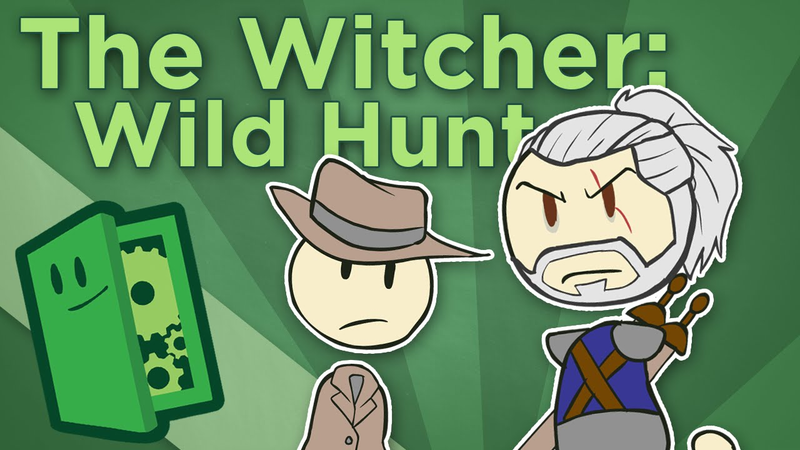
Key insights
6 takeaways- 01By positioning the protagonist as an ostracized outsider, the narrative effectively mirrors the private eye archetype, allowing players to navigate both high and low social strata.
- 02The game incorporates raw social commentary by addressing uncomfortable realities like domestic abuse, PTSD, and systemic prejudice through the experiences of marginalized characters.
- 03Marginalized figures such as laborers and sex workers are treated as individuals with agency rather than narrative props, grounding the game's social commentary in authentic human experience.
- 04The Witcher III successfully adapts the conventions of hard-boiled American detective fiction—characterized by moral complexity and gritty, character-driven narratives—into an open-world fantasy format.
- 05The game prioritizes self-contained, meaningful encounters over a singular linear plot, using the main storyline merely as a connective thread to maintain narrative momentum in an open-world environment.
- 06The structural lessons of 20th-century pulp literature, specifically the focus on individual scenes over final denouements, provide an effective framework for modern, non-linear game design.
Ask AI about this video
Transcript
The Witcher Wild Hunt is the best detective game I think our industry has ever done. Not the best crime game or the best investigation game, but specifically the best detective game. Or even more specifically, the best pulp detective game we've ever created. In fact, it steals so much from the form of pulp detective novels of the '20s and '30s that it's actually what I wanted L.A. Noire to be. I don't say this because you spend much of your time investigating crimes or figuring out murders, but rather because it borrows so heavily in terms of plot, theme, characterization, and even narrative delivery from early American private eye novels. Actually, this game is pretty much what would happen if you picked up a Dashiell Hammett or a Raymond Chandler story and just dropped it in a fantasy setting. But to talk about why this is rad, I first have to talk a little bit about the history of the detective novel. The detective novel as we understand it was basically born in the 19th century. Before that, no detectives, so no detective novels. Then in 1841, Poe brought us The Murders in the Rue Morgue. And here's where we get
the idea of the murder mystery as puzzle box. And this is actually incredible, the idea of being entertained by watching somebody perform astounding feats of logic. Conan Doyle then took this and gave it character and depth with Sherlock Holmes. And then it was off to the races. This led to a slew of English detective novels from authors like Agatha Christie and Dorothy Sayers, which sort of established what detective fiction was. It was a puzzle. It was about coming up with more and more elaborate methods to commit a crime. But more than that, these novels were about the gentry, about the English upper class. They often took place at somebody's country estate or in some tiny English hamlet where the mere scope of the setting could limit the number of suspects. The murder itself was whitewashed. There was no grieving, no moral revulsion. Usually, a body turning up did little more than interrupt a dinner party. The detectives themselves were often dilettantes, rarely asking for payment for their services. The police were often bumbling, but never corrupt, and society always stayed the same. But in America, a few authors began to rebel against this tradition.
They felt that the detective novel had become completely divorced from the world they saw around them. And here's where we get back to The Witcher. In these American pulp detective novels, or hard-boiled detective novels, or private eye novels, whatever you want to call them, the authors decided to move away from the wealthy dilettante and make the central character an outsider, somebody ostracized by society, but also not within the bounds of common society, and so able to move between high-class and low-class with ease. Geralt, the world is always a world of upheaval. It's not the timeless aristocratic society of England, but the rough-and-tumble society of America, where everyone's either on the make or on their way down. The state of war and flux in The Witcher leaves practically every character in this state, and Witcher 3 specifically goes out of its way to show us advisors to kings and powerful nobles hiding out as country herbalists, or reduced to being petty crime lords. And these hard-boiled detective novels began to focus on a world that really did include the poorer and seedier sides of humanity. Beggars, drunks, and prostitutes appeared in these novels, and they weren't just props or red
herrings. They were allowed to have real character, a real life within the story. These stories didn't shy away from talking about the real world, from making a social commentary through observation of the real world. These were authors not trying to preach to you, but rather trying to show things as they really were, and have that alone express the problems of the world. We see this in the broadest sweeps of The Witcher, with characters like the Bloody Baron forcing us to stare at domestic abuse, alcoholism, and PTSD, to more minor moments like the huntsman who makes us look at the horrific consequences of homophobia, as Geralt assumes that people are calling the huntsman a monster because he's a werewolf or something, when it's actually just because he's gay. The Witcher series may have its history of issues portraying women, and that's another episode altogether, but even with the prostitutes, rather than merely serving as sex objects, you can talk to each of them a bit about their lives, and if you do, you get everything from the prostitute who calls you out for thinking what she's doing is wrong, to the one who hates her life, but doesn't feel like she has a choice. And sexuality in general in these hard-boiled novels is moved away from the vaguely implied or often the holy chaste world to something realer and
more raw, something shown and indulged in but also embraced as human, as something that motivates us, sometimes for the better, sometimes for the worse. Though I will confess I've yet to read a detective novel with sex on a stuffed unicorn. Then of course there's the depiction of Geralt himself, unflappable, sarcastic, taking pride in his work, a guy who can take a beating and give one, all essential traits of our hard-boiled detective. But more than anything it's the delivery of the piece as a whole that's lifted from hard-boiled fiction, and that's what drew us to do this episode, because this choice is brilliant. It's what makes The Witcher Wild Hunt. In fact, in many ways it reveals the key to delivering narrative in an open world game. You know what? Rather than talk about it myself, I'm just going to read what's probably the most well-known passage from Raymond Chandler's famous essay on the difference between American detective fiction and British detective fiction. This is from The Simple Art of Murder. The emotional basis of the standard detective story was and had always been that murder will out and justice will be done. It's technical basis was the relative insignificance of everything
except the final denouement. What led up to that was more or less passage work. The denouement would satisfy everything. The technical basis of the black mask type of story on the other hand was that the scene outranked the plot in the sense that a good plot was one which made good scenes. The ideal mystery was one you would read if the end was missing. Let me reread that last bit. This new type of mystery is one where the scene outranked the plot in the sense that a good plot was one which made good scenes. The ideal mystery was one you would read if the end was missing. I can't think of a statement more true and more essential to The Witcher. In this, the main storyline, as it so often is in so many pieces of American detective fiction, is simply a thread you follow to get from scene to scene. But it's all the little moments, it's all the disparate scenes that make it compelling. The human interaction with an old woman wanting to get her pan back, or the children in the countryside stealing chickens because they've lost their family. That's what you play The Witcher for. Those moments are what allow us no exit point. They're what allow us to wander our way through quest
after quest for hours at a time. It's the journey, not the way everything wraps up in the end. And as game designers, this was the piece they needed. If this had been a more traditional story, and if it all hinged on the denouement, it couldn't work as an open-world game. Understanding open-world storytelling as a series of scenes, and understanding the plot of an open-world game is something that enables the player to encounter incredible scenes, rather than something that directly drives the player down a linear path. That is what allowed CD Projekt Red to present such a vivid world, to make an open-world narrative work. And this scene-based approach works so well for The Witcher because all the other elements of their narrative already come from a scene-based storytelling style, that of the hard-boiled detective novel. So, with that, I would just like to end with the words that end The Simple Art of Murder. They describe how to put together a good detective for your mystery, but The Witcher 3 is such a pure distillation of the hard-boiled detective formula that these words written 65 years ago could just as easily have been the mantra CD Projekt Red used to create this incarnation of Geralt. Down these mean streets a man must go
who is not himself mean, who is neither tarnished nor afraid. The detective in this kind of story must be such a man. He is the hero. He's everything. He must be a complete man and a common man, and yet an unusual man. He must be, to use a rather weathered phrase, a man of honor. By instinct, by inevitability, without thought of it, and certainly without saying it. He will take no man's money dishonestly, and no man's insolence without a due and dispassionate revenge. He's a lonely man, and his pride is that you will treat him as a proud man, or be very sorry you ever saw him. He talks as a man of his age talks, that is with rude wit, a lively sense of the grotesque, a disgust for sham, and a contempt for pettiness. The story is his adventure in search of a hidden truth, and it would be no adventure if it didn't happen to a man fit for adventure. He has a range of awareness that startles you, but it belongs to him by right because it belongs to the world he lives in. If there were enough like him, I think the world would be a very safe place to live in, and yet not too dull to be worth living in.
That is how you build a character. See you next week.
Summary
The Witcher III: Wild Hunt represents a pinnacle of interactive storytelling by successfully adapting the conventions of hard-boiled American detective fiction into an open-world fantasy format. The game moves away from the traditional British "puzzle-box" mystery—characterized by aristocratic settings and bloodless, intellectualized crimes—in favor of the gritty, socially conscious, and character-driven approach pioneered by authors like Dashiell Hammett and Raymond Chandler. By positioning the protagonist, Geralt, as an ostracized outsider capable of navigating both high and low society, the game effectively mirrors the thematic depth and moral complexity of the private eye genre.
The core strength of this narrative design lies in its prioritization of individual scenes over a singular, linear plot. Drawing on the principles of hard-boiled fiction, the game treats the main storyline as a connective thread that facilitates meaningful, self-contained encounters. This structure allows for a more immersive open-world experience, where the player’s engagement is driven by the richness of the journey and the humanity of the characters encountered, rather than a singular focus on the final denouement. This approach addresses the fundamental challenge of open-world design: maintaining narrative momentum while granting the player freedom to explore.
The game further distinguishes itself by refusing to shy away from raw, uncomfortable social realities, including domestic abuse, PTSD, and systemic prejudice. By treating marginalized characters—such as beggars, laborers, and sex workers—as individuals with agency rather than mere narrative props, the game achieves a level of social commentary that feels both authentic and grounded. Ultimately, the game succeeds because it embodies the archetype of the honorable, lonely hero navigating a chaotic world, proving that the structural lessons of 20th-century pulp literature remain highly effective for modern, non-linear game design.


















Comments