1 free read left. Create a free account for unlimited reading + AI research.
Create free account
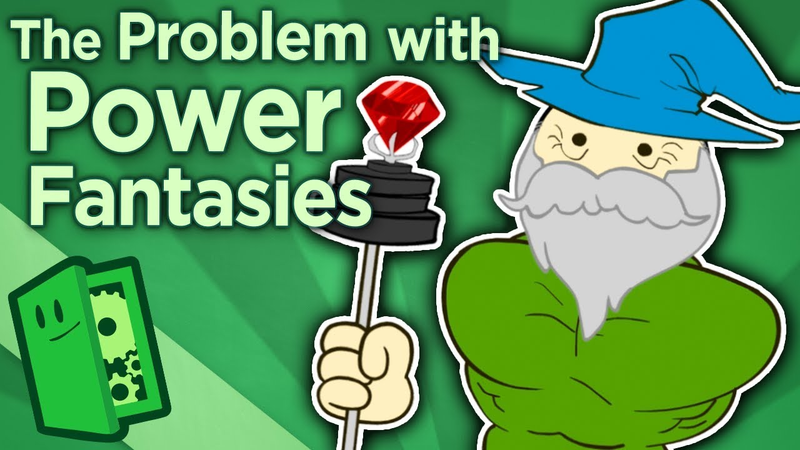
The Problem with Power Fantasies - We're Not Always Right - Extra Credits
Key insights
5 takeaways- 01When games do address morality, they frequently default to binary, cartoonish villainy rather than facilitating genuine ethical reflection.
- 02Integrating moral ambiguity and self-examination into gameplay does not diminish player enjoyment or the sense of power, but instead adds depth and thematic resonance to character arcs.
- 03Moving beyond the assumption that players are too fragile to handle moral complexity is essential for the medium to evolve into a more sophisticated storytelling format.
- 04The gaming industry’s reliance on 'power fantasies'—where players are always perceived as being in the right—limits the medium's narrative maturity and prevents the exploration of complex ethical themes.
- 05Games are uniquely positioned to foster self-examination because players act as the architects of their own on-screen behavior.
Ask AI about this video
Transcript
many if not most of the games we create indulge in some form of power fantasy a fantasy of having power or skill or influence beyond anything that we could realistically achieve in this world but there's one problem with a true raw power fantasy to really deliver on that the player must always be right I mean it wouldn't be a very effective power fantasy if as you were running and gunning along murdering everything in sight some guy popped out of the bushes to say record scratch hey buddy hello so tell me what you're doing I'm rampaging mmm sure but no like tell me what are you doing though I mean I'm huh it would be a buzzkill because in many of these power fantasy games stopping to think about what you're actually doing in the context of the story often reveals your character to be kind of a psychopath or at least a jerk like okay I wouldn't be the first to
point out that the original Uncharted Nathan Drake murders hordes of people just because they're standing between him and some money he's presented as the roguish hero han solo type in-game but really the lovable scamp's only there to find a treasure and he guns down hundreds of people to get it but it doesn't have to be about mass murder even consider RPGs like the Elder Scrolls where we can and do sneak around looting all of the peasants blind it is satisfying and extremely fun to do of course realistically my actions would almost certainly send entire villages spiraling into starvation and even more desperate poverty it's quite probable that scores of people would be falsely accused of my crimes and hanged but thinking about that quickly breaks the fantasy so understandably it doesn't really get brought up and a lot of the time especially in the elder scrolls case where that scenario Falls way outside the core experience that is honestly fine not every game is
obligated to second-guess it's fictional premise Miyamoto says jump on those mush men to save the princess from the turtle and we say can do but given that we have built so much of our industry on delivering this power fantasy type of experience it does concern me just a little bit that we've all embraced this unspoken rule that power fantasies are ruined by self-examination that merely questioning the rightness of what the player is doing stopping for just one seconds to ask wait a minute are we the baddies would just completely shatter the fantasy and drive players away now you might argue that hey there are some power fantasy games out there where it's made obvious that the things you're doing are evil and that's true but while those games do make you evil I would argue that they don't make you wrong those games aren't about questioning the heroism of your actions they're just about going whoohoo I'm evil now it's not about examining the ramifications of what you're doing it's just embracing the cartoonish supervillain flavor of power fantasy
here's the thing I think players can handle that self-examination and again it doesn't have to be a huge thing it doesn't even need to happen in every game but I'm willing to bet that having some character asked hey did we do the right thing here after mowing down thousands of sentient beings would not break the experience at all and what's more the answer to that question can even be yes it is totally legitimate to ask that question and then to answer yes whatever our specific cause is is worth the cost maybe that's the stance you want your game to take or maybe it's just the stance that character in question would take the answer isn't important what matters is the self-examination superhero comics started getting a lot better once they started asking these questions science fiction got a lot better once it started asking these questions heck even Game of Thrones is built on having characters face these questions I sometimes worry that this lack of self-examination this unquestioning
assumption of being in the right has kind of bled into our culture of it because it associates being wrong with being weak and critical examination of what you're doing with being in some way attacked it creates this idea that conscience is a check on power it's not though James spoke with a few friends who spent much of their time serving in the military and one of them said that really examining and understanding why he was there and what he was fighting for what gave him the strength to do impossible things day after day for years at a time more than that that the ability to see the flaws the things that weren't right allowed him to conduct himself in such a way that made things better and every time he didn't think he could get through one more day of it that is what he would try to remind himself but even more than that if we never stop to examine how are we gonna grow it's only by stopping to look at our situation that we have the opportunity to spot problems and it's only by being willing to admit that things aren't perfect or that we might
have been wrong that we're able to become better and come on games are the perfect medium for that sort of self-examination because we're participating in the actions occurring on the screen they are our own choices and I don't believe that gamers are so delicate that having one or two lines asking us to step back and consider what we're doing in play is going to somehow shatter the joys of these incredible gaming power fantasies I mean do we really want game companies to think we're that fragile did moments of self-examination ruin Logan or Captain America Civil War did they somehow wreck Battlestar Galactica or Babylon 5 did they instantly turn us against a rogue one actually heck I don't even have to look to other media for this a few games were already brave enough to try it did moments of self-examination ruined The Witcher 3 or blood-borne Mass Effect 2 battlefield 1 listen even with a tiny tiny bit of self-examination we can still feel powerful and awesome and we
can still totally enjoy our power fantasies and avoiding that tiny bit of self-examination only does us a disservice it denies us some of the incredible experiences that can come from just that little bit of additional meaning without it we miss out on all of that nuance and that variation that other media have enjoyed it's what gave them all kinds of interesting new stories we can handle it we're grown-up we don't always have to be right see you next week [Music]
Summary
The prevailing design philosophy in the video game industry centers on the power fantasy, a construct that grants players agency and influence beyond realistic limits. A core tenet of this design is the assumption that the player must always be perceived as being in the right to maintain immersion. When games force players to confront the moral ramifications of their actions—such as mass violence or looting—the industry often fears it will shatter the fantasy and alienate the audience. Consequently, many titles either ignore the consequences of player behavior or relegate moral choices to cartoonish, binary villainy rather than genuine ethical reflection.
This reliance on unquestioned righteousness limits the narrative maturity of the medium. By avoiding self-examination, games miss the opportunity to explore complex themes that have elevated other storytelling formats like literature, film, and television. Integrating moments of reflection, where characters or players must grapple with the morality of their choices, does not inherently diminish the sense of power or enjoyment. Instead, it provides depth and nuance, allowing for more compelling character arcs and thematic resonance.
The industry should move past the assumption that players are too fragile to handle moral ambiguity. Drawing parallels to military service and successful narrative franchises, it is clear that acknowledging flaws and questioning one's actions can actually strengthen a character’s resolve and provide a more profound sense of purpose. Because games are interactive, they are uniquely positioned to facilitate this self-examination, as the player is the architect of the actions on screen. Embracing this complexity is essential for the medium to grow, ensuring that games remain sophisticated, meaningful experiences rather than mere escapist exercises in unchecked authority.




















Comments