1 free read left. Create a free account for unlimited reading + AI research.
Create free account
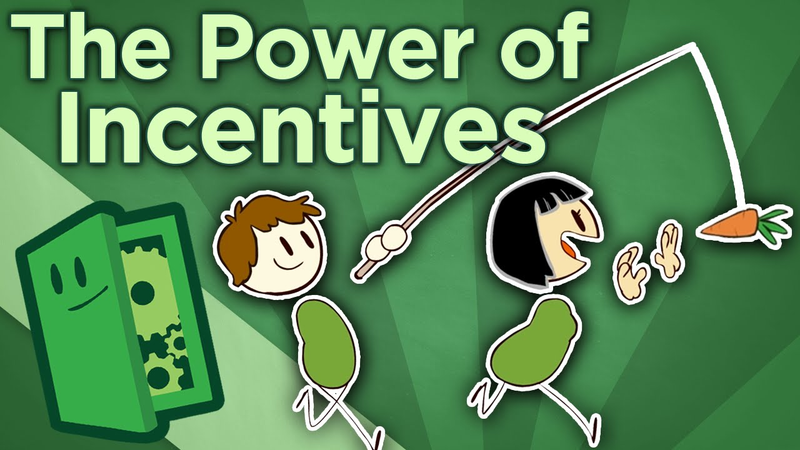
The Power of Incentives - How Games Help Us Examine Our World - Extra Credits
Key insights
6 takeaways- 01Games function as experiential tools that allow players to navigate complex incentive systems, revealing how well-intentioned policies often trigger perverse, unintended outcomes.
- 02By embedding systemic logic into mechanics, games foster critical thinking and allow individuals to analyze the flaws of real-world structures more effectively than passive observation.
- 03Historical examples, such as colonial-era bounties for cobras or rats, demonstrate how poorly designed incentives can inadvertently encourage the very behaviors they aim to eradicate.
- 04Early U.S. welfare systems serve as a case study for flawed policy, where the immediate removal of benefits upon gaining employment acted as a disincentive for low-income workers.
- 05Real-world policy failures, such as Mexico City’s environmental regulations that led citizens to purchase older, high-emission vehicles to bypass restrictions, illustrate the danger of ignoring human behavior in systemic design.
- 06Interactive simulations like 'Prison Architect' and 'Fate of the World' force players to balance competing pressures, such as profit motives versus ethical welfare or technological implementation versus infrastructure requirements.
Ask AI about this video
Transcript
Our world is run by incentives, and games are the perfect tool for showing us how. Not wholly, but in the big complex machine that is modern society, how we incentivize things drives on a macro level a lot of what goes on. The problem is we don't always incentivize things right, and we don't always realize what we're incentivizing. Actually, heck, sometimes things just are not thought through at all, and no one's even really considering what they're incentivizing. But you know what else runs on a system of interlocking incentives? Video games. One of the most powerful things a game can do is help us to understand the kinds of decisions that human beings make given the web of interlocking incentives they're faced with. So when designing a game experience, rather than beating the player over the head with what the designer may think is some grand message, often the best way to get people to understand the world and some of the deep-rooted problems within it is simply to build it into the game's incentive systems. Human beings have
always been bad with incentives, getting ourselves into all sorts of situations we don't intend to because of how we try to direct how groups behave. Back in colonial India, the British decided that there were too many cobras slithering around. So they offered a bounty for cobra corpses. At first this seemed to work, but actually it just led to people setting up cobra farms, breeding them, and turning them in for the bounties. Obviously, as soon as the British figured this out, they canceled the bounty, which caused the cobra ranchers to just release their now worthless cobras, and now there were even more cobras in India than there had been before. In Vietnam, there's an even better attested example of the French doing the exact same thing with rats. They put out a bounty for rat tails, so rat catchers would now simply clip the tails of the rats they caught rather than killing them before releasing them back into the wild so that more of them would breed. For some more modern examples, well, how about the welfare system? Now I am 100% in favor of a social safety net, and there's a lot of economic evidence that it actually
benefits everybody to have that sort of system in place, whether or not you ever end up collecting a welfare check yourself. But, it's one of those systems where, at least in its early forms, nobody in charge seemed to be drawing the connection between the goals they were trying to achieve and the incentives they were putting into place. Imagine a system where you got to collect welfare money up to whatever amount would take you right above the poverty line each year, enough to make sure that you didn't starve. I am sure that some of you are already seeing the potential problems here. Let's say that the poverty line is $20,000. Well, the minimum wage in the US is $7.25. So, if you work a full-time job at minimum wage, you will make $15,080 a year, which falls below that poverty line, which means that under this system, you bring in a total of $20,000. Congratulations, you have just worked 2,000 hours this year and not made a single cent more than you would have if you hadn't worked at all. In fact, you probably made less since the income you did bring in might cause a decrease in other benefits you receive, like
Medicaid. So, unless you could find yourself a job that paid like 30,000 or more a year, it was not worth finding a job at all. And that's just not how getting out of poverty works. And while that may sound insane, that's pretty much how Aid to Families with Dependent Children, one of the largest parts of the US welfare system, worked all the way up until the 1980s. What they eventually realized is that by being more generous and not reducing people's benefits as they started bringing in a small income, you actually pay out less in welfare benefits over the long run because it encourages people to get that first job and get some experience on their resume so that they're able to make the step up to bigger and better things. So, if the goal is to spend as little as possible to help get people back into the economy of society, the incentives that they had originally set up were all sorts of wrong. Or, how about this one? Smog in Mexico City. In the 1980s, smog in Mexico City was terrible. So, in 1989, they passed a law called you don't drive today, which basically stated that each day of the
week, if your license plate ended in specific numbers, you couldn't drive. So, maybe plates ending in a three or an eight can't drive on Saturday. Well, since it was tied to license plate numbers, people came to an easy solution, buy a second car with a different number. But, since you only had to be driving that car one day a week, what most people ended up doing was buy the dingiest, cheapest old beater they could find. And now, instead of cutting traffic by 1/7, Mexico City had just converted 1/7 of the vehicles on the road at any given time into the worst polluting, least environmentally friendly junkers possible. Now, games are great at helping us to see and understand perverse incentives. And that's really valuable because sometimes it's not that the world's incentive systems are designed wrong by mistake. Sometimes it's that a small group of people who have influence over something think they can pull a fast one on society because no one's going to see what their incentive systems really mean. And showing this is where games really shine. Take Prison Architect. It
doesn't overtly say anything about the US prison system. It doesn't make any moral judgment about for-profit prisons, but as you play it, you start to feel the pressure of the incentives. You start making choices to value profit over the welfare of the prisoners. Or, if you don't, you find yourself struggling against the system to do so. And you can't help but start seeing and thinking about the questions these systems raise. Is it a perfect simulation? Well, no. It shouldn't be. It's meant to engage you thinking about these problems, not be a system where if you just play long enough, you'll find the perfect solution for America's prisons. But, just the same, it's a jumping off point to start pondering in the broadest sense what some of these incentive systems might cause in the real world. And when games do go deeper, they can make us think about how the interlocking systems of our world interact. Back when James was teaching, he used to show students Fate of the World, a game about climate change. And one of the first things that students would try to do was incentivize people switching to electric cars, much like we've done in the real world. But then
they would be shocked to find that their carbon output had barely changed, because it turns out those cars have got to get their electricity from somewhere, and these students' countries were still generating that electricity with coal-fired power plants. This was an eye-opening experience. And because it's done in a game, you as the player feel out these different systems and find yourself walking down the wrong path because you didn't think deeply enough about them. These games get us to explore those systems and think about them in a radically different way than simply having them explained to you would. So if you want to make a game showing the consequences of, say, having a largely unregulated financial sector, or maybe showing what unlimited anonymous campaign donations might do to democracy, simply preaching that message and hammering it into the player might be a less effective approach than presenting players with a rough version of the incentive systems that exist and letting them form their own conclusion as they interact with them. Because experiencing the consequences and the insidious pull of incentives firsthand is something games are uniquely qualified to offer. It's one of our
greatest strengths. Of course, simply experiencing a simulation of a bad incentive structure isn't where the exploration of those problems should ever end, but if you want to make a game to get people thinking, letting them experience firsthand the consequences of some of these incentive systems we've set up in the world might be the best way. See you next week. Oh.
Summary
Games serve as a powerful medium for examining the complex, interlocking incentive systems that govern modern society. By allowing players to navigate these systems firsthand, games can illustrate how well-intentioned policies often produce perverse outcomes. Rather than relying on didactic lectures, game design can embed real-world logic into mechanics, enabling players to discover the unintended consequences of specific rules through trial, error, and personal decision-making.
Historical and modern examples demonstrate the prevalence of flawed incentive structures. Policies such as colonial-era bounties for cobras or rats inadvertently encouraged breeding rather than eradication, while early welfare systems in the United States often penalized low-income workers by removing benefits as soon as they gained employment. Similarly, environmental regulations in Mexico City led to increased pollution when citizens purchased older, high-emission vehicles to circumvent driving restrictions. These cases highlight how failing to account for human behavior within a system can exacerbate the very problems a policy aims to solve.
Games like Prison Architect and Fate of the World exemplify how interactive simulations force players to confront these systemic pressures. In these environments, players experience the tension between profit motives and ethical welfare, or the realization that technological solutions like electric vehicles are ineffective without corresponding changes to energy infrastructure. By placing the player in a position of agency, games provide a unique, experiential understanding of how societal systems interact. This approach encourages critical thinking, allowing individuals to identify and analyze the flaws in real-world structures more effectively than passive observation, ultimately serving as a vital tool for social and political reflection.


























Comments