1 free read left. Create a free account for unlimited reading + AI research.
Create free account
The next generation of mobile esports
Key insights
6 takeaways- 01Mobile esports is transitioning from a niche category to a professionalized industry with distinct profit-and-loss models that mirror traditional sports.
- 02Industry growth is increasingly dependent on securing non-endemic partnerships with mainstream brands rather than relying solely on traditional hardware and telecom sponsorships.
- 03Mobile esports viewership now frequently rivals or exceeds that of established PC and console titles, driven by the ubiquity of mobile devices and a lower barrier to entry.
- 04The shift from 4G to 5G technology is critical for competitive viability, as 5G reduces latency from 50–80 milliseconds to under 10 milliseconds while resolving bandwidth congestion at live events.
- 05Developers are prioritizing the expansion of high-skill competitive titles across the MOBA, FPS, and RPG genres to solidify the sector's professional standing.
- 06The maturation of a demographic that views mobile as their primary gaming platform is the primary driver for long-term viewership and competitive prominence.
Ask AI about this video
Transcript
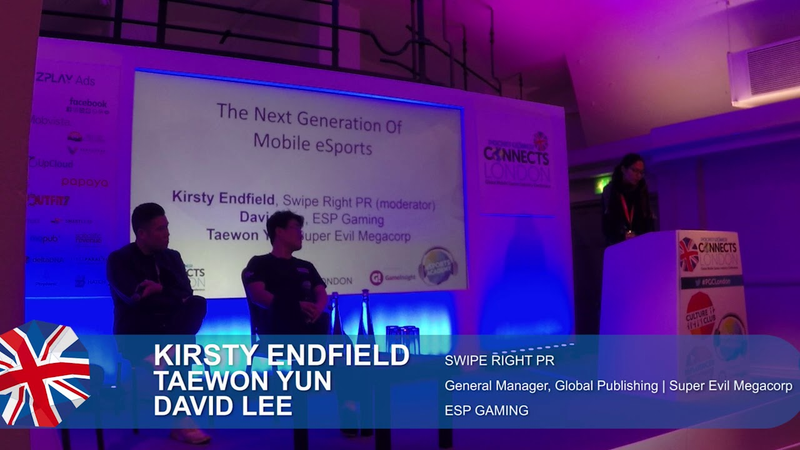
[Music] [Music] so I'm very very aware that we are standing in the way of your lunch so I'm gonna save you all the formalities of introductions but we're actually going to do a bit of a deeper dive following on from James's interview not that we plan that but it's that's a nice follow on so we're going to touch on items like brand partnerships 5g new hardware launches that are having a significant impact on mobile eSports and how they're sort of shifting the dynamic for the industry at the moment so I'd like to introduce you to Taiwan the global weight general manager of global
publishing for super evil and David Lee the VP of Operations VSP gaming perhaps guys you could share a quick overview your background your experience and also how you feel the industry is evolved over the last few years so hey I'm fair one you and from Spyderco before I studied with them speak evil I'm like I have roughly 20 plus years of experience in gaming I'm actually the one of my first external game conference was actually that one of the first is ETS in London in back in 1997 ish that was before I released the but as this small game called start drafting in Korea so that came somehow like grew into am like TV and entertainment I'm in Korea like around year 2000 ish and then since then
I worked on my world of warcraft start of to Diablo 3 and move on to wargaming and worked on the world would tank so I'm kind of like I'm like leave through this entire eSports cycle and then I'm and super evil a little bit different here is that you know now I'm kinda like trying to make eSports as a industry with its own P&L and I believe that you know it will be a like something similar to traditional sports and I fell or like be it NFL or FIFA so one thing I'd like to point out here is that like but the previous lecture on like mobile it was great but one thing we talked about today here will be specifically eSports that once become a real industry not even type of stuff
that like you tend to see her often like yeah that was good David if you have anything to add yeah so I'm David Lee I my background is that I don't want to say it was a professional gamer because back then it was not the same as it is today but I played at a very high level back in the day I played Warcraft 3 at a very high level and then I eventually became an attorney and while I was practicing while I was practicing I became a team owner and I started my own production company and then I worked for a small company by the name of ESL which saw James Dean to do a presentation I worked in the American division and then now I currently oversee eSports production for ESP gaming I've been fortunate along with day one I've been fortunate I've been a part of eSports in some way
or another whether it's competing or writing about it or producing events since I was maybe 14 or 15 since Starcraft boudoir as well so I've been very fortunate enough to experience and chronicle the entire experience so we think we're all big advocates of mobile eSports we have seen significant shifts in terms of sort of the player base and the needs of players as well can you explain a little bit of I suppose how the audience it's matured and grown last few years well the first time I started to like talk about mobile is first well like three years ago in some of the conference's in Asia and I had to always have to start you know my lecture on well you know you guys will feel probably feel that time I mean crazy because I'm talking about eSports on
mobile and and that Mobile is alien like jungler it's like it it was when everyone was thinking that the like MOBA on mobile is impossible mobile eSport is like they simply no one believed what I was talking about and then I as time goes by I cannot came back to that like one conference in Indonesia over and over again it's like this year you know this is how we developed so every year like with us we've been kind of like like increasing our fan base and also the audience roughly two or three times per year Tom so I'm really glad to see that the now not only is what itself but also mobile is purchased becoming a part of being like getting a lot of attention sometimes I even feel like you know we started going to the observable stage in
you know eSports is a young overall industry so any touched on the bubble at the moment for mobile eSports we're seeing I suppose more endemic brands pick up sponsorship opportunities so the likes of three or razor or you know the like do you think we are at risk do you think there's going to be a shift in terms of the sponsors and brands that are going to become associated with mobile eSports is it too early do you think bigger brands are going to start to get involved now that the audience is growing David maybe you want to touch on that yeah I think as the audience grows and right now mobile eSports is still like the ugly stepchild people don't respect that yet don't think they don't give the same respect but people don't realize that a lot of the mobile titles are outperforming a lot of PC and console titles in terms of viewership already
like you know if you have a major mobile eSports title it's it's gonna be top three top four on Twitch over all other PC or any console games so what PC and console have done effectively was blazed a trail for mobile eSports where mobile could take from the learnings you know both the good and the bad and then kind of you know tailor and tweak the strategy and pressing forward so I think if you look at if you look at the big brands a lot of the big brands already they have their foot halfway in and within the next year or two I guarantee there's going to be some big non-endemic sponsorships because we're working directly with those guys and we're talking with those guys so yeah I think it's it's very much on the horizon the same way you saw in PC sports a lot of non-endemic sponsors flooded in the past two or three years a lot of those similar partnerships are going to be
forged in mobile very soon well in our case that the world championship we did a last month in Singapore was sort of iam like step change for us in terms of sponsorship because that was the first time we had we had at Lee you know Telus poster for our Easter the World Championship in the form of our Asia but that was like endemic but we also had a em to incredible feat where coca-cola like has become our sponsor for Walter Bishop as well on top that was really interesting to me was that we've been we actually study the network or partnership throughout the world in the form of cinema chains they are doing that reviewing event on their own that was that's how we get to work with coca-cola and so with that I think that they this
year I think that we will be start to see that a lot more and non-endemic brands you know working with them about eSports and that is definitely one of my goal for the year as well like having real sponsorship from the AMA non-endemic friend not only from endemic brands such as the device makers of telecoms but now but just touching on that is that still is it still too early for non-endemic brands to get involved or is there that sort of risk of for mainstream brands that they they already have an assumption of how traditional eSports to run and the growth and the size of you know your League of Legends your hearthstone is there is it still too early I we have in terms of stood the timeframe what are we what are we looking at here because obviously Razer is probably the it's sort of leading the way in in many ways in terms of hardware the audience is kind of spot-on and perfect so how would a mainstream brand
get involved would they bother now so one thing I'd like to point out is that like I find it actually really amusing to have a term traditional eSports because I I don't find anything traditional in overall eSports like mobile or not like from the way I see it is that every is first isn't still in it is am like infancy or growing stage no one has actually really figured out you know what exactly I'm like profitable is what ecosystem works and then I think it is really important to build a ecosystem that everyone who is involved in the ecosystems be profitable and that is until that is done right I don't think we have a traditional likes is first at all so in terms of the sponsorship itself like one thing I do think need
really focus on is epilady and how we can return the value to the MX sponsors oh and and brand so I see in this sort of like Francie's people talk about the unlike how we can approach attracted attract to the amount of Rand but I really see people talk about you know how we give value to those brand right so it never is late right oh it never is too early as long as the value we delivered to the our sponsors and brands and then DM like the amount of sponsorship we are asking for them justified ery it is it is really important to me that figuring out that magic formula between what we do and then what kind of value we deliver to them Matt is what you're asking and that is why I'm talk about this bubble in eSports overall because I
have a bit of scare that you know a lot of our evaluations and like money's like talked about in this process that a bit dumb to exaggerate nowadays so that's why I see things the so that the growth of the the number of titles that were seeing offering up more core experiences that essentially civ blur the line between again traditionally sports but PC and console gamers do you think that is more down to the audience and mobile gamers wanting those kind of experiences or is that actually based off of the launchers that were seeing with the razor phone project Lynda that sort of blur those lines blur the lines between sort of mobile and the offering core experiences so you're sort of blurring the lines between what PC and Mobile actually is especially for
from mobile like you just constantly see new games that completely revolutionize the industry right so it's it's the iteration over and over again of like making slight tweaks and then somebody comes up with something crazy like a clash Royale monetization right like or the or recently we saw a lineage to net marbles lineage to come up with a very interesting monetization scheme where your where you're constantly having a carrot the end of the stick and making people spend more right so you have and then you have a game-like vainglory which gives a core gaming experience that does not take away from it does not give you a watered-down experience right so that's that's another level of revolutionising the industry so whenever you have a game that's released that really changes the industry then that's gonna add to the eSports cycle and that's gonna add on and then people learn from that and grow and grow and grow and grow so when you see mobile and PC and how
now they're almost interchangeable I think you're gonna see as as mobile gets closer and closer to two PC and eventually overtake PC in terms of graphics which I think it we're very close to getting I think you know they're they're gonna learn from each other and then mobile will eventually surpass because there is no barrier of entry from for mobile eSports well for me I don't really see difference between the mobile experts all traditional eSports because what it really do is that it is am like you are playing a game competitively and then the current trend stuff is possessed for watching how those games are played by open yourself right so mobile will not PC like console like it is a different sort of phone factor and like as an eSport I
think everything is same but I do think that mobile has a inherent advantage over PC or console but the fact that it is like you don't it's not really easy to bring around your PC or console so one of the key part of eSports for me is that you're not experience of playing with your friends and compete your friends like that and like mobile like games inherently everyone has a mobile in a pocket and then developing that you know like familiarity to the game is so so much easier in mobile than PC or console so it's not like you know when you play you know football now see it if you look at you a traditional sports then the way you get to get into sport is that you play as a like child playing
football in the element of friends and then if they're good you become professional players or national players if you're not you sit you know on your couch and watch the TV with your beer in your hand so so that's why I think that like mobile is a perfect medium to deliver the experience and then the project we were doing with like grazer and also the up Samsung that's a lot nada so we didn't like slightly experimenting with like shifting venker experience from mobile only to also mouse and keyboard as a interface as well and then like I think that potentially in the future that this mobile and desktop or TV experience will move into like one thing you you may
have a different UI and different you know location you play very right now is a mobile game but in the future maybe you play on your TV as well so shaping out that could be an interesting thing to think about in the future I believe and how do you think that would change the I suppose the gameplay and I mean the strategic side of things with people competing or even people sort of just experiencing a call game on their phone versus something with a mouse and keyboard how is that going to evolve the competitive nature of things like bring glory or Arena valor or all of any of those titles very simply really good question and hard to answer right now like obviously I'm when you have a touch as a like your basic UI and when you have a physical joy pad or joystick or
mouthing keyboard like are they all equally same in terms of competitiveness I don't have an answer to that then right now we've been basically confining our company the scene in its first like we only allow people to do touch interfaces am like is the scene but it is a I'm not something that will have to like think about as we develop like angrily people as a game as a in also a I'm like eSports what is still really interesting is that the like the core mission of regular eSports is you know being mobile or PC or console is not really important you know we want to be as complicated as possible I mean like we don't want to deliver a dumb down a casual experience to our players like it is a if you do that I think that it's
not gonna be easy anymore to me will become a just you know marketing tactic from a from an Operations point of view editors do you have anything to you want to add David yeah I think it's only time will tell right so I think every every platform makes each other better because everybody learns from each other so it I you know right now with like project Linda for example we don't know we don't know it's a it's a new venture so the only time will tell whether it works or not well touch on this again next year it's fine aware of aware of timing so this was just a one one final question for me then you touched on sort of the how the mobile scene could potentially overtake PC console because of the experiences that you're all offering what how I suppose one in terms of timings what are you envisioning for that like how far into the future do you think that words that will
place and also what what are the most exciting elements launching or happening at the moment 5g for example that you think will help kind of magnify that shift so there sounds like there are two kind of two questions right if I touch upon 5g first it is happily a really interesting element for us because most of the our event and his purse has been done on the Wi-Fi and there is reason why because the cont 4G or LTE technology has a inherent latency which is like when you play it is stable but it gave a like 50 to 80 millisecond latency and then for a game like Bhangra which has a.m. which requires really fast response like the same or better than like PC MOBA so peacefully a 4G is not enough for having a completely gaming so the the promise
of 5 5g of like 10 millisecond or less latency is actually like god-given gift to us cause like 1 Spivey if IG becomes a like norm then we will probably be able to run our computer gaming and eSports event over 5g and also the another aspect of like 5g is that it allows many many more people to use the network at same time which if you think about it is that exactly the problem you're having internal event I like when we have a eSports event we have to ask people to don't play venery right now over the Wi-Fi cause it clock up all the bandwidth and then fuji can solve the problem but 5g hopefully will it was more sort of blue sky thinking
hat do you think the elements like 5g will sort of help magnify the the shift towards mobile gaming yeah it will and then housing well it depends on how good I do my job David you've been unusually quiet for the so I think in terms of like growth and you know becoming the leader of the eSports scene it's just more about the number of titles right because if you look at the you know the number of core eSports titles on mobile it's the casual titles completely dwarfed it right and if you look at each janma from fps to MOBA to RPG to you know to what not like there are only a very small handful of competitive titles currently on mobile so you know as more developers focused on the competitive experience as technology continues to
expand and you know press forward and give opportunities for a core gaming experience on the mobile platform I think that's going to really drive it that's one out one element and from the spectator spam standpoint which is half of what the eSports experience is about I think it's it's just it's just a matter of time but if you look at the PC the PC audience it wasn't until the kids growing up playing Starcraft playing you know the the very early PC games until they got older to the point where they were watching the games that they used to play happen with League of Legends League lenses were in their eighth or ninth year now and you know when those kids went from teenagers to you know professionals and they no longer at the time to play and they're still watching the game because they were into the competitive experience that maturation process was just you can't you can't speed that up and so if you look at you know a game a platform like mobile you had the first really core you know eSports experience about four years ago
four and a half years ago and those kids were 13 year olds to 15 year olds and once they became they said hey mobile is my platform I'm going to play my core gaming experience is going to be played on mobile and then they get older and they assure the new generation of gamers and they accept that you know they accept that watching eSports on their mobile device right after they play their game on their mobile device is the most seamless and frictionless experience that they have that's going to be the most important driving factor for increasing spectators viewership on mobile [Music] [Music]
Summary
The mobile esports sector is currently undergoing a significant transformation, driven by advancements in hardware, the rollout of 5G technology, and an increasingly mature audience. Industry leaders argue that mobile esports is evolving from a niche category into a professionalized industry with its own distinct profit-and-loss models, mirroring the structure of traditional sports. While historically viewed as an inferior alternative to PC and console gaming, mobile titles are now achieving viewership numbers that frequently rival or exceed established desktop titles.
Key drivers of this growth include the removal of barriers to entry, as mobile devices are ubiquitous and facilitate a seamless transition from casual play to competitive spectating. The industry is actively working to move beyond endemic hardware and telecom sponsorships toward non-endemic partnerships with mainstream brands. Success in this area depends on the ability of developers and organizers to demonstrate clear value propositions to these partners, ensuring that the ecosystem remains profitable for all stakeholders.
Technological infrastructure remains a critical focus, particularly the transition from 4G to 5G. Current 4G latency issues—often ranging from 50 to 80 milliseconds—hinder high-level competitive play, whereas 5G’s promise of sub-10-millisecond latency is expected to revolutionize the sector by enabling stable, high-performance competitive events. Furthermore, 5G’s increased network capacity will resolve bandwidth congestion issues common at large-scale live events.
Looking forward, the industry is focused on expanding the library of core, high-skill competitive titles across genres like MOBA, FPS, and RPG. Experts emphasize that the maturation of the mobile gaming audience—a generation that grew up with mobile as their primary platform—will be the most significant factor in driving long-term viewership. As hardware continues to blur the lines between mobile and desktop experiences, the industry expects a future where mobile platforms potentially overtake PC and console in both player engagement and competitive prominence.