1 free read left. Create a free account for unlimited reading + AI research.
Create free accountReport DiGRA
1 free read left. Create a free account for unlimited reading + AI research.
Create free accountReportDiGRA
The research aims to move past the narratology-ludology debate by examining dynamic relationships rather than fixed categories. It analyses 80 critically acclaimed titles released in 2003.
The Diverse Worlds II study examines how narrative structure and game mechanics relate in computer games, aiming to move past the long-standing narratology-ludology debate by investigating dynamic relationships rather than fixed categories. Drawing on Jenkins' four dimensions of narrative architecture and Aarseth, Smedstad and Sunnanå's thirteen-factor ludological typology, the research applies both frameworks to a sample of 80 critically acclaimed titles released in 2003. The authors also propose "pseudo-narrative" as an intermediate category for genres such as sports games that sit between fully narrative and non-narrative designs.
The content analysis yields several notable patterns. Narrative formal systems appear in roughly three-quarters of the sampled games, with evoked and enacted narrative the most prevalent forms, while flashback and flash-forward techniques are rare, and story information is predominantly objective in presentation. On the ludological side, most titles feature geometrical topography, finite goal structures, real-world-paced time, and single- or two-player configurations, with experience leveling and conditional savability as the most common mutability and savability forms. Most games employ deterministic responses, real-time geometric environments, and objective-based rules, with overcoming evil emerging as the dominant strategic objective.
Cross-tabulation reveals strong relationships among ludological factors. Time-based rules, for instance, occur in about 70 percent of games oriented toward accumulating points, and enacted narrative correlates closely with power-ups and experience leveling. Evoked narrative, by contrast, shows no clear association with any ludological pattern, a finding that leads the authors to conclude that the concept requires redefinition. They argue that the narrow, empirically testable labels employed in the study prove more analytically productive than broader theoretical frameworks such as Jenkins' four pillars, offering a more rigorous basis for future research into the interplay of story and play.

DiGRA · 2012
DiGRA · 2012
DiGRA · 2012
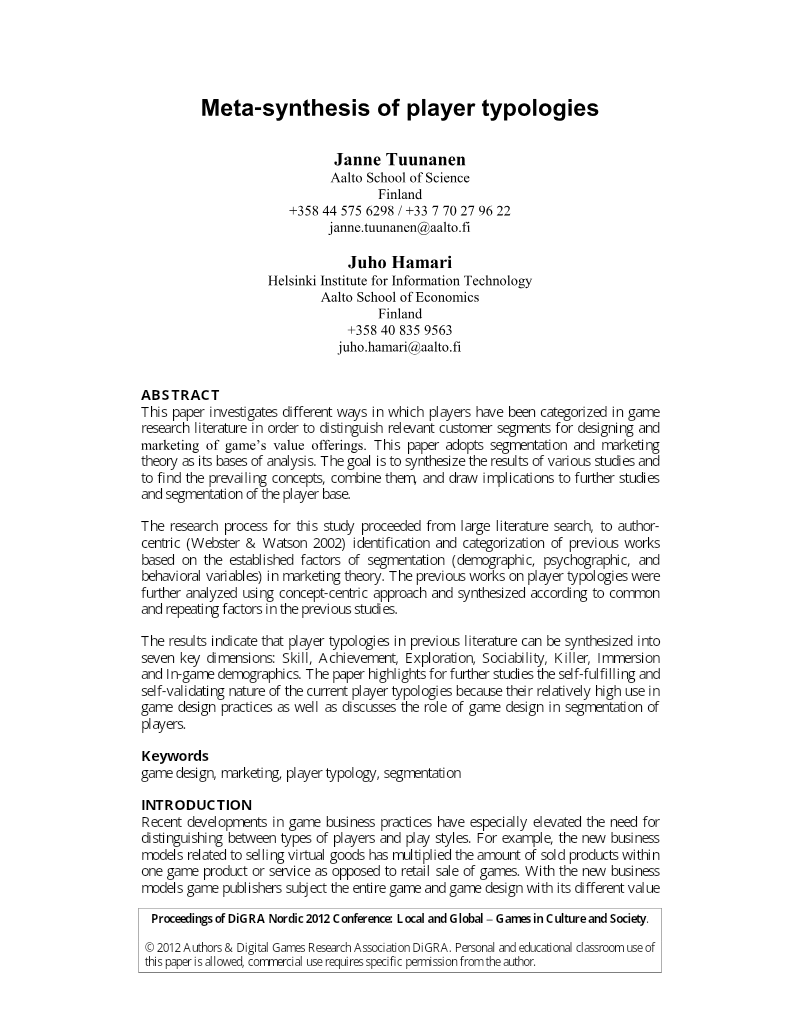
DiGRA · 2012
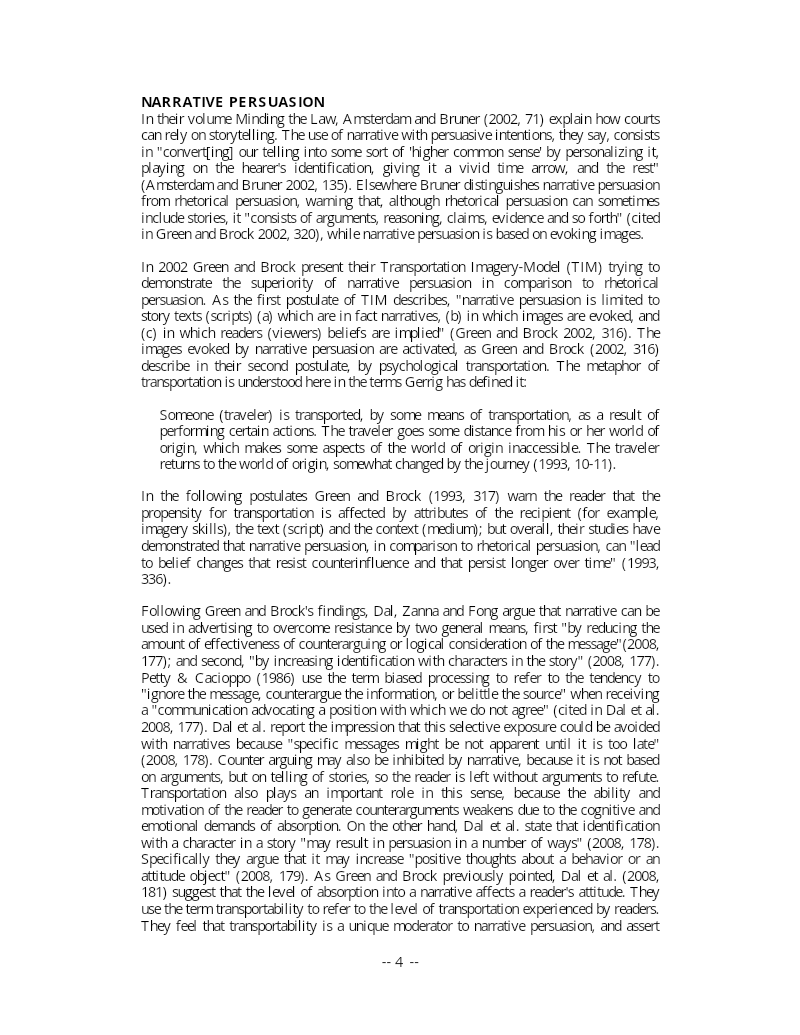
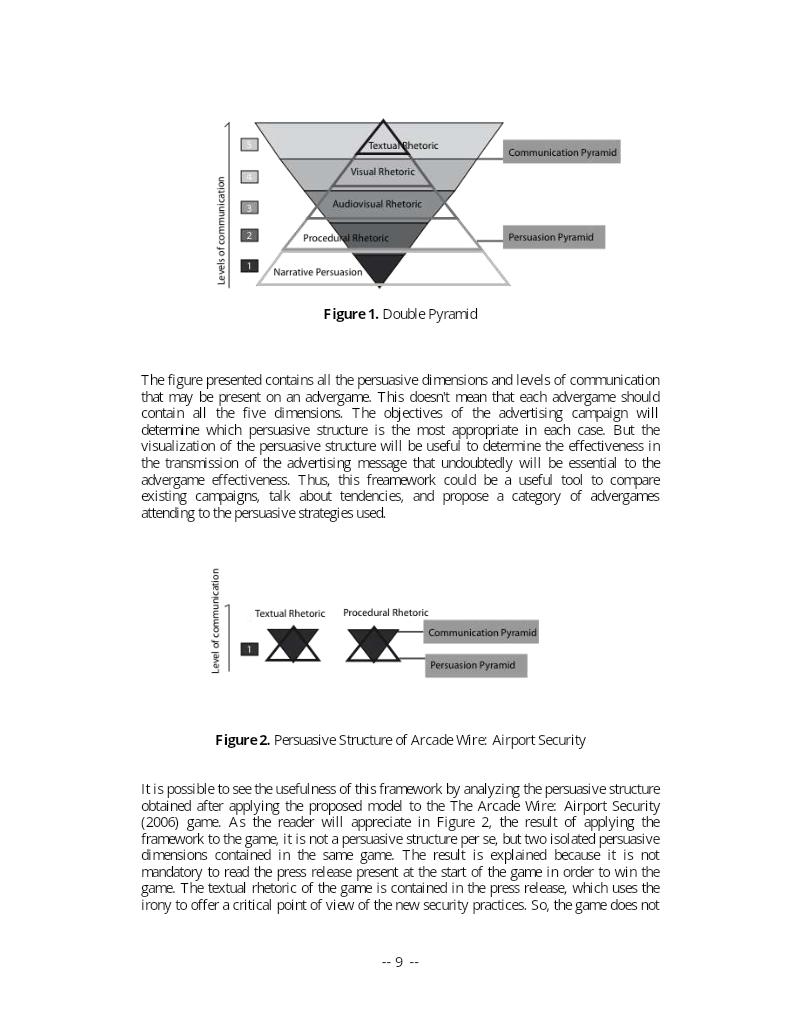

DiGRA · 2012
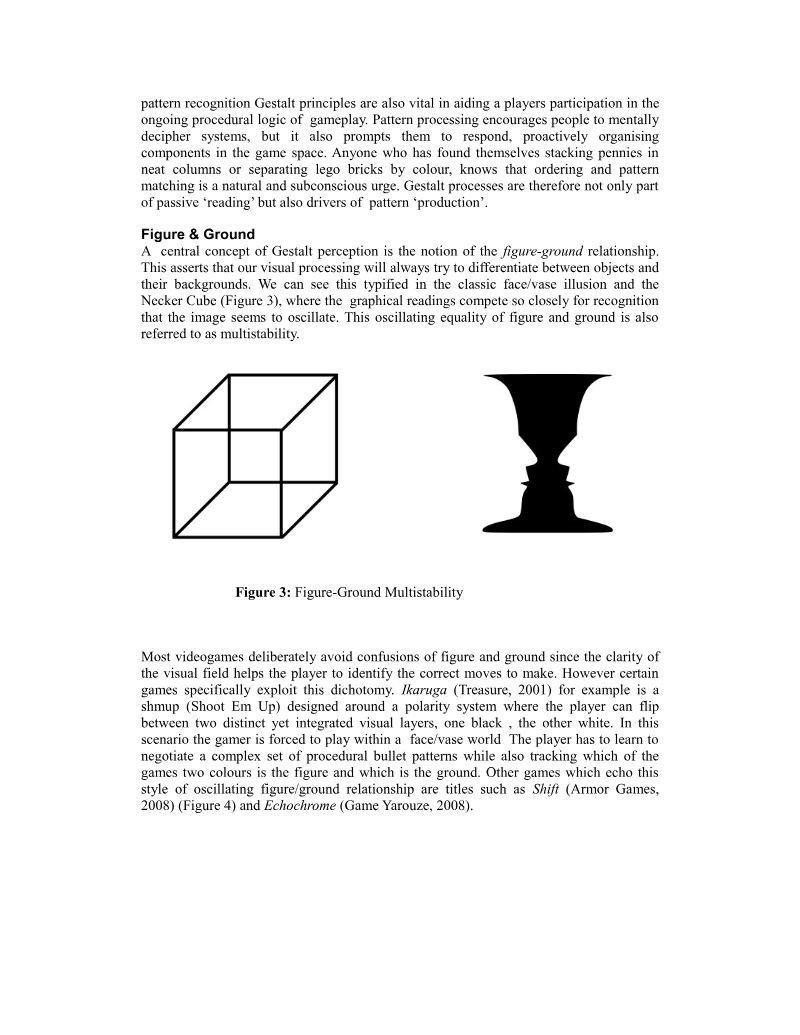
DiGRA · 2011
DiGRA · 2011
DiGRA · 2011
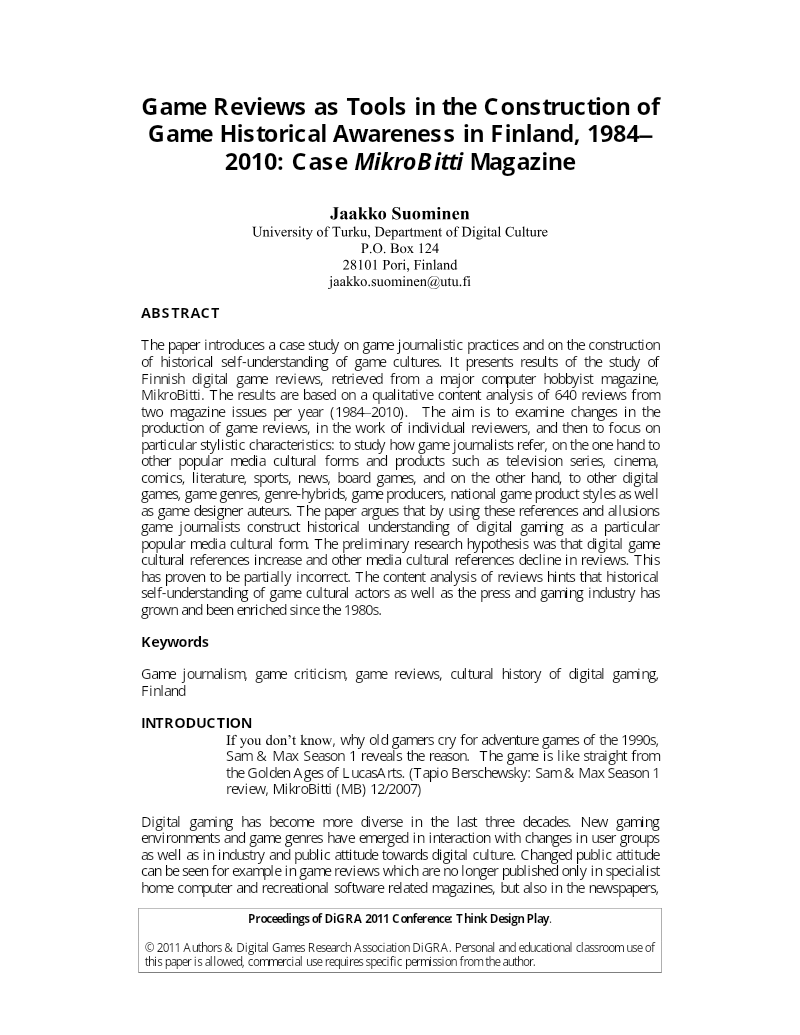
DiGRA · 2011

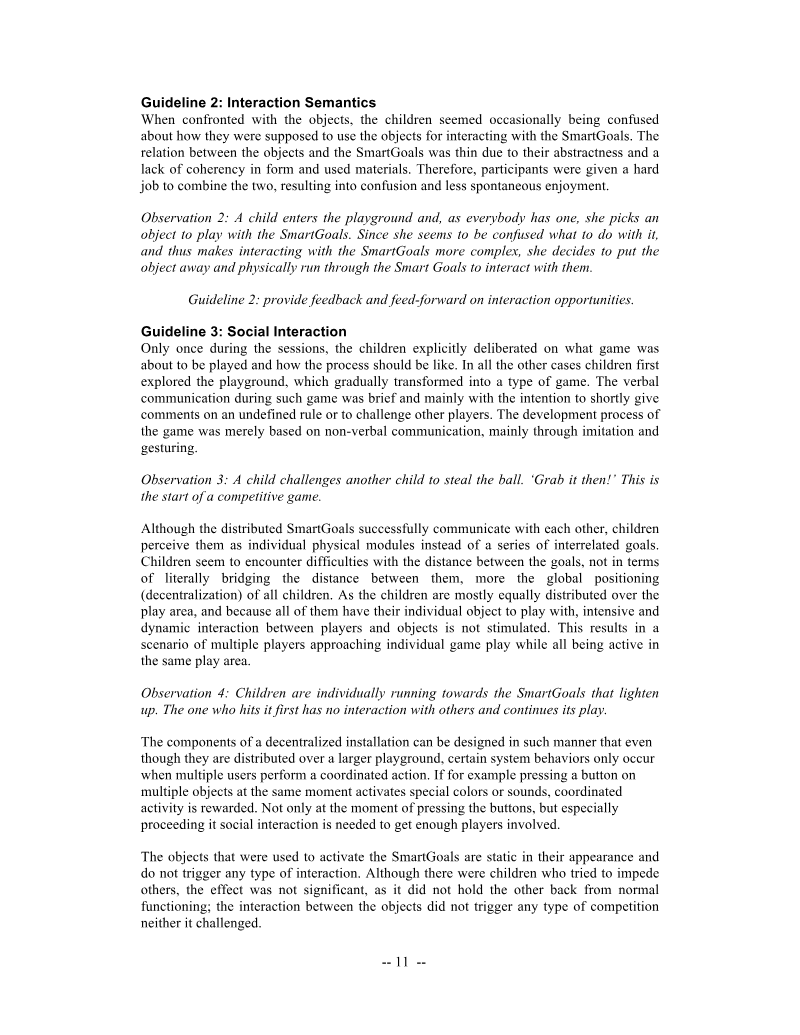
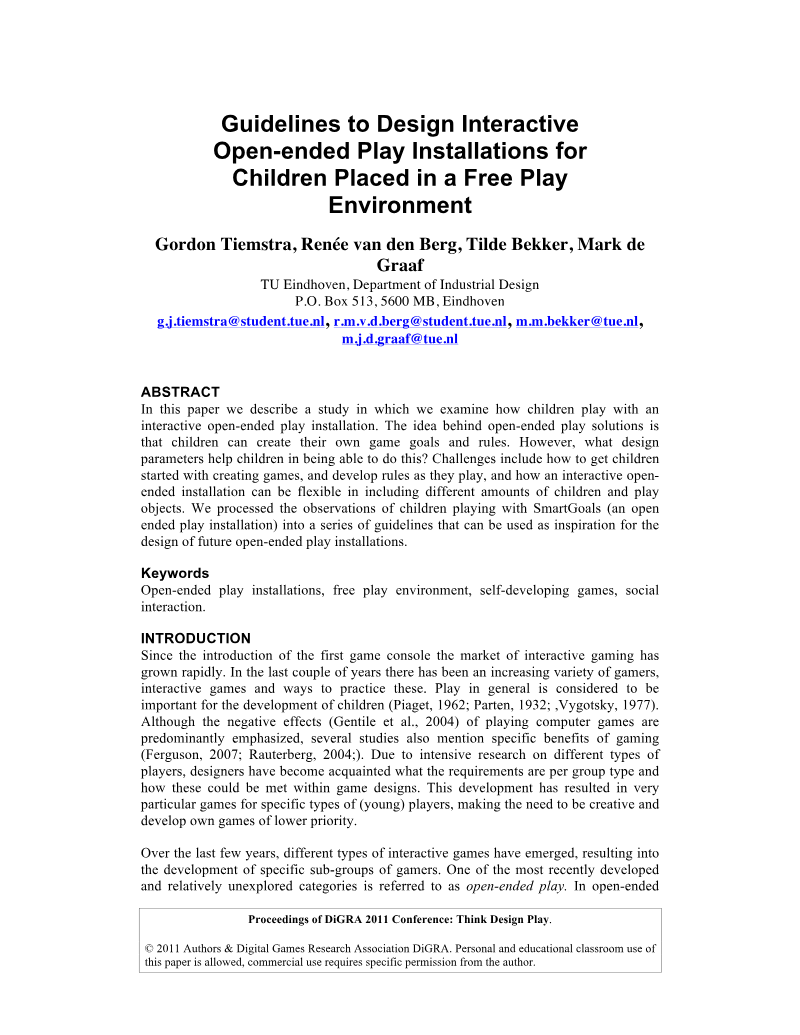
DiGRA · 2011
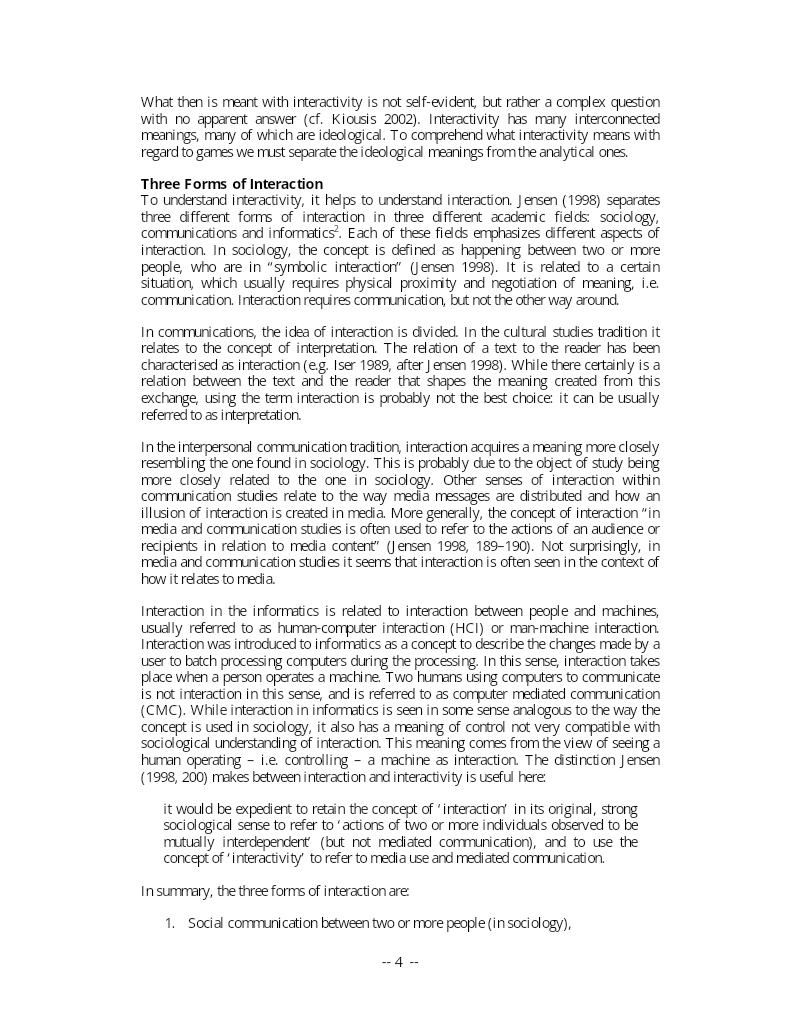
DiGRA · 2011

DiGRA · 2011
Game Developers Conference · 2020