1 free read left. Create a free account for unlimited reading + AI research.
Create free accountWhitepaper DiGRA
1 free read left. Create a free account for unlimited reading + AI research.
Create free accountWhitepaperDiGRA
The authors argue that player freedom is always bounded by rules and goals, so designers set the frame in which a character is experienced.
Characters in Computer Games: Toward Understanding Interpretation and Design argues that protagonists in games are shaped jointly by their designers and by players, since player freedom is always bounded by rules and goals. The authors contend that game characters are often perceived as flat not because of any inherent limitation of the medium, but because of weak design. Their central proposition is that a consistent, interpretable personality can be built deliberately through predefined elements such as cut-scenes, dialogue, and animation, alongside the goals assigned to a character and the actions that are enabled or restricted within the game.
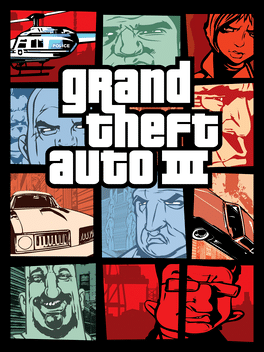
The argument develops by drawing on literary theory and on research by Reeves and Nass showing that people automatically attribute personality even to minimal characters. Examples from Thief II, Ico, Hulk, and Grand Theft Auto III illustrate how these techniques operate in practice. A distinctive contribution is the adaptation of Robert Berman's six dramatic aspects and Lajos Egri's three-dimensional model of physiological, sociological, and psychological traits into a framework for game design. The Bruce Banner and Hulk contrast serves as the principal case study, showing how a protagonist's nature can be encoded into mechanics, meaning which actions are possible or impossible, rather than conveyed only through narrative exposition. The authors conclude that this approach generates the conflict and goals that drive player behavior.
The discussion covers commercial action and stealth titles, including Grand Theft Auto III, Hitman 2, Hulk, Thief II, and Deus Ex, and its scope is primarily analytical and conceptual rather than empirical. The paper offers no quantitative data, so its conclusions rest on design reasoning and illustrative examples. Its theoretical base spans literary criticism, game design practice, and media psychology, with additional grounding in work on player agency, immersion, and the relationship between character and conflict.
DiGRA · 2005
Game Developers Conference · 2020