1 free read left. Create a free account for unlimited reading + AI research.
Create free account
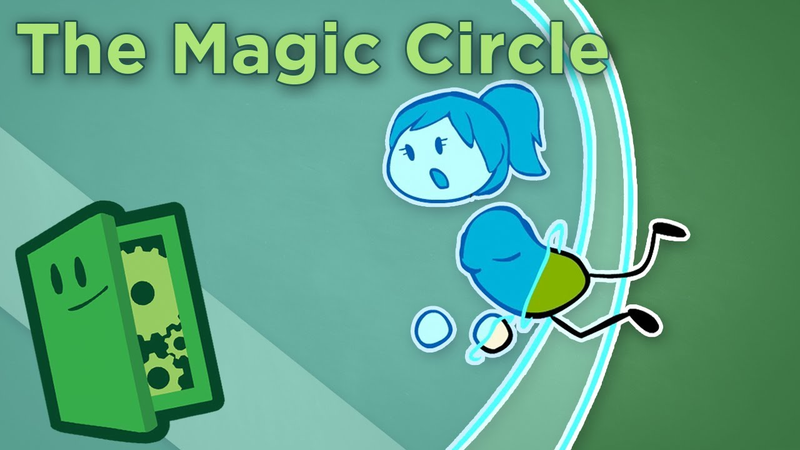
The Magic Circle - How Games Transport Us to New Worlds - Extra Credits
Key insights
6 takeaways- 01The 'magic circle' is a psychological boundary that allows players to suspend disbelief and treat fictional narratives as emotionally significant experiences.
- 02Visual design contributes to the magic circle by establishing a sense of 'otherness' through atmosphere and aesthetics that deviate from routine expectations.
- 03Audio design serves as a primary tool for immersion, signaling to the player that it is safe to emotionally engage with the game's narrative.
- 04Designers facilitate entry into the magic circle by using sensory cues to sever the player's connection to mundane, real-world distractions.
- 05Curiosity acts as the final bridge into the magic circle, as players will overlook technical flaws if they are driven to resolve compelling narrative mysteries.
- 06The creation of the magic circle is a deliberate craft that requires a strategic combination of sensory input and narrative engagement to ensure deep player investment.
Ask AI about this video
Transcript
The magic circle is something we probably should have talked about long ago. It's that place, that boundary which we cross to leave behind what we know to be real, to enter an agreed upon new reality. It's an essential concept in entertainment, and it's been used across history. It's what allows us to lose ourselves in another world rather than be permanently changed to this one. Over the centuries, the magic circle has taken on a thousand different forms. Ancient storytellers would use the crackle of the fire, the glow around it in an otherwise dark world to create that space where it was all right to believe. Ancient tragedians would use their ritual masks. Priests would create chapels such that when you cross their threshold, you are no longer in your world but in theirs. Theaters pull back the curtain to signal to you that the compact has been entered, that it's okay for you to believe what plays out before you. Rock stars, magicians, poets, and playwrights all have their tricks, their techniques, and their rituals for helping you to allow yourself to let something matter, something that by any
pragmatic or cynical judgment doesn't. And that's the key. Without letting these things matter to us, without investing in the world or honestly and truly caring about the characters, these experiences are hollow. Without this, they don't bring us joy or help us grow. So, how do we do it? How is it that we as human beings can do this incredible thing where we can temporarily transport ourselves to a place where we can believe in things we know are fictitious, where we can find importance things that don't have any real impact on our lives, that don't put bread on the table, or find us shelter, or advance our career? Part of it is environment, to be sure. I mean, you've probably had an experience where you played a game that was really meaningful to you in the quiet of your room, but then you played it in an airport or a coffee shop, and you just couldn't get into it the same way you did alone in the dark. Part of it is social. If the people around you agree on the reality you're entering, if they feel the same energy, excitement, and importance you can, then it's easy. Any of you who have been swept up in the energy of a rock concert have felt this one. It's It's easy if you can be alone, a society of one, wanting to have this experience, creating your own magic circle, however
you do. But there's another part beyond all that. I'm sure you've had works that you experienced in the right setting, in the right society, that you simply couldn't get into, couldn't let go of the everyday world. I bet you've all had experiences that you felt were meaningless or that were a waste of your time, even though in a strictly practical sense, that's true of most of our fictive experiences. And that's the wonder, the awe and mystery and emotional context for letting go. Way back we talked about how to deliver on an intro to engage the player. Today we want to talk about how to help them across that magic circle, how to help them abandon the idea that what you're doing is silly or inconsequential, and to help them simply live in the experience you create. So how do we let ourselves be immersed in an experience on a screen? How can we, as designers, invite someone into the magic circle? First, we have to get out of the banal. We have to get out of the everyday and the routine. Usually we do this through a combination of audio, visuals, and a sense of curiosity. First, in terms of audio, music can do a lot to let you know that it's okay to feel. Music can evoke emotion, and more importantly, it allows us a conduit to that emotion. In
today's society, high value is placed on maintaining an emotional baseline. A lot of us spend so many of our hours within a relatively small emotional band, and when we fall outside of that, when we experience things deeply, it's often seen as awkward, improper, or unseemly by our society. Music allows us to transcend that. Music unlocks the floodgates. If you've ever been moved by the tender, sad sound of the Final Fantasy theme, or even stirred by the Halo music, you know the feeling. You know, even if you didn't fully understand it at the time, the moment you were ready to experience the game. The moment where music helped you to cross that line to being fully receptive to the experience at hand. This is why that opening music is so essential to help bring us into that magic circle. Next, we have to talk about visuals. For the games you were really immersed in, it's my guess that somewhere along the line the visuals took you to somewhere else, transported you to a realm of wonder and imagination that escaped what you experience every day. Very often this is done with tone and grandeur, but that's not the only way. Many games like Silent Hill or Demon's Souls, Journey or
Shadow of the Colossus use loneliness and isolation. Other games like Wind Waker or Katamari use brightness and levity, but all of them have one thing in common. They bring us to a place that we're not used to, that severs the bonds of our world and allows us to cross over into that other one. The principal thing to know here though is that this sense of otherness isn't just granted by putting in critters. Orcs and elves have become kind of routine to our community. There's no wonder to them anymore. Nothing that demands the mind to see them as other than game pieces. But then again, Spec Ops certainly showed us how even the desert sands of modern war could bring us to a wholly other place that kicked the consciousness and demanded that you buy in. It's all in understanding what's outside of our expectations. Lastly, curiosity is a powerful tool to get us to step into the magic circle. If you've ever had a game whose narrative makes you want to know more about that world, that makes you want to explore or investigate, that gives you a mysterious thing that you burn to understand, you know the feeling. The moment where there's a question that you feel you need to know the answer to, most of the work has been done to get you to cross the magic circle. You've already bought in. You're already invested in the world when that happens. In your desire to understand,
in your willing participation in this mystery, you're willing to overlook some of the flaws and artificialities that often keep us from entering the circle and becoming immersed. Games like Xenogears, Final Fantasy Tactics, even the Assassin's Creed series try to use this sense of mystery to get you to agree to enter the circle without even realizing you're doing it. It's an incredible thing that we can do this. We can agree to accept a reality that isn't real and get lost in it, to invest in it almost as we do in the real one, and in the end come away with more as we do so. As designers, allowing players this entry point, creating that magic circle and inviting them into it is an essential part of creating an immersive experience. This isn't done haphazardly. It's not luck or accident. It's all part of the craft. Catch you on the other side of the circle.
Woo!
Summary
The magic circle represents a fundamental psychological boundary that allows individuals to suspend disbelief and enter an agreed-upon, fictional reality. This concept, which has historical roots in storytelling, theater, and religious ritual, is essential for achieving deep immersion in entertainment. By crossing this threshold, participants move beyond pragmatic or cynical judgments, allowing them to derive genuine emotional value and personal growth from experiences that have no tangible impact on their daily lives.
Designers facilitate this transition by carefully crafting environments that sever the player’s connection to the mundane. Audio serves as a primary conduit for this process, as music helps transcend societal emotional constraints and signals that it is safe to engage deeply with the narrative. Visual design further supports this by establishing a sense of otherness, whether through grandeur, isolation, or unexpected aesthetics that challenge routine expectations. Rather than relying on tired tropes, effective design uses tone and atmosphere to demand the player's full attention.
Curiosity acts as the final, critical bridge into the magic circle. When a game presents a compelling mystery or a narrative question that the player feels compelled to resolve, the player naturally overlooks artificialities and flaws in the medium. By fostering this desire to explore and understand, designers secure the player’s investment, effectively inviting them to participate in a reality that feels as significant as the real world. Ultimately, the creation of the magic circle is a deliberate craft, requiring a strategic combination of sensory cues and narrative engagement to ensure that players can fully inhabit and benefit from the worlds created for them.

























Comments