More on Serious Games
View all
Whitepaper
Development of a Serious Game for Practicing Pronouns
European Conference on Games Based Learning (ECGBL) · 2025
Report
Use of Computer and Video Games in the Classroom
DiGRA · 2003



Report
Annual Review 2026: Ukie
Ukie · 2026



Whitepaper
A Tripartite Framework for the Co-design of an Awareness-raising Serious Game Addressing Visual Impairment: A Systematic Literature Review
European Conference on Games Based Learning (ECGBL) · 2026
Whitepaper
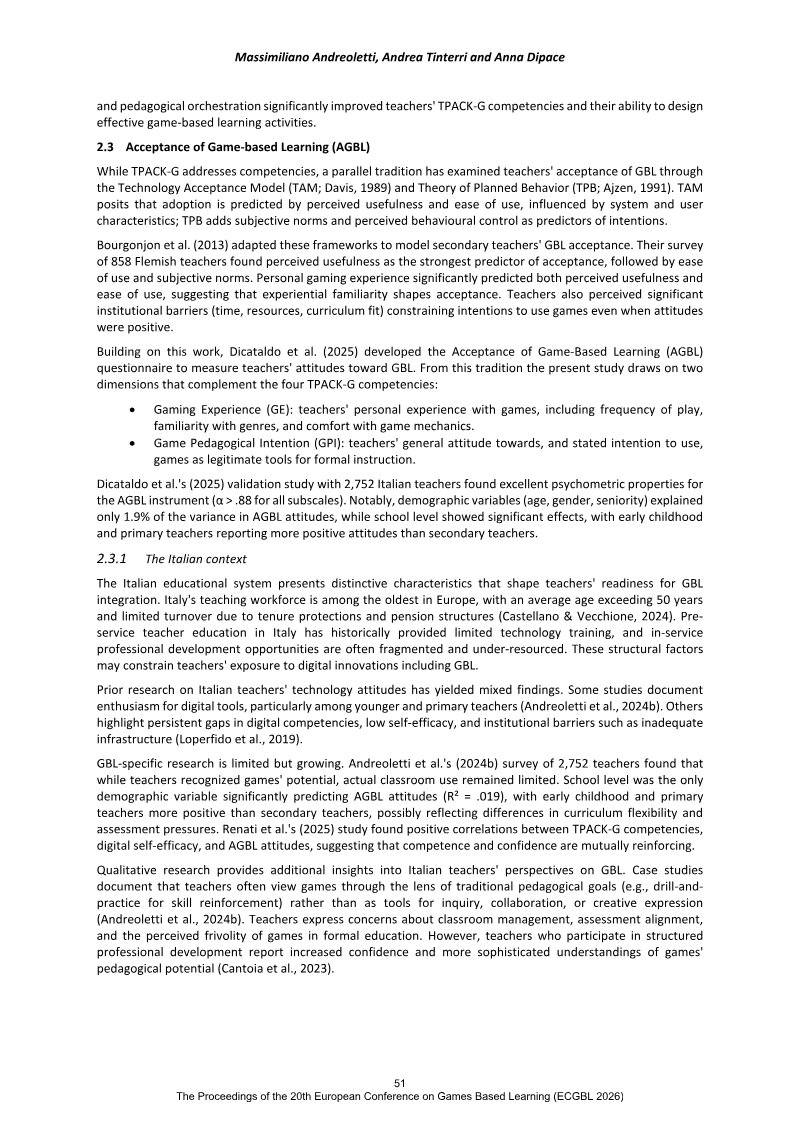
Playful Pedagogy: Student Perceptions of Academic Skill Development Through Board Games
University of Toronto · 2026
Whitepaper
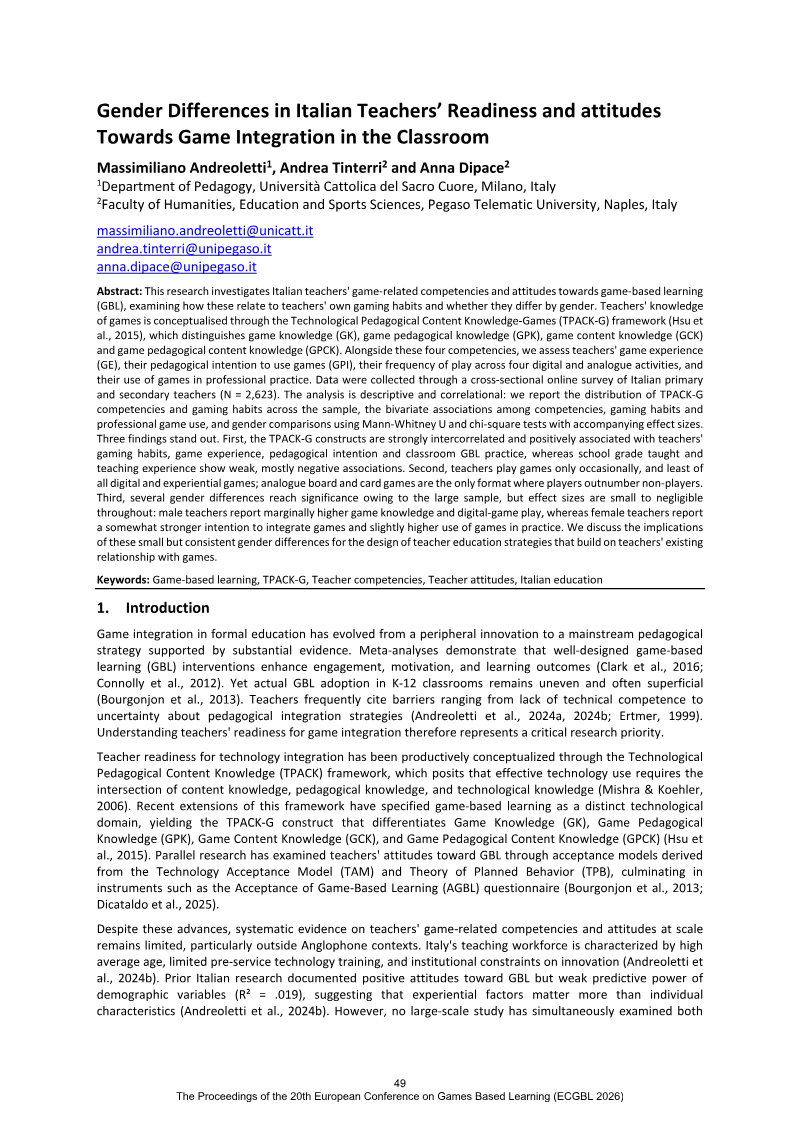
Gender Differences in Italian Teachers' Readiness and Attitudes Towards Game Integration in the Classroom
European Conference on Games Based Learning (ECGBL) · 2026



Whitepaper
MERIG: Design of a Multidimensional Evaluation Rubric for Informatics Games
European Conference on Games Based Learning (ECGBL) · 2026
Whitepaper
Playing the Climate Future: Evaluating Climate-adaptation Games for Higher Education
European Conference on Games Based Learning (ECGBL) · 2026
Whitepaper
Emotion Detectives: Co-Designing Inclusive SEL Games with Preschool Children
European Conference on Games Based Learning (ECGBL) · 2026



Whitepaper
An Early-Stage Feasibility and Usability Pilot for an Immersive Serious Game to Support English Spelling and Semantic Skills
European Conference on Games Based Learning (ECGBL) · 2026
Whitepaper
GBL in Urban Planning Education: Case Studies of Metropoli and Katopolis Games
European Conference on Games Based Learning (ECGBL) · 2026
Whitepaper
Extending The Project Win Game: Teaching Real Options and Moral AI Project Decision-making
maxmetrics · 2026