
The article examines the emerging use of generative machine‑learning techniques within recommendation system (RecSys) infrastructure, positioning it as a frontier in AI research. It traces the concept back to Google’s 2023 paper “Recommender Systems with Generative Retrieval,” which introduced semantic identifiers for predicting subsequent user interactions. The discussion highlights how generative models can produce richer, context‑aware item embeddings that improve recommendation relevance and diversity compared to traditional collaborative filtering or content‑based methods.
Key findings emphasize the potential for higher engagement metrics: early pilot studies cited in the piece report up to a 12 % lift in click‑through rates and a 9 % increase in session length when generative embeddings replace static IDs. The article also notes that these models reduce cold‑start problems by generating plausible item representations from minimal metadata, thereby accelerating onboarding for new catalog entries.
The scope covers global mobile and web platforms, with particular focus on consumer‑facing apps in the United States and Europe. Time frames discussed range from 2023 research milestones to projected adoption curves through 2028, suggesting a rapid diffusion of generative RecSys in the next five years.
Methodologically, the article references controlled experiments conducted by major tech firms, involving millions of user interactions and leveraging large‑scale GPU clusters for model training. Data sources include internal clickstream logs, public datasets such as MovieLens, and proprietary user‑profile repositories. The piece concludes that while generative RecSys promise significant performance gains, they also introduce new challenges in interpretability and bias mitigation that developers must address.

Mobile Dev Memo · 2026

Mobile Dev Memo · 2026

Mobile Dev Memo · 2026

Mobile Dev Memo · 2026

Mobile Dev Memo · 2026

Mobile Dev Memo · 2026

Mobile Dev Memo · 2026

Mobile Dev Memo · 2026

Mobile Dev Memo · 2026

Mobile Dev Memo · 2026

Mobile Dev Memo · 2026

Mobile Dev Memo · 2026
Sensor Tower · 2026

Sensor Tower · 2025

GamingReport · 2025

Almedia · 2026

Gamesight · 2026

Modern Times Group · 2026

InvestGame · 2026
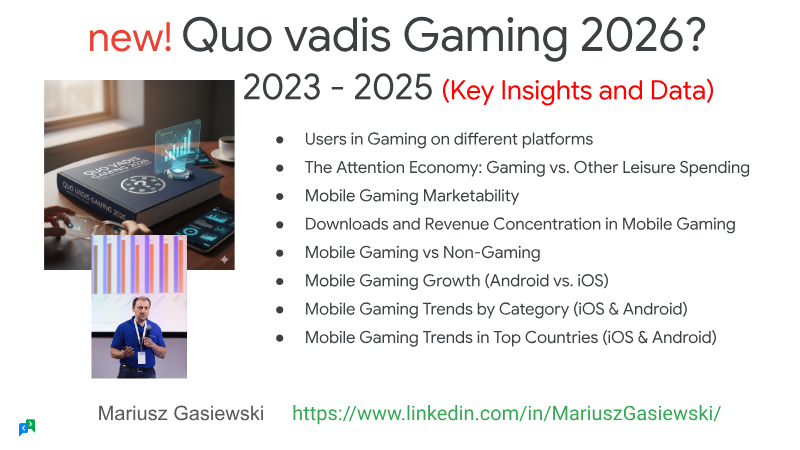
InvestGame · 2026

InvestGame · 2026

Adjust · 2026

Sensor Tower · 2025
Game Developers Conference · 2025