Loading the document
1 free read left. Create a free account for unlimited reading + AI research.
Create free accountWhitepaper DiGRA
1 free read left. Create a free account for unlimited reading + AI research.
Create free accountWhitepaperDiGRA
The proposed framework integrates media archaeology, platform studies, life course analysis, and game research to document and analyze local platforms and their ecosystems.
Methodology focus. The methodology aims to understand how local platform capabilities influenced game design and development.
The document outlines a methodology for conducting platform archaeology studies focused on regional video game history, particularly for eras when local platforms were prevalent. The proposed framework integrates media archaeology, platform studies, life course analysis, and game research to comprehensively document and analyze a platform, its games, and the individuals involved in its ecosystem. The approach emphasizes the importance of understanding how local platform capabilities influenced game design and development.
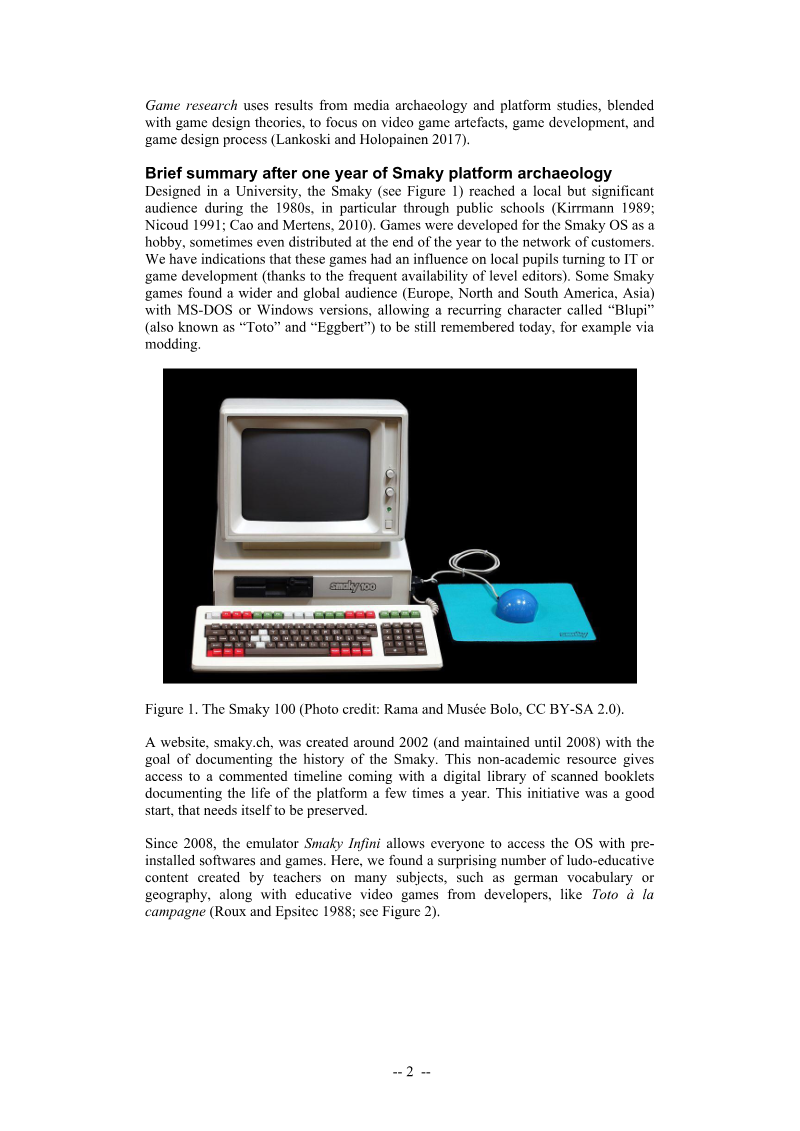
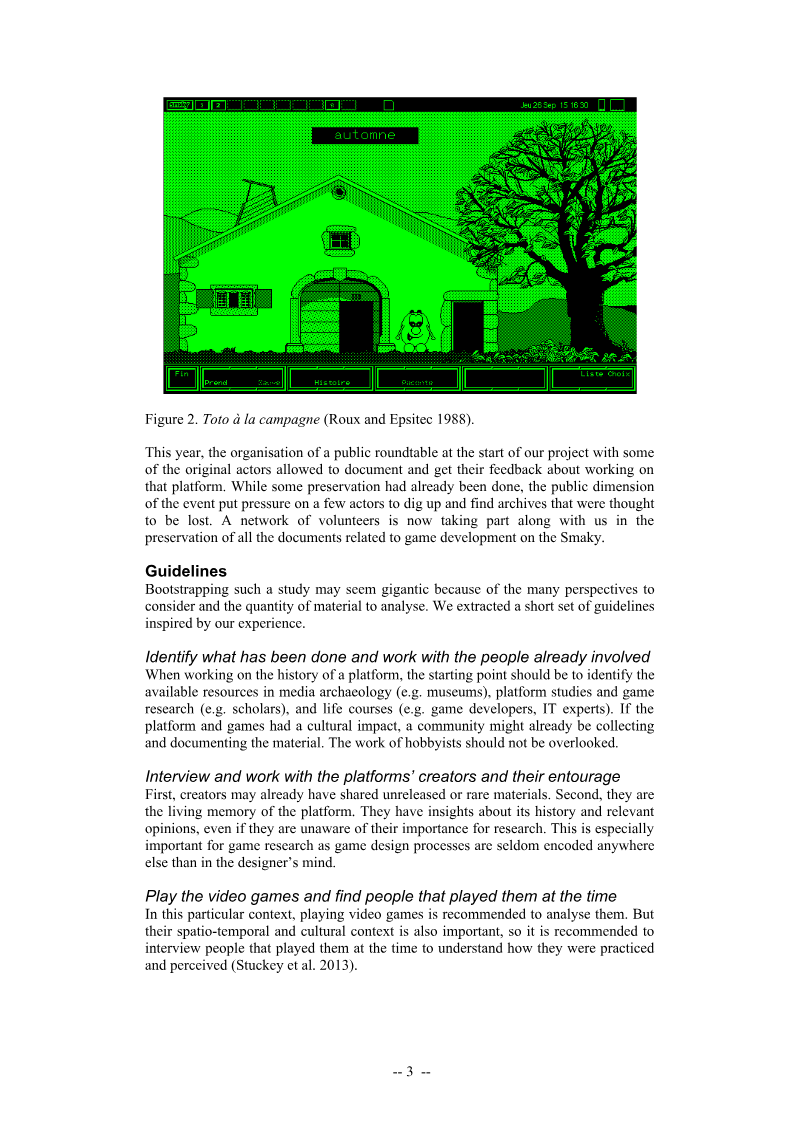
The methodology is illustrated through an ongoing research project centered on the Swiss computer Smaky (1978-1995) and its video game heritage. Initial findings from the Smaky project indicate that the platform, designed in a university, gained significant local traction, especially in public schools during the 1980s. Games developed for the Smaky OS, often as hobbies, sometimes influenced local students to pursue IT or game development, partly due to the frequent availability of level editors. Some Smaky games, featuring characters like "Blupi," achieved wider global audiences through MS-DOS or Windows versions. The project also uncovered a surprising number of "ludo-educative" content created by teachers for subjects like German vocabulary and geography, alongside educational video games from developers.
Key guidelines for bootstrapping such a study include identifying existing resources and engaging with involved individuals (museums, scholars, developers), interviewing platform creators and their associates to capture historical insights and design processes, playing the video games and interviewing contemporary players to understand their practice and perception, and searching for trends between video games to understand hardware and software influences on development. The project has benefited from a public roundtable with original actors, which spurred the discovery of previously lost archives and established a network of volunteers for preservation efforts. The next step for the Smaky project is to contextualize the ludo-educative trend with contemporary platforms like the Thomson MO5 in France, aiming to understand the origins of teacher-initiated educational content to inform future teaching platform development.

DiGRA · 2026

DiGRA · 2026



DiGRA · 2026



DiGRA · 2026



DiGRA · 2026



DiGRA · 2026



DiGRA · 2026



DiGRA · 2026



DiGRA · 2026

DiGRA · 2026



DiGRA · 2026



DiGRA · 2026





Comments