1 free read left. Create a free account for unlimited reading + AI research.
Create free account
SVB Collapse / Applovin spawns Redemption
Key insights
6 takeaways- 01Microsoft is leveraging long-term cloud gaming partnerships with providers like Boosteroid and Ubitus to address antitrust regulatory hurdles regarding its Activision Blizzard acquisition.
- 02The mobile gaming landscape is undergoing significant consolidation and restructuring, highlighted by Activision Blizzard phasing out Call of Duty: Mobile in favor of Warzone Mobile and Google exiting the cloud infrastructure space after closing Stadia.
- 03Major Western publishers are increasingly centralizing operations internally and reducing reliance on third-party Chinese co-development studios to improve margins and mitigate cross-border partnership complexities.
- 04The collapse of Silicon Valley Bank has forced tech and gaming startups to shift treasury management strategies, moving away from concentrated risk toward diversifying cash holdings across multiple institutions and short-term government treasuries.
- 05Redemption Games has divested from its previous model to pursue a diversified portfolio that bridges traditional mobile gaming with Web3 projects.
- 06AppLovin is pivoting away from mobile game development toward its ad-tech software business following a 30% revenue decline in its games division caused by post-App Tracking Transparency (ATT) market disruptions.
Ask AI about this video
Transcript
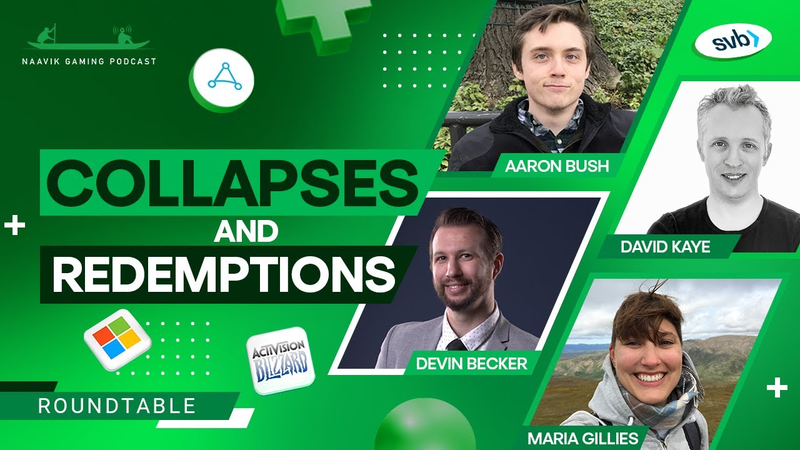
foreign [Music] gaming podcast where it is our mission to explore the business and future of video games we bring together the industry's brightest Builders investors and thinkers to keep a full sun current events dissect emerging Trends and games share Lessons Learned and have a great time this podcast is also part of novik's growing ecosystem which ranges from free and premium research to Consulting and advisory services for more information visit www.navic.com now let's jump into the episode hello everyone welcome to another episode of the novik Roundtable I am your host for today Devin Becker I actually am a novik writer and consultant and then you may see some familiar faces here joining me I've got uh Aaron Bush co-founder of novik who you may have heard many many times on many of the podcasts here David K joining us as well president of snapshot games and an angel investor and
then Maria Gillis our usual host uh switch over to a guest role here as senior project or product manager at Hutch hello everybody how does it feel to be on the other side of the glass here this is great I've never had an intro it's been about almost a year since I've had an intro this is quite nice I like this cozy feeling awesome yeah well to give you a bit of context I might be moving on from being a host because I need to get some personal time back but hopefully staying on and doing some of these as a participant that was a good answer I'm too opinionated to be a host I think that's what we're going with but yeah now you get to expound a bit more on things yeah so lots of chaos today new host do host as panelists and of course David this is your second time on but excited excited to see where this episode goes I know we have a lot of fun stuff to talk about yeah we definitely have quite a few updates as well as some deep dive discussions we've got some stuff on some Xbox updates including their cloud gaming stuff uh some stadia cloud news
around their uh discontinuing their services uh Cod mobile possibly sun setting and some stuff around a topic you've probably already heard quite a bit about svb or Silicon Valley Bank collapsing uh some stuff about app loving so if you want to get us a crack off here Aaron on Xbox sure so I have two short Xbox updates um the first uh nice and short star field was delayed again and this time from the first half of 2023 to now September 6th I believe uh now I'm sure the game which is going to be massive and very complex is being delayed for good quality driven reasons they don't want to have a cyberpunk 2077 moment on their hands so I'm not going to overthink that but I've mentioned it just because it's a continuation of the pattern of Xbox lacking and delaying exclusive AAA games that is causing Xbox to continue losing market share in this
console generation and that's something we talked about many times in the past so we don't need to beat a dead horse here but hopefully we're daring a turning point for Xbox's AAA game output but getting like these big projects right and um making sure that Starfield is is a hit and you know as a driver to bring people to Game Pass and to keep people there at least for a while um that's going to be important for them to figure out and of course the biggest change to that would affect Xbox's AAA gaming output is the acquisition of Activision Blizzard which is still in the hands of regulators which brings me to part two of this update which is that in response to European Regulators being fixated on cloud gaming as a source of monopolistic concerned which as we talked about maybe it was a week or two ago is a bit silly because it's not actually that important of like a component of the games industry right now and probably won't be as a standalone entity in its current form at
least for a very long time but either ways that's that's how Regulators see it and in response to that Xbox just announced two new you could call them absolutely game changing deals that no one saw coming which is that um they're striking 10-year agreements to bring Xbox PC games to both boosterloid and ubisys two cloud gaming companies I'm sure we all have we all know about that we all have heard of um I was very excited to hear I've been waiting for an announcement about when are they going to bring Game Pass to boosteroid that's really been very top of mind for me and I'm I'm sure it was also you know a very high priority um uh project for the Xbox business development team so I'm really glad that we finally have seen uh Game Pass come to boosterloid that's probably the thing that's going to get them over the hump for sure yeah it's true Innovation although David I I did make you have to be more of an ubatist kind of guy so I'm
a bit surprised you know I go back and forth originally I was I was much more of an Uber to Sky but I think you know if you just anyone who's been paying attention really knows that it's really all about boostroid these days and so I'm a real boostroid Stan now I really need a sarcasm alert uh but but anyways in case in case the sarcasm was not cleared out this is really just a regulatory dance that Xbox is playing and just saying hey we have these games but we support all of these different platforms and services out there like we're not trying to look how anti-contest look how how anti-anti-competitive we can be Yes We Love We Heart competition um it could be the the t-shirts that the Xbox exacts can wear at the next hearing um so anyways those are the uh it's a couple quick Xbox announcements none of them are too huge of a deal but it's
just interesting to see see both the ongoing struggle of AAA games and just the dance they continue to have on the the regulatory frauds and again that Saga will probably come to an end relatively soon so hopefully in the next few weeks we'll be able to stop talking about things from like a speculative angle and actually talk about things from a hey this is what's actually going to happen angle so fingers crossed we'll get resolutions there soon enough and and David you had some stuff on stadia that seems kind of relevant given the cloud gaming here well I think just a a quick note um you know Google announced this week this week last week announced recently anyway uh the shutdown of so if you recall when Google shut down the consumer version of stadia the actual consumer service they announced a uh a pivot to a B2B strategy under the moniker I think it was immersive stream and
um I was not shocked to hear that that has also been shut down now for a couple of reasons one um it was quite hard to see who this was for and what strategic role it would play for developers and Publishers and I think this was probably also um not helped by the fact that their their go to market for immersive stream as far as I could tell was to well let me back up they had a bunch of uh publishing agreements essentially where they had had essentially had paid a bunch of developers to bring their content to stadia and uh I think it's what was interesting was they after they announced the shutdown they terminated all those agreements um including leaving some some payments to developers uh outstanding and this was the exact same base of people that they went to to try and convince them that they should become customers of uh
immersive stream which doesn't seem like I made it didn't really make a ton of sense to me so I I was not shocked for uh to see this to see this outcome well you know as a former steady Affair myself I'm sad to see it go but it makes sense that at this point you know it's just done for yeah are you also a destiny fan you know that was actually the only way anyway so it was actually it's like now I'm like I'm left in the Lurch uh on quite a few games like I got my refund right like they were good on the word on at least two customers on the refunds it sounds like maybe Studios or a little bit on the on the the bad side of that but at the same time like it's I now I know I have to consider rebuying these games right and so it's as a big cloud person myself now I'm forced to wait for Starfield I guess on uh on Xbox and I I guess also Diablo 4 will not be part of that cloud stuff on launch so it's gonna be an interesting year it's
not being part of the game pass I believe speaking of of Microsoft and uh and shutting things down I got some potential news around uh Call of Duty mobile yeah I hope to bring good news maybe it is good news we'll see so uh we spoke about the new Call of Duty mobile game War Zone when we were talking about Apex Legends mobile being shut down and they announced I was going to be a cross-platform experience and I think that makes a lot of sense they're realigning the the franchise with the now the modern expectations of players of being able to play wherever they want however they want and I was looking more into the what's going to be cross-platform as things like shared progression which includes the battle pass that sounds pretty cool but also your weapons and your Cosmetics a common friends list cross-platform matchmaking so it's really tying the game into the centralized franchise and then when Activision Blizzard reconfirmed Warzone Mobile's 2023 release late last year
they detailed that it was not going to impact Call of Duty mobile that was developed and is owned by Timmy Studios which is a subsidiary of tencent but in a response to the UK CMA regarding Microsoft's acquisition of Activision Blizzard and they revealed that actually Call of Duty mobile was expected to be phased out over time and that came a bit of a surprise to players because it was different to what Activision had informed them and of course players very disappointed I looked at the number of act the active player base and again take this number with just a bit of a grain of salt and that's about 24 million players and a day or so after a micro sorry Microsoft um share that information that was disclosed to the CMA Activision came out and said oh wait no we promised that we're actually going to keep committed to Call of Duty mobile and keep giving you content and updates which is essentially counter to what Microsoft had said and so it seems like Activision
is still able to call the publisher shots for the game but I do wonder if the acquisition goes through do you think that Microsoft might Force Activision Blizzard to change his stance I'm curious what you think I mean this also reminds me of the the rift between blizzard and other Chinese developers right like could this be like another situation like that the maybe um I mean my take is that it never really made sense for two of these games to be out there and competing for users and competing for monetization um especially when they have such similar modes and they would be the the focus really would be on the same type of player and just that type of cannibalization doesn't make sense long term and what I read at least for the what Microsoft was saying is that uh Call of Duty mobile would I guess gradually wind down I don't know exactly
what that would look like around the world except for in China and so I don't know what Activision come comes back and says hey we'll continue to support it I don't even know if they're talking like broadly or just for a certain period of time or if they're just saying words and then it'll really just be in China but they're not lying like I don't know what the corporate dance really looks like here but one data point I'll just throw out that you know maybe you could to have a couple interpretations for it is that I think it was in October according to data.ai paid downloads for Call of Duty mobile went to zero they just stopped doing um like more paid downloads so you could say that's a result of the UA environment being tough and maybe it is but you could also say that maybe they do they they made a decision on how they would think about the future of the franchise and if they're going to emphasize board Zone more in the future does it make sense to be spending millions of
dollars on UA for a game that's not even going to be their like Flagship at least how they see it anymore I don't know the answer to that other other than to say I just don't see how having both of these out there and competing with each other makes a lot of sense I I agree especially when it benefits activism Activision Blizzard to bring the call the mobile franchise into its centralized cross-platform because it's stickier you're in the environment but at the same time yeah they did say that they're going to keep updating it so I'm curious to see what happens there and on that data point as well I went to look at the pre-registration for war zone and that passed the 25 million Mark and it's now on its way to 35 million they had to add a new go to give even more stuff to players that pre-register so that's now across the active player base well estimated numbers for Call of Duty mobile yeah I think overall I'm interested to also understand if this is just more of that strategic move
that you mentioned Devin about divesting from third-party Studios and also centralizing everything Call of Duty under Activision Blizzard yeah I actually have a a bigger picture question that I'm curious to hear your thoughts on or maybe David you would even have have thoughts on this as kind of a as an entrepreneur um uh it seems like there's like a pendulum that's been Swinging with uh like over the past few years it's been like Western companies admitting in certain types of mobile genres that they don't have the expertise and so they look to get co-development partners with these like Chinese companies that have proven experience but as we've seen with EA and now Activision through whatever reason relationships being tense the revenue shares that big ideal whatever it is it seems like at least with those two companies the pendulum is swinging back the other way where they're saying hey let's take on the risk and uncertainty develop
internally reap all the profits not deal with co-development Partnerships the same way um is that a trend that we're going to see across the industry or is it really just these two companies standing alone I mean I can share just sort of anecdotally uh things I've heard from developers who've been in these situations I I this is not something I've never done uh code we had 10 cent as an investor in our last company but um we didn't there was no code about our relationship there um I've not heard great things about um the reality of co-development between Western and Chinese companies and I broadly I think it comes down to um significant cultural differences unsurprisingly um you know also logistically it's very hard to coordinate across you know across time zones on development you can you know it and uh I think especially when the stakes are
as high and the and the budgets are involved are as large um it just heightens the heightens the the risks and the challenges and I I I I think we could see a bit of a pendulum swing back the other way for for these reasons I see two two more reasons I believe that when a lot of these Partnerships started developing it was at a time where there wasn't a lot of AAA Triple A mobile developers and Studios that could execute on these kind of games whilst China's always been ahead in terms of mobile game development but now I believe that through those code they have opportunities in developing these higher quality games the West now has that talent to deliver it on its own I think additionally there's just a change in the competitive market where we see now these Eastern companies trying to also take market share from the west and I don't know if they want to centralize their operations and not have code Dev
with the direct competitor that I was trying to also take their market share brings the question of whether or not the quality is going to be the same though right like uh you know obviously Call of Duty mobile did pretty well on the quality of it and the development you know was was obviously like you know up there but can they rep applicate that you know when they go to do their own will the game feel totally different and people be disappointed because they'll be like this doesn't feel like Call of Duty mobile because game feel is pretty big for Call of Duty games it's currently self-launched in Australia and there was also some lakes and I think while players are saying is that's the best it's the best thing not Call of Duty could have done it's a great experience the map that they prioritize it's fun and the cross-platform it just makes it streamlined that you have one battle pass you can carry everything over but because it's on the same engine as Modern Warfare 2 and the new war zone is meant to be great I guess we'll see if they uh if they push everyone over like you know we start seeing ads within Call of Duty mobile pushing everyone over to Warzone
and like purposely cannibalizing people over to try and sunset it or not I guess that'll kind of give us an early indicator there probably I wonder if the t's and c's with the partnership with Timmy Studios would allow that I'm not sure it'd be interesting to see we've got some uh some interesting deep Dives here today with especially something that's been on everyone's mind over the weekend and into this week and possibly even today like a lot of stuff going on which is uh svb or Silicon Valley Banks big collapse along with other Banks like signature that went down over the weekend but especially focused on what happened but here with uh Silicon Valley Bank yeah okay so a lot to cover uh you've heard the expression you know may you live in interesting times people uh people have said it's a Chinese curse actually was an American politician who made it up as I actually think well uh where it came from but anyway the reason I mentioned is I'm I'm really happy to say that this topics about 40 percent less interesting than when we first picked it for the podcast and I'm really happy about that because the most
interesting version of events would have been absolutely catastrophic so it would have been a better podcast but I'd be having a much worse week um I should also declare you know some some interest in the um I did have an account and some assets at SBB and um also have quite a number of uh friends uh other entrepreneurs who were affected so uh this is the perspective from which I am coming at this discussion um okay so some some quick background I'll give an overview and then we'll sort of dig into some of the more games industry specific uh aspects of this uh so Silicon Valley Bank was a 40 year old Bank set up in 1983 it was the 16th largest bank in the country before its collapse um and it offered a range of services to companies including obviously checking and deposit services but they had a number of other areas of business wealth management a bunch of different investment products
and and also a very active um uh debt business offering loans of various kinds um Capital call lines of credits to VCS as well as Venture debt and and things things like this um and it's customer base obviously very very heavy presence in both Venture capitalists as well as Bay Area and not just Bay Area actually Global uh tech companies but also served a number of businesses in the Bay area as well they were um also very very present in for a lot of climate companies they were very large in the wine business and there were many local Bay Area businesses that banked with with svb as well as their as their local bank so that's that's the kind of background on on on what Silicon Valley Bank actually was um I think what happened over the last couple of years um as we were as we experienced the covid boom times in technology there was
a huge huge increase in the bank's deposits so I believe that between the end of 2019 and the first quarter of 2022 the bank tripled its deposit balances to about 190 something billion dollars so really really huge influx of cash um that was obviously a you know an outcome of all the money that was flowing in you know companies were raising money big VC funds were you know we're raising big amounts of money and they were they were putting it with uh with with with svb um what that meant was they ended up with a very um with a deposit base that was very heavily skewed towards these a relatively smaller number if you compared them with an average Bank a relatively small number of very very large accounts and you know that's relevant because the um the limit uh the FDIC deposit limit on what is insured by the by the federal government is just 250 000 which is you know a decent amount of a decent amount of money if
you're talking about a personal checking account but as soon as you're talking about businesses that have you know 30 50 100 a thousand employees um it's uh it's it of course is is is not less than you need to meet a single payroll cycle so um so far so so okay um I think where things really started to go wrong was um the what they did with this money and you know if obviously we remember this was a very low interest rate environment at the time and so in uh and really the bank's business Banks business models are take money and earn more in yield than you're paying out to depositors and keep the difference but this is obviously there's lots of other ways they make money but that's certainly one part of the business model and so uh I think where things started to come undone was um a pretty significant chunk of these deposits were put into long very long dated Securities so you know these were these were elongated treasuries
um mortgage-backed Securities and of course what happened in the last six months or whatever it's been of this Federal you know this rate hiking cycle that was you know among the most rapid interest rate increases I think that has ever been done in the US economy more or less um what happened was the value of these of these bonds was plummeting and this is a problem for svb and they were really kind of actually doubly exposed to the increase in interest rates um partly because as I said they had they invested in all these long-dated bonds that were no longer very attractive compared to the interest rates that people people could get today but then they also had a depositor base that was very exposed to interest rate increases as well right so you know tech companies everyone always talks about sort of tech companies being a zero more of a zero interest rate phenomenon people people's appetite for risk goes up when assets are you know when when interest rates are low and so their their depositor base really needed to actually start drawing down on their um
on on the money that they had and so what that meant was Silicon Valley Bank was essentially being forced to sell uh these Securities our loss um at a time when you know the value was it was was PL was was plummeting and what kicked all of this off was um as a result of this they announced they were going to do a capital raise which never got completed they announced Capital raise on the same day that silvergate bank collapsed which also not ideal uh from a Communications perspective probably and basically this kicked off a bank run which was I think and this is one of the one of the things that I think was a bit specific to svb and also specific to maybe what bank runs looked like in 2023 which is this happened at an unprecedented speed so you know they had about uh 40 billion dollars in outflows in one day it was Thursday I believe it was and I think this was a com this is a
combination of one they had a customer base that was very very highly concentrated in you know a couple of of sectors and also um these are very online these are terminally like all of us terminally online people who would talk to each other all the time and so the speed that this that this happened was just unprecedented anyway that's the recap uh that's what happened what um I think what's interesting and what's sort of relevant like why do we care about this um as you know a podcast talking about games I think there's a couple of reasons um so first of all as I said at the outset there were quite a number of particularly venture-backed game companies that were keeping their funds with svb and also a number of the VCS that game companies that raise money from also had their money there and particularly as we approach uh GDC where a lot of pitching is going to be going on um it's worth asking One impact it's going to have on on on the landscape
um but I think but first I want to just talk about the reaction to the bailout so I should say the final kind of the sort of happy ending to the story is the federal government stepped in here and announced that they were essentially going to guarantee the deposits of the people who had money with svb I think it's really important to draw a distinction between what happened here and what happened in the uh to some of the the g-subs the systemically the big the big Banks during the the financial crisis this was not a bailout of the bank's shareholders or bondholders in fact I think the the banks the banks basically the equity is going to be zeroed this was them stepping in to say hey if you had money at svb even if it was much much more than the 250 limit we are going to make sure you have access to that money and the and the the out the the reset the the reaction to this to me was maybe
not surprising but it was really disheartening and this is a reaction I saw both from uh the various corners of the of the media but also actually from a number of games industry you know non-svp uh uh games industry CEOs and the reaction was basically this is a bailout of rich VCS and um they shouldn't be helped and uh and like this and for again like I have a I have a I have a dog in this race you know I know there were CEO you know there were game company CEOs who I who I knew were having a pretty terrible weekend trying to figure out how the hell they were going to meet payroll and I think it's I'm gonna declare my perspective and then maybe ask for maybe you know maybe some alternative you know some alternative perspectives from you guys but here is here's my here's my my take if you're our game Company CEO you raise five million dollars from uh
from a VC and a VC says hey you should use this bank because they understand your business they're going to be able to and I I I know speaking someone who has banked with various places and I including large banks that have no understanding of what you do and trying to do things like get any kind of a loan for anything and just being told no there are real there were there were a lot of reasons why people had money uh with this institution and my belief is if you put a bunch of money with your bank it is a reasonable expectation as a game Company CEO to say you know what I uh I don't have to think too I don't have to I should not have to go and look at the bank's balance sheet and analyze its uh its duration exposure or interest rate risk or any of the other things that it's hard enough hard enough to focus on just building a company building a startup making analyzing the market building a team making games and I think that this idea that you were somehow irresponsible for
putting your money with a 40 year old bank and expecting it to be there on Monday um I have no sympathy for the perspective that this was somehow irresponsible you should have spread your money across 40 different banks but I don't know maybe there are there are definitely other perspectives so I'll shut up for a second and uh yeah we'd love to hear your thoughts yeah I think it is a wake-up call um if you are a CEO and you have a physical responsibility to a business to recognize that hey um maybe I I should be paying a bit more attention here because reality isn't exactly as it seems I I actually agree with you on basically everything you said about how a lot of the reaction was disheartening like I do think there there probably are some Fair criticisms you could say of like what some VCS are saying on Twitter or just like how yeah some people were taking advantage of the situation to try to you know spark new new pretty egregious
terms to like loan out money to help companies throughout the crisis but in general yeah when things like this happen like most people should handle this with some level of empathy right um even if you can't directly help to at least be understanding of those who are going through the situation I I mean you can probably draw some some further distinctions here right like you know one of the companies that was caught up and this was apparently Roku had you know 500 billion dollars in cash with svb and yeah you know you could argue that a publicly traded company that presumably has a very well paid CFO and finance team should be expected to have a more sophisticated approach to treasury management such that they are managing their risk in a very very you know very active way um but I sort of that's that's a very different thing than you know a 30 person 50 person startup that let's face it like you're not an expert on what this this entire lens this entire
landscape and I sort of Wonder actually if maybe one solution is just a higher limit for businesses like a 250 000 does not go very far for a you know for for a business and maybe that's part of the solution I don't know yeah I think it probably should be I mean I think that um it's I agree it's unrealistic that companies should be able to like have to spend a lot of time reading the balance sheets of their Banks to really understand what's going on also because a lot of times just Bank financials are super opaque um and not so like you know get two in the weeds of like bake finances which I'm sure all of our readers or listeners you know love hearing about but like there are essentially loopholes in the system that like with Silicon Valley Bank um they didn't have to price their loans to the market and so it made it look like their assets were larger than they actually were if they were being priced at like the current the current rates um and so yeah it's just like again as a
startup founder do I should I be expected to understand the distinction between the hell to maturity and available for sale categorization of Bank debt like maybe I should I don't know I mean I do think we will see a proliferation of new products that are designed if I'm already starting to see them that are designed to help address this risk um in terms of this treasury risk um so you know I can I can definitely see that that signing a change the final kind of the final thing I'm able to leave leave this on is as far as how do we how do I you know do we see this having a a long-term impact or anything on the on the fundraising environment I I don't think that there are um massive long-term implications here I do think that um as we look at the the fun the near-term slash medium term funding environment like there's a dial the way I think
about invest you know the investing uh landscape is there's there's an access there's the fear greed access right and you're always at somewhere along along a Continuum and uh I think there's no question even though crisis has been averted here I do think this definitely moves us a couple of notches uh towards the fear side of the Continuum and uh that's not a a great place to be if you if you if you need to raise money right now I gotta I got a question then what what do all these people do especially the game studios do now with that money now that they've taken it out right they just can't put it in their mattress yeah they probably don't have time to do a whole bunch of due diligence on new Banks but they've got to put it somewhere right to pay payroll or whatever what do they do now at this point yeah well that was part of the real really stressful last last week where you have to go through the checks to open accounts and that takes you know two days three days and you're trying to do that towards the end of the week to have somewhere to put your money yeah what I would say where I was going to
kind of connect the dots to saying like it's unreasonable for company leaders to like fully understand the financials of their bank but it is more reasonable for them to start to risk manage a bit in terms of not putting all their eggs in one basket and um you know even with a company like Roku like it had a lot of money in One bank but that still was like a percentage of like a smaller percentage of money it had all around but but even then I mean you could kind of be critical of that but as a as a leader like managing the cash of your company um I mean I think not having all your eggs in one basket is probably a wise move now that now that we realize that the 250k uh marker is maybe it's it's low and you know the government stepped in this time but you never know um in the future and you also never know like what that could look like with other governments around the world the last thing I was just going to say is like there's money that you can have in Banks but even then I'm starting to see
um more like alternative kinds of options so for example um Mercury is a financial um platform they're not a bank themselves but they basically create the interface and connect you to Banks and they have what's called a sweep Network which basically is instead of like if you work deposit your money through Mercury it doesn't go into one account it gets spread out across I think now they have like 12 Partners or something and so they're like their insured rate is 3 million 12 times higher than the um 250k so it wouldn't surprise me if we start to see some like more Solutions like that get thrown out and and something like that genuinely is probably like really good for startups to consider uh where it's the same simple interface but behind the scenes the complexity is kind of taking taking care of the insurance management the other thing I was just going to say for larger companies is not everything needs to be held specifically in cash like you can have um I mean look at like the the best
companies in the world for managing their Capital like if you look at a Berkshire Hathaway you'll see that they have a lot of money in short-term treasuries too uh which is you know basically putting your money with the government um and getting not awesome rates of return but just like an alternative to to bank accounts and you can spread it out in different and different different terms different governments different ways um and so I don't know if all companies need to be thinking about that but I do think there are alternatives versus just having all of your money and in one spot and then it's just up to the companies and however much money they have and what they're looking to do with their money to figure out how they want to spread it out across these um these different things so it's not perfect and I expect we'll see some regulatory change but there's still there still is some action leaders can take to to de-risk um but anyways I I did cut you off there Maria so I don't know if you want to get back to the the point that you were making yeah I just wanted to add that with svb UK
um the limit is actually 85 000 that's guaranteed pounds so much lower and HSBC acquired um the UK arm in order to bail the the companies that had their money with them but I think it might also be a cultural thing as trusting a bank with all of your eggs in one basket you know in Portugal we don't trust the government you know we come from a position of distrust and you always want to control your finances because who knows if a bank might might collapse and so one of my jobs when I first started in the fishing industry I spent a year just managing multiple bank accounts and always making sure that all that risk was was mitigated and so maybe yeah we'll agree I think we'll definitely see a change in wanting to protect your money but it could also have been uh just from a cultural perspective not not having that something first and foremost it's also a situation where even even not having all of your eggs in one basket still could get impact so for example like a circle with usdc it was
just it was enough money in there to potentially depeg the whole thing and not have enough to back it and stuff like that so it's like depending on the which money it is over there and and what they need it for like uh you know like the payroll situation was the big one for right for for empathy for these situations because that affects people Downstream as well whereas it's like what type of money is over here is it appropriate for here when you spread your stuff out do you have to have some stuff all in one chunk for example because you're like say payroll probably can't you can't distribute it across 50 Banks very well right like so I imagine this is going to be like a complex situation resolve like even with new better practices of like how to manage this stuff right yeah I hope I hope governments come to look at this and try to modernize the system a bit at least in terms of how companies how Company accounts work and also just how Banks themselves manage risk exactly there's probably some work to be done there we don't need to dig
into the weeds of that but yeah for the sake of everyone I think there's some work to be done on the system well speaking of uh divesting eggs different places uh we've got an interesting one here from Apple oven spinning off Redemption uh games and and then fundraising yeah what a transition there um that was really good so yeah that was good um so last week it was announced that Apple event spun off spun out uh Redemption games and the spin-off on Redemption side was also paired with a venture raise of seven million dollars and I want to cover this briefly from both the Redemption and app love insides um but let's start with Redemption since I think it's it's simpler um and for some brief background Redemption games was founded by Michael witz and Dan Lin in 2019 these guys originally were behind the hit Cookie Jam but Redemption games originally set out to build a game called sweet escapes which was a is a match 3 Bakery themed
game which according to venture beat has amassed more than 60 million dollars in revenue and currently the team is working on two new games one is another puzzle game but the other is a web 3 digital collectible game of sorts and I don't know much about either but I suspect the latter is maybe part of the reason why uh Redemption sought to leave applevin which has been very free to play mobile focus and go independent again and we can talk about the App 11 side of things next but you know really before digging into like the the app loving side of the equation and all that's going on on there um David I I do want to hear your insights on the Redemption side you're an advisor to Redemption games and you led Merit circle's investment in them in this latest round um so I'm curious just what attracted you to this team and whatever it is they're building or if you have any color on just the spin-off as a whole yeah thanks uh well you've certainly
declare again declared my my biases for me so that's great um look I think I someone who looked I you know talked to a lot of startups and looked at a lot of web 3 deals this is exactly the kind of team and company that you want to see um entering the space um because I think their approach is really is really interesting so first of all you have a team that shipped games before uh which is which is obviously really really positive Michael's a great entrepreneur he's been he's been making games since the days of uh the Facebook platform back in the 2000 2009 2008 2009 period and um and then and specifically that team has been shipping games together for a significant amount of time and I think that is a very very um if people don't talk about it as much but I it's you know there's a lot of focus as I sort of become almost like a cliche that inventure like you have all these you know the classic thing to do
which Mitch Lasky called kind of a lazy approach is you know you throw a bunch of money out a bunch of x-rite people like and and I hope for the best and I think they're like a much better strategy is if you can find a team that's sort of getting the band back together essentially and they they've they've got that shorthand they've worked together they've shipped together before that's that's rare actually and and from my perspective um really really uh valuable I think the other thing that is that is really good to see is they have uh they're taking a little bit of a portfolio approach I'm noticing this with some of the stronger teams um in who are announcing web three they're sort of they're a bit Diversified from a sort of platform perspective so in the you know in the case of redemption without going too much into detail about what they're doing they have one thing that's a little bit more traditional playing to the the what you know some of the stuff that they've done before and then they have a bet that's you know a little bit more out there and I think that is from
a venture investor perspective a very attractive um sort of risk well it depends I guess depends on your outlook because eventually some VCS just want you to go balls to the wall and you know pursue the riskiest possible thing in in the in the you know in the case of also personally though I really like the fact that you have a team that's taking a bit of a diversified approach and uh combining you know more traditional approaches with more Innovative ones and yeah I'm a big fan of Michael on that team and uh I'm excited about what they're doing awesome do you think there's some parallels then with what happened with Jam City spinning out their web 3 game into play Labs like that sort of idea of like Hey we're established mobile game company we know what we're doing there uh but we want to do some more experimental stuff maybe we should spin this off yeah I think that's a little I think it's a little different um you know in the case of Jam City um you know when you've got this sort of scaled somewhat at least semi-scaled mobile game company um things are really it's really I've seen this happen a little bit and how much
has been announced I've seen this happen a few times before it's it's pretty hard it makes sense to spin the more um you know the more sort of uh bench you think about this if you were looking if you're looking at them as Investments one is a very different stage investment than the other so when you have a latest you know a larger company uh for a whole bunch of reasons it makes a lot of sense to have something in a separate entity that can be financed separately be a separate thing basically um yeah but do you think the the web Theory aspect of redemption is part of what led it to leave app Lovin to or I really can't I I really can't speculate or talk about any of the okay that's cool actually um I don't even think that it that um Michael even announced that they had spun out from App love and that was a I think a detail I I mean looks not rocket science if you if you looked at who owned it before but um I actually don't even think
Michael and the team even announced that it was spinning out when they when they did okay um interesting um but yeah the other side of the equation here is just app Lovin which I think is um interesting to to chat through is just like what are they up to what are they doing like what is this um what is this move maybe just like hint at like bigger picture how they're approaching their mobile games business and um if you recall a couple years ago app Lovin was one of the hottest new companies to IPO in the games industry right in part because of how the two sides of its business the the app side which was largely mobile games and the ad tech software side um how those two complemented each other and there were some concerns at the time about conflicts of interest around leveraging third-party data for internal games but the business itself was clicking really well but then ATT happened uh right as has
happened across the industry and affected many companies and everything changed and I won't rehash the full history there but the the high level results for this last quarter for applevin are informative in my opinion the ad tech software side of the business is up nicely well the apps business Revenue wise is down nearly 30 percent and earnings um are also held way down partially because of high stock based comp but also it looks like they did some like asset write-offs too um and if you look over the past few quarters it's easy to get the sense that from management that they are focusing their future much more on the the software side I don't think that's the secret I think they've been pretty pretty transparent about that is where they are leaning and that doesn't mean that they are completely winding down the app side um although maybe if a buyer came to the portfolio it came you know looking to to buy everything I'm sure they happily consider it um but what it does mean is that the
apps business is getting a lot of scrutiny internally and that scrutiny has entailed layoffs Studio closures um completely rethinking the UA strategies of course restructuring of earn out Arrangements Etc and much of this has happened but based on the Redemption news it seems pretty obvious that App 11 will continue staying open to winding down certain operations or handing things over or just getting creative in its ways kind of like hand hand things off and and the apps business elsewhere um and so um I'm curious what you all make of app loving these days if it may be at a high level and just kind of thinking about like the apps or the mobile game side of their business do you suspect that they'll continue to wind that down either in big ways or in small ways um yeah I'm just curious where you all maybe see see that business flowing there I don't think it's a coincidence
that two of the most high reputation companies of the industry that are data LED and how they try to create new games and iterate Honor games or spinning off the studio or shutting down new games like betika did and I I assume that uplibbon might also be suffering in that regard with the ATT changes where yeah they were data LED and how like what Marcus Marcus do we target what kind of games do we aim to quickly prototype and throw out there yep and so it it might make more sense just follow into their strongest suit which is the the software side I mean if you look at those two businesses have very different characteristics right these sort of mediation ad Network piece of the business and the uh Studio piece of the business and it is pretty telling that on the one hand you have a piece of the business that is uh highly exposed to the changes in the Privacy landscape and
I think if you talk to a lot of Founders who are running mobile game studios they will tell you how broken uh the UA landscape is right now um so you have a piece of business is highly exposed to that and then you have a piece of the business that if not if I mean I don't think it would be fair to say it benefits from from from it in any way but certainly you're not taking that same level of risk your your mod you know you're taking a margin on activity and you know they have a pretty strong position in on that on that side of the business so it sort of makes sense that they would double down on that and dial down their exposure to to the other piece just based on the characteristics of the of the two businesses right yeah I'm just curious what that that looks like um and I mean I think that'll mean that the scales will continue to tip more towards the software side obviously and we also know from a few months ago that when uh the unity iron Source uh merger
was announced apples stepped in to try to you know you know get Unity to say no to iron soy iron source and join forces with them instead and so I still think it is it is telling like even if they're trying to like rethink wind down optimize the app side of the business there still is more work to be done on the software side to best position themselves competitively and obviously the unity deal didn't go through with them for better or worse but um yeah maybe maybe just final question if anyone has any thoughts on the software ad Tech side like um like what do you make of the like that that landscape these days like do you think we'll see more consolidation are there enough like big players left out there to continue to consolidate into to make to kind of rally around like these bigger companies that can help developers move the needle more or
um like what realistically should we expect from an app level as they refocus on the ad Tech side these are businesses that benefit from scale right so if you're if you have the ability to be one of the scaled players then you're you're in a stronger position than anyone else so yes I I think we're going to see and we might already be seeing a change in the landscape where bigger gaming Studios that own you know multiple um subsidiaries have a portfolio of games uh they'll make more investment in trying to pull their data and have a holistic uh data source to make learnings that don't have as much limitation in terms of the transparency and the granular detail but I also think we might see these software Solutions become more specialized potentially in terms of the genre and what kind of platforms they can Target players from I know that there are already some networks that are ideal for if you're
going to do a hyper casual game or if you're going to be doing a mid-core game you want to go with more of your percentage of spend on another Network so again this I'm not a very it's not a very informed opinion but based on what I've been seeing that could be a direction that it's going through and I think I remember that up 11 was already looking to reach structure and separate their games business from their software business so it could just be that they have that that appetite already exists to potentially accept some some spin-offs and let some of these Studios go if they wish to do so yeah yeah I just think it's interesting too just from the standpoint of when you're so reliant on massive platforms to dictate the policies that affect an entire industry like how you think about your strategy and tactics around that they can just change that a whim and they have changed in on a whim in the past obviously like App 11 was bringing together these two sides of the business together for a reason that overnight basically made that strategy fall apart and force them
to rethink there's a chance you know three five years from now that um you know once App Store policies continue to change new uh best practices are found in UA or new platforms where that happens that um even like what we what they would come up with like a game plan for thinking about the future that that completely changes again just in terms of how ad Tech works and merging businesses together like this um so yeah I can't help just kind of shake the thought in the back of my head that we just don't really know like the next five years of what makes sense because it's so dependent on big platforms and whatever they do but um yeah it's an interesting interesting situation App 11 has been and how kind of sad how how how far they've they've fallen from the hype that they had a couple years ago cool well I want to thank all the panelists of course uh familiar faces here that I'm sure will be back uh for joining today had some good topics and I look forward to seeing all the rest of
you guys next week if you enjoyed today's episode whether on YouTube or your favorite podcast app make sure to like subscribe comment or give a five star review and if you want to reach out or provide feedback shoot us a note at podcast navic dot Co or find us on Twitter and Linkedin plus if you want to learn more about what novik has to offer make sure to check out our website www.navic.com there you can sign up for the number one games industry newsletter navic digest level up your insights with our premium research platform novik Pro or contact us to learn about our wide-ranging Consulting and advisory Services again that is www.navic.com thanks for listening and we'll catch you in the next episode
Summary
Microsoft is currently navigating a complex regulatory environment surrounding its acquisition of Activision Blizzard, utilizing long-term cloud gaming partnerships with providers like Boosteroid and Ubitus to appease antitrust concerns. Simultaneously, the company is prioritizing quality control by delaying major titles like Starfield. This period of transition extends to the broader mobile gaming ecosystem, where Google has exited the cloud infrastructure space following the closure of Stadia, and Activision Blizzard appears to be phasing out Call of Duty: Mobile in favor of Warzone Mobile. Furthermore, major Western publishers are increasingly moving away from third-party co-development with Chinese studios, opting instead to centralize operations internally to capture higher margins and reduce the complexities of cross-border partnerships.
The collapse of Silicon Valley Bank served as a critical inflection point for the tech and gaming sectors, exposing the dangers of concentrated financial risk among venture-backed startups. While government intervention prevented widespread payroll failures, the event has forced a fundamental shift in treasury management. Founders are now encouraged to diversify cash holdings across multiple institutions and utilize sweep networks or short-term government treasuries to protect capital. This heightened focus on financial stability coincides with a broader restructuring of the mobile gaming market, as evidenced by the divestiture of studios like Redemption Games, which is now pursuing a diversified portfolio spanning traditional mobile titles and Web3 projects.
AppLovin exemplifies the industry’s pivot away from high-risk, platform-dependent studio models. Facing a 30% revenue decline in its mobile games division, the company is aggressively restructuring to prioritize its more resilient ad-tech software business. This shift is largely a response to the post-App Tracking Transparency landscape, which has fundamentally disrupted traditional user acquisition strategies. Ultimately, the industry is moving toward a model where data-led, scalable software solutions are prioritized over the volatile economics of mobile game development, reflecting a strategic retreat from the challenges of the current mobile advertising environment.






















Comments