1 free read left. Create a free account for unlimited reading + AI research.
Create free accountWhitepaper Replay. The Polish Journal of Game Studies
1 free read left. Create a free account for unlimited reading + AI research.
Create free accountWhitepaperReplay. The Polish Journal of Game Studies
Distilling the key insights…
Technological advancements continuously reshape human environments, creating a fluid intersection between physical reality and virtual experience. This evolution is defined by layers of modernity, where private gaming setups and public virtual reality spaces function as ephemeral structures that dictate the user’s interaction with their surroundings. Because these environments are inherently transient and often vanish alongside the obsolete hardware or software that sustains them, they represent a critical category of contemporary cultural heritage that requires immediate, systematic documentation to prevent the loss of digital history.
The relationship between gaming culture and spatial design is characterized by spatial automorphism, a process wherein individuals project their identities and preferences onto reactive virtual landscapes. This phenomenon mirrors the personalization observed in physical gaming environments, suggesting that the boundaries between the user and their digital surroundings are increasingly porous. By categorizing these spaces based on accessibility and the degree of user influence, it becomes clear that gaming environments serve as primary sites for the construction of modern spatial identity.
This analytical framework provides a foundation for understanding how both real-world gaming areas and virtual realms function as evolving cultural artifacts. The study emphasizes the necessity of adopting a proactive approach to the design and preservation of these spaces. By recognizing these environments as dynamic layers of human experience, researchers and designers can better navigate the challenges posed by rapid technological change, ensuring that the history of digital interaction is preserved even as the underlying technologies continue to shift and dissolve.
Replay. The Polish Journal of Game Studies · 2026
Replay. The Polish Journal of Game Studies · 2026



Replay. The Polish Journal of Game Studies · 2026
Replay. The Polish Journal of Game Studies · 2026
Replay. The Polish Journal of Game Studies · 2026
Replay. The Polish Journal of Game Studies · 2026
Replay. The Polish Journal of Game Studies · 2024
Replay. The Polish Journal of Game Studies · 2024
Replay. The Polish Journal of Game Studies · 2024
Replay. The Polish Journal of Game Studies · 2024
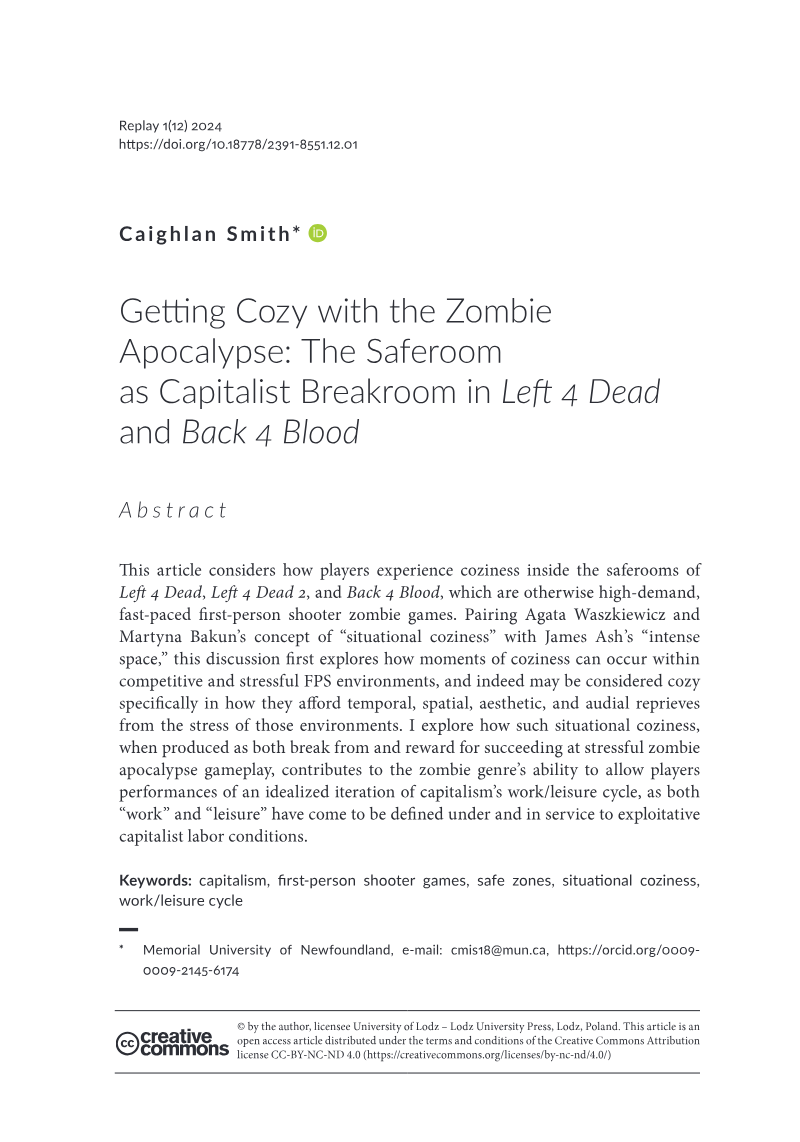
Replay. The Polish Journal of Game Studies · 2024
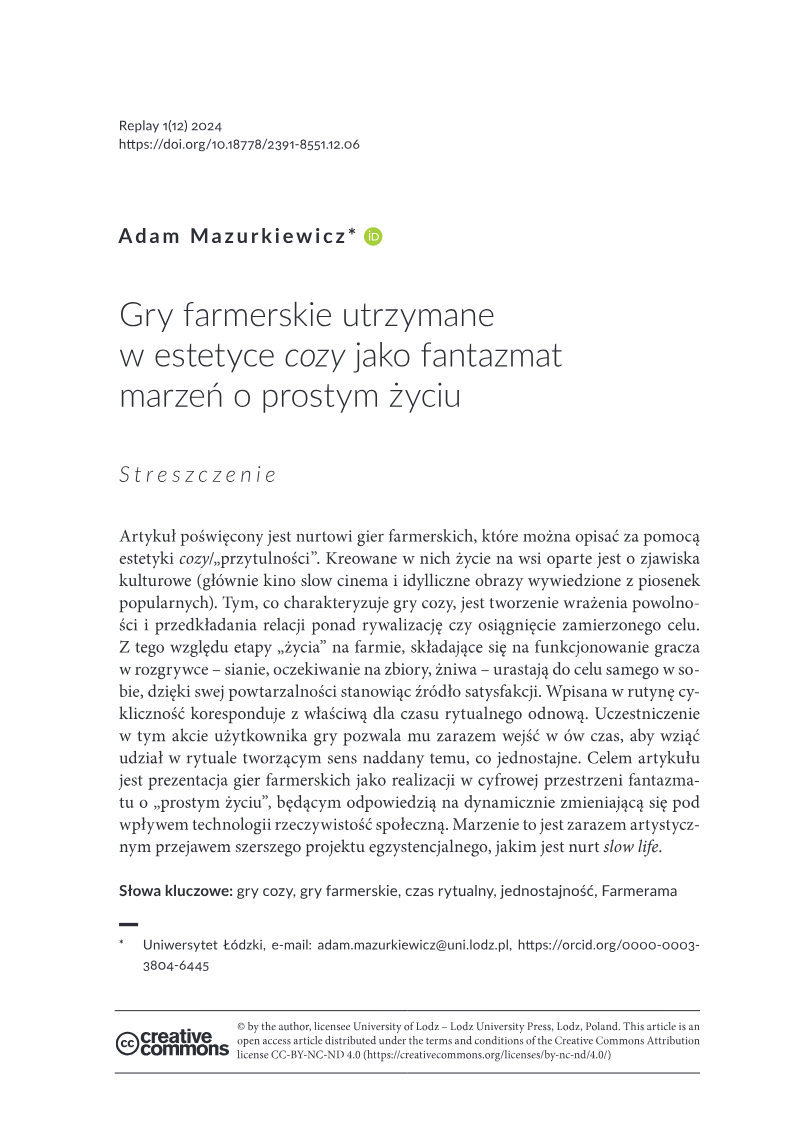
Replay. The Polish Journal of Game Studies · 2024
DiGRA · 2026