Sony Group’s FY2009 Form 20‑F documents a sharp deterioration in operating performance, with consolidated operating income falling from ¥475 billion in 2008 to a loss of ¥228 billion, and net income turning negative at ¥98.9 billion (¥‑40.7 per share). Sales declined 12% to ¥7.73 trillion, driven primarily by weak Consumer Products & Devices and Networked Products & Services segments. Restructuring charges rose to ¥124 billion, reflecting plant rationalization and workforce reductions, while R&D spending remained high at ¥497 billion. The company’s financial‑services arm offset some losses, posting a profit of ¥162 billion in FY2009, but overall liquidity remained robust with cash and equivalents rising 80% to ¥1.19 trillion and an unused credit line of ¥788 billion.
Geographically, Sony’s revenue is concentrated in Japan, the United States and Europe, each contributing roughly a third of sales. The report highlights significant exposure to foreign‑exchange volatility, supply‑chain disruptions, and regulatory changes in both consumer electronics and financial services. Capital expenditures fell from ¥332 billion to ¥192 billion, with a planned ¥220 billion spend for FY2011, while semiconductor development funding of ¥27 billion (FY2010) and ¥35 billion (FY2011) is financed through operating cash flow.
Strategically, Sony pursued joint ventures such as the Sharp Display partnership and completed the full acquisition of BMG’s stake to form Sony Music Entertainment. The company also intensified cost‑cutting initiatives, including the consolidation of mobile‑phone manufacturing and the sale of ten manufacturing sites worldwide. These actions aim to restore profitability, yet the high restructuring burden and ongoing currency headwinds pose short‑term risks. Overall, Sony’s FY2009 performance reflects a challenging macro environment, significant restructuring costs, and a strategic pivot toward consolidating operations while maintaining strong liquidity.
Sony Group · 2026

Sony Group · 2025

Sony Group · 2024

Sony Group · 2024

Sony Group · 2023

Sony Group · 2022
Sony Group · 2021

Sony Group · 2020

Sony Group · 2019
Sony Group · 2018

Sony Group · 2017

Sony Group · 2016
GungHo Online Entertainment · 2026
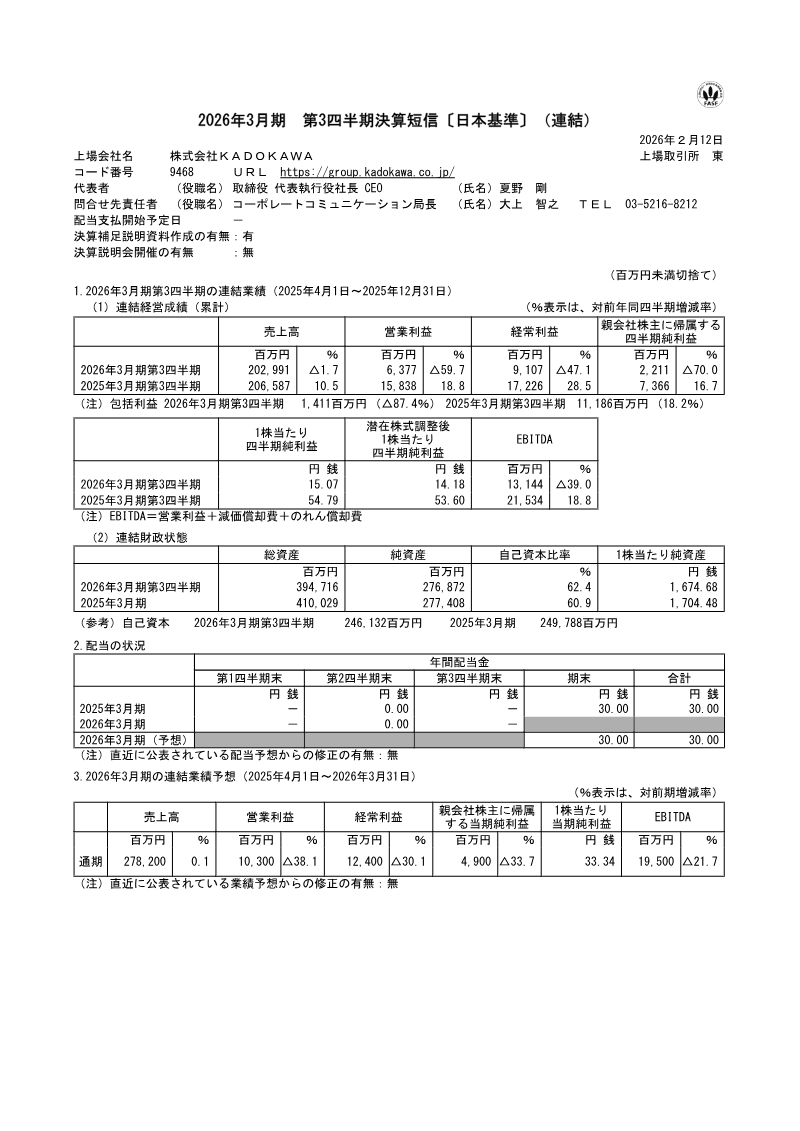
Kadokawa Corporation · 2026
Akatsuki · 2026
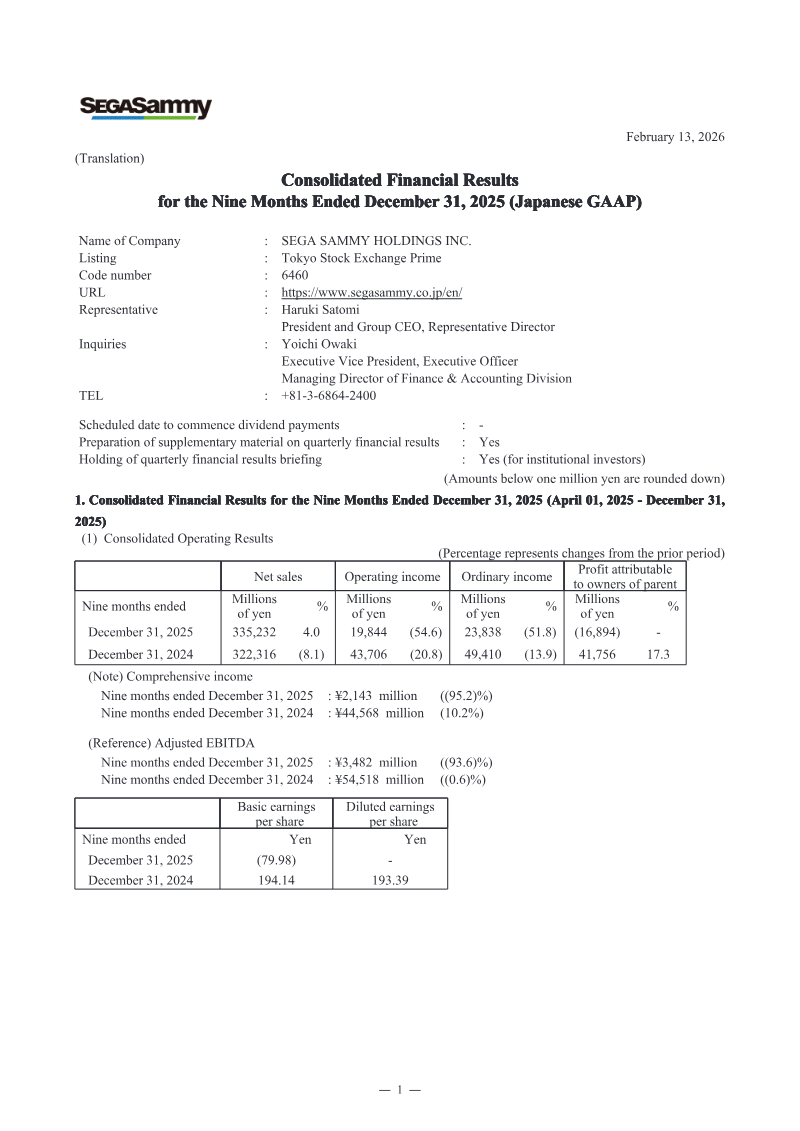
Sega Sammy Holdings · 2026
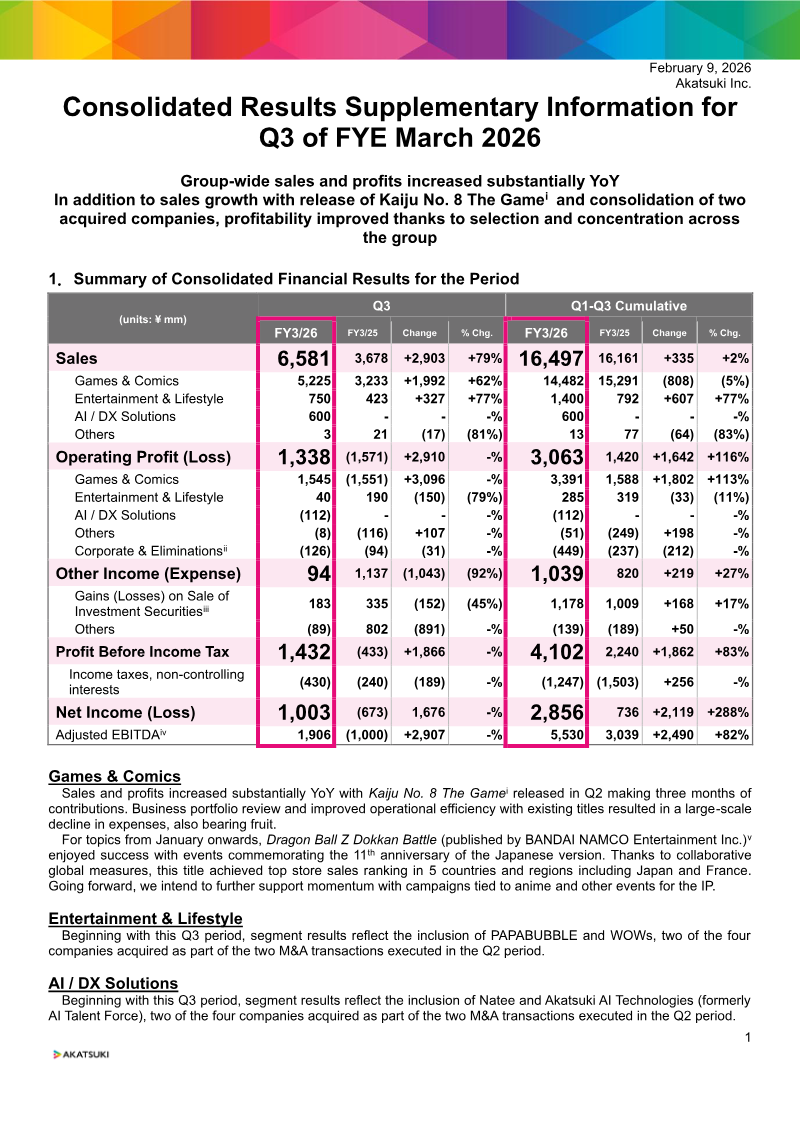
Akatsuki · 2026

GungHo Online Entertainment · 2026
Akatsuki · 2025
Akatsuki · 2025
Akatsuki · 2025
PROEXCA · 2025
CyberAgent · 2025

Koei Tecmo · 2025